



Gjør som tusenvis av andre bokelskere
Abonner på vårt nyhetsbrev og få rabatter og inspirasjon til din neste leseopplevelse.
Ved å abonnere godtar du vår personvernerklæring.Du kan når som helst melde deg av våre nyhetsbrev.

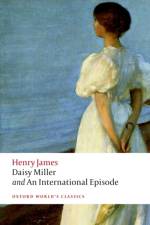
A unique edition of James's two complementary tales, 'Daisy Miller' and 'An International Episode', in which the young American girl irrupts into European society. This edition includes introduction and notes by Adrian Poole, and an Appendix on stage and screen versions of 'Daisy Miller'.
'Did she know and if she knew would she speak?'The story of an unsolved literary mystery that explores what James referred to as "e;troubled artistic consciousness"e; Introducing Little Black Classics: 80 books for Penguin's 80th birthday. Little Black Classics celebrate the huge range and diversity of Penguin Classics, with books from around the world and across many centuries. They take us from a balloon ride over Victorian London to a garden of blossom in Japan, from Tierra del Fuego to 16th-century California and the Russian steppe. Here are stories lyrical and savage; poems epic and intimate; essays satirical and inspirational; and ideas that have shaped the lives of millions.Henry James (1843-1916). James's works available in Penguin Classics are The Portrait of a Lady,The Europeans, What Maisie Knew, The Awkward Age, The Figure in the Carpet and Other Stories, The Turn of The Screw, The Aspern Papers and Other Tales, The Wings of The Dove, Washington Square, The Tragic Muse, Daisy Miller, The Ambassadors, The Golden Bowl, Selected Tales, Roderick Hudson, The Princess Casamassima and The American.
This critical essay and biography by Henry James (1843-1916) of his fellow American novelist Nathaniel Hawthorne (1804-64), today best remembered for The Scarlet Letter and The House of the Seven Gables, was published in the first 'English Men of Letters' series in 1879, and is notable for being the only volume in that series devoted to an American. It is now recognised as being one of the first critical studies of an American writer, and it remains an important work for students and admirers both of James and of Hawthorne. In his critical assessment, James, whose own writing was strongly influenced by Hawthorne, seeks to identify him not only as a great novelist, but particularly as an American novelist, rooted in the landscape, and speaking in the language, of the New World.
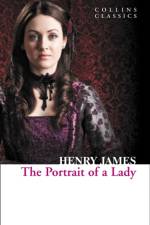
HarperCollins is proud to present its new range of best-loved, essential classics.'Money's a horrid thing to follow, but a charming thing to meet.'Isabel Archer is a beautiful, intelligent and independent young woman. Brought from America to England by her wealthy Aunt who seeks to further her education and find her niece a husband, Isabel is determined to shape her own future - one that does not necessarily entail becoming a wife. Isabel inherits a fortune when her rich uncle dies and feels even more inclined to turn down two eligible suitors on the basis that she is a woman of her own means. However, a trip to Italy heralds her downfall when she meets the charming Gilbert Osmond, a worthless, yet ambitious and scheming dilettante.
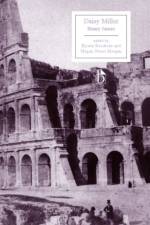
Henry James's Daisy Miller was an immediate sensation when it was first published in 1878 and has remained popular ever since. In this novella, the charming but inscrutable young American of the title shocks European society with her casual indifference to its social mores. The novella was popular in part because of the debates it sparked about foreign travel, the behaviour of women, and cultural clashes between people of different nationalities and social classes. This Broadview edition presents an early version of James's best-known novella within the cultural contexts of its day. In addition to primary materials about nineteenth-century womanhood, foreign travel, medicine, philosophy, theatre, and art--some of the topics that interested James as he was writing the story--this volume includes James's ruminations on fiction, theatre, and writing, and presents excerpts of Daisy Miller as he rewrote it for the theatre and for a much later and heavily revised edition.
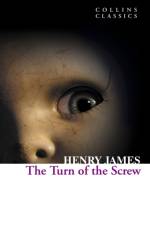
HarperCollins is proud to present its new range of best-loved, essential classics.'The place, with its grey sky and withered garlands, its bared spaces and scattered dead leaves, was like a theatre after the performance-all strewn with crumpled playbills.'Revered as one of the greatest ghost stories ever told, James's The Turn of the Screw is an eerie Victorian masterpiece.When an inexperienced governess goes to work at Bly, a country house in Essex to look after a young boy Miles and his sister Flora, all manner of strange events begin to occur. The governess spots a ghostly man and woman around the grounds and is told by the housekeeper that the valet and previous governess haunt the house. It soon becomes clear that the children are inexplicably connected to these ghosts in some way and the young governess struggles to protect the children, although from exactly what, she is not sure.Exploring the psychological and sexual fears of an era, this ambiguous, suspenseful and anxiety-inspiring novella remains one of Henry James's most well-known tales.
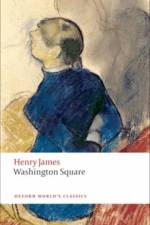
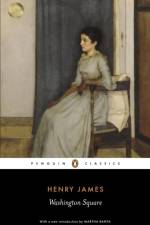
Catherine Sloper is heiress to a fortune and is easily overwhelmed by the attentions of a handsome but penniless suitor. Her clever father is implacably opposed to the match, and the scene for a classic confrontation is set. This new edition of James's most enduringly popular work offers more information than any previous edition.
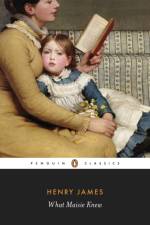
After her parents' bitter divorce, young Maisie Farange finds herself shuttled between her selfish mother and vain father, who value her only as a means for provoking each other. Maisie - solitary, observant and wise beyond her years - is drawn into an increasingly entangled adult world of intrigue and sexual betrayal, until she is finally compelled to choose her own future. What Maisie Knew is a subtle yet devastating portrayal of an innocent adrift in a corrupt society. Part of a relaunch of three James titles.
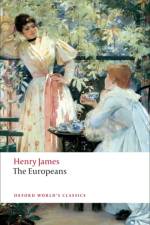
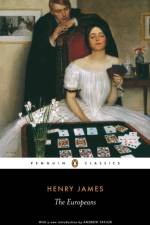
Eugenia, Baroness M"nster, wife of a German princeling who wishes to be rid of her, crosses the ocean with her brother Felix to seek out their American relatives. Their voyage is prompted, apparently, by natural affection; but the Baroness has also come to seek her fortune. The advent of these visitors is viewed by the Wentworths, in the suburbs of Boston, with wonder and some apprehension. The brilliant Eugenia fascinates her impressionable cousins and their more worldly neighbour, but she is baffled by these people, 'to whom fibbing was not pleasing'. Meanwhile Felix, painter of trifling sketches, eases them all in and out of various amorous complications, with 'no fear of not being, in the end, agreeable'. ABOUT THE SERIES: For over 100 years Oxford World's Classics has made available the widest range of literature from around the globe. Each affordable volume reflects Oxford's commitment to scholarship, providing the most accurate text plus a wealth of other valuable features, including expert introductions by leading authorities, helpful notes to clarify the text, up-to-date bibliographies for further study, and much more.
ABOUT THE SERIES: For over 100 years Oxford World's Classics has made available the widest range of literature from around the globe. Each affordable volume reflects Oxford's commitment to scholarship, providing the most accurate text plus a wealth of other valuable features, including expert introductions by leading authorities, helpful notes to clarify the text, up-to-date bibliographies for further study, and much more.
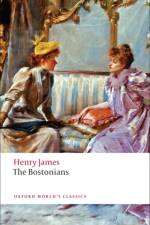
The plot of this novel revolves around the feminist movement in Boston in the 1870s. F.R. Leavis called it one of "the two most brilliant novels in the language. "The novel's many allusions to the historical and social background of Boston society are explained in the editorial material.
A wealthy American man of business descends on Europe in search of a wife to make his fortune complete. His bid for Claire de Cintr'e hand receives an icy welcome from the heads of her aristocratic family. Can they stomach his manners for the sake of his dollars? Out of this classic collision between the old world and the new, James weaves a fable of thwarted desire that shifts between comedy, tragedy, romance and melodrama a fable which in the later version printed here takes on some of the subtleties associated with this greatest novels.
A rich American art-collector and his daughter Maggie buy in for themselves and to their greater glory a beautiful young wife and a noble husband. They do not know that Charlotte and Prince Amerigo were formerly lovers, nor that on the eve of the Prince's marriage they had discovered, in a Bloomsbury antique shop, a golden bowl with a secret flaw. When the golden bowl is broken, Maggie must leave the security of her childhood and try to reassemble the pieces of hershattered happiness. In this, the last of his three great poetic masterpieces, James combined with a dazzling virtuosity elements of social comedy, of mystery, terror, and myth. The Golden Bowl is the most controversial, ambiguous, and sophisticated of James's novels.
This volume includes "Daisy Miller", "Pandora", "The Patagonia", and "Four Meetings".
With an Introduction and Notes by Martin Scofield, University of Kent at Canterbury.Henry James was arguably the greatest practitioner of what has been called the psychological ghost story. His stories explore the region which lies between the supernatural or straightforwardly marvellous and the darker areas of the human psyche. This edition includes all ten of his ghost stories, and as such is the fullest collection currently available.The stories range widely in tone and type. They include 'The Jolly Corner', a compelling story of psychological doubling; 'Owen Wingrave', which is also a subtle parable of military tradition; 'The Friends of the Friends', a strange story of uncanny love; and 'The Private Life', which finds a shrewd, high comedy in its ghostly theme.The volume also includes James's great novella The Turn of the Screw, perhaps the most ambiguous and disturbing ghost story ever written.
Standing on the shore of Lake Geneva, young writer Frederick Winterbourne is drawn to Daisy Miller. As disdain about her recklessness with men resonates around the aristocratic circles, he continues to defend her, but at what cost? As an intriguing tale of passion and romance unfolds, he is confronted with a tragedy that will haunt him forever.
one of a series of new editions of Henry James's most famous short stories and novels.
When timid and plain Catherine Sloper acquires a dashing and determined suitor, her father, convinced that the young man is nothing more than a fortune-hunter, decides to put a stop to their romance. Torn between her desire to win her father s love and approval and her passion for the first man who has ever declared his love for her, Catherine faces an agonising dilemma, and becomes all too aware of the restrictions that others seek to place on her freedom. James s masterly novel deftly interweaves the public and private faces of nineteenth-century New York society; it is also a deeply moving study of innocence destroyed.
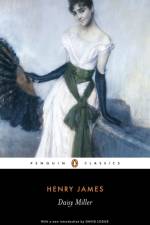
Travelling in Europe with her family, Daisy Miller, an exquisitely beautiful young American woman, presents her fellow-countryman Winterbourne with a dilemma he cannot resolve. Is she deliberately flouting social convention in the outspoken way she talks and acts, or is she simply ignorant of those conventions? When she strikes up an intimate friendship with an urbane young Italian, her flat refusal to observe the codes of respectable behaviour leave her perilously exposed. In Daisy Miller James created his first great portrait of the enigmatic and dangerously independent American woman, a figure who would come to dominate his later masterpieces.
Concerned that her son Chad may have become involved with a woman of dubious reputation, the formidable Mrs Newsome sends her 'ambassador' Strether from Massachusetts to Paris to extricate him. Strether's mission, however, is gradually undermined as he falls under the spell of the city and finds Chad refined rather than corrupted by its influence and that of his charming companion, the comtesse de Vionnet. As the summer wears on, Mrs Newsome comes to the conclusion that she must send another envoy to Paris to confront the errant Chad, and a Strether whose view of the world has changed profoundly. James's favourite novel and one of the greatest of his late works, The Ambassadors is a subtle and often witty exploration of different American responses to a European environment.
This story of the alliance between Italian aristocracy and American millionaires is "e;a work unique among all [James's] novels: it is [his] only novel in which things come out right for his characters ...he had finally resolved the questions, curious and passionate, that had kept him at his desk on his inquiries into the process of living. He could now make his peace with America and he could now collect and unify the work of a lifetime."e; Leon Edel in The Life of Henry James
The child of violently divorced parents, Maisie Farange opens her eyes on a distinctly modern world. Mothers and fathers keep changing their partners and names, while she herself becomes the pretext for all sorts of adult sexual intrigue. The novel traces the course of her education and ends with the death of her childhood. It is one of James's finest studies of lost innocence.
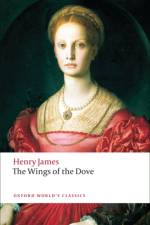
Beautiful Kate Croy may have been left penniless by her relatives, but her bold, ambitious nature ensures she will not succumb meekly to a life of poverty. If the financial circumstances of Merton Densher, the man she is passionately in love with, are not sufficient to secure her future, perhaps her cunning will. So when Milly Theale arrives in Europe from America, laden with wealth but also gravely ill, Kate sees an opportunity to exploit her vulnerability and devises a plan that will see her and Merton financially provided for. Her scheming is flawed though, for it fails to take into account the inconstancies of the human heart.John Bayley's introduction examines the novel in the context of James's other late, great works.
A young, inexperienced governess is charged with the care of Miles and Flora, two small children abandoned by their uncle at his grand country house. She sees the figure of an unknown man on the tower and his face at the window. It is Peter Quint, the master's dissolute valet, and he has come for little Miles. But Peter Quint is dead. Like the other tales collected here - `Sir Edmund Orme', `Owen Wingrave', and `The Friends of the Friends' - `The Turn of the Screw' is to all immediate appearances a ghost story. But are the appearances what they seem? Is what appears to the governess a ghost or a hallucination? Who else sees what she sees? The reader may wonder whether the children are victims of corruption from beyond the grave, or victims of the governess's `infernal imagination', which torments but also entrals her? `The Turn of the Screw' is probably the most famous, certainly the most eerily equivocal, of all ghostly tales. Is it a subtle, self-conscious exploration of the haunted house of Victorian culture, filled with echoes of sexual and social unease? Or is it simply, `the most hopelessly evil story that we have ever read'? The texts are those of the New York Edition, with a new Introduction and Notes.
Classic / British EnglishA young woman comes to a big house to teach two young children. Its her first job and she wants to do it well. But she begins to see strange things the ghosts of dead people. Do the ghosts want the children?
*The inspiration behind Netflix's The Haunting of Bly Manor*Discover Henry James's most famous and terrifying story in an edition which also includes a unique selection of his best loved ghost stories. A young governess is sent to a great country house to care for two orphaned children.
Abonner på vårt nyhetsbrev og få rabatter og inspirasjon til din neste leseopplevelse.
Ved å abonnere godtar du vår personvernerklæring.