Gjør som tusenvis av andre bokelskere
Abonner på vårt nyhetsbrev og få rabatter og inspirasjon til din neste leseopplevelse.
Ved å abonnere godtar du vår personvernerklæring.Du kan når som helst melde deg av våre nyhetsbrev.

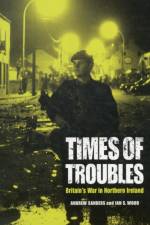
When do 'troubles', riots and insurgency become war? How does a liberal state respond to an internal war within its own borders? How does it define the rules of engagement for its armed forces? These questions, amongst others, faced the British government in 1969, when it decided to send the British Army to the streets of Northern Ireland.This is the first academic study of the British Army in Northern Ireland, featuring Scottish, Welsh, Irish and English regiments. It investigates the complex experiences of soldiers during the often-controversial Operation Banner (1969-2007). The experiences of these soldiers raise many important and difficult questions on war and policy. Featuring key interviews with former soldiers, paramilitaries and Special Branch detectives, amongst other key actors, the authors attempt to answer these questions and enhance our knowledge of conflict resolution by providing a deep analysis of one of the most significant British military operations since the Second World War.Andrew Sanders is the John Moore Newman Research Fellow at University College Dublin. He is the author of Inside the IRA: Dissident Republicans and the War for Legitimacy (Edinburgh, 2011)Ian S. Wood is a distinguished Military historian, lecturer and journalist. He is the author of Gods, Guns and Ulster (Caxton 2003); Crimes of Loyalty: a History of the UDA (Edinburgh 2006); Britain, Ireland and the Second World War (Edinburgh 2010) and is a contributing author to A Military History of Scotland (Edinburgh 2012).Key WordsNorthern Ireland, British Army, Scottish soldier, Troubles, Northern Ireland, Ulster, Operation banner, Bloody Sunday, Saville report, soldiers, IRA, British Army, military, occupation, RUC, UDA, UVF, conflict, Military history, counter-terrorism, counter-insurgency, terrorism Key Features* First title to analyse the role of British Army in Northern Ireland* Draws on new primary sources including soldiers' diaries, log-sheets, in
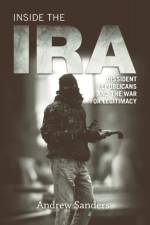
Who is the 'real' IRA?The Real IRA, the Continuity IRA, the Irish National Liberation Army, the Official IRA and the Provisional IRA have all assumed responsibility for the struggle for Irish freedom over the course of the late-twentieth century. Yet as recently as 1969 there was only one Irish Republican Army which had attempted to unify Ireland using physical force. Andrew Sanders explains how and why the transition from one IRA to several IRAs occurred, analysing all the dissident factions that have emerged since the outbreak of the Northern Ireland troubles. He looks at why these groups emerged, what their respective purposes are, and why, in an era of relative peace and stability in Northern Ireland, they seek to prolong the violence that cost over 3500 lives. Key FeaturesExclusive interviews with members of all dissident and mainstream republican organizations, all loyalist factions and security force sources. Extensive archival research. The first scholarly analysis of Irish republican division. Shows influence of Irish-America in provoking dissent within republicanism.
Abonner på vårt nyhetsbrev og få rabatter og inspirasjon til din neste leseopplevelse.
Ved å abonnere godtar du vår personvernerklæring.