


















Gjør som tusenvis av andre bokelskere
Abonner på vårt nyhetsbrev og få rabatter og inspirasjon til din neste leseopplevelse.
Ved å abonnere godtar du vår personvernerklæring.Du kan når som helst melde deg av våre nyhetsbrev.

Being in touch with feelings--naming ones stirred up by a loss--can be critical in terms of moving ahead productively. Loss comes in many different packages: losses of relationship whether by death, divorce, or some other means; loss of status as per experiencing retirement or down-grading with respect to jobs; material loss whether homes, savings accounts, etc.; loss of function whether declining health, loss of a body part, etc. Whatever the loss there is an accompanying need to grieve. Wright's own experience of a metastatic breast cancer diagnosis has been her most challenging loss in life. Her poetry is honest in terms of the feelings she has faced. Instead of glossing over the challenges of loss, she attacks them head-on. This is especially true in terms of the conversations she has with God. Her desire is to grant permission for readers to be equally honest in terms of feelings they encounter with respect to their losses in life.
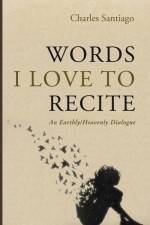
The experience of the afterlife is, normally, considered to take place after death. Death is seen as a wall of partition between those living and those departed. ""Dead and gone"" are words often used to describe the departed. The writer of these poems was at his wife's bedside when she took her last breath. Anyone observing the horror and desperation the author expressed at that moment would have concluded that he truly believed his wife was dead and gone. In fact, he did believe she was dead and gone. A grief counselor suggested to the new widower that he keep a journal of his experience. He started keeping a journal which, from the start, was a dialogue between him and his ""departed"" wife. The prose dialogue soon became peppered with poems. The widower began to notice that there were, sometimes, correlations between what was written in the poems and his daily experience. The poems and his daily experience became for the new widower proof enough that the afterlife can be experienced this side of the grave.
Sticks and stones may break bones, but words can crush the spirit. Since childhood, Julie Matthews has felt closest to God when singing. Mere days away from realizing her lifelong dream of singing professionally, she awakens in a hospital room unable to speak. Suddenly her dreams and God seem distant.Rick Matthews supports his ambitious wife, but has no solution for the constant tension between them. During Julie's recovery, Rick becomes Julie's caregiver and their marriage undergoes a wonderful change--they rediscover each other.But as Julie's voice grows stronger, unseen wounds surface and years of unhealthy habits begin again to pull them apart. Faced with losing their newly rekindled love, Julie and Rick are forced to evaluate the state of their marriage and how their dysfunction has affected their marriage and their children.
"When four strangers rent bargain-basement rooms in an old hotel near the beach, they embark on the summer of their lives. First there's Ariel Spencer, who has big dreams of becoming a writer and is looking for inspiration in Nantucket's high society. Her new friend Sheila Murphy is a good Catholic girl from Ohio whose desire for adventure is often shadowed by her apprehension. Then there's small-town Missourian Wyatt Smith-who's immediately taken with Ariel. The last of the four, Nick Volkov, is looking to make a name for himself and have a blast along the way. Despite their differences, the four bond over Wednesday night dinners, trips to the beach, and all that Nantucket has to offer. But venturing out on their own for the first time, with all its adventure and risks, could change the course of their future ... Twenty-six years after that amazing summer, Ariel, Sheila, Wyatt, and Nick come together again at the hotel where they first met. Now it's called The Lighthouse and Nick owns the entire operation with his wife and daughter. Ariel and Wyatt, married for decades, arrive with their son, and Sheila's back too, with her daughter by her side. Life hasn't exactly worked out the way they had all hoped. Ariel's dreams have since faded and been pushed aside, but she's determined to rediscover the passion she once had. Nick has the money and reputation of a successful businessman, but is it everything he had hoped for? And Sheila has never been able to shake the secret she's kept since that summer. Being back together again at last will mean confronting the past and finding themselves again. Meanwhile, the next generation discovers Nantucket, exploring the island together, experiencing love and heartbreak, and forging lifelong bonds just as their parents did all those years ago. It's sure to be one unforgettable reunion."--Page 4 of cover.
A savvy former street child working at a law office in Mumbai fights for redemption and a chance to live life on her own terms in this “smart, haunting, and compulsively readable” (Amy Jones, author of We’re All in This Together) debut novel about fortune and survival. “A heartbreaking yet hopeful story about the resilience of the human spirit in the face of insurmountable odds.”—Etaf Rum, New York Times bestselling author of A Woman Is No ManWith a sharp wit and sharper tongue, twenty-three-year old Rakhi Kumar is nobody’s fool. Sure, she lives alone in a slum and works as a lowly office assistant for the renowned lawyer, Gauri Verma, who gave her a fresh start. But she’s come a long way from her childhood on the streets of Mumbai. Most important, she’s busy enough to distract herself from the nightmares of a grisly childhood incident that led to the disappearance of her best friend. Fiercely intelligent, Rakhi could be doing so much more than making chai, but she allows herself to be underestimated by her colleagues at Justice For All, Gauri’s cash-strapped rights law office. These days, it’s becoming harder for Rakhi to keep her head down as Gauri desperately tries to save her organization by recruiting former Bollywood actress and infamous nineties “thong girl,” Rubina Mansoor, to be their celebrity ambassador. But not all money is good money. Convincing Gauri to make increasingly brash moves, Rubina demands an internship for a young family friend, Harvard-bound graduate student, Alex Lalwani-Diamond. An ambitious, naïve rich kid with a savior complex, Alex persuades Rakhi to show him “the real India.” In exchange, he’ll do something to further Rakhi’s dreams, in a transaction that seems harmless, at first. As old guilt and new aspirations collide, everything Rakhi once knew to be true is set ablaze. And as the stakes mount, she will come face-to-face with the difficult choices and moral compromises one must make in pursuit of self-preservation, and ultimately, survival. Such Big Dreams is a moving, smart, and arrestingly clever look at the cost of reclaiming one’s story.
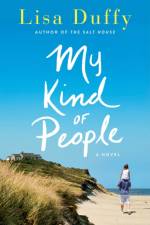
From the author of The Salt House and This Is Home comes a profound novel about the power of community and a small town's long-buried secrets as a group of New England islanders come together for a recently orphaned girl. On Ichabod Island, a jagged strip of land thirteen miles off the coast of Massachusetts, ten-year-old Sky becomes an orphan for the second time after a tragic accident claims the lives of her adoptive parents. Grieving the death of his best friends, Leo's life is turned upside down when he finds himself the guardian of young Sky. Back on the island and struggling to balance his new responsibilities and his marriage to his husband, Leo is supported by a powerful community of neighbors, many of them harboring secrets of their own. Maggie, who helps with Sky's childcare, has hit a breaking point with her police chief husband, who becomes embroiled in a local scandal. Her best friend Agnes, the island busybody, invites Sky's estranged grandmother to stay for the summer, straining already precarious relationships. Their neighbor Joe struggles with whether to tell all was not well in Sky's house in the months leading up to the accident. And among them all is a mysterious woman, drawn to Ichabod to fulfill a dying wish. Perfect for fans of Celeste Ng and Ann Leary, My Kind of People is a riveting, impassioned novel about the resilience of community and what connects us all in the face of tragedy.
In this newest addition to the School for Scoundrels series, Simeon Jones and Lady Myrtle Allen tell all the ton that they are engaged to be wed, fully knowing that once the season is over they will quietly part ways. They each have their reasons, but neither expected love to tempt them into turning a pretense into reality!Simeon Jones has a secret--he is soft-hearted. Despite his scandalous exterior, he will quietly give money to orphans (after all, he was one himself), animals, and damsels in distress. One such damsel is Lady Myrtle Allen--but it's not her funds that are lacking, but rather she needs to get to London--fast.And so begins a wild adventure. First, the pair tells all the ton that they are engaged to be wed--how else to prevent scandal once they are found together--alone! They plan to carry out this deception, fully knowing that once the season is over, they will quietly part ways. But then, they discover that they have fallen in love, which was definitely not part of their plan! Can this scandalous man and adventurous woman turn this pretense into reality?
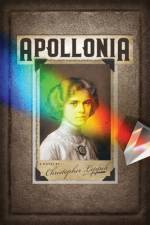
Apollonia is a story that has it all: time travel, a vividly drawn Civil War setting, a sweeping romance, and an action-packed plot that delivers on every page.A year, a number, a piece of time, A distance in living, a state of mind, Begins as a woman awaiting her lover . . .It was and would always remain impossible to say how it all happened.Torn apart by a recent divorce, guitar-strumming everyman Jonathan Chase abandons his life in Denver to return to Saginaw, Michigan, and start anew in his place of birth. But much more than childhood memories await.While managing a used bookstore, he discovers an old family album, bound in dark leather and brittle and faded. It is filled with sepia-toned images, the names of each person penciled in cursive underneath. Although not the usual inventory he stocks on the shelves, Jonathan can't seem to part with it. The heavy paper, hairstyles, and clothing speak of an earlier era, yet the portraits and their provenance are mute on the page. All once vital, thinking, loving, hating, hoping, dreaming - living - beings, there is now little more than slabs of fading paper to testify to their lives. It saddens him to think what an awesome and terrible power time reveals itself to be.Until he turns the page and sees her for the first time.In the gloaming of a snowy December night, Jonathan falls asleep with the album and his cat Pluto by his side . . . and awakens to the chime of a bell, distant but clear, in 1864 and the middle of the Civil War.Although his journey of romance, war, intrigue, mystery, and a touch of the supernatural will lengthen and deepen far beyond what he ever would have imagined or even thought possible, the why was the easiest question of all.Apollonia was the why.
He began his life physically handicapped, rejected by his brothers and shunned by the other villagers. His loving parents teach him about flowers and plants; the village rabbi teaches him about the life lessons in the Bible. Despite his infirmity, Joshua grows into a talented, vibrant person who is sought after by everyone in the village, young and old alike. Upon the death of his mother and father, Joshua's two brothers marry and force him out of their home. Joshua, now homeless, leaves in search of a new home in Jerusalem.On the road, he encounters a woman and an old man who have been attacked by bandits. Joshua demonstrates an unusual skill with his crutch to thwart the attack. After the altercation, Joshua is invited to the farm of the woman, Sara, and her husband, Avram. Joshua demonstrates his knowledge of farming and horticulture, and soon becomes a valuable member of the farm.Joshua realizes that his life is not yet complete. He learns of a holy man, Jesus of Nazareth, who has gained a reputation and a following. After meeting Jesus, Joshua becomes convinced that his life is in some way connected to this man. Joshua travels to Jerusalem to meet Jesus once again when he learns that Jesus has been sentenced to death by the Romans.Joshua follows Jesus to the crucifixion site and has a dramatic final confrontation with the Romans.
Der sehnsüchtige Kindheitstraum vom afrikanischen Kontinent findet in mehreren Reisen zu der Wiege der Menschheit seine Erfüllung.
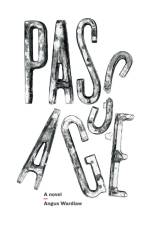
'PASSAGE' is the shocking account of the John Franklin Expedition brilliantly told in a new novel by Angus Wardlaw, descendant of Captain Francis Crozier captain of HMS Terror.
This work has been selected by scholars as being culturally important, and is part of the knowledge base of civilization as we know it. This work was reproduced from the original artifact, and remains as true to the original work as possible. Therefore, you will see the original copyright references, library stamps (as most of these works have been housed in our most important libraries around the world), and other notations in the work.This work is in the public domain in the United States of America, and possibly other nations. Within the United States, you may freely copy and distribute this work, as no entity (individual or corporate) has a copyright on the body of the work.As a reproduction of a historical artifact, this work may contain missing or blurred pages, poor pictures, errant marks, etc. Scholars believe, and we concur, that this work is important enough to be preserved, reproduced, and made generally available to the public. We appreciate your support of the preservation process, and thank you for being an important part of keeping this knowledge alive and relevant.
This work has been selected by scholars as being culturally important, and is part of the knowledge base of civilization as we know it. This work was reproduced from the original artifact, and remains as true to the original work as possible. Therefore, you will see the original copyright references, library stamps (as most of these works have been housed in our most important libraries around the world), and other notations in the work.This work is in the public domain in the United States of America, and possibly other nations. Within the United States, you may freely copy and distribute this work, as no entity (individual or corporate) has a copyright on the body of the work.As a reproduction of a historical artifact, this work may contain missing or blurred pages, poor pictures, errant marks, etc. Scholars believe, and we concur, that this work is important enough to be preserved, reproduced, and made generally available to the public. We appreciate your support of the preservation process, and thank you for being an important part of keeping this knowledge alive and relevant.
In Mark Haines's former life, he was an evangelical youth pastor, a role model, and a family man?until he abandoned his wife, his daughter, and his beliefs. Now he's marking time between sunny days surfing and dark nights working security at an industrial complex. His isolation is broken when Cindy, a charming twenty-two-year-old drifter he sees hitchhiking on the Pacific Coast Highway, hustles him for breakfast and a place to crash?two cynical kindred spirits.Then his coworker is murdered in a robbery gone wrong, and Cindy disappears on the same night. Haines knows he should let it go and return to his safe life of solitude. Instead, he's driven to find out where Cindy went, under stranger and stranger circumstances. Soon Mark is chasing leads, each one taking him back into the world where his old life came crashing down?the seedier side of Southern California's drug trade and ultimately into the secrets of an evangelical megachurch where his past and future are about to converge.What begins as an investigation becomes a haunting mystery and a psychological journey both for Mark and for the elusive young stranger he won't let get away.
This work has been selected by scholars as being culturally important, and is part of the knowledge base of civilization as we know it. This work was reproduced from the original artifact, and remains as true to the original work as possible. Therefore, you will see the original copyright references, library stamps (as most of these works have been housed in our most important libraries around the world), and other notations in the work.This work is in the public domain in the United States of America, and possibly other nations. Within the United States, you may freely copy and distribute this work, as no entity (individual or corporate) has a copyright on the body of the work.As a reproduction of a historical artifact, this work may contain missing or blurred pages, poor pictures, errant marks, etc. Scholars believe, and we concur, that this work is important enough to be preserved, reproduced, and made generally available to the public. We appreciate your support of the preservation process, and thank you for being an important part of keeping this knowledge alive and relevant.
This work has been selected by scholars as being culturally important, and is part of the knowledge base of civilization as we know it. This work was reproduced from the original artifact, and remains as true to the original work as possible. Therefore, you will see the original copyright references, library stamps (as most of these works have been housed in our most important libraries around the world), and other notations in the work.This work is in the public domain in the United States of America, and possibly other nations. Within the United States, you may freely copy and distribute this work, as no entity (individual or corporate) has a copyright on the body of the work.As a reproduction of a historical artifact, this work may contain missing or blurred pages, poor pictures, errant marks, etc. Scholars believe, and we concur, that this work is important enough to be preserved, reproduced, and made generally available to the public. We appreciate your support of the preservation process, and thank you for being an important part of keeping this knowledge alive and relevant.
This work has been selected by scholars as being culturally important, and is part of the knowledge base of civilization as we know it. This work was reproduced from the original artifact, and remains as true to the original work as possible. Therefore, you will see the original copyright references, library stamps (as most of these works have been housed in our most important libraries around the world), and other notations in the work.This work is in the public domain in the United States of America, and possibly other nations. Within the United States, you may freely copy and distribute this work, as no entity (individual or corporate) has a copyright on the body of the work.As a reproduction of a historical artifact, this work may contain missing or blurred pages, poor pictures, errant marks, etc. Scholars believe, and we concur, that this work is important enough to be preserved, reproduced, and made generally available to the public. We appreciate your support of the preservation process, and thank you for being an important part of keeping this knowledge alive and relevant.
This work has been selected by scholars as being culturally important, and is part of the knowledge base of civilization as we know it. This work was reproduced from the original artifact, and remains as true to the original work as possible. Therefore, you will see the original copyright references, library stamps (as most of these works have been housed in our most important libraries around the world), and other notations in the work.This work is in the public domain in the United States of America, and possibly other nations. Within the United States, you may freely copy and distribute this work, as no entity (individual or corporate) has a copyright on the body of the work.As a reproduction of a historical artifact, this work may contain missing or blurred pages, poor pictures, errant marks, etc. Scholars believe, and we concur, that this work is important enough to be preserved, reproduced, and made generally available to the public. We appreciate your support of the preservation process, and thank you for being an important part of keeping this knowledge alive and relevant.
This work has been selected by scholars as being culturally important, and is part of the knowledge base of civilization as we know it. This work was reproduced from the original artifact, and remains as true to the original work as possible. Therefore, you will see the original copyright references, library stamps (as most of these works have been housed in our most important libraries around the world), and other notations in the work.This work is in the public domain in the United States of America, and possibly other nations. Within the United States, you may freely copy and distribute this work, as no entity (individual or corporate) has a copyright on the body of the work.As a reproduction of a historical artifact, this work may contain missing or blurred pages, poor pictures, errant marks, etc. Scholars believe, and we concur, that this work is important enough to be preserved, reproduced, and made generally available to the public. We appreciate your support of the preservation process, and thank you for being an important part of keeping this knowledge alive and relevant.
This work has been selected by scholars as being culturally important, and is part of the knowledge base of civilization as we know it. This work was reproduced from the original artifact, and remains as true to the original work as possible. Therefore, you will see the original copyright references, library stamps (as most of these works have been housed in our most important libraries around the world), and other notations in the work.This work is in the public domain in the United States of America, and possibly other nations. Within the United States, you may freely copy and distribute this work, as no entity (individual or corporate) has a copyright on the body of the work.As a reproduction of a historical artifact, this work may contain missing or blurred pages, poor pictures, errant marks, etc. Scholars believe, and we concur, that this work is important enough to be preserved, reproduced, and made generally available to the public. We appreciate your support of the preservation process, and thank you for being an important part of keeping this knowledge alive and relevant.
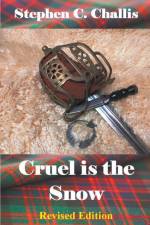
Cruel is the Snow is an account of the Massacre of Glencoe. The story is through the eyes of a fictional resident, Annella MacDonald. Though she is the only fictional character in the story, all events described are based on eye witness accounts, court transcripts, and official records. The events described actually happed, and the perpetrators were guilty of the most serious crime to the people of Scotland.The crime of 'Murder under Trust' is committed when the killer turns, without warning, on guests or friends who have shown them deep hospitality. Those guilty can expect to be totally ostracized by their fellow country; this condemnation is handed down from generation to generation. Even today, there is little trust between the MacDonald and the Campbell Clans. 'Cruel is the Snow' is, by necessity, a violent and shocking novel which makes portions of disquieting reading, but I believe it is a history that should never be forgotten.
Guitar Ghost is a story about family and about youthful love and commitment set against the backdrop of the 1960s just as America was becoming immersed in a war in Vietnam. Its inspiring and faith-filled message, tempered with humor, has meaning for readers today. James Theodore Patterson and Jessie May Clark are two high school seniors from Cordova, Alabama. They are young and their love is new and energetic, yet strong and steadfast. However, when James enlists in the army, will their love be able to withstand the trials and temptations of life as James goes off to war? An endearing tale nestled in Southern comforts; this is a timeless story of how love can prevail through Him who gives us strength.
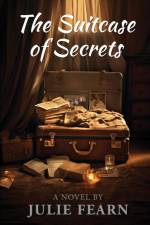
Sara Agnew had not seen her beloved Uncle Jacob Schroder in seven long years, not since the funeral of her Aunt Clarice. Now, having received word that Uncle was languishing in hospital, apparently near death, she is racked with guilt. Sara therefore, along with her husband Oliver, and their little son Bengy, leave the city and travel the 150 miles to the rural town of Kiertville to be near him, initially for a week. Upon seeing her uncle, Sara is shocked at his deterioration. His response to her is a confusing mixture of harshness and absent-mindedness, while sometimes lucid and sometimes seemingly demented. Towards Oliver the old man displays disdain, and to the boy mere dismissiveness. Thus Oliver despises the old man. Yet Bengy in his innocense adores him; the boy shows his affection by bringing wild flowers and blackberries as gifts. Oliver however, wants nothing more than for the week to end, so having reluctantly done his duty, can then return to the city.Each evening the Agnews stay out at Uncle Jacob's farm, and each morning they return to the hospital to keep vigil at his side. The inevitable tension builds between Oliver and Sara, until one evening it erupts. The next day in her disgust, Sara goes alone to the hospital, leaving Oliver to brood at the farm, and to babysit. But a chance encounter with a stranger later that day positively changes Oliver's perspective regarding his uncle-in-law. The following day, to everyone's surprise, Uncle Jacob too has had a dramatic change of demeanour, and he immediately takes both Oliver and little Bengy into his good graces. In fact, he dotes on the boy, and the boy hero-worships him. Sara especially is relieved and grateful. However, when Uncle begins talking in riddles and addressing young Benjamin with trance-like cryptic speech, Sara becomes spooked and extremely frightened. Later, when the couple discuss this, Oliver cannot understand Sara's reaction, but nonetheless trusts her intuition as potentially right, as Sara keeps insisting she feels something is drastically amiss, and perhaps even sinister. Sara contacts the one person she knows might have the answers she seeks: Gladys Galbraith, her uncle and late-aunt's longtime friend and neighbour. Sure enough, when Gladys is pressed by Sara to share what she knows, some heartrending facts emerge from the past that brings the couple understanding of Uncle's mysterious outbursts. Unbeknown to them at the point, the soul connections of the family were yet to continue their unfolding in unexpected turns.
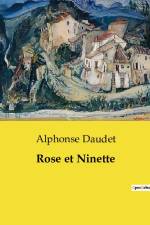
"Rose et Ninette" est une nouvelle d'Alphonse Daudet, extraite de son recueil "Lettres de mon Moulin", publié en 1869. L'histoire présente deux jeunes filles, Rose et Ninette, vivant dans un petit village provençal. Rose est une jeune fille douce et aimable, tandis que Ninette est plus espiègle et coquette.L'intrigue tourne autour d'un ruban rouge que Ninette aime porter dans ses cheveux. Rose, quant à elle, est admirative de ce ruban et souhaite en avoir un similaire. Cependant, Ninette refuse de le partager, créant ainsi une petite rivalité entre les deux amies.L'histoire explore les thèmes de l'amitié, de la jalousie et de la générosité, offrant une peinture charmante de la vie quotidienne dans ce village provençal. Elle capture également l'innocence et la simplicité de l'enfance, tout en transmettant des leçons de partage et de compréhension mutuelle.
Abonner på vårt nyhetsbrev og få rabatter og inspirasjon til din neste leseopplevelse.
Ved å abonnere godtar du vår personvernerklæring.