






















Gjør som tusenvis av andre bokelskere
Abonner på vårt nyhetsbrev og få rabatter og inspirasjon til din neste leseopplevelse.
Ved å abonnere godtar du vår personvernerklæring.Du kan når som helst melde deg av våre nyhetsbrev.

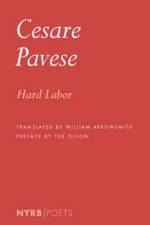
A landmark translation of passionate, fiercely intelligent poetry about coming of age by one of the most influential Italian writers of the twentieth century.Cesare Pavese’s 1936 collection of poems, Lavorare stanca, is increasingly regarded as one of the most astonishing and powerful books of twentieth-century poetry. William Arrowsmith’s translations capture the spirit and complex vitality of Pavese’s voice.This bilingual edition also contains a thorough introduction to Pavese’s work, notes to individual poems, and two critical essays that he wrote about Lavorare stanca, the book by which he hoped to be remembered. “Lavorare stanca,” he once declared, “is a book that might have saved a generation.”
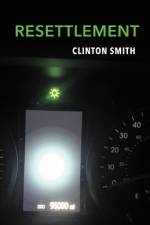
"After a seismic event leaves the world shattered, an unnamed narrator at the end of a mediocre acting career struggles to regain the ability to walk on ground that is in constant motion. When her alluring younger housemate, Tala, disappears, what had begun as an obsession grows into an impulse to kill, forcing the narrator to confront the meaning of the ruptures that have suddenly upended her life. The drive to find and eliminate Tala becomes an existential pursuit, leading back in time and out into a desolate, dust-covered city, where the narrator is targeted by charismatic "healing" ideologues with uncertain motives. Torn between a gnawing desire to reckon with the forces that have made her and an immediate need to find the stability to survive, she is forced to question familiar figurations of light, shadow, authenticity, resistance, and the limits of personal transformation in an alienated, alienating world"--
In 1924, at Brooklyn's Kings County Hospital, Ruby del Palacio delivers a blue baby weeks early. The baby girl dies for want of oxygen. Within a year, Ruby delivers another baby girl named Alice.Gradually realizing that her sole role in the del Palacio household is to conceive, deliver, and nurse babies, trapped by societal expectations in a time of limited women's rights and rampant injustices, Ruby summons the courage to sue for a legal separation from her Colombian husband, Juan. Her efforts are met with a counter lawsuit, resulting in Juan being granted custody of their six children. Months later, he flees the state with the children, leaving Ruby abandoned and bereft.Decades later, Alice embarks on a journey to find her long-lost mother. It is only when a dear friend imparts a profound revelation to Alice, explaining that forgiveness necessitates relinquishing all hope for a different past, that Alice finds the strength to accept her history.Across the Narrows unravels as a sweeping family saga, centered around a tragedy that shapes the del Palacio family's destiny and leaves little room for forgiveness. With themes of love, loss, and resilience, this poignant novel explores the transformative power of forgiveness and the pursuit of one's own identity in the face of adversity.
In 1920's England, a young woman searches for the truth behind her uncle's mysterious death in a town haunted by a restless ghost. The arrival of handsome Scotland Yard inspector and former RAF pilot with mysteries of his own, leaves the woman with more questions than answers.
Kurze Berichte über 52 Wochen im Jahr 2023. Was ist alles passiert, was habe ich erlebt, was hat mir gut getan und was auch nicht. Jede Woche ein Tag mit seinen Besonderheiten.
This work has been selected by scholars as being culturally important, and is part of the knowledge base of civilization as we know it. This work was reproduced from the original artifact, and remains as true to the original work as possible. Therefore, you will see the original copyright references, library stamps (as most of these works have been housed in our most important libraries around the world), and other notations in the work. This work is in the public domain in the United States of America, and possibly other nations. Within the United States, you may freely copy and distribute this work, as no entity (individual or corporate) has a copyright on the body of the work.As a reproduction of a historical artifact, this work may contain missing or blurred pages, poor pictures, errant marks, etc. Scholars believe, and we concur, that this work is important enough to be preserved, reproduced, and made generally available to the public. We appreciate your support of the preservation process, and thank you for being an important part of keeping this knowledge alive and relevant.
The recently discovered super-Earth, TOI-715 b, travels around its sun in a total of 19 Days. Many astronomers believe this planet is our best bet to learn soon that it may be habitable by humans. But, at this time from our own planet we don't know if that 19 Earth days equals one very short year on this newly discovered planet or a very long day. This book reveals new and important information about how Time is composed of waves, travels about the universe creating the reality we see and how anyone can defy Time and use it for their own purposes. Centuries ago, humans learned how to measure Time. We noticed that the seasons would change from Winter to Summer without fail in a very predictable pattern and this established the annual cycle we know as years. Even as cave dwelling men and women, we noticed that the Moon became a bright full moon, lighting up the dark nights every thirty days, and thus Months from Moons were invented. Later, we would begin to measure the length of the days in 24 segments, which would lead to calendars. Then, the 24 segments would be broken down into 60 minutes, and these segments into seconds, and so clocks could be invented to measure all of these things to give us a sense of what O'clock or what Time it is. But, even in modern times with all of our understanding of the major forces in Physics, all we have today is more refined ways of measuring time, such as the Atomic Clock, based on the vibrations of the Cesium Atom that does not lose more than a second every ten million years or so. We also look back in Time for millions and even billions of years in the past when we pierce the night sky with your huge, amazing Space telescopes like the Hubble and the James Webb. But none of our modern instruments or experiments have brought us any clearer an understanding of what time is made of than our earliest observations from the caves - UNTIL NOW - In this book, I hope to prove that TIME is like Gravity, Electricity, TV, Radio, etc. in that it flows all around the universe in waves and that the force particle that makes these Time Waves is called the Chronon. More importantly, I will show how this theory of mine may soon be new and proven science through the use of the largest scientific apparatus in human history that will be launched into Space in or about the year 2035. But even more importantly, even before my theory is proven, I'm going to show you how you can defy Time simply because you know enough about it to feel it radiating all around you and even how to rearrange it so that you can improve just about everything in your life and in all of our lives far, far into the future. Learn how to surf the waves - Join the S.W.A.T. Team Today!
Becoming apparent in this Gentile Church Age is the falling away of the Christian fiber of society and the Lord's command to "watch" being disregarded. The New Testament church, battling demonic forces of this world, has been strengthened by various persons called forth to stand on the front lines and not melt away from this attacking enemy. A call to purge worldly desires for many Christians goes unheeded as prophetic signs unfold, plunging this world into chaos. When the Gentile Church Age is fulfilled and the judgment era begins with the 144,000 Jews' testimonies, the trumpets will blast, that "man of perdition" shall be released from the bottomless pit and the vials of God's wrath will then be released. It also is the time of the mark of the beast and the world order by Satan, who will stand, proclaiming himself to be God with ability to perform miraculous signs. As judgment engulfs an ever-darkening world, evil will hunt its prey as the living breathes the air. The destruction of these evil forces comes as the final trumpet sounds and the last vial is emptied, for then all shall behold "the King of kings and Lord of lords"--Jesus Christ!
"Finding Your Purpose: A Guide to Discovering Meaning and Direction in Life" is a transformative book that offers readers a practical and insightful journey towards discovering their true purpose. Through a blend of psychological insights, practical exercises, and inspiring stories, this book guides readers on a path of self-discovery and personal growth.The book begins by exploring the concept of purpose, helping readers understand what it means to live with intention and direction. It then dives into the process of self-discovery, encouraging readers to reflect on their values, passions, and goals. With each chapter, readers are guided through exercises and reflections that help them gain clarity and insight into their own lives.As readers progress through the book, they are encouraged to embrace uncertainty, cultivate mindfulness, and stay true to themselves. The book emphasizes the importance of living authentically and aligning one's actions with one's values and goals.Ultimately, "Finding Your Purpose" is a guidebook for anyone seeking greater meaning and direction in their life. Whether you're at a crossroads in your career, relationships, or personal development, this book offers practical tools and insights to help you navigate your journey with clarity, purpose, and joy.
Amidst the enchanting Yuletide festivities, the Duke of Cleburne, Giles Fortescue, renowned for his roguish charm, finds his artfully constructed façade slipping through unexpected circumstances in the hallowed library's shadows. Mistaking one lady for another in a clandestine rendezvous, his carefully cultivated guise begins to unravel, plunging him into a labyrinth of unforeseen complexities that threaten to shatter his carefully honed reputation, leaving him ensnared by the ominous specter of societal censure. Lady Juliet Gale's world is transformed when the devilishly alluring duke's impetuous kiss propels her into a realm of unprecedented excitement and trepidation. As their passions entwine and boundaries blur, Juliet's moment of daring abandon leads to a transgression with consequences that reverberate far beyond the stolen embrace. As Yuletide joy collides with societal strictures, she must confront the price of her recklessness, navigating a path fraught with judgment and censure. Amid the flickering candlelight and ornate decorations, the fates of Giles and Juliet converge. Will they surrender to the inexorable pull of destiny, allowing love to bloom amidst the frosty air of the holiday season, or will they muster the strength to defy convention and carve their own path, redefining their lives and love against the backdrop of a Regency Christmas? In Fate Gave Me a Duke, the Yule log's glow illuminates not only festive celebrations, but the enduring struggle between honorable actions and untamed desires.
Echols, Texas, 1883Katie McCord bears much weight on her shoulders-single-handedly running her family's business, McCord's Confectionery, and caring for her three younger siblings. And her little shop is in trouble, which forces her to seek help from her brother, Johnny McCord, a notorious gambler living in New Orleans, or lose everything. Rowdy Denton might be a gambler working for Johnny McCord, but one look at Katie's sweet innocence tugs at the ache and guilt in his heart. For his peace of mind, he's determined to get her out of the opulent hotel and brothel kept by her brother and back to the little town in Texas where she belongs-far away from Rowdy. When Johnny refuses to sell his share to Katie, he sends Rowdy to her hometown to cause her further trouble. But, instead, Rowdy finds himself working as her hired hand and helping her keep everything together. Katie knows Rowdy has another purpose for being in Echols. He works for her brother, after all, and is a gambler himself. So, why is he helping her? When she discovers the answer to her question, she races back to New Orleans, prepared to make the biggest gamble of her life.
Lexie Trueblood lost her mother in a tragic accident when she was a toddler. Raised by her father, she never knew of her mother or her past until she receives a surprise gift inheritance of money and a house; her mother's childhood home. On the day she moves into her new home, her husband disappears, taking their son without her knowing. A story of twists and turns, Lexie learns her life has been a lie in many ways. She gains the support of her mother's childhood friends who realize their own lives may not have been as it seems.
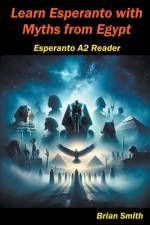
Embark on a linguistic and cultural journey like no other with "Learn Esperanto with Myths from Egypt," a captivating A2 reader designed for those who wish to delve into the Esperanto language through the enchanting world of ancient Egyptian mythology. This book offers a unique blend of language learning and cultural exploration, bringing to life the stories of gods, goddesses, and mythical creatures that have fascinated humanity for centuries.From the birth of Horus to the epic battles between Seth and Horus for the throne of Egypt, each myth is carefully adapted into Esperanto, providing readers with a diverse range of vocabulary and grammatical structures suited to the A2 level. The tales of Isis's unyielding search for Osiris, the wisdom of Thot, and the creation myths will not only enhance your Esperanto skills but also immerse you in the rich tapestry of Egyptian culture and spirituality.The book is thoughtfully organized, starting with simpler stories to build your confidence and gradually introducing more complex language and themes. Each myth is followed by a glossary of key terms, making it easy to learn and review new vocabulary as you read.Whether you are drawn to the mysteries of ancient Egypt or looking to expand your Esperanto proficiency, this book offers a fascinating and rewarding experience. Through the timeless stories of Egyptian mythology, you will not only improve your language skills but also gain insights into the beliefs, values, and imagination of one of history's greatest civilizations. Join us on this journey through time and language, and let the gods and goddesses of Egypt guide you to Esperanto fluency.
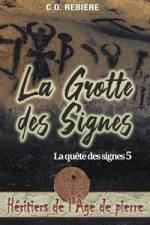
La Grotte des SignesLa quête des signes 5 Enfin réunis après tant d'épreuves, Zia et Kadmeron se préparent à affronter la colère du Dieu Poisson. Devant la menace d'une attaque imminente à la saison de la Renaissance, le Marteron organise la défense du village des Enfants du Soleil. L'issue de la bataille place les vainqueurs dans un cruel dilemme : faut-il - oui ou non - assouvir une juste vengeance et châtier les prisonniers ? Sera-t-il alors possible d'instaurer la paix dans ce peuple déchiré depuis tant d'années ? Zia intervient de façon décisive pour créer les conditions d'une réconciliation entre les deux factions de la ginte des Lepenvis et permettre, peut-être, la coexistence des deux cultes du Silure et du Soleil. Mais le sort réservé au dernier captif plonge nos héros dans le doute sur l'avenir du Peuple du Poisson. Il est désormais temps de partir alors que la Grande Rivière Mère continue de grossir sous les pluies incessantes.En aval, la quête des signes semble s'achever pour Kadmeron lorsqu'il arrive enfin à la caverne de Magura. La rencontre avec un sage des étoiles et les fresques millénaires qu'il découvre sur les parois peintes le bouleversent au plus haut point. En effet, des révélations sur l'équilibre du monde et une prophétie stupéfiante le concernant lui posent plus de questions que ne lui apportent de réponses. Entre-temps, l'inépuisable curiosité de Zia s'exprime dans une idée innovante : aidé par l'ermite et deux mystérieuses étrangères, le couple commence à élaborer une proto-écriture qui répond aux besoins concrets - et étonnants - de la transmission des connaissances.Alors que Kadmeron rêve de rester à Magura pour étudier les signes-mots, une nouvelle alarmante provenant de la Gorge des Ancêtres les contraint à quitter brutalement la Grotte des Signes. Dans des conditions climatiques dures et des circonstances difficiles, Zia est obligée de retourner auprès de ses parents. Que trouvera-t-elle sur place après bientôt deux années d'absence ? Pourra-t-elle affronter son passé et les changements inévitables qu'elle percevra dans son entourage ? Que décidera-t-elle, tourmentée entre les ambitions des uns et ses envies profondes ? Héritiers de l'Âge de pierre - une série qui explore les défis du Mésolithique Il y a plus de six millénaires avant notre ère, l'Europe du Mésolithique est ébranlée par des cataclysmes climatiques. Des pluies diluviennes s'abattent sur le monde, la Mer Méditerranée envahit les côtes. L'Océan Atlantique monte de plusieurs mètres à cause de la fonte massive des glaciers polaires, détruisant des villages et chassant des populations terrifiées. Bien que la partie orientale du continent semble moins touchée, la Mer Noire ne cesse de se remplir et de gagner du terrain sur le littoral.C'est le début d'une période de migrations forcées qui placent l'humanité dans une situation terrible. Paradoxalement peu documentée et controversée, cette époque méconnue de notre préhistoire ouvre cependant les perspectives de la fabuleuse révolution de l'agriculture et des changements profonds du Néolithique. Les contraintes climatiques, sociologiques et culturelles obligeront nos ancêtres à prendre des mesures drastiques et courageuses. Un message du passé pour les profondes mutations qui se déroulent de nos jours.Comment se sont-ils organisés pour faire face au réchauffement climatique ? Avec quelles technologies ont-ils réussi à survivre ? Quelles alliances ont-ils dû forger pour dépasser ces terribles catastrophes ? Ce sont les questions auxquelles les Héritiers de l'Âge de pierre tentent, humblement, de répondre. Cette série de fiction s'appuie sur certaines découvertes archéologiques et sur les suppositions et l'imagination de ses auteurs.
Stories about motel misadventures...mostly. It seems like disaster always strikes when you're on the road. Sometimes it's unavoidable but others, it's from a the actions of one of the world's dumbest and most incompetent creatures. Andrew Spurgle is at it again, complete with an explanation from the "man" himself in the Foreword.
¿Embárcate en una travesía hacia la realización espiritual con "Vive una vida plena en Dios"¿.Este libro trasciende la noción de ser meramente una lectura; se presenta como una guía de estudio enriquecida, con preguntas al final de cada capítulo que están diseñadas para profundizar tu aprendizaje y reflexión.Descubre la profundidad de tu fe, transformando tu espíritu, alma y cuerpo en un espejo del amor y la sabiduría divinos. A través de enseñanzas bíblicas enriquecedoras y reflexiones profundas, este libro te enseñará a cultivar una vida de plenitud, paz y propósito. Es el acompañante perfecto para aquellos que desean profundizar su relación con Dios y vivir una vida con significado. "Vive Una Vida Plena en Dios" no es solo un libro; es una invitación a experimentar el poder transformador de una vida en comunión con Dios.Haz de esta guía el siguiente paso en tu camino espiritual y descubre la plenitud de vivir una vida enriquecida por la fe.
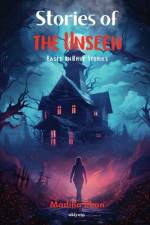
"Stories of the Unseen: A Collection of Terrifying Tales"Step into the shadows with "Stories of the Unseen," a gripping anthology ofspine-tingling narratives that explore the eerie realms beyond our senses. Inthis collection, darkness is not just the absence of light; it is a canvas for theunseen to manifest, revealing horrors that defy explanation and terrify eventhe most skeptical minds."Stories of the Unseen" invites readers to peer into the darkness and embracethe unknown. Each tale is a glimpse into the terrifying mysteries that lie justbeyond our perception, where the unseen forces that shape our nightmarescome to life. Brace yourself for a collection that challenges the boundaries ofreality and delves into the unsettling truths that dwell in the shadows.
Mary will not be broken...In the devastating aftermath of London's 1944 bombings, Mary Bray falls hopelessly in love with Charlie Lambert. Together, they build a life in England a life enriched by the birth of a daughter. When Charlie is called away for military duty, Mary succumbs to the charms of Archie Bray, an egotistical Scot. Charlie discovers the affair and leaves Mary. She is inconsolable.Now pregnant with Archie's child, and weighed down with regret, Mary has no option but to move with him to Glasgow, Scotland. She lives in a rat-infested tenement slum with a violent, abusive man with no potential or ambition.Despite this, Mary is stoic, she has a plan. Her struggles have strengthened her resolve, she is determined to forge a new life for her and her children. She is no longer that downtrodden woman.As her plans forge ahead, an unforseen setback threatens to destroy the years of planning. Her world falls apart, she is heartbroken with nowhere to turn ...Mary Bray needs a miracle.
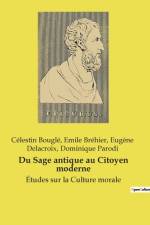
"Du Sage antique au Citoyen moderne : Études sur la Culture morale" est un ouvrage qui réunit les contributions de plusieurs auteurs, dont Célestin Bouglé, Émile Bréhier, Henri Delacroix et Dominique Parodi. L'ouvrage se penche sur l'évolution de la culture morale, en mettant en lumière la transition du concept du "Sage antique" au "Citoyen moderne". Voici un résumé général :L'ouvrage explore les différentes perspectives sur la culture morale en examinant les idéaux moraux qui ont prévalu dans les sociétés antiques et en les comparant à la conception moderne du citoyen. Il analyse les changements culturels, sociaux et philosophiques qui ont influencé cette transition.Célestin Bouglé aborde probablement les aspects sociologiques de cette évolution, examinant comment les idéaux moraux étaient intégrés dans la structure sociale. Émile Bréhier, en tant que philosophe, pourrait se pencher sur les dimensions philosophiques et éthiques de cette transition. Henri Delacroix et Dominique Parodi pourraient également contribuer à la discussion en apportant leurs propres perspectives et analyses.Globalement, l'ouvrage offre une réflexion approfondie sur la manière dont les conceptions morales ont évolué au fil du temps, fournissant ainsi une compréhension plus large de la culture morale dans son contexte historique et social.
"La Philosophie dans le boudoir" est un dialogue philosophique qui explore les thèmes de la liberté sexuelle, du libertinage et du pouvoir. L'histoire se déroule dans le boudoir de Madame de Saint-Ange, qui enseigne à Eugénie, une jeune fille de quinze ans, les principes du libertinage. Madame de Saint-Ange est aidée par son frère, Le Chevalier de Mirval, et Dolmancé, un homme débauché.Le récit présente des scènes érotiques explicites et des discussions philosophiques sur la morale, la religion, et la nature humaine. Sade utilise ces dialogues pour critiquer la société, la religion et les normes morales de son époque. L'¿uvre est controversée en raison de son contenu sexuel explicite et de ses idées subversives.Il est important de noter que l'¿uvre de Sade est souvent considérée comme controversée et choquante en raison de sa représentation explicite de la sexualité et de ses idées radicales.
Dans cet essai, Friedrich Engels explore le rôle fondamental de la violence dans le façonnement de l'histoire humaine. Il analyse diverses formes de violence, de l'individuelle à la sociale, et met en lumière leur impact sur les structures de pouvoir et l'évolution des sociétés.Engels soutient que la violence n'est pas simplement un moyen de perturbation, mais plutôt un moteur essentiel du changement social. Il examine en particulier la violence révolutionnaire comme un outil puissant pour renverser les structures de pouvoir existantes et instaurer de nouvelles formes d'organisation sociale.L'auteur établit une corrélation entre la violence et l'État, affirmant que l'État représente souvent l'organisation institutionnelle de la violence au service d'une classe dominante. Engels considère la violence révolutionnaire comme une force libératrice, citant des exemples tels que les révolutions françaises pour illustrer comment elle peut transformer radicalement la société.Bien qu'il reconnaisse les aspects éthiques complexes de la violence, Engels souligne son potentiel de libération et son rôle dynamique dans la création de nouvelles structures sociales. Il appelle à une réflexion approfondie sur la relation entre la violence et l'histoire, mettant en avant son rôle central dans le processus de changement social.
Dans cet essai, Anténor Firmin examine la relation entre les États-Unis et la République d'Haïti à l'époque de la présidence de Theodore Roosevelt. Firmin, ancien sous-inspecteur des écoles et commissaire de la République d'Haïti à Caracas, aborde la question des relations internationales entre les deux nations.L'auteur analyse les politiques et les actions de Theodore Roosevelt à l'égard d'Haïti, mettant en lumière les implications politiques et économiques de l'intervention américaine dans les affaires haïtiennes. Il examine de près les motivations et les objectifs de l'administration Roosevelt, cherchant à comprendre les dynamiques complexes qui ont influencé les relations bilatérales.Firmin souligne probablement les conséquences de l'intervention américaine sur la souveraineté et l'autonomie de la République d'Haïti. Il peut également aborder les aspects historiques et culturels qui ont façonné la compréhension mutuelle entre les deux nations.L'auteur pourrait également discuter des répercussions de ces événements sur la perception d'Haïti dans le contexte international et analyser les implications à long terme de cette intervention sur les relations entre les États-Unis et Haïti.
Les ouvrages relatifs à l¿Histoire de la Chine qui ont été publiés jusqüà ce jour peuvent être classés en deux catégories. Les uns, qui, pour la plupart, suivent les annales chinoises, traitent assez sommairement l¿histoire de Chine proprement dite pour arriver rapidement aux temps modernes et s¿y arrêter plus longuement. Les autres étudient en détail les origines de la civilisation chinoise, sans tenir compte des différentes époques. Le présent ouvrage est un exposé complet du sujet. Il ne se borne pas à de sèches énumérations de dates, de guerres et de règnes, mais il montre aussi clairement que possible quels ont été les facteurs et les phases successives de l¿évolution de la civilisation chinoise aux différentes époques, depuis l¿antiquité jusqüà l¿intervention de l¿Europe en Chine. A partir de ce moment, il ne manque pas d¿ouvrages qui indiquent les modifications que les idées étrangères ont apportées à la civilisation chinoise.
"L'homme stupide" est un essai de Charles Richet dans lequel il explore la nature de la stupidité humaine et ses implications sur la société. L'auteur commence par définir la stupidité comme une incapacité à comprendre, à apprendre et à évoluer intellectuellement malgré les opportunités et les informations disponibles.Richet analyse ensuite les différents aspects de la stupidité, soulignant comment elle peut se manifester dans divers domaines tels que la politique, la religion, la science et la vie quotidienne. Il examine également les conséquences de la stupidité sur le progrès social et intellectuel, mettant en évidence les obstacles qu'elle crée.L'auteur explore les causes de la stupidité, notamment l'ignorance volontaire, l'entêtement, et le refus d'accepter de nouvelles idées. Il aborde également la question de savoir si la stupidité est innée ou acquise et s'il existe des moyens de la surmonter.En fin de compte, Charles Richet propose des réflexions sur la façon dont la société peut faire face à la stupidité et encourager l'éducation et la pensée critique. Il plaide pour une prise de conscience collective et un engagement en faveur du développement intellectuel pour surmonter les défis posés par la stupidité dans notre monde moderne.
Urlaub. Die schönste Zeit des Jahres. Für mich immer eine Zeit der gechillten Muse. Doch dieser Urlaub ist anders. Er ist mehr als sonderbar. Er fühlt sich eher wie ein praller, vollgestopfter Wäschesack an. Dabei sollte er doch erholsam und fluffig wie ein seidiges Schaumbad sein. Doch Pustekuchen! Nicht nur das ich immer wieder in meine schräge Vergangenheit abdrifte, nein, auch mein Mann taucht ständig, völlig unverhofft auf. Sie denken, das wäre nichts Besonderes? Nun ja, mein Mann Dariusz ist tot. Seit zwei Jahren. Plattgewalzt von einem LKW, während er auf dem Weg war, sich Zigaretten zu besorgen. Ein Umstand, den ich ihm bis heute nicht verziehen habe. Weder das Rauchen, noch das er tot ist. Was will er? Gerade jetzt, wo ich das Gefühl habe, mein Leben würde sich endlich langsam wieder normalisieren. Natürlich weiß ich, dass ich meinen Mann nicht wirklich sehe. Das wäre ja zu gruselig oder ich wäre verrückt. Bin ich aber nicht. Dennoch frage ich mich, warum mein Gehirn mir ausgerechnet jetzt, in meinem Urlaub, diesen üblen Streich spielt. Was will es damit erreichen? Mein Name ist Kornelia Korn und die Antwort offenbart sich mir, am Ende dieser zwei Wochen, die sich letztendlich anfühlen wie eine einzige popelige Sekunde. Eine Sekunde, die so lang wie ein ganzes Leben ist.
Abonner på vårt nyhetsbrev og få rabatter og inspirasjon til din neste leseopplevelse.
Ved å abonnere godtar du vår personvernerklæring.