


Gjør som tusenvis av andre bokelskere
Abonner på vårt nyhetsbrev og få rabatter og inspirasjon til din neste leseopplevelse.
Ved å abonnere godtar du vår personvernerklæring.Du kan når som helst melde deg av våre nyhetsbrev.

Language, Cognition, and Emotion in Keats's Poetry applies an innovative cognitive linguistic approach to the poetry of John Keats, the first of its kind to employ a cognitive-based framework to explore the expression and articulation of emotion in his work.
Seamus Heaney's American Odyssey describes, with a new archive of correspondence, interviews, and working drafts, the some forty years that Seamus Heaney spent in the U.S. as teacher, as lecturer, as friend and colleague, and as an active poet on the reading circuit.
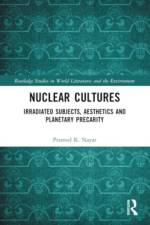
Nuclear Cultures: Irradiated Subjects, Aesthetics and Planetary Precarity aims to develop the field of nuclear humanities and the powerful ability of literary and cultural representations of science and catastrophe to shape the meaning of historic events.
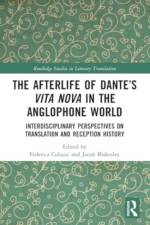
This volume provides the first systematic study of the translation and reception of Dante's Vita Nova in the Anglophone world, reconstructing for the first time the contexts and genesis of its English-language afterlife from the early nineteenth century to the present day.
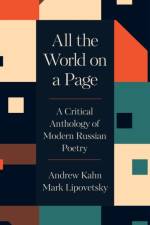
The rich and ongoing development of Russian lyric poetry, explored through close readings of thirty-four poems by poets ranging from Alexander Blok to Maria StepanovaThe Russian cultural tradition treats poetry as the supreme artistic form, with Alexander Pushkin as its national hero. Modern Russian lyric poets, often on the right side of history but the wrong side of their country's politics, have engaged intensely with subjectivity, aesthetic movements, ideology (usually subversive), and literature itself. All the World on a Page gathers thirty-four poems, written between 1907 and 2022, presenting each poem in the original Russian and an English translation, accompanied by an essay that places the poem it its cultural, historical, and biographical contexts. The poems, both canonical and lesser-known works, extend across a range of moods and scenes: The poems, both canonical and lesser-known works, extend across a range of moods and scenes: Velimir Khlebnikov's Futurist revolutionary prophecy, Anna Akhmatova's lyric cycle about poetic inspiration, Vladimir Nabokov's Symbolist erotic dreamworld, Joseph Brodsky's pastiche of a Chekhovian play set on a country estate, Maria Stepanova's pandemic allegory of political repression, Galina Rymbu's energetic manifesto "My Vagina."An introduction explores the abiding inspiration of modernism on the Russian lyric tradition. The separate chapter essays, informed by extensive knowledge of the existing scholarship and critical styles of interpretation consider how the interplay of originality and tradition, form and voice work to engage the reader. The poems themselves, many of them in newly commissioned translations, operate outside state-mandated poetic styles to address the reader directly, "tête-à-tête," as Brodsky said in his 1987 Nobel lecture. With each chapter devoted to a different poem, All the World on a Page allows readers to experience the richness of Russian poetry through poems and poets.
This volume considers representations of space and movement in sources ranging from Roman comedy to late antique verse to explore how poetry in the Roman world is fundamentally shaped by its relationship to travel within and the geography of Rome's far-reaching empire.
A book of poems, all of which were written in 2023/4, in a variety of styles and approaches. All of them are short (no more than one page).The content is varied, but perhaps the best way to describe their overall style or flavour might be to say that they concern themselves with many of the themes of traditional Romanticism: nature, madness, love, nostalgia, childhood, memory, loss, melancholia, dreams, the supernatural, beauty. Many have a philosophical tone.About a fifth of the poems are ekphrastic: that is, they are reactions to other works of art, especially paintings and songs. For example, there are poems based on paintings by Van Gogh, Matisse, Velasquez, Hopper, (among many others), and songs by Nico, the Beach Boys, Neu and Popol Vuh (again among others).Since the author is now 70 and most of the poems are written in a fairly traditional style, they might appeal most to fellow Boomers. Many of the poems deal with coming to terms with getting old, looking back at one's life, and preparing to face death. This sounds grim, but the mood of the poems varies a lot.As well as the poems, the book also has two other sections featuring short stories and essays.The eight short stories follow the modern trend of being really short by past standards, often around 1000-1500 words. There is no flash fiction, though. With two exceptions, they are basically realistic in style and are mostly about relationships.The eleven essays focus on Art (predominantly painting and poetry), exploring the following range of topics in terms of their relationship to Art: authenticity, materiality, the canon, success and failure, rhyme, originality, ekphrasis, science, logic, beauty, and mystification.
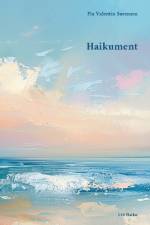
Haiku throughout the seasons, from the yellow pearls of spring to the bright nights of the North, from nature's own afterparty to the snow-covered pine trees.
It is therefore, a work of monumental importance for understanding the development of a regional poetic consciousness within the contexts of classical cosmopolitan structures of thought and aesthetic taste."
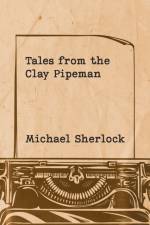
"My work as a 'tale bandolier' hinges on a broad picture of human and country life, with a light-hearted observational approach. Sometimes my poems have serious and challenging content, which might provoke and hold the reader's attention - with a smile or two, maybe! Thank you for taking the time to read my book." - Michael Sherlock
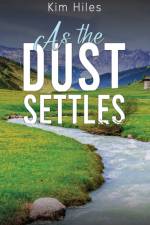
As the Dust Settles is an archetypal series of poems that explore love, letting go, and optimism leaving the reader with hope and encouragement. The breadth of poetry covers a diverse sequence of subjects that compel the reader to form an attachment to Kim's writing that surpasses association. Kim's collection possesses a calming resonance that is rooted in the everyday, making episodic poems from her life seem prescient.
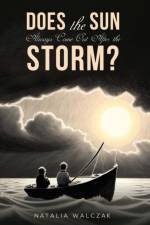
When I began to ponder what my poems represent, the term 'chaos' immediately sprang to mind. 'Storm' aptly captures the essence of my work. Yet, as I continued writing, my outlook on life evolved, and a sense of joy emerged, much like the sun following a storm. My poems transformed, resonating with happiness. This collection symbolizes a journey of growth - navigating through life's storms and basking in the sunshine that follows. Life's challenges, like storms, are recurrent, but so are the moments of joy and sunlight. I hope these poems inspire readers to embrace their emotions, rather than confining them to a neatly tied box. While the box may appear beautiful and controlled, it's what's inside that truly matters. Living authentically, acknowledging, and expressing our true feelings, is essential. It's challenging to live, but even more so when we are not honest with ourselves about our emotions.
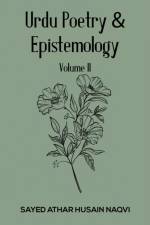
Urdu Poetry & Epistemology - Volume II celebrates the enduring beauty and depth of Urdu literature, captivating the heart of the reader. This work pays homage to the divine craftsmanship of words and poetry, showcasing how Urdu continues to carve new paths into the future, resonating with souls far and wide. The writings of the esteemed Sayed Athar Husain Naqvi serve as a testament to Urdu's rich heritage, compelling readers to acknowledge the language's origins and its poignant journey through time. Although it is often mourned for its perceived decline in its birthplace, Urdu finds a vibrant resurgence amidst its trials. Drawing inspiration from the historical currents of the Euphrates, it finds a new home among the diaspora in Europe, flourishing particularly on the fertile cultural grounds of London. In this new era, Rajab Ali Beg Saroor breathes life into Urdu with his pen. His work, infused with innovation and wonder, creates a mesmerizing universe of words, where magic and reality blend seamlessly, offering a testament to the language's adaptability and enduring charm. London, celebrated as a melting pot of cultures, plays a crucial role in embracing Urdu and other languages, providing them with a platform to thrive and enchant anew. This book is not only a tribute to Urdu poetry's illustrious past but also a beacon of hope for its flourishing future, inviting readers to delve into its harmonious and enchanting world.
In the beginning when things are simple, and they're done just for fun The enjoyment's there, you haven't a care, but then what becomes? The better you get, you may regret, in a later time When money gets the better of pleasure and the fun then declines.
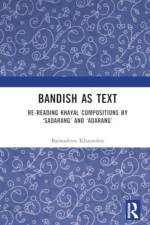
This book provides a socio-cultural analysis of khayal bandishes composed by Ne'mat Khan 'Sadarang' and Feroze Khan 'Adarang'.
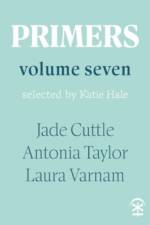
In 2023, Nine Arches Press launched their nationwide Primers scheme for a seventh time, in search of exciting new voices in poetry, with Katie Hale and Jane Commane as selecting editors. After reading through hundreds of anonymous entries, and narrowing down the choices from longlist to shortlist, three poets emerged as clear choices: Jade Cuttle, Antonia Taylor and Laura Varnam. Primers Volume Seven now brings together a showcase from three exciting new voices. Through engagement with language, connection to place and time, and the stories we tell or are told about ourselves, these lively and revealing poems offer an essential, insightful collection of new work from some of poetry's most talented emerging voices.
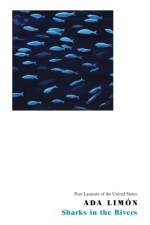
The speaker in this extraordinary collection finds herself multiply dislocated: from her childhood in California, from her family's roots in Mexico, from a dying parent, from her prior self. The world is always in motion and it is also full of risk. In such a world, how should one proceed? Throughout Sharks in the Rivers, Limon suggests that we must cleave to the world as it "keep[s] opening before us," for, if we pay attention, we can be one with its complex, ephemeral, and beautiful strangeness. Loss is perpetual, and each person's mouth "is the same / mouth as everyone's, all trying to say the same thing." For Limon, it's the saying-individual and collective - that transforms each of us into "a wound overcome by wonder," that allows "the wind itself" to be our "own wild whisper."
Inspired by the odes of John Keats, I would like to write poetry which touches the soul. My early poetry is about imagery and beauty. Then I moved onto a period of trying to create mood with the artist Paul Klee's remark in mind: 'Art is not about reproducing the visible. It renders visible.' This followed with some verses trying to describe depression. Finally, there are some abstract poems which try to convey what happens when we reach the end of language.
Abonner på vårt nyhetsbrev og få rabatter og inspirasjon til din neste leseopplevelse.
Ved å abonnere godtar du vår personvernerklæring.