


Gjør som tusenvis av andre bokelskere
Abonner på vårt nyhetsbrev og få rabatter og inspirasjon til din neste leseopplevelse.
Ved å abonnere godtar du vår personvernerklæring.Du kan når som helst melde deg av våre nyhetsbrev.

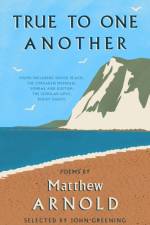
John Greening's personal selection aims to restore Arnold's name as one of the finest poets of the Victorian era. Readers may be surprised to learn just how ahead of his time Arnold was in his tastes and values, as well as in his early use of free verse.
The Norton Library edition of The Iliad features the complete text of Emily Wilson's renowned 2023 translation. An elucidating introduction explores the poem's Bronze Age origins, its major themes, and its unsurpassed impact and influence. Also included in this edition are specially -drawn maps, a glossary (with pronunciation), and summaries and extensive notes for each book.The Norton Library is a growing collection of high-quality texts and translations-influential works of literature and philosophy-introduced and edited by leading scholars. Norton Library editions prepare readers for their first encounter with the works that they'll re-read over a lifetime.Inviting introductions highlight the work's significance and influence, providing the historical and literary context students need to dive in with confidence.Endnotes and an easy-to-read design deliver an uninterrupted reading experience, encouraging students to read the text first and refer to endnotes for more information as needed.An affordable price (most $10 or less) encourages students to buy the book and to come to class with the assigned edition.
From 1987, when Rita Dove won the Pulitzer Prize for Poetry, to 2021, when Amanda Gorman skyrocketed to celebrity status after performing during Biden's inauguration and the Super Bowl, Black women have seemingly attained secure, stable positions at the forefront of American poetry. But this prominence comes at a price. As figures like Dove and Elizabeth Alexander have become well known, receiving endorsements and gaining visible platforms from major prizes, academic institutions, and publishing houses, the underlying terms of evaluation that greet Black women's poetics often remain superficial, reflecting efforts to co-opt and contain rather than meaningfully consider new voices and styles. In Pitfalls of Prestige, Laura Elizabeth Vrana surveys how developments in American literary institutions since 1980 have shaped-and been shaped by-Black women poets. Grappling with the refulgent works of the most acclaimed contemporary figures alongside lesser-known poets, Vrana both elucidates how seeming gestures of inclusion can actually result in constraining Black women poets' works and also celebrates how these writers draw on a rich lineage and forge alternative communities to craft continually innovative modes of transgressing such limits, on the page and in life.
Lay down all hope, you that go in by me . . . Through the gates of Hell, past whirling hurricanes, leering devils and rivers of blood, lies the ultimate evil: Satan himself. Masterfully translated by Dorothy L. Sayers, this first instalment of The Divine Comedy tells the captivating tale of Dante and Virgil's arduous journey through the nine circles of the underworld, and remains one of the most influential works in literary history.
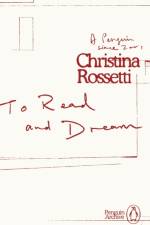
One of the finest poets of the Victorian age, Christina Rosetti is known today for the directness, clarity and unmatched lyricism of her works. This selection brings together some of her finest verses, love lyrics and sonnets for the contemporary reader. Spanning themes like love, death, loss, womanhood and devotion to pleasures both earthly and divine, these are poems of startling beauty, as evocative and relevant today as when they were first published.
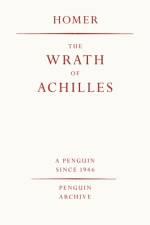
On the fields of Troy, war is raging. At its centre is Achilles: godlike, swift-footed, the greatest champion of the Greeks. But when his pride is wounded and he refuses to fight, the thread of fate begins to spin . . . From frenzied rampages to intimate moments of grief, this selection from Homer's Iliad traces the tale of a warrior whose name echoes through the ages, and whose story remains as powerful as ever.
The Divine Comedy follows Dante on a symbolic journey through the realms of the afterlife: Hell, Purgatory, and Paradise. Dante encounters souls facing the consequences of their Earthly lives.
A series of ekphrastic 'interventions' respond to 20th century European cinema, the work of Serbian performance artist Marina Abramovic, and consider what art can offer in face of the predicaments we find ourselves in.
Olivia McCannon's latest collection is shot through with questions. How ecological is English? How do you read an unreadable world, or a transforming planet? The Lives of Z is an inventory of poem-artefacts gleaned from the spoilheaps of a speculative future. Each 'find' emerges with the randomness of any archaeological discovery, in that moment when its significance hangs in the air. Except that here, life is growing out of the data. In this space of provocation and encounter, the reader is invited to "play Z's game" and crash-test different ways of being in language. What will I have been? Who or what owns the 'collective possessive'? How many life forms can inhabit the same pronoun? Z, the creative principle of life - multitudinous, networked and irreverent - is running the experiment, in an unrepentantly 'bad science' mode. Salvaged from what can't be thrown away, these poems meet uncertainty with creativity, searching for the freedom and the words to reclaim human and earthly connections.
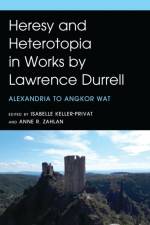
"Heresy and Heterotopia in Works by Lawrence Durrell examines heretical elements in Durrell's thought and writings and Foucauldian explorations of his treatments of place and space. It links Lawrence Durrell's fiction, travel writing, and poetry in offering new theoretical appreciations of Durrell's response to orthodox epistemologies"--
"The Life Everlasting of Doäna Lisa is a hard-boiled, minimalist, postmodern novel about perennial problems of postcolonialism. This is a tale of a failed attempt to escape Trinta di Mei, the postcolonial revolt of May 30, 1969, in Curaðcao. Edgar Raven, the central character, makes a consequential choice, to abandon Curaðcao temporarily during Trinta di Mei, bringing with him his two closest friends, for a "little vacation" to Venezuela to buy a new fishing boat. This choice unleashes an avalanche of consequences described in a narrative style that seems like a digressive festival of ideas and philosophies, intellectual duets and arias stitched together with the clipped and brutal realism of the narration. Originally written in Dutch, the novel is suitable for courses on Caribbean and postcolonial literature, and for readers of fiction in general"--
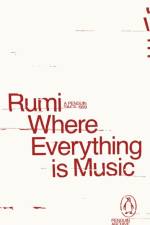
Rumi's verses have been a balm for readers' souls for over eight centuries. This exquisite selection brings together some of the Persian mystic's most profound, evocative and transcendent works. Exploring passion, heartbreak, friendship, faith and the myriad ways in which we move through the world, these strikingly modern poems are perfect for those looking for inspiration, guidance, or endless delight.
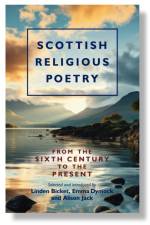
"A comprehensive selection of religious poetry that Scotland has produced over the centuries, including some Gaelic voices and reflecting the mixed religious profile of Scotland today. An earlier edition published in 2000 was a huge success, selling out very quickly. This eagerly awaited follow-up offers the very best from a diverse, often turbulent history and reveals an attractive and distinctive spirituality that is unique to Scotland. The poetry spans 15 centuries and includes poets from every corner of Scotland. It reflects the rich range of language across regions and centuries and is a unique collection of the deepest religious thought of a nation. Selected and introduced by three experts in the field, this offers an attractive and informed volume that will appeal to all lovers of Scottish literature."--
Abonner på vårt nyhetsbrev og få rabatter og inspirasjon til din neste leseopplevelse.
Ved å abonnere godtar du vår personvernerklæring.