

Gjør som tusenvis av andre bokelskere
Abonner på vårt nyhetsbrev og få rabatter og inspirasjon til din neste leseopplevelse.
Ved å abonnere godtar du vår personvernerklæring.Du kan når som helst melde deg av våre nyhetsbrev.

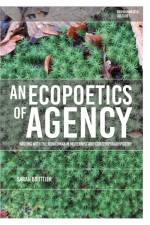
Focusing on a category of poems from the Modernist and contemporary periods which give agency to nonhuman beings and texts themselves, this book puts form, often neglected within ecocriticism, at the center of its definition of ecopoetics. Grounding ecopoetics in posthumanist ontologies (new materialism, flat ontology and Latour's work on agency), this book explores the way in which the poems collapse the human/nonhuman divide and re-instil wonder at the natural world. By juxtaposing readings of Modernist poets such as D. H. Lawrence, Wallace Stevens and Marianne Moore with contemporary poets such as Les Murray, Pattiann Rogers, Alice Oswald and Kathleen Jamie, the book provides fresh insight into well-known works and offers a new perspective on contemporary ecopoetry.
The Pearlsong is an ancient poem that recounts the story of a Parthian prince sent on a mission to Egypt to retrieve a pearl from the clutches of a giant serpent. Along the way, he falls asleep, forgetting his identity. This edition includes the original Syriac text, a Greek translation, a Greek homily version, and English translation.
The thirteenth-century Art of Making Verses, which departs from established critical texts on poetry and seeks to teach the art of verse in an entirely new way, was composed by the English poet and teacher Gervase of Melkley. This edition presents an improved Latin edition based on the manuscripts and a new English translation.
The Dantesque political allegory The Labyrinth of Fortune, composed in 1444 by Juan de Mena, reflects on Juan II of Castile's contentious kingship and frames the Reconquest of Moorish territories as a sacred task. This is the first English translation of a Spanish masterpiece that influenced Miguel Cervantes and Luis de Góngora.
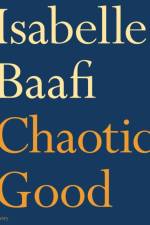
A piercing debut about how we are made, how we get lost and how we find new selves. Framed by the story of escape from a toxic marriage, Chaotic Good focuses on the incremental ways in which power accumulates, shifts and is relinquished within both home and community. Incisive, rigorous and artful, Isabelle Baafi reminds us of the importance of self-determination, and how, when we feel most eroded, we might discover what we need deep within ourselves: 'This time and every time, I was the code I needed to find my way back.''With sure formal dexterity and an exciting precision of lyrical imagining, Baafi explores the complicated pathways of suspicion and uncertainty, and - most vitally - the simultaneous possibilities of threat and beauty, mistrust and hope, darkness and joy. The knowing narrative detail is charged as strongly with ideas as with feeling, resulting in a highly original fusion of resistance and compassionate determination.' Jane Draycott'In this wise-hearted and deft debut, Baafi gets to the grain of family, inheritance, the grit of growing up and the grappling to become oneself.' Rachel Long'Isabelle Baafi's Chaotic Good is a debut of amazing endurance. Its formal pressures create a kind of kaleidoscopic intensity that - with each turn of the chamber - brings newly beautiful and painful shapes into focus.' Will Harris'Chaotic Good offers beautiful, urgent poems to remake our breaking world. From the playground all the way to the marriage bed, these redemption songs return to heal and emancipate.' alice hiller
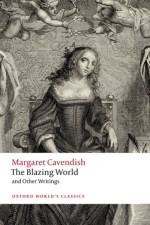
One of the most diverse and maverick intellectuals of the early modern period, Margaret Cavendish is known for critiquing a wide range of early modern cultural and philosophical beliefs. In this edition Lisa Walters brings together popular works such as The Blazing World, alongside lesser-known poems and prose pieces, like The Ambitious Traitor.
"Provides college instructors with discussion of original sources and biographical and critical works on C. P. Cavafy, as well as approaches for teaching his works in the context of queer studies, classical historiography, postcoloniality, music, archival research, and the minority status of Greeks in British-controlled Egypt"--
"Provides college instructors with discussion of original sources and biographical and critical works on C. P. Cavafy, as well as approaches for teaching his works in the context of queer studies, classical historiography, postcoloniality, music, archival research, and the minority status of Greeks in British-controlled Egypt"--
"This book explores how early modern writers used poetry to fight food insecurity. Authors like Robert Herrick and Anne Bradstreet witnessed the privatization of public farmland, rising food prices amidst uncontrolled inflation, mass starvation in nascent North American colonies, and the racist violence of the Caribbean plantation slavery system. Anders M. Greene-Crow shows how these authors' experiments with literary form sought to change their readers' eating habits and beliefs about food and diet. Simultaneously, this book reveals why criticism began to discount literature's power as a tool for social change, connecting the political history of New Criticism to close reading practices that reinforce the scarcity culture of literature departments today. Taking writers' material conditions into account in analyzing form, this book recovers the role of one of our most basic needs-the need to eat-within literary criticism, shedding new light on modern-day food ethics and activism's place in literature"--
Peripheries: A Journal of Word, Image, and Sound is a literary and arts journal based at Harvard Divinity School. It includes poetry, fiction, creative non-fiction, visual art that is, broadly understood, "peripheral" exploring the interstices between discourses, traditions, languages, forms, and genres.
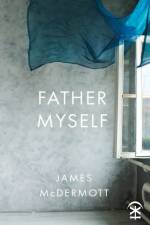
In 2022, James McDermott lost his sixty-year-old father to COVID after three weeks in intensive care. In his second collection from Nine Arches Press, McDermott explores his father's complex illness and death; the pandemic; grief; growth and how as a queer boy then a bereaved son, he had to learn to father himself.
Abonner på vårt nyhetsbrev og få rabatter og inspirasjon til din neste leseopplevelse.
Ved å abonnere godtar du vår personvernerklæring.