
Gjør som tusenvis av andre bokelskere
Abonner på vårt nyhetsbrev og få rabatter og inspirasjon til din neste leseopplevelse.
Ved å abonnere godtar du vår personvernerklæring.Du kan når som helst melde deg av våre nyhetsbrev.

"This is life, and you don't have to get it right all the time."Beeha, in her collection of poems, paints life together with the greys and blues to the sunny yellows, the yearning bubbles to the sober realities, from the nostalgia of cherished memories to creating new ones. 'Life through her eyes' delves into the dynamics of relationships - friends, family, lovers, and even one with self. Exploring the intricacies of perfectly imperfect connections, the poems sing a melody of wishes and sorrows, hope and heartbreaks, bringing a blanket of comfort to everyone.For people you adore and for people you miss, for you.With love.
Gathering essays from an international team of emerging and established scholars, Translating Petrarch in early modern Britain explores the many ways in which Petrarch's famous poetic works, the Canzoniere and Triumphi, were translated, adapted, reshaped and transformed by English and Scottish writers across the early modern period. For English-language poets, translating Petrarch's verse meant joining a prestigious transnational literary movement. While Wyatt and Surrey's translations famously launched the English sonnet, versions of Petrarch remained a crucial component of Britain's literary tradition throughout the period, featuring in lyric sequences, poetic miscellanies, and even songbooks. Through their literary and commercial success, these productions also contributed to shaping early modern Britain's cultures of manuscript and print. This collection examines the specific role of translation, in all its early modern variety, as a key mode of poetic, imaginative, and cultural engagement with one the most revered and imitated authors in early modern Europe. It revisits well-known works such as Tottel's Miscellany, the productions of the 'Castalian band' at the Scottish court of James IV/I, and versions of the Triumphi by Elizabeth I, Mary Sidney Herbert, and Anna Hume. It also pays attention to lesser-known pieces by anonymous, or 'minor' translators, poets considered marginal to English Petrarchism, and alternative modes of translation such as indirect translation and musical transposition. By examining the interconnected trajectories of both the Canzoniere and Triumphi in English translation, this collection sheds new light on early modern translation practices, British Petrarchism, and its place in the European literary landscape.
This book is concerned with the complexities of defining 'place', of observing and 'seeing' place, and how we might write a poetics of place. From Kathy Acker to indigenous Australian poet Jack Davis, the book touches on other writers and theorists, but in essence is a hands-on 'praxis' book of poetic practice. The work extends John Kinsella's theory of 'international regionalism' and posits new ways of reading the relationship between place and individual, between individual and the natural environment, and how place occupies the person as much as the person occupies place. It provides alternative readings of writers through place and space, especially Australian writers, but also non-Australian. Further, close consideration is given to being of 'famine-migrant' Irish heritage and the complexities of 'returning'. A close-up examination of 'belonging' and exclusion is made on a day-to-day basis. The book offers an approach to creating poems and literary texts constituted by experiencing multiple places, developing a model of polyvalent belonging known as 'polysituatedness'. It works as a companion volume to Kinsella's earlier Manchester University Press critical work, Disclosed Poetics: Beyond Landscape to Lyricism.
How was Abraham Sutzkever, the most famous Yiddish poet to survive the ghettos of Europe, inspired by an invitation to speak in South Africa at a moment when Yiddish literature was saturated with memory and mourning? 'Elephants by Night' offers a timeless meditation on the intersection of place, memory, and renewal.
The natural world is the theme for the poems in this collection. Here, I Can Breathe includes poems about the countryside, the sea, the changing seasons and that good old British favourite, the weather.Many of the poems were inspired by walks in the countryside, for example, along the lanes of Devon and the South West Coast Path or amongst the Lake District fells. Some are narrative poems, some are descriptions of particular rural places, and others more generally describe the countryside observed, or the feelings engendered, whilst being out in the open air.
Embark on a beautiful yet an emotional journey with Matthew Paul in his soulful collection of poetry. Explore the essence of waiting - the hope one grips onto and the risk that comes along.From the exploitation of demons in love, to the moments of deception, Shadows captures the soul of romance with grace and depth.Continue reading this interesting piece of work to see the world with new eyes.
Poetry of Your Dreams is an evocative collection that guides readers through life's trials, joys, and dreams. Each poem is a reflection on universal human experiences-struggles, triumphs, empathy, and hope-told with lyrical depth and vivid imagery. From the peaks of self-discovery in 'The Mountain Top' to the wisdom shared in 'The Tale of the Wise', these verses inspire reflection and growth. Gabriel Pare invites readers to explore the richness of emotions and life lessons, reminding us that in every moment of hardship or happiness, there is a deeper meaning waiting to be uncovered. Whether it's the search for purpose or the strength to move forward, this collection beautifully captures the essence of what it means to dream, live and overcome.
This first collection from a Caribbean-born writer examines how violence shapes four generations of women and how each generation resists the dysfunction, tyranny, and terror inherited from the previous one.
McAlpine's first Carcanet collection explores themes of marriage, motherhood, and family life, distilling everyday occurrences into moments of self-discovery.
This new Jamaican Dante is as much a transformation as it is translation, by one of the most celebrated Caribbean writers of our time and former Poet Laureate of Jamaica.
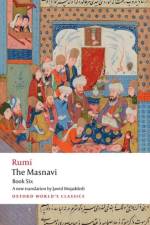
This is the first ever verse translation into English of the entirety of Book Six of Rumi's Masnavi. Book Six is the longest of the books, focusing on self-annihilation in God and the oneness experienced at the end of the Sufi path by the realized mystic.
Self-Literacy: Writing Out Personhood offers fifty perspectives on gaining an understanding of what 'personhood' may mean through various disciplines.
Abonner på vårt nyhetsbrev og få rabatter og inspirasjon til din neste leseopplevelse.
Ved å abonnere godtar du vår personvernerklæring.