
















Gjør som tusenvis av andre bokelskere
Abonner på vårt nyhetsbrev og få rabatter og inspirasjon til din neste leseopplevelse.
Ved å abonnere godtar du vår personvernerklæring.Du kan når som helst melde deg av våre nyhetsbrev.

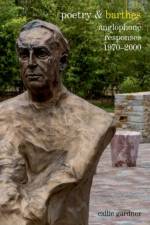
The influence of Roland Barthes on contemporary culture has been the subject of much analysis, but never before has this influence been closely examined in relation to poetry. This innovative study traces Anglophone poetry's response to the literary and cultural theory of Barthes - from debate to adoption, adaptation and rejection.
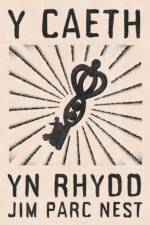
Rhyddhau'r gair, rhyddhau'r person a rhyddhau'r genedl. Dyma nod y Prifardd Jim Parc Nest wrth gyhoeddi'r gyfrol arbennig hon. Dyma fardd sy'n angerddol dros "ryddhau'r gynghanedd rhag bod yn grefft ei 'gorffennol yn unig'" a dymuna i'r gyfrol fod yn ysgogiad i lawer arbrofi gyda'r gynghanedd. Teimlwn y cyffro a'r arbrofi hwn yn ei gerddi wrth... -- Books Council of Wales
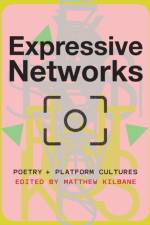
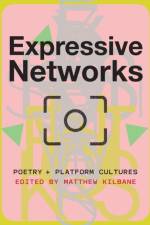
Expressive Networks convenes an urgent conversation on digital media and the social life of contemporary poetry. Tracing how poems circulate through online spaces and how capitalized platforms have come to pattern the reading and writing of poetry, contributors emphasize both the expressivist cast of digital literary culture and the deep-running ambivalence that characterizes aesthetic and critical responses to platformed cultural production. The volume features chapters on Pan- African spoken word programs, Singaporean Facebook groups, decolonial hemispheric networks, and Japanese media-critical poetries as well as platforms such as Twitter/X, Instagram, and Amazon. Though contributors write from a variety of methodological positions and address themselves to a range of archives, they share the primary conviction that the impact of Web 2.0 on literary practice is far-reaching, far from self-evident, and far more variegated and unpredictable than easy summations of social media's influence suggest. Expressive Networks asks after poetry's present and future by examining what poems themselves express about the social make-up of networked platforms. Edited by Matthew Kilbane with contributions from Cameron Awkward-Rich, Micah Bateman, Andrew Campana, Sumita Chakraborty, Scott Challener, C.R. Grimmer, Tess McNulty, Michael Nardone, Seth Perlow, Anna Preus, Susanna Sacks, Carly Schnitzler, Melanie Walsh, and Samuel Caleb Wee.
Expressive Networks convenes an urgent conversation on digital media and the social life of contemporary poetry. Tracing how poems circulate through online spaces and how capitalized platforms have come to pattern the reading and writing of poetry, contributors emphasize both the expressivist cast of digital literary culture and the deep-running ambivalence that characterizes aesthetic and critical responses to platformed cultural production. The volume features chapters on Pan- African spoken word programs, Singaporean Facebook groups, decolonial hemispheric networks, and Japanese media-critical poetries as well as platforms such as Twitter/X, Instagram, and Amazon. Though contributors write from a variety of methodological positions and address themselves to a range of archives, they share the primary conviction that the impact of Web 2.0 on literary practice is far-reaching, far from self-evident, and far more variegated and unpredictable than easy summations of social media's influence suggest. Expressive Networks asks after poetry's present and future by examining what poems themselves express about the social make-up of networked platforms. Edited by Matthew Kilbane with contributions from Cameron Awkward-Rich, Micah Bateman, Andrew Campana, Sumita Chakraborty, Scott Challener, C.R. Grimmer, Tess McNulty, Michael Nardone, Seth Perlow, Anna Preus, Susanna Sacks, Carly Schnitzler, Melanie Walsh, and Samuel Caleb Wee.
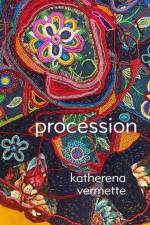
you are only here to learn from those who came beforeand make space for those who come afterProcession: a line of people moving in the same direction; a formal ceremony or celebration, as in a wedding, a funeral, a religious parade. Bestseller and Governor General's Award-winner Katherena Vermette's third collection presents a series of poems reaching into what it means to be at once a descendant and a future ancestor, exploring the connections we have with one another and ourselves, amongst friends, and within families and Nations.In frank, heartfelt poems that move through body sovereignty and ancestral dreams, and from '80s childhood nostalgia to welcoming one's own babies, Vermette unreels the story of a child, a parent, and soon, an elder, living in a prairie place that has always existed, though looks much different to her now. This book is about being one small part of a large genealogy. A lineage is a line, and the procession, whether in celebration or in mourning, is ongoing. Procession delves into what it means to make poems and to be an artist, to be born into a body, to carry it all, and, if you're very lucky, age.be a good ancestor be a good kid
Abonner på vårt nyhetsbrev og få rabatter og inspirasjon til din neste leseopplevelse.
Ved å abonnere godtar du vår personvernerklæring.