Gjør som tusenvis av andre bokelskere
Abonner på vårt nyhetsbrev og få rabatter og inspirasjon til din neste leseopplevelse.
Ved å abonnere godtar du vår personvernerklæring.Du kan når som helst melde deg av våre nyhetsbrev.

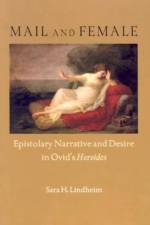
Using feminist and psychoanalytic approaches to examine the ""female voice"" in the ""Heroides"", Sara H. Lindheim closely reads these fictive letters. She points out that in Ovid's verse epistles all the women represent themselves in a strikingly similar and disjointed fashion.
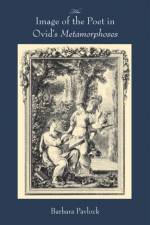
Reveals major figures in Ovid's ""Metamorphoses"", highlighting the conflicted revisionist nature of the ""Metamorphoses"". This title explores issues central to Ovid's poetics - the status of the image, the generation of plots, repetition, opposition between refined and inflated epic style, and the interrelation of rhetoric and poetry.
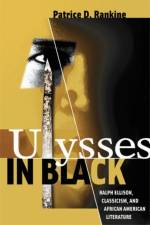
Demonstrates that, similar to their white counterparts, African American authors - including Ralph Ellison, Toni Morrison and Countee Cullen - have been students of classical languages, literature, and mythologies by such writers as Homer, Euripides, and Seneca. This study of black classicism becomes an exploration of America's cultural integrity.
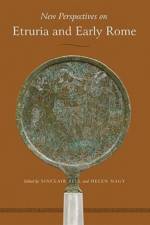
Shedding light on the evidence of well-known and recently excavated sites and the objects they have yielded - their iconography, manufacturing techniques, and afterlives - this collection follows the first archaeological traces of the rise of ancient Italy to its rediscovery in the Renaissance and its reinvention in contemporary fiction.
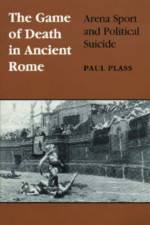
Offering a reminder of the complex uses to which institutionalized violence can be put, this study shows how the deadly violence of arena sport and political suicide served a social purpose in ancient Rome.
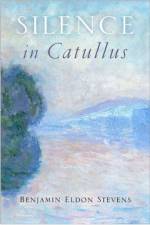
Both passionate and artful, learned and bawdy, Catullus is one of the best-known and critically significant poets from classical antiquity. An intriguing aspect of his poetry that has been neglected by scholars is his interest in silence, from the pauses that shape everyday conversation to linguistic taboos and cultural suppressions and the absolute silence of death. In Silence in Catullus, Benjamin Eldon Stevens offers fresh readings of this Roman poet's most important works, focusing on his purposeful evocations of silence. This deep and varied "poetics of silence" takes on many forms in Catullus's poetic corpus: underscoring the lyricism of his poetry; highlighting themes of desire, immortality-in-culture, and decay; accenting its structures and rhythms; and, Stevens suggests, even articulating underlying philosophies. Combining classical philological methods, contemporary approaches to silence in modern literature, and the most recent Catullan scholarship, this imaginative examination of Catullus offers a new interpretation of one of the ancient world's most influential and inimitable voices.
Abonner på vårt nyhetsbrev og få rabatter og inspirasjon til din neste leseopplevelse.
Ved å abonnere godtar du vår personvernerklæring.