Gjør som tusenvis av andre bokelskere
Abonner på vårt nyhetsbrev og få rabatter og inspirasjon til din neste leseopplevelse.
Ved å abonnere godtar du vår personvernerklæring.Du kan når som helst melde deg av våre nyhetsbrev.

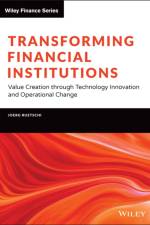
Transform your financial organisation's formula for value creation with this insightful and strategic approachIn Transforming Financial Institutions through Technology Innovation and Operational Change, visionary turnaround leader Joerg Ruetschi delivers a practical and globally relevant methodology and framework for value creation at financial institutions. The author demonstrates how financial organisations can combine finance strategy with asset-liability and technology management to differentiate their services and gain competitive advantage in a ferocious industry.In addition to exploring the four critical areas of strategic and competitive transformation -- financial analysis, valuation, modeling, and stress -- the book includes:* Explanations of how to apply the managerial fundamentals discussed in the book in the real world, with descriptions of the principles for reorganization, wind-down and overall value creation* An analysis of the four key emerging technologies in the financial industry: AI, blockchain, software, and infrastructure solutions, and their transformational impact* Real-world case studies and examples on how financial institutions can be repositioned and rebuilt on a path of profitabilityPerfect for managers and decision makers in the financial services industry, Transforming Financial Institutions through Technology Innovation and Operational Change is also required reading for regulators, tech firms, and private equity and venture capital funds.
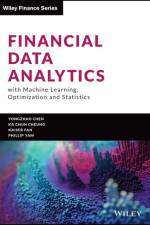
An essential introduction to data analytics and Machine Learning techniques in the business sectorIn Financial Data Analytics with Machine Learning, Optimization and Statistics, a team consisting of a distinguished applied mathematician and statistician, experienced actuarial professionals and working data analysts delivers an expertly balanced combination of traditional financial statistics, effective machine learning tools, and mathematics. The book focuses on contemporary techniques used for data analytics in the financial sector and the insurance industry with an emphasis on mathematical understanding and statistical principles and connects them with common and practical financial problems. Each chapter is equipped with derivations and proofs--especially of key results--and includes several realistic examples which stem from common financial contexts. The computer algorithms in the book are implemented using Python and R, two of the most widely used programming languages for applied science and in academia and industry, so that readers can implement the relevant models and use the programs themselves.The book begins with a brief introduction to basic sampling theory and the fundamentals of simulation techniques, followed by a comparison between R and Python. It then discusses statistical diagnosis for financial security data and introduces some common tools in financial forensics such as Benford's Law, Zipf's Law, and anomaly detection. The statistical estimation and Expectation-Maximization (EM) & Majorization-Minimization (MM) algorithms are also covered. The book next focuses on univariate and multivariate dynamic volatility and correlation forecasting, and emphasis is placed on the celebrated Kelly's formula, followed by a brief introduction to quantitative risk management and dependence modelling for extremal events. A practical topic on numerical finance for traditional option pricing and Greek computations immediately follows as well as other important topics in financial data-driven aspects, such as Principal Component Analysis (PCA) and recommender systems with their applications, as well as advanced regression learners such as kernel regression and logistic regression, with discussions on model assessment methods such as simple Receiver Operating Characteristic (ROC) curves and Area Under Curve (AUC) for typical classification problems.The book then moves on to other commonly used machine learning tools like linear classifiers such as perceptrons and their generalization, the multilayered counterpart (MLP), Support Vector Machines (SVM), as well as Classification and Regression Trees (CART) and Random Forests. Subsequent chapters focus on linear Bayesian learning, including well-received credibility theory in actuarial science and functional kernel regression, and non-linear Bayesian learning, such as the Naïve Bayes classifier and the Comonotone-Independence Bayesian Classifier (CIBer) recently independently developed by the authors and used successfully in InsurTech.After an in-depth discussion on cluster analyses such as K-means clustering and its inversion, the K-nearest neighbor (KNN) method, the book concludes by introducing some useful deep neural networks for FinTech, like the potential use of the Long-Short Term Memory model (LSTM) for stock price prediction.This book can help readers become well-equipped with the following skills:* To evaluate financial and insurance data quality, and use the distilled knowledge obtained from the data after applying data analytic tools to make timely financial decisions* To apply effective data dimension reduction tools to enhance supervised learning* To describe and select suitable data analytic tools as introduced above for a given dataset depending upon classification or regression prediction purposeThe book covers the competencies tested by several professional examinations, such as the Predictive Analytics Exam offered by the Society of Actuaries, and the Institute and Faculty of Actuaries' Actuarial Statistics Exam.Besides being an indispensable resource for senior undergraduate and graduate students taking courses in financial engineering, statistics, quantitative finance, risk management, actuarial science, data science, and mathematics for AI, Financial Data Analytics with Machine Learning, Optimization and Statistics also belongs in the libraries of aspiring and practicing quantitative analysts working in commercial and investment banking.
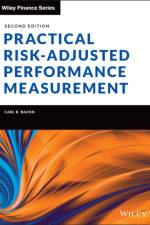
A practitioner's guide to ex-post performance measurement techniques Risk within asset management firms has an undeserved reputation for being an overly complex, mathematical subject. This book simplifies the subject and demonstrates with practical examples that risk is perfectly straightforward and not as complicated as it might seem.
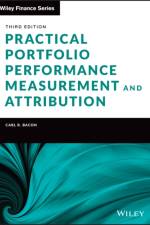
An introduction to the subject of performance measurement aimed at performance analysts, portfolio managers and senior management within asset management firms and pension fund trustees.
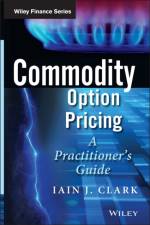
Covers commodity option pricing for quantitative analysts, traders or structures in banks, hedge funds and commodity trading companies. Based on the author's industry experience with commodity derivatives, this book provides a thorough and mathematical introduction to the various market conventions and models used in commodity option pricing.
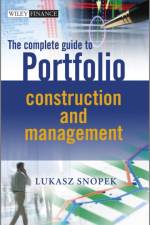
In the wake of the recent financial crisis, many will agree that it is time for a fresh approach to portfolio management. The Complete Guide to Portfolio Construction and Management provides practical investment advice for building a robust, diversified portfolio.
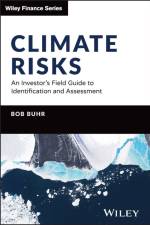
Assess the likelihood, timing and scope of climate risksIn Climate Risks: An Investor's Field Guide to Identification and Assessment, financial analyst Bob Buhr delivers a risk-based framework for classifying and measuring potential climate risks at the firm level, and their potential financial impacts. The author presents a "climate risk taxonomy" that encompasses a broad range of physical, transition and natural capital risks that may impact a firm's financial profile.The taxonomy presented in the book will be of interest to investors and lenders involved in:* The identification and assessment of the potential scope and impact of a wide range of risks that might normally remain outside of more traditional risk or credit analysis, usually for horizon issues;* The determination of the points at which climate risks may crystallize into real and significant financial exposure* The assessment of the relative aggregate riskiness of portfolios exposed to climate and natural capital risks at the firm levelA rigorous and practical toolkit for the assessment and measurement of a broad range of potential climate risks, this book offers fund managers, portfolio analysts, risk experts, and other finance professionals a clear blueprint for assessing potential financial impacts at firms arising from climate change.
Abonner på vårt nyhetsbrev og få rabatter og inspirasjon til din neste leseopplevelse.
Ved å abonnere godtar du vår personvernerklæring.