


















Gjør som tusenvis av andre bokelskere
Abonner på vårt nyhetsbrev og få rabatter og inspirasjon til din neste leseopplevelse.
Ved å abonnere godtar du vår personvernerklæring.Du kan når som helst melde deg av våre nyhetsbrev.

Mathematical finance requires the use of advanced mathematical techniques drawn from the theory of probability, stochastic processes and stochastic differential equations. These areas are generally introduced and developed at an abstract level, making it problematic when applying these techniques to practical issues in finance.
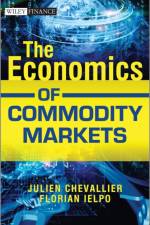
As commodity markets have continued their expansion an extensive and complex financial industry has developed to service them. This industry includes hundreds of participating firms, including asset managers, brokers, consultants, verification agencies and a myriad of other institutions.
Offers coverage of how hedge funds work, from risks to rewards. This work discusses - from an investor's perspective - the potential uses, risks, and returns in hedge funds, while offering both the qualitative and quantitative tools investors need to access these types of funds.
Provides econometric analysis of power markets around the world, gives an understanding of their particular characteristics, and assesses the applicability of various methods of price modelling. This book focuses on financial engineering, industrial economics and power systems analysis, as they relate to the behaviour of electricity markets.
Banks, clearing houses, corporations, companies, technology firms, consultants and academics are all talking about SEPA (the Single Euro Payments Area) and the PSD (Payment Services Directive) For Europe's banks complying to this regulation involves massive change.
The second book in Darbyshire and Hampton s Hedge Fund Modelling and Analysis series, Hedge Fund Modelling and Analysis Using MATLAB(R) takes advantage of the huge library of built-in functions and suite of financial and analytic packages available to MATLAB(R).
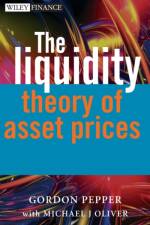
Professional investors are bombarded on a day to day basis with assertions about the role liquidity is playing and will play in determining prices in the financial markets.
A unique, international approach to optimal real estate financing Property Finance is an authoritative guide to both the financial and legal issues surrounding real estate financing.
Investment funds are the driving force behind much global private economic development, and yet the world of investment funds can be complex and confusing.
Introducing a revolutionary new quantitative approach to hybrid securities valuation and risk management To an equity trader they are shares. For the trader at the fixed income desk, they are bonds (after all, they pay coupons, so what's the problem?). They are hybrid securities.
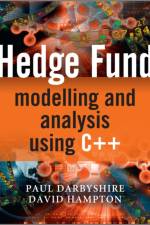
Use powerful C++ algorithms and Object Oriented Programming (OOP) to aid in hedge fund decision making Low interest rates, overcrowded markets and greater regulatory oversight are just some of the many reasons it is close to impossible for hedge funds to draw competitive returns.
Bonds without Borders tells the extraordinary story of how the market developed into the principal source of international finance for sovereign states, supranational agencies, financial institutions and companies around the world.
The world is upside down. The emerging market countries are more important than many investors realise. They have been catching up with the West over the past few decades.
Explores the agricultural marketplace and the cycles in agricultural commodity prices that can be the key to investor success. This book addresses a wide range topics including agricultural insurance, energy, shipping and bunker prices, sustainability, investments in land, subsidies, agricultural derivatives, and farming risk-management.
Practical guidance toward handling the latest changes to the OTC derivatives market Central Counterparties is a practical guide to central clearing and bilateral margin requirements, from one of the industry's most influential credit practitioners.
An overview of today's energy markets from a multi-commodity perspective As global warming takes center stage in the public and private sectors, new debates on the future of energy markets and electricity generation have emerged around the world.
The market approach aims to establish the value of a company based on how similar firms are priced on the stock exchange or through company transactions. Using the market approach, price-related indicators such as price to earnings, sales and book values are utilised.
Private equity is more economically significant than ever, as institutions hunt for high returns in a risky world. Private Equity 4. 0 examines the role, workings and contribution of this important industry in a straightforward yet revealing manner. Dr. Josh Lerner Jacob H.
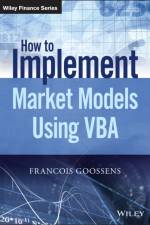
Accessible VBA coding for complex financial modelling How to Implement Market Models Using VBA makes solving complex valuation issues accessible to any financial professional with a taste for mathematics.
The derivative practitioner s expert guide to IFRS 9 application Accounting for Derivatives explains the likely accounting implications of a proposed transaction on derivatives strategy, in alignment with the IFRS 9 standards.
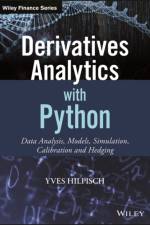
Supercharge options analytics and hedging using the power of Python Derivatives Analytics with Python shows you how to implement market-consistent valuation and hedging approaches using advanced financial models, efficient numerical techniques, and the powerful capabilities of the Python programming language.
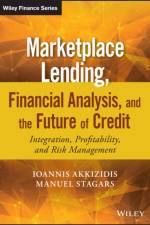
The time for financial technology innovation is now Marketplace Lending, Financial Analysis, and the Future of Credit clearly explains why financial credit institutions need to further innovate within the financial technology arena. Through this text, you access a framework for applying innovative strategies in credit services.
Manufacturing and Managing Customer-Driven Derivatives Manufacturing and Managing Customer-Driven Derivatives sheds light on customer-driven derivative products and their manufacturing process, which can prove a complicated topic for even experienced financial practitioners.
The business guide to Big Data in insurance, with practical application insight Big Data and Analytics for Insurers is the industry-specific guide to creating operational effectiveness, managing risk, improving financials, and retaining customers.
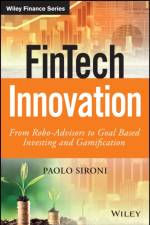
A survival guide for the FinTech era of banking FinTech Innovation examines the rise of financial technology and its growing impact on the global banking industry. Wealth managers are standing at the epicenter of a tectonic shift, as the balance of power between offering and demand undergoes a dramatic upheaval.
The comprehensive, broadly-applicable, real-world guide to financial modelling Financial Modelling in Practice, Second Edition covers the full spectrum of financial modelling tools and techniques to provide practical skills grounded in real-world scenarios.
Cut risk and generate profit even after the market drops The Second Leg Down offers practical approaches to profiting after a market event. Written by a specialist in global macro, volatility and hedging overlay strategies, this book provides in-depth insight into surviving in a volatile environment.
Delve into ETFs for smarter investing and a weatherproof portfolio Beyond Smart Beta is the investor's complete guide to index investing, with deep analysis, expert clarification and smart strategies for active portfolio management.
Discover the future of the financial services industry with this insightful new resource on Contextual and Conscious BankingIn Banks and Fintech on Platform Economies: Contextual and Conscious Banking, accomplished fintech professional and author Paolo Sironi delivers an insightful examination of how platform theory, born outside of financial services, will make its way inside banking and financial markets to radically transform the way firms do business.You'll learn why the financial services industry must master the necessary shift of focus from selling business outputs to selling client outcomes. You'll also discover how to steer the industry towards new forms of digital transformation underpinned by Contextual Banking and Conscious Banking platform strategies that will benefit stakeholders of all kinds.This important book:* Describes the shift in mindset necessary to help banks strengthen and extend the reach of their Banking-as-a-Service and Banking-as-a-Platform operations.* Shows how a renewed interpretation of fundamental uncertainty inspires the usage of exponential technologies to achieve architectural resilience, and open the reference theory to spring new business models centered on clients' and ecosystems' antifragility.* Financial services industry can break-out from a narrow space of value-generation to reclaim top spot against bigtech contenders, enjoying greater flexibility and adaptability at lower digital costsPerfect for CEOs, business leaders, regulators, fintech entrepreneurs, wealth managers, behavioral finance researchers and professionals working at financial technology companies, Banks and Fintech on Platform Economieswill also earn a place in the libraries of bankers seeking a firm grasp of the rapidly evolving outcome economy and a view about the future of the industry.
State-of-the-art algorithmic deep learning and tensoring techniques for financial institutionsThe computational demand of risk calculations in financial institutions has ballooned and shows no sign of stopping. It is no longer viable to simply add more computing power to deal with this increased demand. The solution? Algorithmic solutions based on deep learning and Chebyshev tensors represent a practical way to reduce costs while simultaneously increasing risk calculation capabilities. Machine Learning for Risk Calculations: A Practitioner's View provides an in-depth review of a number of algorithmic solutions and demonstrates how they can be used to overcome the massive computational burden of risk calculations in financial institutions.This book will get you started by reviewing fundamental techniques, including deep learning and Chebyshev tensors. You'll then discover algorithmic tools that, in combination with the fundamentals, deliver actual solutions to the real problems financial institutions encounter on a regular basis. Numerical tests and examples demonstrate how these solutions can be applied to practical problems, including XVA and Counterparty Credit Risk, IMM capital, PFE, VaR, FRTB, Dynamic Initial Margin, pricing function calibration, volatility surface parametrisation, portfolio optimisation and others. Finally, you'll uncover the benefits these techniques provide, the practicalities of implementing them, and the software which can be used.* Review the fundamentals of deep learning and Chebyshev tensors* Discover pioneering algorithmic techniques that can create new opportunities in complex risk calculation* Learn how to apply the solutions to a wide range of real-life risk calculations.* Download sample code used in the book, so you can follow along and experiment with your own calculations* Realize improved risk management whilst overcoming the burden of limited computational powerQuants, IT professionals, and financial risk managers will benefit from this practitioner-oriented approach to state-of-the-art risk calculation.
Abonner på vårt nyhetsbrev og få rabatter og inspirasjon til din neste leseopplevelse.
Ved å abonnere godtar du vår personvernerklæring.