











Gjør som tusenvis av andre bokelskere
Abonner på vårt nyhetsbrev og få rabatter og inspirasjon til din neste leseopplevelse.
Ved å abonnere godtar du vår personvernerklæring.Du kan når som helst melde deg av våre nyhetsbrev.

The Oxford Handbook of Opera offers a series of trenchant, cutting-edge, and previously unpublished essays on the most important and compelling issues confronting those who think and write about opera. The handbook emphasizes not only operas themselves, but such broad concerns of the discipline as genre, voice, national style, performance, censorship, staging, film, editions, and aesthetics.
The Oxford Handbook of Film Theory narrows in on the subject of film, not with a nostalgic sensibility, but with the recognition that what constitutes a film is historically contingent and in dialogue with the vicissitudes of entertainment, art, and empire. Essays topics include (but are not limited to) audiovisuality, silent cinema, psychoanalytic film theory, affect theory, critical race theory, and the male gaze.
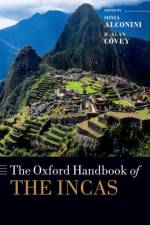
The Oxford Handbook of the Incas aims to be the first comprehensive book on the Inca, the largest empire in the pre-Columbian world. Using archaeology, ethnohistory and art history, the central goal of this handbook is to bring together recent research conducted by experts from different fields that study the Inca empire, from its origins and expansion to its demise and continuing influence in contemporary times.
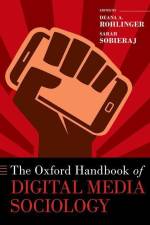
The Oxford Handbook of Digital Media Sociology is an indispensable resource for students and scholars interested in understanding how new information and communications technologies shape social life. Chapters written by experts from around the world explore the role digital media play in numerous contexts including the intimate and personal elements of social life, such as our identities and closest relationships, as well as in larger social phenomena, such as racial inequality, labor markets, education, and war. This handbook is ideal for classroom use and library acquisition, as each stand-alone chapter--whether on dating apps or disinformation--offers accessible and succinct overviews of what research has shown thus far and what questions remain unanswered.
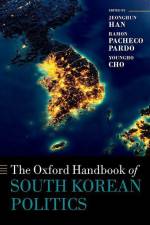
This Handbook presents and analyses contemporary South Korean politics, bringing together domestic political, economic, social cultural, and demographic developments and putting them in the context of trends in fellow developed countries.
In The Oxford Handbook of Expertise and Democratic Politics, Gil Eyal and Thomas Medvetz have brought together a broad group of scholars who have engaged substantively and theoretically with debates regarding the nature of expertise and the social roles of experts to examines these areas within sociology and allied disciplines. The analyses take an historical and relational approach to the topic and are motivated by the sense that growing mistrust in experts represents a danger to democratic politics today. Bringing together investigations from social scientists, philosophers, and legal scholars into the political dimensions of expertise, this Handbook connects interdisciplinary work done in science and technology studies with the more classic concerns, topics, and concepts of sociologists of professions and intellectuals.
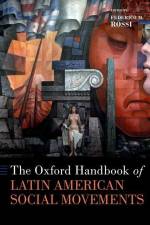
In The Oxford Handbook of Latin American Social Movements, Federico M. Rossi presents a survey of the broad range of theoretical perspectives on social movements in Latin America. Bringing together a wide variety of viewpoints, the Handbook includes five sections: theoretical approaches to social movements, as applied to Latin America; processes and dynamics of social movements; major social movements in the region; ideational and strategic dimensions of social movements; and the relationship between political institutions and social movements. Covering key social movements and social dynamics in Latin America from the late nineteenth century to the twenty-first century, The Oxford Handbook of Latin American Social Movements is an indispensable reference for any scholar interested in social movements, protest, contentious politics, and Latin American studies.
The Oxford Handbook of the Synoptic Gospels presents essays that push the field beyond the Synoptic Problem and theological themes that ignore the particularities of each Gospel. The first section explores some of the traditional approaches of literary dependence and engages with alternative ways to understand Synoptic relations, while the second section treats a variety of historical, literary, and cultural phenomena important to the study of these Gospels.
Until recently, Baruch Spinoza's standing in Anglophone studies of philosophy has only seemed to confirm Heinrich Jacobi's assessment of him as "a dead dog." However, an exuberant outburst of scholarship on Spinoza has of late come to dominate work on early modern philosophy. While the 26 essays in this volume--by many of the world's leading Spinoza specialists--grapple directly with Spinoza's most important arguments, these essays also seek to identify and explain Spinoza's debts to previous philosophy, his influence on later philosophers, and his significance for contemporary philosophy and for humanity.
The Oxford Handbook of Roman Philosophy provides a thorough exploration of Roman philosophy as a valuable study in its own right. Topics covered include ethnicity, cultural identity, literary originality, the environment, Roman philosophical figures, epistemology, and ethics.
The Oxford Handbook of the Archaeology of Indigenous Australia and New Guinea reviews and brings together the latest findings on the archaeology of the Australia-New Guinea region. In 42 new chapters commissioned for this book, 77 leading researchers present the archaeological evidence for Australia and New Guinea's deep-time history. The stories told reveal the astounding richness of Australia and New Guinea's Indigenous cultural history, stories of tens of thousands of years of Aboriginal, Torres Strait Islander, and New Guinean adaptation, cultural know-how, and creative ingenuity.
This handbook shows the unexpected richness and diversity of key phenomenological and post-phenomenological thinkers in an aim to help management and organization scholars to understand a huge variety of contemporary phenomena such as AI, digitalization of organizational processes, remote work, financial markets, and much more.
The Oxford Handbook of Jane Addams is a selective collection of original analyses offered by an international group of social and political theorists who have contributed to the burgeoning field of Addams Studies. This collection pays particular attention to her contributions to scholarly fields of sociology and philosophy as well as to more professional disciplines of public administration and social work. Furthermore, this volume signifies Addams's global impact as scholars from all over the world contribute to the tapestry of her intellectual legacy.
The Oxford Handbook of Freedom presents the first wide-ranging analysis of freedom in all its dimensions: legal, cultural, religious, economic, political, and psychological. It includes 28 new essays by well-regarded philosophers, historians, and political theorists.
This Handbook provides a comprehensive study of ordoliberalism from the intellectual origins and prime exemplars to its main theoretical themes and practical applications up to the most recent debates taking place across a range of disciplines.
World War II dramatically transformed human life and society, resulting in the deaths of 100 million people and shaping the worldview and psyches of generations. The Oxford Handbook of World War II broadens traditional narratives of the war and in the process changes our understanding of this epic conflict. Spanning the rise and fall of the Versailles system to the postwar reintegration of veterans and the eventual commemoration of the conflict and its victims, The Oxford Handbook of World War II marks a landmark contribution to the historical literature of war.
The Oxford Handbook of the Latin Bible contains thirty-one chapters covering the history of the Latin Bible from its earliest translations (the Vetus Latina), the revisions leading to the Vulgate, the achievements and innovations of the Carolingian period and Middle Ages, the development of modern scholarship, and the twentieth-century innovation of the Nova Vulgata. It includes discussions of key figures and interpreters, the most important manuscripts, and the significance of the Latin Bible in multiple fields.
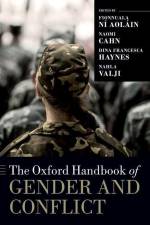
In The Oxford Handbook of Gender and Conflict, Fionnuala Ní Aoláin, Naomi Cahn, Dina Francesca Haynes, and Nahla Valji focus on the multidimensionality of gender in conflict, yet they also prioritize the experience of women given both the changing nature of war and the historical de-emphasis on women's experiences.
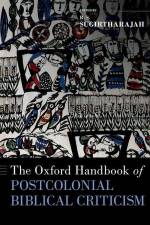
The Oxford Handbook of Postcolonial Biblical Criticism is a comprehensive treatment of a relatively new form of scholarship. Generally speaking, postcolonialism aims to critique and dismantle hegemonic worldviews and power structures, while giving voice to previously marginalized peoples and systems of thought. This approach has inevitably engaged with the text and reception of the Bible, a scripture that Western colonizers introduced to-and often imposed upon-their colonial subjects. With a globally diverse list of contributors, the Handbook aims to cover the perspective and context of the authors of the Bible, as well as the modern experiences of imperialism, resistance, decolonization, and nationalism.
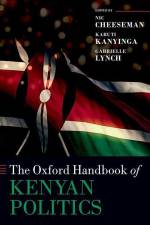
The Oxford Handbook of Kenyan Politics provides a comprehensive and comparative overview of the Kenyan political system as well as an insightful account of Kenyan history from 1930 to the present day.
The discipline of translation studies has gained increasing importance at the beginning of the 21st century as a result of rapid globalization and the development of computer-based translation methods. Today, changing political, economic, health, and environmental realities across the world are generating previously unknown inter-language communication challenges that can only be understood through a socially-oriented and data-driven approach. The Oxford Handbookof Translation and Social Practices draws on a wide array of case studies from all over the world to demonstrate the value of different forms of translation - written, oral, audiovisual - as social practices that are essential to achieve sustainability, accessibility, inclusion, multiculturalism, andmultilingualism.Edited by Meng Ji and Sara Laviosa, this timely collection illustrates the manifold interactions between translation studies and the social and natural sciences, enabling for the first time the exchange of research resources and methods between translation and other domains'' experts. Twenty-nine chapters by international scholars and professional translators apply translation studies methods to a wide range of fields, including healthcare, environmental policy, geological and cultural heritageconservation, education, tourism, comparative politics, conflict mediation, international law, commercial law, immigration, and indigenous rights. The articles engage with numerous languages, from European and Latin American contexts to Asian and Australian languages, giving unprecedented weight tothe translation of indigenous languages. The Handbook highlights how translation studies generate innovative solutions to long-standing and emerging social issues, thus reformulating the scope of this discipline as a socially-oriented, empirical, and ethical research field in the 21st century.
The two-volume Oxford Handbook of Music Performance provides a resource that musicians, scholars and educators will use as the most important and authoritative overview of work within the areas of music psychology and performance science. The 80 experts from 13 countries who prepared the 53 chapters in this handbook are leaders in the fields of music psychology, performance science, musicology, psychology, education and music education. Chapters in theHandbook provide a broad coverage of the area with considerable expansion of the topics that are normally covered in a resource of this type. Designed around eight distinct sections - Development and Learning, Proficiencies, Performance Practices, Psychology, Enhancements, Health & Wellbeing, Science, andInnovations - the range and scope of The Oxford Handbook of Music Performance is much wider than other publications through the inclusion of chapters from related disciplines such as performance science (e.g., optimizing performance, mental techniques, talent development in non-music areas), and education (e.g., human development, motivation, learning and teaching styles) as well as the attention given to emerging critical issues in the field (e.g., wellbeing, technology,gender, diversity, inclusion, identity, resilience and buoyancy, diseases, and physical and mental disabilities). Within each chapter, authors have selected what they consider to be the most important scientific and artistic material relevant to their topic. They begin their chapters by surveying theoretical views on eachtopic and then, in the final part of the chapter, highlight practical implications of the literature that performers will be able to apply within their daily musical lives.
The Oxford Handbook of the Cognitive Science of Religion is the most authoritative and comprehensive examination of the growing field of CSR. With contributions from the field's founders and its rising stars, this volume offers a critical overview of more than 25 years of research.
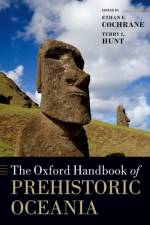
The Oxford Handbook of Prehistoric Oceania presents the archaeology, linguistics, environment and human biology of Melanesia, Micronesia, and Polynesia. First colonized 50,000 years ago, Oceania witnessed the independent invention of agriculture, the construction of Easter Island's statues, and the development of the word's last archaic states.
Supply chain management contends with structures and processes for delivering goods and services to customers. It addresses the core functions of connected businesses to meet downstream demand. This innovative volume provides an authoritative and timely guide to the overarching issues that are ubiquitous throughout the supply chain. In particular, it addresses emerging issues that are applicable across supply chainsΓÇösuch as data science, financial flows, human capital, internet technologies, risk management, cyber security, and supply networks. With chapters from an international roster of leading scholars in the field, the Oxford Handbook of Supply Chain Management is anecessary resource for all students and researchers of the field as well as for forward-thinking practitioners.
With essays covering an array of topics including ancient Homeric texts, contemporary sound installations, violin mutes, birdsong, and cochlear implants, this volume reveals the richness of what it means to think and talk about timbre and the materiality of the experience of sound.
The Oxford Handbook of Nigerian History provides a comprehensive history of Africa''s most populous and most rapidly developing country. Rather than centering the rise of the nation-state, the Handbook reads the narrative of national politics alongside deeper histories of political and social organization, as well as in relation to competing influences on modern identity formation and inter-group relationships, such as ethnic and religiouscommunities, economic partnerships, and immigrant and diasporic cultures. Consisting of 36 chapters, the Handbook is separated into five major sections, starting with the historiography of NigeriaΓÇönamely, the systems of knowledge handed down by the indigenous, Christian, Islamic, colonial, and post-colonial traditions. From that foundation, the chapters cover the development of nomadic and agricultural societies, the colonial era, the emergence of a modern Nigeria, and the impact of Nigerians outside of the country''s borders. This transnational approachincorporates the most important ideas from the new scholarship emerging in the 21st century, creating a forward-looking volume appropriate for a dynamic, diverse, and swiftly changing Nigeria.
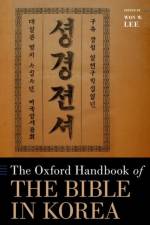
The phenomenon of South Korean Christianity is, in a word, remarkable. In less than 250 years, 29% of South Korea''s population adheres to Christianity, a staggering 71% of Korean Americans identify as Christian, and the powerful zeal of Korean Christians to spread the Gospel''s influence in South Korea already overshadows other established religious groups (i.e. Buddhism, Confucianism).This phenomenon-particularly the rapid growth and unique interpretation of Christianity among Koreans around the world-is intimately and inextricably tied to how Koreans appropriated the Bible in their religio-cultural and socio-political milieu from the 18th century onward. Less noted and understood, however, is the tapestry of Korean biblical interpretation that emerged from being missionized, colonized, divided, and globalized. These influences reflect a distinctive Korean-ness ofbiblical interpretation that relates closely to Korean perceptions of divine liberating intervention, and the Korean diaspora that seeks to move beyond oppression.This Handbook offers a comprehensive overview on how the Bible has been used by faith communities in Korea and the Korean diaspora over two centuries. In this volume, noted theologically diverse scholars present representative thinking on creative inculturations of the Bible in Korea. Some conservatively align with received western orthodoxy. Others have a sense of complementarity that informs distinctive accents of Korean Christianity, the long-standing religious traditions of Korea,the diversity of Korea''s global diaspora, and the learning of non-Koreans attentive to the impact of the Bible in Korea. Together, this volume presents an exquisite tapestry of Korean biblical interpretation in the making.
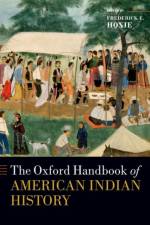
"Everything you know about Indians is wrong." As the provocative title of Paul Chaat Smith''s 2009 book proclaims, everyone knows about Native Americans, but most of what they know is the fruit of stereotypes and vague images. The real people, real communities, and real events of indigenous America continue to elude most people. The Oxford Handbook of American Indian History confronts this erroneous view by presenting an accurate and comprehensive history ofthe indigenous peoples who livedΓÇöand liveΓÇöin the territory that became the United States.Thirty-two leading experts, both Native and non-Native, describe the historical developments of the past 500 years in American Indian history, focusing on significant moments of upheaval and change, histories of indigenous occupation, and overviews of Indian community life. The first section of the book charts Indian history from before 1492 to European invasions and settlement, analyzing US expansion and its consequences for Indian survival up to the twenty-first century. A second group ofessays consists of regional and tribal histories. The final section illuminates distinctive themes of Indian life, including gender, sexuality and family, spirituality, art, intellectual history, education, public welfare, legal issues, and urban experiences. A much-needed and eye-opening account ofAmerican Indians, this Handbook unveils the real history often hidden behind wrong assumptions, offering stimulating ideas and resources for new generations to pursue research on this topic.
Abonner på vårt nyhetsbrev og få rabatter og inspirasjon til din neste leseopplevelse.
Ved å abonnere godtar du vår personvernerklæring.