















Gjør som tusenvis av andre bokelskere
Abonner på vårt nyhetsbrev og få rabatter og inspirasjon til din neste leseopplevelse.
Ved å abonnere godtar du vår personvernerklæring.Du kan når som helst melde deg av våre nyhetsbrev.

This volume provides a comprehensive overview of different ways to grow algae and the techniques used to start algal cultivation, monitor algal growth, environmental impact of growing algae, and various methods for characterizing the biomass.
This book collects techniques to continue exploring post-genomic land plant biology though the wisdom and skills accumulated from work on the founding molecular biology models that can now guide research into other species, including crop plants.
This second edition volume expands all chapters of the previous edition, which have been enhanced to cover the most recent developments, the current state of method research, and applications. Additional protocols were added to examine lipid-protein interactions by mass spectrometry, to use protein microarrays to investigate large sets of various proteins, to study membrane protein dynamics by UV resonance Raman spectroscopy, to analyze peptide-induced pore formation in membranes, and to investigate folding and insertion of membrane proteins. Written in the highly successful Methods in Molecular Biology series format, chapters include introductions to their respective topics, lists of the necessary materials and reagents, step-by-step, readily reproducible laboratory protocols, and tips on troubleshooting and avoiding known pitfalls.Cutting-edge and authoritative, Lipid-Protein Interactions: Methods and Protocols, Second Edition is an essential resource for all researchers who are interested in obtaining up-to-date and comprehensive information about membrane structure and function.
This book provides a single-source reference on the current state of the ribosome profiling method by describing experimental protocols for the quantitative analysis of translation in a variety of model organisms.
1. Isolation of Lipid Rafts by the Detergent and Non-Detergent Based Methods for Localization of GPCRs with Immunoblotting and Laser Scanning Confocal Microscopy Peter Abdelmaseeh, Andrew C. Tiu, Selim Rozyyev, Laureano D. Asico, Pedro A. Jose, Van Anthony M. Villar 2. Detection of GPCR mRNA Expression in Primary Cells via qPCR, Microarrays, and RNA-Sequencing Krishna Sriram, Cristina Salmerón, Anna Di Nardo, and Paul A. Insel 3. Construction of Recombinant Cell Lines for GPCR Expression Philip J. Reeves 4. Recombinant Expression and Purification of Cannabinoid Receptor CB2, a G Protein-Coupled Receptor Alexei A. Yeliseev 5. Screening for Serotonin Receptor 4 Agonists Using GPCR-Based Sensor in Yeast Emily A. Yasi and Pamela Peralta-Yahya 6. Immobilization of Olfactory Receptors Carried by Nanosomes onto a Gold Sensor Surface Jasmina Vidic and Yanxia Hou 7. Screening Methods for Cell-Free Synthesized GPCR/Nanoparticle Samples Zoe Köck, Volker Dötsch, and Frank Bernhard 8. Fluorescence Anisotropy-Based Assay for Characterization of Ligand Binding Dynamics to GPCRs: The Case of Cy3B-Labelled Ligands Binding to MC4 Receptors in Budded Baculoviruses Santa Veiksina, Maris-Johanna Tahk, Tõnis Laasfeld, Reet Link, Sergei Kopanchuk, and Ago Rinken 9. Bioluminescence in G Protein-Coupled Receptors Drug Screening Using Nanoluciferase and Halo-Tag Technology Hannes Schihada, Katarina Nemec, Martin J. Lohse, and Isabella Maiellaro 10. Nanoluciferase-Based Complementation Assay to Detect GPCR-G Protein Interaction Céline Laschet and Julien Hanson 11. Imaging of Genetically-Encoded FRET-Based Biosensors to Detect GPCR Activity Luca Bordes, Sergei Chavez-Abiega, and Joachim Goedhart 12. cAMP Biosensor Assay Using BacMam Expression System: Studying the Downstream Signaling of LH/hCG Receptor Activation Darja Lavogina, Tõnis Laasfeld, Maris-Johanna Tahk, Olga Kukk, Anni Allikalt, Sergei Kopanchuk, and Ago Rinken 13. FLIPR Calcium Mobilization Assays in GPCR Drug Discovery Grzegorz Woszczek, Elisabeth Fuerst, and Thomas J.A. Maguire 14. Live Cell Imaging and Optogenetics-Based Assays for GPCR Activity Xenia Meshik and N. Gautam 15. Split-Tobacco Etch Virus (Split-TEV) Method in G Protein-Coupled Receptor Interacting Proteins Marta Alonso-Gardón and Raúl Estévez 16. NanoLuc-Based Methods to Measure β-Arrestin2 Recruitment to G Protein-Coupled
Part I: Bioinformatic Tools to Study RNA Modifications 1. RNA Post-Transcriptional Modification Mapping Data Analysis Using RNA Framework Ilaria Manfredonia and Danny Incarnato 2. An Informatics Pipeline for Profiling and Annotating RNA Modifications Qi Liu, Xiaoqiang Lang, and Richard I. Gregory Part II: Detecting RNA Modifications Using Nanopore Direct RNA Sequencing 3. EpiNano: Detection of m6A RNA Modifications Using Oxford Nanopore Direct RNA Sequencing Huanle Liu, Oguzhan Begik, and Eva Maria Novoa 4. Adaptation of Human Ribosomal RNA for Nanopore Sequencing of Canonical and Modified Nucleotides Miten Jain, Hugh E. Olsen, Mark Akeson, and Robin Abu-Shumays Part III: Next-Generation Sequencing Approaches to Detect and Capture Modified RNAs 5. AlkAniline-Seq: A Highly Sensitive and Specific Method for Simultaneous Mapping of 7-Methyl-Guanosine (m7G) and 3-Methyl-Cytidine (m3C) in RNAs by High-Throughput Sequencing Virginie Marchand, Lilia Ayadi, Valérie Bourguignon-Igel, Mark Helm, and Yuri Motorin 6. Transcriptome-Wide Detection of Internal N7-Methylguanosine Li-Sheng Zhang, Chang Liu, and Chuan He 7. miCLIP-MaPseq Identifies Substrates of Radical SAM RNA Methylating Enzyme Using Mechanistic Crosslinking and Mismatch Profiling Vanja Stojković, David E. Weinberg, and Danica Galonić Fujimori 8. Mapping RNA Modifications Using Photo-Crosslinking-Assisted Modification Sequencing Bryan R. Cullen and Kevin Tsai 9. Quantitative and Single Nucleotide Resolution Profiling of RNA 5-Methylcytosine Jun Li, Xingyu Wu, Trung Do, Vy Nguyen, Jing Zhao, Pei Qin Ng, Alice Burgess, Rakesh David, and Iain Searle 10. A Small RNA-Seq Protocol with Less Bias and Improved Capture of 2''-O-Methyl RNAs Erwin L. van Dijk and Claude Thermes Part IV: Assessing RNA Modifications Using qPCR- and Molecular Biology-Based Methods 11. Assessing 2''-O-Methylation of mRNA Using Quantitative PCR Brittany A. Elliott and Christopher L. Holley 12. Relative Quantification of Residue Specific m6A RNA Methylation Using m6A-RT-QPCR Ane Olazagoitia-Garmendia and Ainara Castellanos-Rubio 13. Monitoring the 5-Methoxycarbonylmethyl-2-Thiouridine (mcm5s2U) Modification Utilizing the Gamma-Toxin Endonuclease Jenna M. Lentini and Dragony Fu 14. Analysis of Queuosine tRNA Modifications Using APB Northern Blot Assays Cansu Cirzi an
The book integrates mitochondria with other cellular components, discussing the dynamic properties of mitochondria with an emphasis on how these processes respond to signaling events and how they affect cellular metabolism.
This second edition volume expands on the previous edition with discussions of recently developed techniques that use RNA scaffolds as molecular tools.
This detailed book provides an accessible compendium of up-to-date methods in the fields of environmental toxicology, molecular toxicology, and toxicogenomics.
This book brings together a unique collection of protocols that cover novel and specialized techniques as well as updated and improved adaptations of more standard procedures involving the cell cycle and its regulation by oscillatory networks, exploring recent progress in the field from both holistic and reductionist perspectives.
The collected research methods and protocols include the dissection of Notch functional sites, Notch regulators, Notch activity reporters and analysis, roles of Notch in development and diseases, wet and dry lab tools and studies, and bioinformatics analysis.
Preface...Table of Contents...Contributing Authors...1. Proteoforms and Proteoform Families: Past, Present, and Future Lloyd M. Smith2. Membrane Ultrafiltration-Based Sample Preparation Method and Sheath-Flow CZE-MS/MS for Top-Down ProteomicsZhichang Yang and Liangliang Sun3. Size Exclusion Chromatography Strategies and MASH Explorer for Large Proteoform CharacterizationTimothy N. Tiambeng, Zhijie Wu, Jake A. Melby, and Ying Ge4. RPLC-RPLC-MS/MS for Proteoform IdentificationKellye A. Cupp-Sutton, Zhe Wang, Dahang Yu, and Si Wu5. Monolithic Materials-Based RPLC-MS for Proteoform Separation and IdentificationYu Liang, Lihua Zhang, and Yukui Zhang6. Capillary Isoelectric Focusing: Mass Spectrometry Method for the Separation and Online Characterization of Monoclonal Antibody Charge Variants at Intact and Subunit LevelJun Dai, Qiangwei Xia, and Chengjie Ji7. Proteoform Analysis and Construction of Proteoform Families in Proteoform SuiteLeah V. Schaffer, Michael R. Shortreed, and Lloyd M. Smith8. Top-Down Mass Spectrometry Data Analysis Using TopPIC SuiteIn Kwon Choi and Xiaowen Liu9. Accurate Proteoform Identification and Quantitation Using pTop 2.0Rui-Xiang Sun, Rui-Min Wang, Lan Luo, Chao Liu, Hao Chi, Wen-Feng Zeng, and Si-Min He10. Proteoform Identification and Quantification using Intact Protein Database Search Engine ProteinGoggleSuideng Qin and Zhixin Tian11. Mass Deconvolution of Top-Down Mass Spectrometry Datasets by FLASHDeconvKyowon Jeong, Jihyung Kim, and Oliver Kohlbacher12. Deconvolving Native and Intact Protein Mass Spectra with UniDecMarius M. Kostelic and Michael T. Marty13. Discovery of Unknown Post-Translational Modifications by Top-Down Mass SpectrometryJesse W. Wilson and Mowei Zhou14. Determining Copper and Zinc Content in Superoxide Dismutase using Electron Capture Dissociation under Native Spray ConditionsRachel Franklin, Michael Hare, and Joseph S. Beckman15. Surface-Induced Dissociation for Protein Complex CharacterizationSophie R. Harvey, Gili Ben-Nissan, Michal Sharon, and Vicki H. WysockiSubject Index List...
1. RNP-Based Control Systems for Genetic Circuits in Synthetic Biology Beyond CRISPR Trevor. R Simmons, Andrew D. Ellington, and Lydia M. Contreras 2. Computational Design of RNA Toehold-Mediated Translation Activators Kaiyue Wu, Zhaoqing Yan, and Alexander A. Green 3. Design of RNA-Based Translational Repressors Seongho Hong, Dongwon Park, Soma Chaudhary, Griffin McCutcheon, Alexander A. Green, and Jongmin Kim 4. Design of Ribocomputing Devices for Complex Cellular Logic Griffin McCutcheon, Soma Chaudhary, Seongho Hong, Dongwon Park, Jongmin Kim, and Alexander A. Green 5. Computational Design of Small Transcription Activating RNAs (STARs) Baiyang Liu and James Chappell 6. Design and Assembly of Multi-Level Transcriptional and Translational Regulators for Stringent Control of Gene Expression F. Veronica Greco, Thea Irvine, Claire S. Grierson, and Thomas E. Gorochowski 7. Model-Based Design of Synthetic Antisense RNA for Predictable Gene Repression Tae Seok Moon 8. Design of a Toolbox of RNA Thermometers Shaunak Sen, Abhilash Patel, and Krishan Kumar Gola 9. Development of Synthetic Riboswitches to Guide the Evolution of Metabolite Production in Microorganisms Minsun Kim, Sungho Jang, and Gyoo Yeol Jung 10. Efficient Method to Identify Synthetic Riboswitches Using RNA-Based Capture-SELEX Combined with In Vivo Screening Janice Kramat and Beatrix Suess 11. RNA Design Principles for Riboswitches that Regulate RNase P-Mediated tRNA Processing Anna Ender, Peter Stadler, Mario Mörl, and Sven Findeiß 12. Design, Characterization, and Application of Targeted Gene Activation in Bacteria Using a Modular CRISPRa System Maria Claudia Villegas Kcam and James Chappell 13. Reprogramming TracrRNAs for In Vitro RNA Detection and In Vivo Transcriptional Recording Chunlei Jiao and Chase L. Beisel 14. Harnessing CRISPR-Cas9 for Epigenetic Engineering Rosa S. Guerra-Resendez and Isaac B. Hilton 15. RNA Structure Prediction, Analysis, and Design: An Introduction to Web-Based Tools Raphael Angelo I. Zambrano, Carmen Hernandez-Perez, and Melissa K. Takahashi 16. Single-Molecule FRET Studies of RNA Structural Rearrangements and RNA-RNA Interactions Ewelina M. Małecka, Boyang Hua, and Sarah A. Woodson 17. Cotranscriptional RNA Chemical Probing
Part I: Strategies to Induce ROS Production 1. Modification of Chloroplast Antioxidant Capacity by Plastid Transformation Shengchun Li, Pan Shen, Bipeng Wang, Xiujie Mu, Mimi Tian, Tao Chen, and Yi Han 2. Analysis of Ascorbate Metabolism in Arabidopsis under High-Light-Stress Takanori Maruta and Takahiro Ishikawa 3. Genetic Manipulation of Reactive Oxygen Species (ROS) Homeostasis Utilizing CRISPR/Cas9-Based Gene Editing in Rice Sheng Xu, Tao Chen, Mimi Tian, Marie-Sylviane Rahantaniaina, Linlin Zhang, Ren Wang, Wei Xuan, and Yi Han 4. Studying Plant Stress Reactions In Vivo by PAM Chlorophyll Fluorescence Imaging Alexey Shapiguzov and Jaakko Kangasjärvi Part II: Methods to Visualize ROS and to Detect Changes in Redox Homeostasis 5. Live Monitoring of ROS-Induced Cytosolic Redox Changes with roGFP2-Based Sensors in Plants José Manuel Ugalde, Lara Fecker, Markus Schwarzländer, Stefanie J. Müller-Schüssele, and Andreas J. Meyer 6. Quantitative Measurement of Ascorbate and Glutathione by Spectrophotometry Graham Noctor and Amna Mhamdi 7. Measurement of NAD(P)H and NADPH-Generating Enzymes Amna Mhamdi, Frank Van Breusegem, and Graham Noctor 8. Quantitative Analysis for ROS-Producing Activity and Regulation of Plant NADPH Oxidases in HEK293T Cells Sachie Kimura, Hidetaka Kaya, Kenji Hashimoto, Michael Wrzaczek, and Kazuyuki Kuchitsu Part III: Small-Scale Targeted Analysis of ROS Accumulation during Stress and Effects on Plant Physiology 9. Estimation of the Level of Abasic Sites in Plant mRNA Using Aldehyde Reactive Probe Jagna Chmielowska-Bąk, Karolina Izbiańska-Jankowska, and Joanna Deckert 10. A Simplified Method to Assay Protein Carbonylation by Spectrophotometry Corentin Moreau and Emmanuelle Issakidis-Bourguet 11. In Vitro Biochemical Analysis of Recombinant Plant Proteins under Oxidation Zeya Chen and Jingjing Huang 12. Methods to Analyze the Redox Reactivity of Plant Proteins Thualfeqar Al-Mohanna, George V. Popescu, and Sorina C. Popescu 13. Determination of ROS-Induced Lipid Peroxidation by HPLC-Based Quantification of Hydroxy Polyunsaturated Fatty Acids Brigitte Ksas and Michel Havaux 14. Detection of Lipid Peroxidation-Derived Free Azelaic Acid, a Biotic Stress Marker and Other Dicarboxylic Acids in Tobacco by Reversed Phase HPLC-MS under Non-Derivatized Conditions Attila L. Ádám, György Kátay, András Künstler, and Lóránt Király
This detailed volume presents status and management protocols with the objective of identifying proper guidelines and materials for research related to the most common malignant neoplasm in the thyroid gland, papillary thyroid carcinoma.
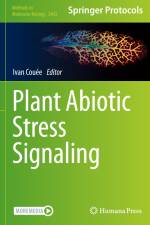
This volume provides conceptual strategies and methodological know-how over a wide range of stress situations that can be used as stepping stones to unravel the intricacies of abiotic stress signaling networks in plants. Chapters guide readers through achievements and challenges in the field and through up-to-date protocols covering identification of novel processes, validation of hypothetical mechanisms, and further characterization of currently-known pathways. Written in the format of the highly successful Methods in Molecular Biology series, wet-lab chapters include an introduction to the topic, lists necessary materials and methods, includes tips on troubleshooting and known pitfalls, and step-by-step, readily reproducible protocols. Authoritative and cutting-edge, Plant Abiotic Stress Signaling aims to be a comprehensive and innovative guide for students and researchers seeking to understand plant molecular mechanisms at the interface with environmental constraints and climate change.
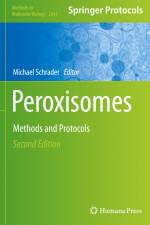
This fully updated volume assembles a comprehensive collection of methods, techniques, and strategies to investigate the molecular and cellular biology of peroxisomes in different organisms. Peroxisome research is on the rise, as novel functions and proteins of this dynamic organelle are still being discovered through studies in model systems including humans, mice, flies, plants, fungi, and yeast, and this progress is reflected in the chapters included in this collection. Written for the highly successful Methods in Molecular Biology series, chapters include introductions to their respective topics, lists of the necessary materials and reagents, step-by-step and readily reproducible laboratory protocols, and tips on troubleshooting and avoiding known pitfalls. Authoritative and up-to-date, Peroxisomes: Methods and Protocols, Second Edition serves as an ideal guide for researchers working on peroxisome- and organelle-based research questions.
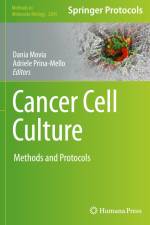
This volume explores the latest collection of cell models that are used in preclinical cancer research, and covers both two-dimensional and three-dimensional culturing techniques. The chapters in this book are divided into two parts. Part One discusses two-dimensional cancer cell culture, cell models at the Air-Liquid Interface, and the latest advancements in three-dimensional complex spheroid models and dedicated disease animal models. Part Two contains technical chapters that illustrate step-by-step methodologies for specific cancer cell culture methods. The methods discussed range from the generation of isogenic cancer cell lines, the use of serum-free growth conditions, and three-dimensional cell cultures and their specific assays for the efficacy assessment of new anticancer therapies. Written in the highly successful Methods in Molecular Biology series format, chapters include introductions to their respective topics, lists of the necessary materials and reagents, step-by-step, readily reproducible laboratory protocols, and tips on troubleshooting and avoiding known pitfalls.Cutting-edge and comprehensive, Cancer Cell Culture: Methods and Protocols is a valuable tool to help researchers involved in this important field to further improve or advance their models for cancer research.
This volume details protocols on animal cloning by Somatic cell nuclear transfer for basic research and biotechnological applications. Written in the format of the highly successful Methods in Molecular Biology series, each chapter includes an introduction to the topic, lists necessary materials and methods, includes tips on troubleshooting and known pitfalls, and step-by-step, readily reproducible protocols. Authoritative and cutting-edge, Somatic Cell Nuclear Transfer Technology aims to be comprehensive guide for researchers.
This volume provides researchers with protocols that help them investigate known or putative O2 sensing proteins and pathways. The chapters in this book discuss techniques ranging from anaerobic redox midpoint measurement to approaches to control expression of globin genes, which provide detailed methods for researchers interested in expanding their knowledge of O2 sensing systems. Written in the highly successful Methods in Molecular Biology series format, chapters include introductions to their respective topics, lists of the necessary materials and reagents, step-by-step, readily reproducible laboratory protocols, and tips on troubleshooting and avoiding known pitfalls.Authoritative and comprehensive, Oxygen Sensing: Methods and Protocols is a valuable resource to a wide audience, ranging from microbiologists and cell biologists, to protein biochemists.
This detailed edition reflects the significant new findings in the components of permeability barriers and how they work in different tissues with a collection of cutting-edge techniques. Chapters explore the formation, maintenance, regulation, and dynamics of permeability barriers in an effort to push the boundaries of the field. Written for the highly successful Methods in Molecular Biology series, chapters include introductions to their respective topics, lists of the necessary materials and reagents, step-by-step, readily reproducible laboratory protocols, and tips on troubleshooting and avoiding known pitfalls. Authoritative and up-to-date, Permeability Barrier: Methods and Protocols, Second Edition serves as an invaluable guide for both experts but novices in the stem cell field and other related areas of research.
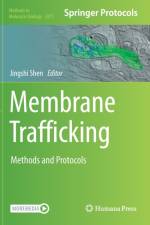
This detailed volume presents a series of methods exploring membrane trafficking research, ranging from genetics and high-resolution imaging to in vitro biochemical and biophysical assays. Covering virtually all the major trafficking branches, the book delves into the exocytic pathway, which focuses on cargo transport from the ER to the Golgi, through the Golgi cisternae, and to the plasma membrane and the extracellular space; the endocytic pathway, which includes cargo endocytosis, endosomal recycling, and lysosomal degradation; as well as emerging topics beyond the conventional exocytic and endocytic pathways. Written for the highly successful Methods in Molecular Biology series, chapters include introductions to their respective topics, lists of the necessary materials and reagents, step-by-step, readily reproducible laboratory protocols, and tips on troubleshooting and avoiding known pitfalls. Authoritative and practical, Membrane Trafficking: Methods and Protocols provides techniques with broad applications as an ideal guide for junior researchers new to membrane trafficking as well as established membrane biologists seeking to expand their research programs.
This detailed volume explores a wide variety of techniques involving optical tweezers, a technology that has become increasingly more accessible to a broad range of researchers. Beginning with recent technical advances, the book continues by covering the application of optical tweezers to study DNA-protein interactions and DNA motors, protocols to perform protein (un)folding experiments, the application of optical tweezers to study actin- and microtubule-associated motor proteins, and well as protocols for investigating the function and mechanical properties of microtubules and intermediate filaments, and more. Written for the highly successful Methods in Molecular Biology series, chapters include introductions to their respective topics, lists of the necessary materials and reagents, step-by-step, readily reproducible laboratory protocols, and tips on troubleshooting and avoiding known pitfalls. Authoritative and practical, Optical Tweezers: Methods and Protocols, Second Edition serves as an ideal resource for expanding the accessibility and use of optical traps by scientists of diverse disciplines.
This volume provides practical guidance on a variety of techniques and steps to ensure successful variant calling. Chapters detail methods for variant calling from single-nucleotide variants to structural variants, variant calling in specialized data types such as RNA-seq and UMI-tagged sequencing, alignment-free genotyping and SNP calling, variant detection in single-cell DNA sequencing data, variant annotation, and preanalytical quality control to ensure successful variant calling. Written in the format of the highly successful Methods in Molecular Biology series, each chapter includes an introduction to the topic, lists step-by-step protocol to execute the algorithms, describes the input and output data, and includes tips on troubleshooting and known pitfalls. Authoritative and cutting-edge, Variant Calling: Methods and Protocols aims to be a foundation for future studies and to be a source of inspiration for new investigations in the field.
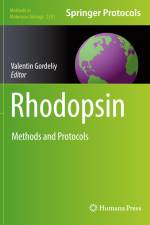
This volume provides readers with the latest information on the advances made in the field of rhodopsins. The chapters in this book cover topics such as new discoveries and developments; new ways to search for rhodopsins; methods to characterize the function and structure of rhodopsins on a molecular level; nano volume high throughput in meso crystallization, and fourth generation x-ray synchrotron sources. Written in the highly successful Methods in Molecular Biology series format, chapters include introductions to their respective topics, lists of the necessary materials and reagents, step-by-step, readily reproducible laboratory protocols, and tips on troubleshooting and avoiding known pitfalls.Cutting-edge and thorough, Rhodopsin: Methods and Protocols is a valuable resource for any scientist and researcher interested in learning more about this developing field.
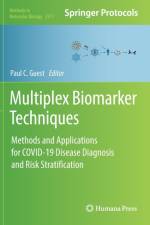
This detailed volume explores the application of multiplex biomarker methods in the critical area of COVID-19 research through state-of-the-art technologies in the fields of genomics, proteomics, transcriptomics, metabolomics, and imaging. The book features a series of protocols from labs across the globe employing multiplex molecular approaches, which can be applied to accelerate progress in the research of SARS-CoV-2 and other infectious illnesses. Written for the highly successful Methods in Molecular Biology series, chapters include introductions to their respective topics, lists of the necessary materials and reagents, step-by-step, readily reproducible laboratory protocols, and tips on troubleshooting and avoiding known pitfalls. Authoritative and essential, Multiplex Biomarker Techniques: Methods and Applications for COVID-19 Disease Diagnosis and Risk Stratification serves as a vital resource for researchers in the areas of virology, metabolic diseases, respiratory disorders, as well as to clinical scientists, physicians, pharmacologists, and the healthcare services.
This second edition volume expands on the previous edition with new and updated chapters on the latest developments in the study of yeast within the biotechnology field. The chapters in this book cover topics such as transformation protocols for genetic engineering of Saccaromyces cerevisiae and Komagataella spp.; an overview of selection markers, promoters, and strains used for metabolic engineering of S. cerevisiae, P. pastoris, and Z. bailii; the use of yeast in CRISPR/Cas9 technology; tools to study metabolic pathway in Yarrowia lypolitica; and a discussion on the "e;universal expression system"e; that is applied in a broad spectrum of fungal species. Written in the highly successful Methods in Molecular Biology series format, chapters include introductions to their respective topics, lists of the necessary materials and reagents, step-by-step, readily reproducible laboratory protocols, and tips on troubleshooting and avoiding known pitfalls.Cutting-edge and authoritative, Yeast Metabolic Engineering: Methods and Protocols, Second Edition is a valuable resource for researchers and scientists interested in learning more about this important and developing field.
Abonner på vårt nyhetsbrev og få rabatter og inspirasjon til din neste leseopplevelse.
Ved å abonnere godtar du vår personvernerklæring.