








Gjør som tusenvis av andre bokelskere
Abonner på vårt nyhetsbrev og få rabatter og inspirasjon til din neste leseopplevelse.
Ved å abonnere godtar du vår personvernerklæring.Du kan når som helst melde deg av våre nyhetsbrev.

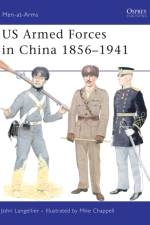
Features the story of the 90-year presence of American forces in China until the fall of Peking in 1941. This work includes coverage of the first operations on the Pearl River in 1856 as well as US involvement in the Boxer Rebellion of 1900.
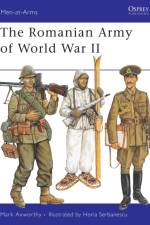
This work is an examination of the organization and equipment of Germany's most powerful ally on the Eastern front and the nation which, from 1944 onwards, provided the fourth largest allied army.
Part of a series of six titles, this fourth title studies the archival and pictorial evidence for the infantry, cavalry and artillery of Virginia - the heart of the Confederacy and its richest, most populous and militarily strongest state; and of Arkansas, which, despite its much smaller population, fielded several interesting units.
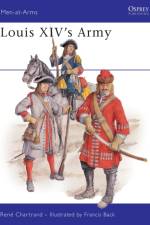
Louis XIV''s army was in many ways the first modern army. After assuming power in 1661, Louis abolished the post of Colonel Général of Infantry so he could exercise direct control over the armed forces in his realm. The king demanded order, discipline and absolute loyalty from his army, and he introduced a military draft in 1688 - the first step towards what we know as conscription in modern armies. This book chronicles the development of Louis XIV''s army during his 54-year reign, including the units, uniforms and weapons of the elite Maison du Roi. Numerous illustrations portray the uniforms, colours and standards of his troops in vivid detail.
The first Native Americans who came into contact with the 17th century English settlers were the tribes of the North Atlantic coast and the interior of New England. Featuring colour illustrations and photographs, this book tells the story of New England's Native Americans.
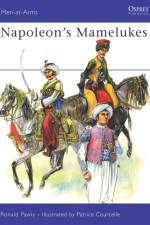
Exploring the history of Napoleon's Mamelukes throughout the Napoleonic wars, this book features detailed illustrations that enhance the story of this extraordinary unit.
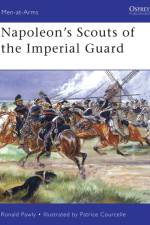
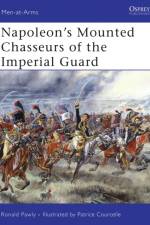
Napoleon's last 'Campaign of France' in 1814 proved to be one of his most brilliant. He relied as never before on committing his elite Imperial Guard cavalry to battle. He raised three new regiments of crack "claireurs". Each regiment had its own style of uniform, but part of each was armed with lances.
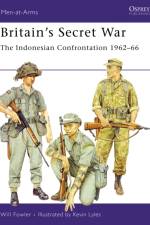
The 'Confrontation' between Malaysia and Indonesia in Borneo - the war against Indonesian raids across a 900-mile border - eventually involved nearly 20,000 British and Commonwealth troops, with air and naval support; and yet, by mutual consent, astonishingly little was reported at the time. This 'secret war' saw the perfection of SAS jungle tactics and audacious secret missions deep inside enemy territory, including the award to a Gurkha soldier of the British Army's only 'living VC' for 40 years. This book will reveal the experiences of the soldiers who survived and succeeded amidst some of the world's worst jungle terrain.
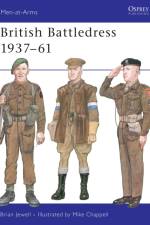
In the 1930s the War Office grew increasingly aware of the need for a new and more rational combat dress, and by 1937 the design for what would become known as ''battledress'' was complete. Though the change in uniform was initially disappointing to the British soldiers, the new battledress served its purpose well, clothing the servicemen for more than 25 years with reasonable warmth and convenience. Complete with a wealth of photographs, diagrams and colour plates, this book offers a history of British battledress up to 1961, detailing its evolution in design, materials, sizes and applied insignia.
The modern wars of the Middle East began in 1947, when the Syrians, Egyptians, Jordanians and Lebanese were unofficially at war with the Jewish settlers of Palestine. On May 15th, the day afer Israel was declared a sovreign state, the Arab invasion began. Between then and 1973 five wars occurred: those of 1948; the Sinai War; the Six-Day War; the 1968ΓÇô1970 War of Attrition and the 1973 October War. This book examines the organization, training and equipment of the key Arab armies during these conflicts and the variey of uniforms are illustrated by a number of contemporary photographs and full colour artwork.
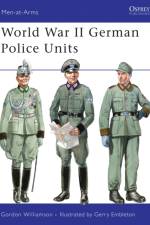
Aims to explain the complex organization and the particular duties of the different branches which formed such a critical part of the Nazi apparatus and ensured that control was maintained inside Hitler's Fortress Europe.
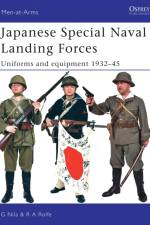
The spearhead of Japan's assault landing operations both in China pre-Pearl Harbor, and in US and British territory post-Pearl Harbor, was provided by the Special Naval Landing Forces. This book provides a comprehensive treatment of the elite force, covering weapons and equipment as well as uniform and insignia.
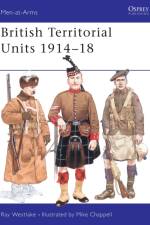
This details the organization and equipment of volunteer units who fought alongside their regular comrades in almost every major British engagement of the war and without whom victory could have proved impossible. This volume is part of the "Men-at-Arms" series.
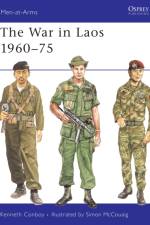
As World War II drew to a close, the Imperial Japanese military seized control of Laos, a French protectorate, and encouraged nationalist movements to forestall the revival of French power in the region. Despite these efforts the French re-entered Indochina and methodically retook the protectorate. By 1957, the government of Laos and the core of the Communist Laotian forces, known as the Pathet Lao, entered an uneasy truce, which plunged the country into 15 years of war. This text explores the resulting war, providing a summary of events and profiling the Laotian government forces, the government Allied forces and the Communist forces.
Wielding their swords in the name of their faith, the crusaders set out to reclaim Jerusalem and its surrounding territory in the Middle East. As with the majority of crusades, the prospective acquisition of land was the one of the key driving forces behind these bloody military expeditions. This book reveals the history of these Crusades.
In 1898, US public opinion turned against the Spanish for their repression of Cuba. Relations between the two governments resulted in the blowing up of the USS Maine in Havana harbour, which triggered a short war. This book highlights this crucial war that changed the future of American foreign policy during 'the age of American imperialism.'
For sheer guts, the Redcoats' behaviour at Bunker Hill, Saratoga and other bloody encounters has rarely been surpassed. The Americans won, but only just, and then thanks to foreign intervention and a small number of dedicated and valiant patriots who were continually let down by their own people. Robin May's splendid work looks at the British Army that fought in the American Revolution from 1775 to1783. It details the soldiers who faced the difficulties of campaigning in America along with the gross inefficiency and corruption at home which, along with their generals' often blundering conduct, were as deadly enemies as the Americans.
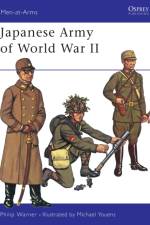
In 1941 the Allied forces in the Pacific were devastatingly unprepared for the onslaught of the Japanese Army, which by this time had been fighting for ten years on the Manchurian front. The Allies paid dearly for their lack of planning and found themselves defeated time and time again as the seasoned Japanese forces swept through the Pacific colonies. This book examines the Japanese concept of war and describes the organization, tactics and weaponry of the Japanese Army from their triumphant invasions of 1941-42 until their ultimate defeat in 1945. Numerous illustrations and colour plates depict the weapons and uniforms of the Japanese troops of World War II in vivid detail.
The King''s German Legion was the largest and most respected of the foreign corps which fought as integrated elements of the British Army during the Napoleonic Wars (1799-1815). The light and heavy cavalry, light and line infantry, and horse and foot artillery of the KGL made major contributions to Wellington''s victories during the Peninsular War, and several units covered themselves with glory at Waterloo. This book offers a comprehensive overview of the KGL from its origins to its disbandment, including its uniforms, weapons, flags and standards. Meticulous illustrations offer unprecedented details of this impressive fighting force.
Featuring the involvement in the legendary battles of Wounded Knee and Wolf Mountains, this work presents the history of the overlooked soldiers of the Indian Wars, culminating in the eventual "closing" of the American Frontier in 1890 and the final conquest of the indigenous inhabitants of North America.
The common image of the Confederate Army during the Civil War is dominated by a limited number of photographs of troops wearing the gray and butternut of the CS regulations and quartermaster issues. This text examines the variety of uniforms worn by Tennessee and North Carolina militia and volunteers brought together in Confederate field armies.
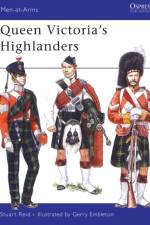
As the British Empire dominated every corner of the globe, Queen Victoria's Highlanders served in a variety of campaigns from the Indian subcontinent to Africa. This title studies their organization, histories, and evolution of uniforms. It covers each of the famous regiments - including the Black Watch, the Gordons, the Argylls, the Camerons.
Napoleon's Polish Lancers of the Guard were unique in their appearance and in their loyalty. This book reveals their varied and colourful uniforms as well as their long and loyal service for the Bonaparte cause. It provides an insight into the fighting lives of the legendary Polish Lancers.
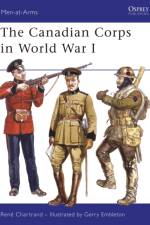
Canada's 600,000 troops - of whom more than 66,000 died and nearly 150,000 were wounded - represented an extraordinary contribution to the British Empire's struggle. This book describes the Canadian Corps in WWI and illustrates the uniforms and equipment of the four Canadian divisions which earned an elite reputation on the Western Front.
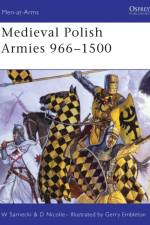
The history of Poland is a fascinating study of a people struggling to achieve nationhood in the face of internal and external enemies. Poland became a unified Christian state in AD 966 and by the 12th century a knightly class had emerged - a force that was integral to the defense of Poland against increasingly frequent foreign invasions. Intent on crushing rival Christian states, the Templars, Hospitallers and Teutonic Knights all mounted attacks but were beaten back by the Poles, as were invading Mongols and Turks. This book reveals the organization, equipment and battle histories of the medieval Polish armies as they developed and modernized to emerge as one of the dominant powers of Eastern Europe.
The Southern states which formed the Confederacy in 1861 fielded many units of volunteer troops wearing a remarkably wide variety of uniforms, often reflecting foreign influences. In a spirit of independence many states also issued their own uniform regulations on the outbreak of the American Civil War; and these non-standard uniforms were often retained until well into the course of the war. The regulation patterns centrally prescribed by the Confederate Army were only ever followed unevenly, and state quartermasters continued to issue uniforms showing regional and state differences. This last in a series of six titles studies the archival and pictorial evidence for the infantry, cavalry and artillery of the final states to secede from the Union - Missouri, Kentucky and Maryland - and is illustrated with fascinating early photographic portraits.
A history of the hand-picked elite cavalry guard that served as Napoleon's close personal escort and were committed to the most dangerous areas of combat on the battlefield.
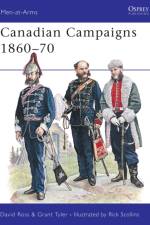
Although the US never attempted an invasion of Canada after the war of 1812, during which British and Canadian militia fought battles against US invaders, the threat lingered in the air. This book details the rebel forces and the British force and fledgling Canadian army which fought them.
In the American Revolutionary War, there were at times as many American volunteers in the field fighting for King George as against him. After the final British defeat the survivors and their families withdrew, many into Canada. This book gives information on unit identities, commanders, strengths, combat record, tactics, uniforms, and equipment.
Abonner på vårt nyhetsbrev og få rabatter og inspirasjon til din neste leseopplevelse.
Ved å abonnere godtar du vår personvernerklæring.