



















Gjør som tusenvis av andre bokelskere
Abonner på vårt nyhetsbrev og få rabatter og inspirasjon til din neste leseopplevelse.
Ved å abonnere godtar du vår personvernerklæring.Du kan når som helst melde deg av våre nyhetsbrev.

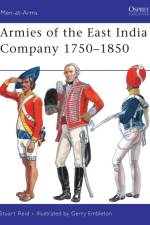
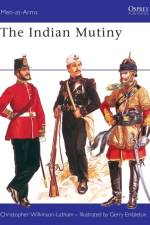
Contrary to popular belief, the capture of India was not accomplished by the British Army, but by the private armies of the East India Company, which grew in size to become larger than that of any European sovereign state. This book offers a history of this army, examining the many conflicts they fought, and their equipment and training.
The Seminole of Florida were one of five so-called 'Civilized Tribes' who for many years lived in peace with the settlers. However, by 1815, frontier Americans had grown increasingly envious of their relative wealth and land, and resentful of their harbouring of former slaves. This book reveals the dramatic stories behind the Seminole wars.
An exploration of the American Army between 1812 and 1814. It concentrates exclusively on the regular US Army units which formed the backbone of the forces which fought the British along the Canadian frontier and at New Orleans in the war which saw the British burn Washington.
Mounted upon their huge black horses, the Mounted Grenadiers of the Imperial Guard were the senior heavy cavalry unit of the French army and were never defeated in battle. Their long list of battle honours earned them the nicknames 'the Giants' and 'the Gods'. This title tells the story of this unit using documentary and pictorial sources.
This volume details the uniforms and insignia of Peter the Great's cavalry during the period when he transformed Russia's army into a modern fighting force.
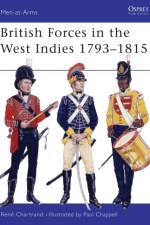
Two centuries ago, the West Indies were a booming set of islands where vast fortunes were made. By the late 1790s, the West Indies attracted four-fifths of British overseas capital investments and provided over one-eight of the government''s £31.5 million total net revenue to the Treasury. These figures explain the tremendous numbers of naval and military forces deployed to protect these valuable Caribbean territories during the French Revolutionary Wars (1792-1802) and beyond. This fascinating volume by Réne Chartrand examines these forces, including a wealth of illustrations and photographs and eight full page colour plates by Paul Chappell.
Covering the period between the reigns of Sultan Selim III and Sultan Mahmut II, this volume details the series of military and naval reforms of the Ottoman armies. It looks at the role of foreign advisors, the impact of the French Revolution and the establishment of military technical schools.
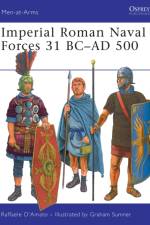
Offers a re-evaluation of the vital contribution made by the Roman navy to Roman imperial power, covering the organisation of the fleets and the everyday life of the soldiers.
Spanish Americans of the early 19th century were eager to institute self-government and open their ports to foreign commerce. During the years 1810-14 two men of outstanding ability appeared in the front ranks of the Republican cause: Simon Bolivar, the greatest of all South American soldiers, and José de San Martin. These two men would achieve the destruction of the southern Spanish American empire as they fought to establish nations shaped and governed ''by Americans, for Americans''. This book details their military campaigns to free South America from the grip of Imperial Spain, including descriptions of their equipment, uniforms, weaponry and enemies.
Contrary to opinion expressed at the time, Argentine troops deployed to the Falklands, and which engaged the British troops sent to recapture the islands, were not 16-year-old conscripts but well-trained troops. This book looks at the arms, equipment and organization of the Argentine troops.
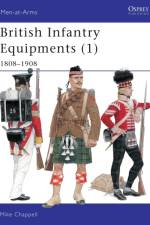
Covers the history of British Infantry equipment from the landing of Wellesley's army in Spain in 1808 through its Victorian glories to the eve of World War I. Colour plates depict the equipment in detail.
Part of the "Men-At-Arms" series, this illustrated book examines the New Model Army of 1645-60, illustrating weapons, equipment and uniforms.
In the MEN AT ARMS series. Covers the Victorian military expeditions which helped shape modern India. Examines the variety of native dress, uniforms and weaponry used by the tribes residing in the area between Bhutan, Tibet and Burma, and the novel tactics used by the British to subdue them.
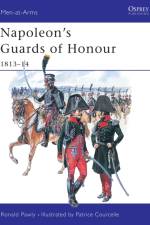
After the Russian campaign in 1812, Napoleon was desperate to form a new army to resist the Allied offensive in Germany. Short of cavalry, he levied four regiments of "Guards of Honour". This title details their history, organization and uniforms in the campaigns of 1813 and 1814.
The states of the Confederacy in 1861 fielded many units of volunteer troops wearing a variety of uniforms, often reflecting foreign influences. This book studies the archival and pictorial evidence for the infantry, cavalry and artillery of Louisiana and Texas, featuring illustrations and early photographic portraits.
Covers the classic 'Beau Geste' period, of the French Foreign Legion when the corps was expanded during the most dynamic years of French imperial expansion. This title examines and illustrates their varied uniforms and equipments for each period and theatre. It is written by a leading expert on the French Foreign Legion.
This volume covers Chinese military history, from the height of the Chinese Empire to the disastrous Opium wars, and covers the latter part of the Ming Empire, the rise of the Ming dynasty and the Ching dynasty. The effect on China of Western influences fronm 1840 onwards is also examined.
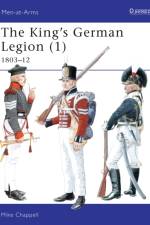
The King's German Legion, described in detail here, represented about 20 percent of Wellington's fighting strength and distinguished itself in all the major campaigns including their famous charge at Garcia Hernandez during the Salamanca campaign.
The Seven Years' War in Germany was characterised by an increasing use of 'light' troops in conjunction with regular infantry and cavalry as part of an evolution in military tactics. This book draws attention to these tactical developments and also provides an analysis of the allied army that fought alongside Frederick the Great in Germany.
Reveals the great warlords of China as well as the organization of their forces which acquired much and very varied weaponry from the west including the French air force bombers.
This book examines the uniforms, equipment, history and organisation of the armies that fought in the Boer War. Both sides are covered, and the campaigns summarised. Uniforms are shown in full illustrated detail.
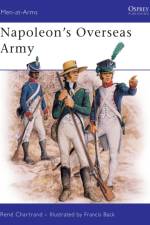
When the French Revolution broke out in 1789, France possessed numerous colonies spread over three continents. To defend and keep the peace in these territories, a small army of colonial troops, distinct from the metropolitan line regiments or marines, had existed since the days of Louis XIV. This book examines the history and uniforms of the often-overlooked French armies in Saint-Domingue, Guadeloupe, Martinique, St Lucia, Tobago, Ile-de-France, La Réunion, Pondichéry, Guiana, Senegal and Saint-Pierre-et-Miquelon. The text is backed by numerous illustrations offering a rare glimpse into dress and equipment of Napoleon's overseas army.
Evolved from the colonial units created by the French, this book discusses the original reorganization of these forces into the first national army. Including a history of the command structure and orders of battle, it also sheds light on the little known divisional histories of the army through original source material.
Detailing their appearance and uniforms, this book describes the armies of the Mamluk Sultanate of Egypt and Syria, the power responsible for the destruction of the Crusader kingdoms.
The Dutch Army was a very important part of Wellington's army at Waterloo in 1815. This volume presents an exploration of Wellington's Dutch allies, and shows that despite criticism from the British, many units fought extremely well and defended some decisive points.
The British victory at Quebec in 1759 was a landmark in the history of North America. In this 'year of miracles', according to Horace Walpole, one could 'never afford to miss a single copy of a newspaper for fear of missing a British victory somewhere'. Of all the pivotal figures in the Seven Years' War, a cast which included George Washington, Sir William Johnson, Lord Howe and Montcalm, Major-General Wolfe remains etched most deeply in Americans' memories for his heroic leadership at Quebec. Enhanced by illustrations and photographs, this book focuses on the British forces throughout their disastrous and triumphant wilderness campaigns which ultimately ensured the birth of the English-speaking United States of America.
Part of the "Men-at-Arms" series, this book details the history, equipment and uniforms of the Dutch-Belgian troops of the Napoleonic Wars.
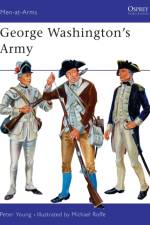
This book examines the uniforms, equipment, history and organization of George Washington''s Army. The chronology of the American Revolution (1763-1776) is summarized, and its major personalities introduced. Uniforms are shown in full illustrated detail.
Abonner på vårt nyhetsbrev og få rabatter og inspirasjon til din neste leseopplevelse.
Ved å abonnere godtar du vår personvernerklæring.