


Gjør som tusenvis av andre bokelskere
Abonner på vårt nyhetsbrev og få rabatter og inspirasjon til din neste leseopplevelse.
Ved å abonnere godtar du vår personvernerklæring.Du kan når som helst melde deg av våre nyhetsbrev.

Charlie has drawn on her experience of working with secondary pupils to produce this book. It provides a developmental series of lessons providing a wonderful programme.This resource comprises of seven sessions with comprehensive facilitator notes and copiable resources. Topics covered include:" peer pressure" individuality" disagreements" victimisation.This book will assist pupils to develop three key areas:" awareness and development of self" development of personal skills" improve understanding of groups and group processes.The process of Circle Time helps meet the requirements of the Citizenship and PSHE curriculum.
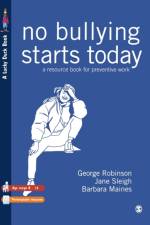
Since 1990 we have joined many schools to help them organise anti-bullying days for pupils. This publication is a collection of activities, processes and programmes that have been put together to help schools organize either a single awareness day or a series of shorter workshop sessions for pupils, which include:" practical aspects of anti-bullying work" ideas for whole-school keynote sessions" facilitators' instructions for group activities" copiable worksheets and overhead foils.The programmes are suitable for secondary and upper primary use. They provide an excellent project for primary/secondary liaison based around Year 6 and 7 joint work during the summer term.
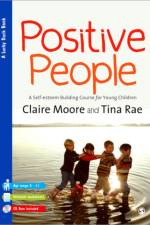
A 12-session course for primary aged pupils. It builds on the "Circle Time" process to teach a range of personal and social skills with activities and ideas for follow up work. It includes strategies such as: listening; turn taking; accepting differences; giving and receiving compliments; co-operating with others; and confident speaking to peers.
Charlie has drawn on her experience of working with secondary pupils to produce this book. It provides a developmental series of lessons providing a wonderful programme.This resource comprises of seven sessions with comprehensive facilitator notes and copiable resources. Topics covered include:" listening" friendship" bullying " anger.This book will assist pupils to develop three key areas:" awareness and development of self" development of personal skills" improve understanding of groups and group processes.The process of Circle Time helps meet the requirements of the Citizenship and PSHE curriculum.
Sometimes we learn something new through personal experience something which up until now, has not been the subject of research. This book provides a mother''s original process of thinking through detail.We all want an in-depth knowledge of autism and Hilde justifies her approach: by thinking through details I have always been able to explain my sons autism.I have never heard anyone explain the world and life from the point of view of a person with autism as clearly as Hilde. Marie Bristol, Head of American Autism ResearchAutism can be explored in different ways. The person who tries to understand autism through Thinking through details will gain a better understanding of the syndrome and how to deal with it.
Suitable for those using Circle Time with 3 to 7 year olds, this book sets out strategies and activities for making the most out of Circle Time sessions. It includes Pre and post-activities, to encourage children to focus on the content of Circle Time as a way of sharing their work, ideas and thoughts.
Suitable for teachers committed to Circle Time and for looking for various ideas, this book provides activities and various games including: ice breakers; mixing up games; and, energisers.
Through the use of play scripts, this practical guide helps children with autism, and those with specific communication disorders, learn to play.
This text provides teachers of children aged 7-14 with structured opportunities to develop their emotional literacy and emotional well-being. It is firmly supported by a wealth of research which links children's mental and physical health to the development of emotional literacy.
Visit the author's own website Following the success of Margaret's book Because We're Worth It, she has developed a series of activity sheets for children to start work on in school and to complete at home with parent/ carer support. /caNot only do the activities involve the adult but they also emphasise the importance of families as promoters of self-esteem.There are 10 sets of take home sheets covering:" self identity" self-worth" body language" intercommunication" friendship" feelings" being confident" empathy and sympathy" relationships" co-operation.There are draft letters and explanatory notes for parents.This is a book that will be extremely valuable to all staff who believe in enhancing self-esteem and in involving parents/ carers.Margaret Collins is a former headteacher of infant and first schools. She is now Senior Visiting Fellow in the School of Education at the University of Southampton. She researches children's perceptions of health education topics, writes teaching materials for children, books and articles on PSHE.
Peer buddy systems have been demonstrated as very successful with older students. For a teacher or school wanting to set up a buddy scheme, or to explore the possibility of doing so, this book contains some useful suggestions, ideas and guidelines.
'Michael Tipper is an entertaining, informative and energetic trainer who is emerging as an inspirational teacher of Mentally Literate principles' - Tony Buzan, inventor of the Mind Map(TM)Based on the work of Michael Tipper (Grand Master of Memory) and Positively Mad, this interactive book quickly, easily and with a sense of humour will:" provide a variety of techniques to help you learn" enhance your ability to remember" reinforce the technique of Mind-Mapping.A valuable book to help make efficient use of an individuals time. It will also be an essential tool for teachers, parents, and anybody who assists others to learn.With the help of this book, all readers should be able to pass on a variety of skills and techniques to benefit others ability to learn.Michael is a corporate keynote speaker, breakout session specialist and educational presenter and has personally taught over 50,000 people how to get more from their thinking and learning. He regularly writes for the children's web site www.happychild.org.uk and is a director of Positively MAD - Making a Difference to the next generation - a UK based company that has taught over 250,000 children how to learn more effectively.
`This is a book that will be useful to carers, helping them understand the issues that affect male suffers and some of the barriers they will have to break down in order to recover. It will also reassure men affected by an eating disorder that they are not alone, their problems are understood b medical professional and that recovery is possible' - SignpostAnna has established herself as a leading author in the field of eating disorders and combines her personal experiences with an extensive research interest. Her two previous books published by Lucky Duck were winner and special commendation in the NASEN/TES book awards and we expect this publication to be equally well received.It would be a mistake to think that eating and body image problems are experienced only by women. Anna draws the readers attention to the characteristic and special difficulties for men, including:" athletics, body building and eating" depression and self-esteem" eating disorders and homosexuality.Like all her books she offers a comprehensive overview and contributes information, advice and hope. This is a book for those affected and those who want to help them.
` Once I started this book I was hooked. Where was this book 10 years ago? So many of the problems I have dealt with and worked out through triall and error are here. It would have saved many tears and tantrums - and those not just from me! Once purchased, you will use it over and over again, for reference' - CommunicationA thought provoking and practical book about how one supporter, a grandmother, helped her granddaughter search for ways to help her overcome the difficulties they both faced.This book does not dwell on the problems but instead looks for the solutions they found together. It will be useful to all those whose lives are touched by Asperger's Syndrome but especially meaningful to those directly involved in supporting young people in school, college and in the home and neighbourhood setting.It specifically considers:} patterns of organization in daily life} constructing programmes of development for individuals.The book covers the practical issues facing those in their teens and twenties:} rules} daily living skills} personal hygiene} managing money} coping in school and college} friendships} romantic relationships.People with Asperger's Syndrome can be valuable contributors to society if they are given support when they need it.This book is the outcome of the combined efforts of Alex and her grandmother Maude. It is practical, realistic and very positive.
For the teachers and pupils already introduced to Circle Time this resource will provide a structured, step-by-step curriculum framework, with games and activities at every stage. The publication comprises a spiral bound file of activities in four sections:" self-esteem" communication" relationships" spiritual and moral development.The book has 15 different topics differentiated from Year 1 to Year 6. Each section contains clear teaching plans and all the resources and activities needed for the session.By working through this programme teachers can demonstrate the incremental development of the Speaking and Listening and PSCHE skills required in the curriculum.
This pack is designed to offer a flexible resource to support teachers in enabling children to cope effectively with transition to secondary school. Planned and positive induction is effective in ensuring that the progress children have made in one educational setting is sustained through a period of change.The pack provides teacher notes and a variety of activities and photocopiable worksheets. It offers a resource for enabling not only pupils but also schools, teachers and parents, to deal with change successfully. The pack considers the psychological aspects of change and through practical activities, helps the emotional robustness of children at a time of predictable change.This pack will help children gain the coping skills to put this change into a new perspective.
Learning about the relationship between thoughts and behaviour is stimulating and enjoyable. These seven stories teach children to:" reflect on behaviour and consequences" learn to control impulsivity stop and think" manage feelings and practise positive self-talk.The publication contains all the necessary teaching materials, lesson notes and copiable resources needed to work on self-control techniques and problem-solving strategies in the primary classroom.This resource provides teachers with a new and different approach to the teaching of responsible behaviour and decision-making. No prior knowledge of cognitive behaviour theory is necessary.
`The book is concise and persuasive. The evidence presented in it does indicate that in certain circumstances the approach can be highly successful. It is a useful resource for those schools re-evaluating their policy documents on bullying and a valuable training resource for those involved in teacher education. It will certainly provoke debate in staff rooms and lecture theatres alike' - Maggie Bowen, North East Wales Institute of Higher EducationYou have probably heard of the 'No-Blame-Approach' to bullying. The method was featured in the BBC 2 documentary 'I Just Want it to Stop!', broadcast in August 1997.This book is the only comprehensive account of the 'No-Blame-Approach', and describes its development. The book is supported by accounts from teachers, psychologists and parents describing their experiences using the method with children and young people in both primary and secondary settings. The latest edition of this book includes a reference to the research carried out by Sue Young in Hull, confirming the effectiveness of the No Blame Support Group Approach.This is an essential read for every school intending to evaluate its anti-bullying policy and implement positive procedures.
Talking about three teenage girls who have some eating problems, this book explores the different effects on each girl. It also describes the difficulties they face as secrets are disclosed and treatment is embarked upon.
`The uncluttered worksheets in The Powerhouse provide a useful template to spark a childs imagination. The sections for pupil evaluations will help develop the skills of self-reflection: a necessary indicator of emotional intelligence. It is a good introduction to emotional literacy and a welcome addition to primary staffroom resources' - Mark Edwards, Times Educational SupplementThis copiable resource, developed from the work of Elizabeth Morris, Principal of the School of Emotional Literacy, is an essential addition to primary school resources on self-esteem.Designed as a teaching aid for the PSHE curriculum, the sections are graded from 5 to 7 years to 9 to 11 years, following the topics:" All about me" Me and my world" You and me" My dreams and wishes" My daily dilemmas. Each section contains teacher notes and photocopiable pupil activity worksheets.The resource helps schools develop the emotional literacy of young people and can be linked to other curriculum topics.
This award winning book illuminates what it means to be a person who has Aspergers Syndrome by providing a window into a unique and particular world.
Whilst the frequency of Autistic Spectrum disorders rises and identification and assessment techniques improve, we can expect to find young people with Aspergers Syndrome in every school. This work features the ways in which adults working in schools can improve the learning and social experience for these students.
Suitable for those who are interested in learning more about using negotiation and mediation to settle conflicts positively and effectively, this book includes stories that can be used to: generate discussion; stimulate thinking in assemblies; enrich mediation training; support win/win positions; and, help those in conflict find solutions.
This publication provides a comprehensive guide to those who aspire to introduce, teach, support and maintain mediation processes for all young people in school.In a world that fails to manage conflict, those who seek peaceful resolution are urged to promote mediation as a positive solution.Topics covered include: - Circle Time- emotional literacy - affirmation - problem solving - co-operation- conflict resolution - communication - mediation.There are 171 pages and 38 copiable activity sheets, which are suitable for infant, junior and secondary schools.
This six session resource helps Year 6 pupils make a successful transition and follows a Circle Time approach with follow-up activities. The issues covered include: bullying, friendship, the induction day and meeting new people.
In the fourth addition to her series of books about Circle Time in the Secondary School, Charlie has developed a fascinating Circle Time book that addresses the transition from Key Stage 3 to Key Stage 4 and considers the dip in achievement especially evident amongst boys. At this transitional phase schools focus on the continuity of curriculum rather than emotional needs. This Circle Time book helps develop emotional wellbeing and reduces the likelihood that pupils will struggle in the later stages of secondary education.Young people need signposting, support, understanding, direction and confidence building at the start of their Key Stage 4 journey. The seven sessions consider issues such as:" Co-operation" Conflict and anger management" Relationships" Hopes and aspirations" Stress and stress management.Detailed facilitator notes and copiable resources are included in the bookThe learning achieved in this programme fits some of the requirements of Citizenship and PSHE curriculum.
Refugee children have often experienced great disruption, violence and fear. They have frequently lost members of their family and may even have witnessed their deaths. They have left everything that is familiar and found themselves deposited in a completely different, strange and sometimes frightening environment.This exceptional resource offers the adults who support these young people a sensitive, honest and practical programme. There is a good balance between affective and skills based activities and, whilst recognising the uncertainty they face, the eight sessions all provide a positive focus for the young people and their families.The programme includes:} Exploring our Feelings about Who We Are} Role-Models} Poetry and Painting} History, Legislation and my Bill of Rights} My Shield of Strength} Hopes, Fears and DreamsThe resource includes copiable material for participants personal files, and posters for display.
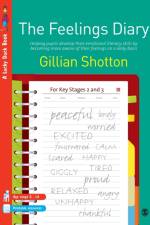
This book has been developed from Gillians own work in primary and secondary schools. The publication consists of:- comprehensive teacher notes- lesson plans focused on emotional literacy- copiable diary pages notes.Facilitating this programme the teacher will:- help students to understand, manage and express their own emotions- extend the range of feelings and vocabulary used- encourage emotionally literate behaviours and relationships.An essential resource for those who want to encourage emotional development in young people.
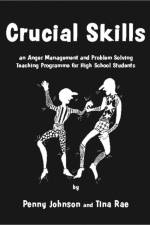
This programme is aimed at students (aged 11 to 16) with challenging and angry behaviours leading to disaffection and disciplinary problems. The handbook includes teacher notes, lesson plans and photocopiable resources.The 10 lessons and follow up work empower students to:" reflect on behaviour and consequences" recognise and understand feelings" develop strategies to control angry outbursts" respond to conflict without anger" resolve relationship difficulties.The programme promotes self-belief in students that they can effect change in their behaviour and achieve a positive outcome to reduce the risk of exclusion.
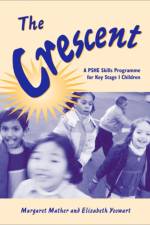
The 24 stories in this resource provide a years work based around the people who live in The Crescent. The characters provide a continuity and the themes include:- giving and taking- bullying and friendship- honesty and lies- birth and new arrivals- environmental issues.With every story there is a warm up exercise, Circle Time discussion, supplementary ideas, National Curriculum links and photocopiable worksheets.A comprehensive resource using a mini soap opera storyline, which will help children identify and emphathise with the characters so that they can experience and experiment to gain understanding of their own world.
Abonner på vårt nyhetsbrev og få rabatter og inspirasjon til din neste leseopplevelse.
Ved å abonnere godtar du vår personvernerklæring.