




















Gjør som tusenvis av andre bokelskere
Abonner på vårt nyhetsbrev og få rabatter og inspirasjon til din neste leseopplevelse.
Ved å abonnere godtar du vår personvernerklæring.Du kan når som helst melde deg av våre nyhetsbrev.

An advanced technical book for hybrid project and program management. The book presents a complete methodology covering both processes as well as principles, according to a sound meta-model.
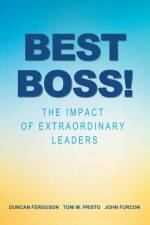
Distilled from accounts of individual best boss stories, research and author experience, this book unlocks the powerful secrets of best boss leadership by providing a systemic approach for leading the best boss way.
Leading business schools routinely offer undergraduate and postgraduate degrees in operations and supply chain management. Yet 200,000 U.S. jobs in supply chain management go unfilled each year owing to lack of talent. The talent that U.S. companies need, and that this book provides, is understanding how to make and buy products from China.How important is China to U.S. operations? In 2018, U.S. imports from China reached $600 billion. Half of these imports were bought by U.S. manufacturers. A dependency on Chinese goods is even greater when looking at U.S. supply chains. Sixty cents of every dollar that U.S. consumers spend on goods made in China go to U.S. workers and companies.Successful operations and supply chain managers understand manufacturing in China. This book takes readers inside Chinese organizations and shows how factories are built, labor is managed, goods are sourced, quality is controlled, and logistics are handled. Through this immersion experience readers are able to see the opportunities and pitfalls manufacturing in China.
Central banks do not print growth. The financial crisis was much more than the result of an excess of risk. The same policies that created each subsequent bust are the ones that have been implemented in recent years. This book is about realistic solutions for the threat of zero-interest rates and excessive liquidity. The United States needs to take the first step, defending sound money and a balanced budget, recovering the middle-class by focusing on increasing disposable income. The rest will follow. Our future should not be low growth and high debt. Cheap money becomes very expensive in the long run. There is an escape from the Central Bank Trap.
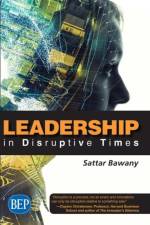
This book provides insights into an understanding of disruptive leadership. It explores the key success factors for digital transformation of organizations in the highly disruptive, increasingly VUCA-driven era of the Fourth Industrial Revolution.Disruption is happening everywhere and in every aspect of our lives. It is happening at a scale and speed that is unprecedented in modern history, impacting diverse industries, from financial services to retail, media, logistics and supply chain, manufacturing, education, professional services, and life sciences. Leaders are finding it challenging to navigate the near-insurmountable challenges resulting from the impact of these disruptive events on their organizations.The right leadership is critical for organizations to thrive in a disruptive business environment. How should we define leadership in such an environment? Are the current leadership practices and competencies still relevant in the face of such disruption? What are the attributes of a "e;disruptive digital leader"e;? How can leaders set themselves up not only to survive but also to thrive in navigating the challenges of disruptive events and crises?This book provides insights into an understanding of disruptive leadership. It explores the key success factors for digital transformation of organizations in the highly disruptive, increasingly VUCA-driven era of the Fourth Industrial Revolution (also known as Industry 4.0). The book also examines the fundamental qualities of disruptive leadership that would distinguish successful leaders as they guide their organizations through the impact of the COVID-19 pandemic and the digital transformation at the workplace.
This book describes methods to transform existing business by using digitized trust that is industrialized at scale.Executives, consultants, and strategists are wondering how to participate in the blockchain economy. They are wondering whether new business models that will emerge because of this novel technology will disrupt theirs or whether they will ignore their businesses and create completely different models. In this book I answer all those questions. By the time you finish, you will understand what blockchain economy is, how to participate in it, and avoid being disrupted or, even worse, ignored. Drawing from my own experiences as research scientist and entrepreneur, the book describes methods to transform existing business by using digitized trust that is industrialized at scale.
In Workplace Jazz, the author raises a battle cry for individual and corporate responsibility in building cultures that are healthier and more productive for those working in them.What should leaders do to address this workforce engagement and productivity gap? Should companies keep implementing culture improvement processes and procedures that do not address the emotional connection that teams need?Workplace Jazz offers a step-by-step process, enhanced with stories, neuroscience research, case studies, metaphors, and a strategic blueprint for developing connected and high-performing project teams based on the author's experiences as a professional musician, certified conversational intelligence coach, and certified business consultant.
This book is a collective project from three authors who have worked with nonprofits in developing and managing effective social media marketing tactics. Within these pages, you will find what you need to ensure your nonprofit is using social media platforms to boost your branding and marketing.When you use social media in your personal life, you connect with old friends, discover new interests, or belong to specialized groups that share your values. However, for nonprofits, social media is a way to connect with those who believe in your purpose. Social media allows nonprofits to showcase their human connection and garner more support.In Make Your Nonprofit Social, you will learn how to: - Expand your nonprofit's audience - Showcase the human side of your nonprofit - Choose the best platform to share your nonprofit with the world - Identify practical strategies you can use to amplify your nonprofit's mission - Design graphics to put your nonprofit front and center - And much more!This book is a collective project from three authors who have worked with nonprofits in developing and managing effective social media marketing tactics. Within these pages, you will find what you need to ensure your nonprofit is using social media platforms to boost your branding and marketing.
Transforming Towards Life orients change agents, policy makers, activists, business leaders, ecologists, economists, and thoughtful people everywhere to the values and practices needed to build a world where all can flourish, where 'all' includes all humanity and all of life's beings.It provides an in-depth understanding of what it will take, especially in the wake of the global Covid-19 pandemic and the burgeoning climate emergency, to transform today's growth-and profit-oriented socio-economic systems to life-affirming ways benefit all rather than just an elite few.Transforming Towards Life argues that to move towards a world in which all can flourish, we all need to start telling new, yet very ancient, stories about who we are and why we are here in the world-stories built on relationship or connectedness, responsibility for the whole, reciprocity, and equity. We need to incorporate core ideas about what gives life to systems into all businesses, communities, governments, and other types of organizations-that is, what helps them flourish.Business and other institutions need to create collective value, that is, value for all, and change the mindsets of people engaged with them so that they in turn can generate new performance metrics, practices, and power relationships that enable people everywhere to find their voice and their capacity to participate actively in bringing about a flourishing world. The book concludes with thoughts about how each one of us can do our bit to bring about this necessary transformation.
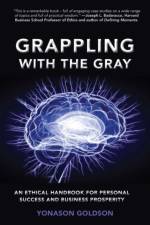
Grappling with the Gray offers a collection of case studies, real and hypothetical, intended to ignite thoughtful consideration of ethical dilemmas in our personal and professional lives. Simply stated, a business culture driven by profits at the expense of values is destined to fail. Research shows that companies ranked highest for ethics grow faster than companies that aren't. Work environments are more pleasant. Employees are more satisfied, engaged, loyal, passionate, and productive. Turnover costs are less. Brand image shines. Cultivating a culture of ethics is the time-tested formula for spectacular success. The thought questions and discussions that follow each case study offer the opportunity to develop the ethical mindset that enables us to see the bigger picture, engage in civil debate, and work effectively toward consensus. Raising our ethical awareness ultimately produces a culture where compliance laws take care of themselves and a workforce that feels empowered, appreciated, and invested in a common vision that accelerates success.
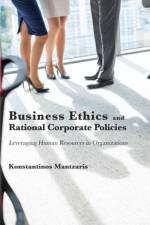
This book is about providing a comprehensive framework for understanding business ethics and corporate governance.As internal doubts persist on whether an individual adheres to business ethics and corporate policies, readers need to utilize this book in order to develop moral reasoning by demonstrating the moral entity consideration principle.This is vital in terms of coping with an internationalized business environment where human resources must adhere to multidimensional and demanding policies, while attempting to develop their mindset capacity of ethical thinking.This book is about providing a comprehensive framework for understanding business ethics and corporate governance, by analyzing the moral aspects of a plethora of challenges regarding human resources management, policy making, corporate responsibility, code of conduct, agency theory, workforce planning, information systems, and employment relationship.
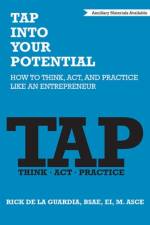
This book focuses on the concepts, mindset, philosophy, and qualities of entrepreneurship.There are many books on entrepreneurship available in the market today, but very few speak to the mindset and philosophy required. This book focuses on the concepts, mindset, philosophy, and qualities of entrepreneurship. The author provides guidance and suggest helpful activities at the end of each chapter to inspire the reader to take positive steps toward entrepreneurship. It will teach the reader how to Think, Act, and Practice like an entrepreneur.The book will not only show you how to do it, but it will also provide first-hand accounts and personal experiences and details of how I did it, including the hurdles I encountered and how I overcame them. I wish to share those with you in the hopes that it makes your path toward entrepreneurship easier, and your successes greater, than mine.
This is a book for anyone intrigued by the complexities of digital leadership that require a capability to constantly balance the routines of everyday business with the ability to innovate.Finding the appropriate mix between the dichotomy stability-flexibility has been a delicate task that few, if any, corporations have properly managed to overcome. Why is that?This conundrum becomes acute as businesses embark on digital transformations, an often-painful venture highlighting the deficiencies of traditional management styles but also agile methodologies. They deliver results that are far below initial expectations, provide half-baked digital solutions where potential commercial gains are poorly captured and leveraged, and, far too often, not even identified.Mismatches between technologies, the man-machine (dis)connect, or organizational dysfunctionality are typically identified as root causes, but beneath them lurks a more scathing problem: an inadequate leadership. This inadequacy rests on a lack of holistic insights backed by well-rounded skills and sets of knowledge that are required to understand all aspects of a digital transformation, as well as its participants from employees to customers.Thus, what is needed is a modern take of the Renaissance Man.
This book is an introduction to computers covering relevant topics that include: computers and society, the Internet, social media, Microsoft Office 2019, and high-level programming.The main goals are to help students to define computers and information processing and describe the main concepts related to hardware, software, and their use.The author prepares students to identify how the Internet has changed people's lives and develops critical thinking about the role of computers in society, recognize the impact of technology in the personal and professional base, to mention a few. Emphasis is placed on developing skills in Word processing, spreadsheets, presentations, and programming algorithms.
This book is an introduction to the challenge of modern leadership.Leadership has changed from the traditional perspective to be one which is far broader based, with more expected and asked. Leaders today need to consider their stakeholders, their employees, the communities and society in which they operate, the environment, culture, and trends.The world has changed so much in the last ten years and many are lagging behind in their understanding. At the same time, we are about to witness a change in generations and the question arises as to whether industry is ready to empower and pass on the baton of leadership?The main goals are to help students to understand what will be asked of them as they become leaders. It is aimed to challenge perceptions, thinking, and knowledge. Also, it aims to prepare students to identify how leadership has changed people's lives and help develop critical thinking about the role of leaders in business and in society.
A Cynic's Business Wisdom is an entrepreneur's manual from the edgy perspective that cynicism teaches us to have a healthy respect for the unexpected.It equips us to effectively deal with real-world business challenges and capitalize on opportunities. Essentially, it is the flip side of all those "e;instant-gratification-sugar-coated-success-guaranteed-get-rich-overnight"e; books.This manual is a keen reflection of converting collegiate knowledge into actions that are intended to give you an advantage in dealing with people, selling, networking, negotiating, managing, and controlling every business situation you find yourself in.It responds to questions posed and issues raised by entrepreneurs, academics, trainers, mentors, and businesspeople over all my years delivering business consulting, and expounds on my advanced business workshops, and on my very own business ventures.Business often is not pretty. Business is not always fair. People are out to win at virtually any cost. Those footsteps you hear are a constant reminder that you have a target on your back. Flexible business ethics are part of empowering you to play by your own rules, recognize that business is a game, nobody owes you a break, there are no black-and-white norms, and that business ethics are flexible. Understand how to play the game to win.
Food and architecture, the two pillars of human civilization, have intertwined to such extents to sustain the civilization itself, that the connection between the two has visually ceased to exist. The apparent diverse fields of human life have worked upon similar principles through ages from the beginning of mankind and they complemented our existence.Food is fundamental to cross-cultural studies of behavior, thought, and imagery. We eat for many reasons than just to satisfy our appetite. The act of eating is now a way of socializing with others. Hence all major institutes of food service are trying hard to amaze their users with a built environment that complements the served delicacy. Although most of the users might not understand the thought consciously but subconscious mind keeps alarming when things don't fall in place.The book surfs through all the aspects of such two diverse fields and tries to show a parallel through a very socialistic and holistic perspective. It's interesting to understand the intangible logics behind the very tangible aspects of human life.
This book equips readers to optimize genuine export opportunities.Globalization or international development is more vital than ever for business survival, let alone growth. This book equips readers to optimize genuine export opportunities.It addresses the fears and risks associated with exporting and reassures readers that international growth is available to any business that conducts in-depth research, adopts the right attitude, and develops a comprehensive strategy.Readers are challenged to consider seven key business considerations facing them when seeking success in export markets: product and service adaptation, comprehensive communication, portable protected branding, high-performance tradeshows, optimized go-to-market channels, fit-for-purpose internal organization, and controlled effective cashflow.This concise book serves time-starved small to medium enterprise (SME) entrepreneurs, owners, and directors in any industry anywhere in the world who seek international or global development and those studying or teaching international business.
The Barn Door Is Open: Frameworks and Tools for Success and Fulfillment in the Workplace is a business book, a playful and humorous read, an intelligent metaphorical and philosophical tale anchored in the tools and techniques of innovative and proven management frameworks.Readers will not only find its teachings entertaining and inspirational, but will benefit from its lessons and tools by applying them to their personal lives.This book integrates the subjects and tools of Lean and Lean Transformation, mindfulness, conflict resolution, Theory of Constraints, project management, Agile, Six Sigma, change management, and corporate culture transformation into one easily digestible reference.
This book provides a unique perspective into the mindset of psychology and cybersecurity.It presents a view of incorporating the latest research in cybersecurity and behavior. The newest cybersecurity challenge is not just understanding cybercriminals' behavior, but our behavior as well, and to realize that some of behaviors could lead us in making bad cybersecurity decisions.By using models and literature rooted in psychology and comparing those to cybersecurity attacks, this book will help those who make crucial cybersecurity decisions to protect their organization, even better decisions. Dr. Brown also presents even a possible theory of cybersecurity. Key areas include: behaviorism; learning models; cybersecurity vulnerabilities; stereotypes; cybersecurity traits; conditioned response; social engineering; deep fakes.
Lean Thinking for Emerging Healthcare Leaders: How to Develop Yourself and Implement Process Improvements aims to solve the issues in modern day healthcare by handing over the reins of the improvement process to healthcare professionals.Putting those who are doing the work and are closest to the actual situation in the lead.This book educates you, as a leading medical professional, in the principles and values of Lean leadership and management. It will teach you how to improve healthcare from the inside, making it safer, better, faster, more accessible, and more affordable.With this book we want to inspire, motivate, and stimulate you to lead continuous improvement-while being respectful to people-on your way to ideal care for every patient.The primary target audience for the book are medical professionals who have (recently) acquired leadership, management, or business responsibilities. The book will also be of high value to those who obtained temporary leadership positions, like project leaders, problem solvers, change managers, and innovators.Because most of the teachings in the book are meta skills and ways of thinking, the book is easily relatable and transferable to other disciplines and even sectors.
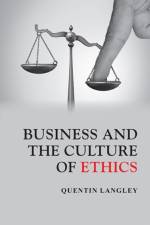
This book explores business ethics as applied in a modern context including data management, corporate social responsibility, media ethics, and government ethics.Ethics are not the same as morals. They are contextual and apply to specific relationships. This work explores business ethics as applied in a modern context including data management, corporate social responsibility, media ethics, and government ethics. Drawing on the work of philosophers, the work is nonetheless contemporary and practical.
Design: A Business Case challenges you to stimulate innovation in your own organization as an ongoing and integral dialogue between complementary skills-to bridge mind and matter, image and identity.Design thinking is a framework developed to ensure C-suite endorsement of the pursuit of design excellence in all actions undertaken by the organization. Design management is a rigorous and strategically anchored mechanism to capitalize on the investment in design as intellectual capital. And design - as we've always known it - is the skills, methods and creative capabilities needed to embody ideas and direction. Design thinking inspires, design management enables, design embodies. This book aims to build the bridges needed to reconcile the three, and to encourage organizational and professional environments in which their combined forces can thrive and reverberate.
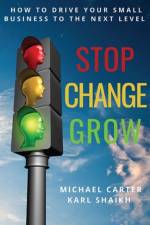
You've grown your business, reached a plateau and are now struggling to grow. Each time you try something new or add a new customer, something else goes awry - leaving you spinning the same plates, under the glass ceiling that's blocking your progress. You need a plateau buster to put yourself back on the growth trajectory!This book is the inspiration you're looking for. In three major sections it shows you how to: STOP doing many of the things that were once right but are no longer appropriate, freeing up resources, allowing you to; CHANGE what you are doing for better results today and then to; GROW the business for a future that will excite you.As you turn the pages, you will find real life examples together with easily implemented ideas and suggestions to provide an immediate impact on your thinking and your business.
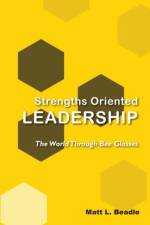
This book is about talent, strengths and positive psychology.Everyone is naturally talented in certain areas and if we get the opportunity to use our talents at work and develop them into strengths then we can work better, faster and far more productively. Bees search for pollen and they find it in the beautiful, successful, growing things around us: flowers. Flies search for rotting trash, bacteria and ugliness. Do you want to go through life like a fly or like a bee?These pages present the overwhelming scientific evidence that strengths-based leadership and collaboration lead to more productivity, more innovation, better well-being at work, lower absenteeism, and better health. Learning to recognize your talents, leverage them into strengths and, mitigate your weaknesses will change the way you and your colleagues work.
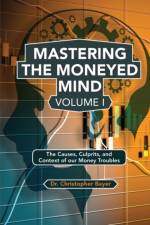
This book invites readers to consider, for themselves, stories of mass mind-control perpetrated by marketing mavens who utilize (and perhaps manipulate) insights from behavioral psychology to generate rank materialism, manifested in ever-increasing consumption, palatable to the public.The Causes, Culprits, and Context of Our Money Troubles is the first book in a series about the psychology of money by Dr. Christopher Bayer, the Wall Street Psychologist. Informed by more than 30 years of research in the areas of economics/finance and psychology, Dr. Bayer explores the history of our relationship with money-specifically the role morality, and the concept of "e;virtue,"e; has played in that history, and the wealth versus money dichotomy. Filled with tales and exemplifications, the book introduces readers, pseudonymously, to sample patients of money -mind imbalances, such as the "e;11 million-dollar man"e; who becomes corrupted by money's influence, that unbalances their internal gyroscope (internal moral compass). It draws readers to examine past- and present-day corruptions derived from money's influence and compels them to examine concepts and theories from great economists of yore (e.g., Adam Smith, Karl Marx, and J.M. Keynes) to create a theoretical foundation for what the author calls a Gyroscope methodology.As a foundational tool in the series, this book invites readers to consider, for themselves, stories of mass mind-control perpetrated by marketing mavens who utilize (and perhaps manipulate) insights from behavioral psychology to generate rank materialism, manifested in ever-increasing consumption, palatable to the public.
Abonner på vårt nyhetsbrev og få rabatter og inspirasjon til din neste leseopplevelse.
Ved å abonnere godtar du vår personvernerklæring.