











Gjør som tusenvis av andre bokelskere
Abonner på vårt nyhetsbrev og få rabatter og inspirasjon til din neste leseopplevelse.
Ved å abonnere godtar du vår personvernerklæring.Du kan når som helst melde deg av våre nyhetsbrev.

This volume presents a unified and up-to-date account of the theory and methods of applying one of the most useful and widely applicable techniques of data analysis, 'dual scaling.' It addresses issues of interest to a wide variety of researchers concerned with data that are categorical in nature or by design: in the life sciences, the social sciences, and statistics.The eight chapters introduce the nature of categorical data and concept of dual scaling and present the applications of dual scaling to different forms of categorical data: the contingency table, the response-frequency table, the response-pattern table for multiple-choice data, ranking and paired comparison data, multidimensional tables, partially ordered and successively ordered categories, and incomplete data. The book also includes appendices outlining a minimum package of matrix calculus and a small FORTRAN program.Clear, concise, and comprehensive, Analysis of Categorical Data will be a useful textbook or handbook for students and researcher in a variety of fields.
Water is fundamental to human life, and the ways in which a society uses it can tell us a great deal about a people. The ancient Greeks and Romans had at their disposal several mechanical water-lifting devices. The water-screw, the force pump, the compartmented wheel, and the bucket-chain were developed by scientists associated with the great school at Alexandria. Application of these devices was sporadic in the Hellenistic world, but they, and the later saqiya gear, were used in a wide range of rural and urban settings in many parts of the Roman Empire.Professor Oleson has prepared a definitive study of mechanical water-lifting devices in the Greek and Roman world. He systematically and thoroughly examines the literary, papyrological, and archaeological evidence for the devices and considers the design, materials, settings, costs, effectiveness, and durability of the many adaptations of the small basic repertoire of models. The literary and papyrological materials range from Deuteronomy to papyri of the seventh century AD, and the archaeological sites discussed range from Babylon to Wales.An extensive collection of illustrations complements the literary, papyrological, and archaeological evidence for this remarkable ancient technology.
This is an analysis of English studies in higher education, addressed in particular to practitioners in the field - teachers and students. As Heather Murray states in her introduction, those who work in English are likely to have a stronger sense of critical history than of disciplinary history. She contends that, in order to understand and reform the discipline of English studies, it is necessary to shift the focus of examination 'down and back' - to look at ordinary and often taken-for-granted disciplinary practices (such as pedagogy), and to extend the historical frame. Murray begins with an examination of some important historical moments in the developments of the discipline in Canada: the appointment in 1889 of W.J. Alexander as first professor of English at the University of Toronto; the twenty-five-year experiment early in this century in rhetorical and dramatic education for women that the Margaret Eaton School of Literature and Expression represented; and the entry of 'theory' into the English-Canadian academy. The second section examines some of the common features and routines of English departments, such as curriculum design, seminar groups, tests and assignments, essay questions, and the conference, in order to establish the critical/political principles that underpin study and teaching in the academy today. In this section, Murray also focuses on the role of women as students and teachers of English. The final section surveys the literature available for further research on the discipline and for constructing a history of English studies in Canada.Theory/Culture
The reconnaissances of this book are ventures in the deep analysis of the unconscious as testified to by world ethnography. The topics examined are the image of the half-man, the operation of analogical classification, and ideas about sovereign powers to which men conceive themselves as subject. In each case, analysis brings out remarkable uniformities on a global scale. These cultural similarities are not correlated with particular social forms or linguistic traditions, and in their characteristics features they are not the products of deliberate cogitation or creative invention. The formal attributes they share are that they are premised on binary opposition and symmetry. The argument is that, intrinsically, the social facts in question are spontaneous products of unconscious 'cerebrational vectors,' and that they are archetypes of human experience.The three studies included in the volume, originally delivered as lectures at the University of Toronto in 1978, form an important sequel to Needham's previous book, Primordial Characters, and further develop certain of its analytical themes and substantive issues.
Certain regions of Canada suffer chronically from social and economic underdevelopment. Economists, geographers, and sociologists have written voluminously about the problem; politicians and policy-makers have mounted grand schemes in a vain effort to rectify imbalances; and planners have created and implemented programs in order to satisfy political exigencies, vested power elites, or the discontent of the Canadian citizens who inhabit these regions. Matthews, in a lucid, systematic analysis of regionalism and regional underdevelopment in Canada (particularly Atlantic Canada), takes us through the academic cant, political puffery, and bureaucratic bumbling to show how regional disparity and regional underdevelopment are the result of exploitation by powerful central Canadian interests - often acting in concert with and aided by the federal government, and too often armed with theoretical models and justifications designed by 'establishment' economists to legitimate their self-interests.He provides a devastating critique of the neo-classical economic and other models that have been created to analyse regional disparities, and in their place champions an approach that rejects economic determinism and structural determinism. He maintains that individuals bring about change and development and individuals, he asserts, are capable of acting in the general interest and not simply out of class interest.The Creation of Regional Dependency makes a landmark contribution to our understanding of the causes of regional dependency in this country and original contribution to the study of Canadian society.
In nine studies which make up this book Professor Skilling analyses the development of the communist systems in the various countries of Eastern Europe, with special emphasis on developments following the 22nd Congress in 1961. His conclusion is that the future of communism is, to a large extent, not only out of the control of the West, but out of the control of the Communist leaders as well. For Western policy he advocates a subtle and restrained approach, avoiding both the extreme attitude of regarding communism as a monolithic enemy bloc, and that of seeking openly to divide and separate the communist states from one another. The most likely trend, he predicts, will be evolution within communism, rather than its total replacement by another system.This work has made a distinctive contribution to studies of Russian and East European affairs. Based on scholarly research, it is written in non-technical language, and succeeds admirably in analysing a very complicated subject in relatively simple terms. It will be read with great interest and profit by students as well as by specialists, and by all the wider public interested in international affairs and in the position of communism in the world today.
For too long the history of Canadian society has been hidden in secondhand bookstores, the dark corners of library stacks, and the privacy of the occasional graduate seminar. Contrary to what often seems the common impression, there is a richness and distinctiveness to our labour history, our urban development, our traditions of regional and cultural conflict, our movements for social reform and justice - to all that vast range of topics, events, issues, and ideas that comprise the social history of a nation. The demands of teachers and students and indeed the general public for material relevant to Canadian social history have been matched only by the frustrations raised by the inaccessibility, sometimes the apparent non-existence, of documents basic to a new understanding of our heritage. It is now time that this heritage be retrieved and made available to everyone. It is the purpose of this new series,a The Social History of Canada,a to help meet these demands. The titles in the series, including The Rapids, will be issued in a common format, in both hardcover and paperback editions, and will deal with all areas of social history. Most of these volumes will consist of a reissue of classic works now out of print - novels, histories, investigations, polemics, tracts; others will contain a compilation of documents in areas where there are no worthwhile book-length studies. Each work will have a new introduction by a scholar who is a specialist in the field. It is hoped that this series will simultaneously enrich our knowledge of the past and lay the groundwork for future advances in scholarship and historical consciousness.
In 1910, Mrs. Lydia A. Marfteet of Prophetstown, Illinois, endowed this Lectureship in memory of her late husband and as an expression of the regard which she and her husband had for this City and this University. Dorothy Thompson's topic as the Marfleet Lecturer is "e;The Crisis of the West."e; "e;Crisis"e; is defined as a turning point. In what direction does the arrow point?
Many singers today perform Elizabethan and Jacobean lute-songs. Robert Toft offers the first help for singers in understanding the principles which governed song performance and composition in the early seventeenth century. He shows how these historical principles may be used to move and delight modern audiences. The main purpose of early seventeenth-century singing was to persuade listeners using a style of utterance that had two principal parts - to sing eloquently and to act aptly. Toft discusses these two facets of singing within a broad cultural context, drawing upon music's sister arts, poetry and oratory, to establish the nature of eloquence and action in relation to singing. He concentrates on these techniques which can be transferred easily from one medium to the other. Specifically, he draws on the two aspects of oratory which directly bear on singing: elocutio, the methods of amplifying and decorating poetry and music with figures, and pronunciatio, techniques of making figurative language inflame the passions of listeners. The arrangement of the material has been inspired by the method of schooling William Kempe prescribed in 1588. The first part of the book examines elocutio, for singers need to understand the structure of songs before they can sing them well. The second part considers pronunciatio and focuses on the techniques used to capture and inflame the minds of listeners, that is, the role of pronunciation in utterance, the methods for making figures and other passionate ornaments manifest, the application of divisions and graces to melodies, and the art of gesture. In the final section of the book, Toft applies the techniques of early seventeenth-century eloquent delivery to two songs - 'Sorrow sorrow stay' and 'In darknesse let mee dwell' - by one of the greatest English songwriters ever to have lived, John Dowland.
The second edition of this companion volume to Sifron la-Student, the Hebrew University summer school textbook for teaching modern Hebrew to English-Speaking students, has been revised to correspond with the new edition of the Sifron. The volume again provides a less-by-lesson Hebrew-English vocabulary and presents relevant grammatical material in a concise and systematic matter. In addition, it includes additional syntactical material and a dictionary of words used.
This study of Environment, Race, and Migration is in a sense a new edition of the writer's book Environment and Race, published in 1927. But so much new material has been added that it was deemed advisable to indicate these additions by a slight change in the title.Among the 158 maps in the present volume, 100 did not appear in the 1927 book. The section on the environmental control of modern migrations has been greatly increased. Five new chapters deal with settlement in Canada, and constitute one of the first modern geographical studies of the whole Dominion. Two of the chapters on Australia are new, and a good deal more emphasis has been laid on new settlement in Siberia and Africa. The fundamental factors of structure, climate, and changing environment are also more fully explained for each continent.
In 1964 the United States began its War on Poverty with the passing of the Economic Opportunity Act, and in the following year Canada announced a similar attack. Since then much has been published in books, journals, pamphlets, and reports relating to this vital concern. Various government departments and academic disciplines, including anthropology, economics, education, history, law, medicine, political science, psychiatry, psychology, public health, religion, social work, and sociology, have examined their relationships and involvements in the War on Poverty, and this Bibliography lists approximately 600 published items from such North American sources. To provide a critical overview of the attack on poverty, Martin Rein, S.M. Miller, and Harris Chaiklin have contributed short papers on the American experience, and B.W. Lappin has presented the problem from the Canadian point of view. Professor Schlesinger has outlined a Canadian profile of poverty, together with the various anti-poverty programs suggested by the Canadian government, since these are less well known and documented than the American counterparts. In addition there is an appendix of articles on poverty found in popular periodicals, and a list of bibliographies on poverty or related topics.Teachers, students, and professionals in the various disciplines named above will find this bibliography valuable, and it will be of interest too to researchers, government officials, and program planners concerned with the War on Poverty.
This volume is a sequel to Rions ensemble, a collection of stories prepared by the author and provided with exercises, vocabulary, and notes by the late Professor H.L. Humphreys. The exercises have been designed to further the purpose of the texts. For each story there is supplied a series of questions that lend themselves to oral answers and discussion; in addition there is a short exercise reviewing grammatical forms, with special emphasis on the verb, as well as a brief passage for prose translation into French. All words occurring in the text of the stories are given in the vocabulary, as are the variant forms, except for a few of the most obvious which occur in the later part of the book. Notes are included in the vocabulary.
ONE AFTERNOON in the Spring of 1936, Claude Thomas Bissell, twenty, honour graduate in English and History, filed with his classmates to the platform of Convocation Hall at the University of Toronto and there received his Bachelor of Arts degree from the Chancellor. Twenty-two years and a few months later - on the evening of October 24th, 1958 - he was in Convocation Hall again, this time to make his pledge as President of the University.It is the purpose of this book to link these two moments in the life of Claude Bissell and to record his installation as the Eighth President.
Throughout the nineteenth and twentieth centuries alcoholism was seen largely as a vice of the poor and its treatment rested almost entirely with the missions and the workhouse. The theory that alcoholism is a disease that can affect anyone regardless of social position is by no means universally accepted even today. Although in the last twenty-five years there has been a rapid increase in the number of public institutions for the treatment of alcoholics, the possibility remains that class status still influences the diagnosis and care they receive. This study observes a sample of patients of a public clinic, from their source of referral for treatment to termination of therapy, to determine the influences of class position on the therapy used in each case. The findings indicate that specific treatments are assigned along class lines. The authors of this study offer a number of necessary recommendations which ask for a more rational link between therapy and diagnosis than is currently evident in clinical practice. This is an extremely important and topical study, the findings of which are applicable beyond the treatment of alcoholism to the treatment of all behavioural disorders.
In this interdisciplinary study Henry Schogt explores the relations between linguistics, literary analysis, and literary translation. He offers an analysis of both theory and practice of literary translation and literary analysis in the light of contemporary linguistic theories. Various aspects of language are examined: sound, grammar, morphology and syntax, semantics, style, social and geographical variants from the system-oriented point of view of linguistics and from that of the individual literary text. Discussions of general problems cover the conflict between system usage and norm, the theory of cost and yield, and the nature of the linguistic sign. Questions more specifically relevant for literary analysis and literary translation are also addressed. How does one deal with sound symbolism? How does the translator cope with the problem raised by the Sapir-Whorf hypothesis, according to which each language represents a different world view? Does the reader/receiver-oriented text analysis destroy the identity of the text and thereby give the translator complete freedom?Schogt reviews some happy and some not so happy encounters of linguistics and literary analysis, and concludes with an assessment of the prospects for a fruitful collaboration of linguistics, literary analysts, and translators.
There has been little analysis of the forces that have contributed to the rise of radicalism in Canada, or to the organizations that subsequently resulted. The ultra-left in the Canadian political spectrum, has been almost totally overlooked. This study is the first to trace the origins and growth of the Party during the initial decade of its existence. Its history is of particular interest because it is unique among Canadian political bodies in drawing its inspiration as well as practical advice from an external source: The Communist International which subordinated the Canadian party to Moscow and to the Communist Party of the Society Union. The Communist party is the only Canadian political body which can trace its origins to an epochal event such as the Russian Revolution. Soldiers of the International covers the origins and growth of the Canadian party in detail and shows that its programme and development paralleled those of other Communist parties throughout the world. Based upon primary sources, this fascinating account emphasizes both the importance of the first decade of the existence of the Canadian party and its failure to establish itself in these crucial years between World War I and the advent of the Depression. The author discusses this failure in view of the Party's unpreparedness and lack of support in the 1930's in conditions that ostensibly were ideally suited to its philosophy and programme. This informative account ably covers a neglected area in Canadian political history and throws new light on the facets of the political scene in Canada today.
The purpose of this work is to establish the relationship between the Romantic drama in France of the period 1829-1843 (circa) and the melodrama or "e;popular tragedy"e; which flourished in the second-class theatres during the first three decades of the nineteenth century. Since the essence of the melodrama of that period is found in the works of Guilbert de Pixerecourt (a fact which no student of French literature will deny) it has been thought sufficient to concentrate attention on these works and their connection with the Romantic drama, rather than to treat all or a large number of the many authors of melodrama who helped to flood the popular stage at that time.
The Canadian Political Science Association's 1964 Conference on Statistics was held in Charlottetown on June 13 and 14. The general theme of the Conference was Regional Statistical Studies. Twelve papers were presented and of these nine are included in this volume.
Trade and regulation have been a theme and counteropint through much of recorded history, each advancing at times when the other receded. In the past, regulation was imposed by self-aggrandizing territorial units that sought to use trade for their own purposes. Today trade agreements between nations are a permanent factor in international commerce, and as a result the nature of regulation is changing. In this series of essays Gilbert R. Winham explores the nature of international trade and regulation as it is evolving today. He begins with a historical perspective, and then considers the various stresses to which the system of international trade is subject. He discusses the nature and function of the GATT and assesses its effectiveness. Next he turns his attention to the latest round of talks, which broke down abruptly in Brussels at the end of 1990, and concludes with a look forward to the future of the GATT specifically and international trade in general. Today as economic boundaries are merging, dividing, and reforming, international trade plays a critical role in global stability. Winham offers an insightful analysis of how the current situation has developed and where it might lead.
In an attempt to maintain self-sufficiency, both Canadian and American federal authorities have imposed a number of restrictions on the inter-country flows of natural gas in North America -- tariffs, export and import permits, and quotas. The purpose of this study is to estimate how much less final consumers would pay for natural gas if free trade were allowed. A linear programming model is used to estimate a hypothetical flow pattern when no restrictions are placed on trans-border flows of gas. In comparing this free trade solution to a simulation of the actual flow pattern under trade restrictions, the costs to final consumers can be estimated. In addition, the regional gains and losses to producers can be measured. A chapter is devoted to investigating both the balance of payments effects of free trade adn the impact of the Canadian tariff on natural gas which existed from 1924 to 1967. A technique is devised to estimate the tariff necessary to prevent entry into the domestic market by foreign suppliers. The book should be of great interest to teachers of programming, economists, people in government, and individuals concerned about the effects of a continental energy policy.
As free trade talks continue uncertainly, as Ottawa and Washington toss protective tariffs at each other's goods, and as the provinces continue to disagree among themselves and with the federal government, the search for a national economic policy goes on. A critical element in that search is the balance between regional needs and federal priorities. Peter Leslie's interpretive essay provides a context in which to view the political and economic forces that make up that delicate balance, including those highlighted in the report of the Macdonald Commission. He discusses the nature of Canada's federal system and its relevance to policy, especially in the economic sphere, where differential effects among regions are often difficult to avoid.Leslie offers a thoughtful appraisal of a historically complex set of relationships and suggests the ways in which it will determine strategy in an area that will continue to occupy political centre-stage in Canada for some time to come.
Canadian defence policy has been largely neglected by historians except as a problem related to constitutional and political development. Dr. Hitsman repairs this neglect in his study of the military aspects of the defence of Canada, from the British Conquest to the withdrawal of the British garrison. His investigation demolishes a number of myths which have sprung up in this era of Canadian history. For example, in his examination of the military arrangements of the British in Canada Dr. Hitsman points out that, contrary to established belief, Guy Carleton, the last officer of the British Army to hold the appointment of Commander-in-Chief in North America, did more than just muddle through when Americans invaded Canada in 1775. This and many other misconceptions are corrected in this lucid study.After a brief introductory section on the problems of defence and attack during the period of the Conquest, there follows a coherent and intelligent account of the military aspects of Canadian defence after 1760: the geographical factors in strategy, the degree of potential danger, the men and resources available, and the policies pursued by the British government and its agents in Canada. The attitudes and behaviour of both English-speaking and French Canadians are also examined in their relationship to British rule.This book presents the facts about Canadian defence policy from original sources. Basing his study on Admiralty, Colonial and War Office papers, Dr. Hitsman reveals a remarkable ability for finding the appropriate document to illustrate each stage in the development in defence planning. His personal knowledge of army organization and his ability to make his way easily through military reports help to make this study an important contribution to Canadian history and scholarship.
Cette bibliographie constitue la liste la plus complete jusqu'a ce jour des romans canadiens-francais publies avant 1900. Les compilateurs presentent une description exacte et detaillee de chaque edition publiee en volume separe, avec indication des bibliotheques ou un exemplaire de l'edition est conserve. La description est suivie d'une liste des etudes et articles qui ont ete consacres au roman en question, et dans la plupart des cas, de note bibliographiques ou biographiques. Un index des noms d'auteurs et des titres facilite la consultation des 1100 references que contient le volume.A l'heure actuelle les etudes de litterature canadienne-franaise sont en pleine expansion non seulement dans les universites canadiennes mais aussi dans de nombreux centres aux Etats-Unis. Par consequent cet ouvrage de reference, fruit de longues annees des recherches consacrees a l'histoire du roman canadien-francais, rendra de grands services aux professeurs et aux etudiants, aux bibliothecaires et bibliographes, aux libraires et aux amateurs du livre canadien.
An all-inclusive edition of the poetry of Watson Kirkonnell would run to some ten large volumes of original verse and translations. His original verse would fill two volumes the size of this one, and his translated verse-from Icelandic, Italian, Dutch, French, Magyar, Latin, Ukrainian and Polish-would fill 5,000 pages. No poet in the English-speaking tradition is more deeply grounded in world literature.The original poetry of Watson Kirkconnell has been primarily narrative in character: first, the twelve philosophically slanted books of his Spenserian epic, The Eternal Quest; then the seventeen vivid narratives in The Flying Bull, and Other Tales, a sort of Western echo of The Canterbury Tales; and finally the thirty narrative poems of his new Centennial Tales, many of which were written in 1964. These are framed about the history of Canada, and are written in honour of the nation's Centennial in 1967. They range from the coming of the first "e;Amerindians"e; from Asia about 30,000 B.C. to a possible atomic holocaust in A.D. 2000, and include poems on the Quebec Conference of 1864, the Vimy Memorial, the Italian Campaign and the Canadians in Cyprus.This volume also contains some lyrics from Dr. Kirkconnell's light opera, The Mod at Grand Pr and the whole of his Greek-style drama, Let My People Go, with its setting in Egypt just before the Exodus and its issues in the present. The original poetry has been arranged in roughly the reverse of chronological order, while the translations are arranged according to the dates of publication.
Wolfe and Montcalm first appeared in the famous Makers of Canada Series in 1905, and was revised by A.G. Doughty in 1926 in the light of new documentary material which had become available. This is the first time this study has been published separately.
The Works of Mencius provides an admirable insight into one of the streams of thought of the Chinese. This new translation, especially arranged and annotated aims at rendering an Archaic Chinese original in a modern and unadorned prose.
By questioning the widely accepted picture of suburban society, this book will challenge much of our thinking about certain trends and developments in present-day society.
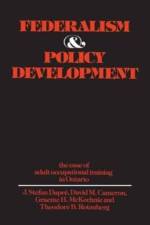
In 1966 the Canadian government announced the termination of a longstanding conditional grant relationship with the provinces in the domain of technical and vocational education. This book examines what ensued with particular reference to the province of Ontario.
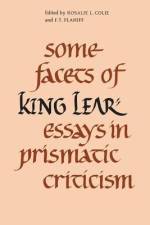
The essays in this book – forming neither a casebook nor a 'perplex' – were written because their authors wanted to understand something specific about King Lear, one of Shakespeare's very complicated plays.
Abonner på vårt nyhetsbrev og få rabatter og inspirasjon til din neste leseopplevelse.
Ved å abonnere godtar du vår personvernerklæring.