


Gjør som tusenvis av andre bokelskere
Abonner på vårt nyhetsbrev og få rabatter og inspirasjon til din neste leseopplevelse.
Ved å abonnere godtar du vår personvernerklæring.Du kan når som helst melde deg av våre nyhetsbrev.

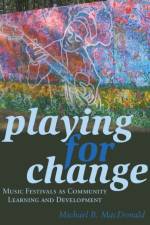
Playing for Change introduces a critical pedagogy of arts-based community learning and development (A-CLD), a new discipline wherein artists learn to become educators, social workers, and community economic development agents. The book challenges the assumption that acculturation into a ruling ideology of state development is necessary.
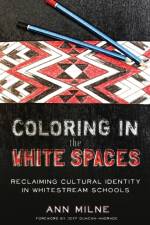
This book examines the struggle against racial and cultural inequity in educational systems. It offers the example of a New Zealand community and its efforts to step outside education's "White spaces" to create a new space for learning and to reclaim educational sovereignty - where individuals have the absolute right to "be Maori," in school.
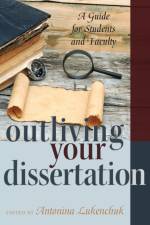
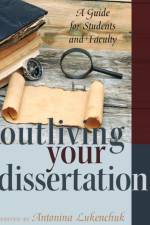
This guide focuses on the dissertation work as a step-by-step process and details the structure and the content of dissertation chapters.
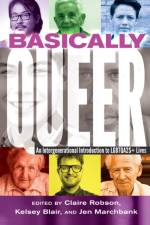
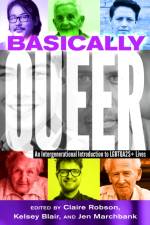
Basically Queer offers an introduction to what it can look and feel like to live life as lesbian, gay, bisexual, asexual, two spirited and trans.
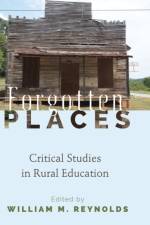
Forgotten Places: Critical Studies in Rural Education critically investigates and informs the construction of the rural, rural identity and the understanding of the rural internationally.
This guide focuses on the dissertation work as a step-by-step process and details the structure and the content of dissertation chapters.
Basically Queer offers an introduction to what it can look and feel like to live life as lesbian, gay, bisexual, asexual, two spirited and trans.
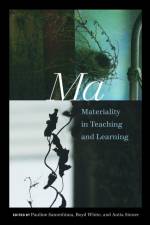
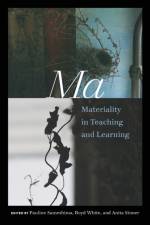
Ma is a curriculum. The Japanese concept of ma refers to the interval between two markers. In a dialectic exploration, the spaces between-private/public, teacher/student, old/new, self/other, among others are probed in ways that contribute to the significant research in teaching and learning that has been undertaken in the last decades.
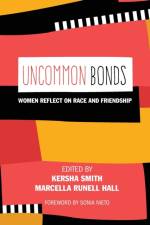
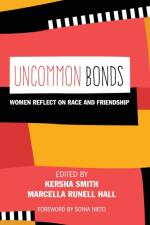
UnCommon Bonds is a collection of essays written by women representing multiple identities; all uniquely addressing the impactful experiences of race, ethnicity, and friendship in the context of the United States.
UnCommon Bonds is a collection of essays written by women representing multiple identities; all uniquely addressing the impactful experiences of race, ethnicity, and friendship in the context of the United States.
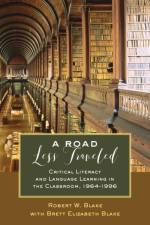
A Road Less Travelled: Critical literacy and language learning in the classroom -- 1964-1996 takes us through what the Blake calls the "jaunty journey" of the English/English Language Arts.
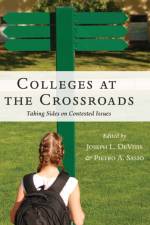
Focusing on crucial issues in higher education, Colleges at the Crossroads: Taking Sides on Contested Issues challenges readers to go beyond taken-for-granted assumptions about America's colleges and universities and instead critically examine important questions facing them in today's troubled world.
Unprepared for What We Learned: Six Action Research Exercises that Challenge the Ends We Imagine for Education explores how twentieth century models of education are not delivering on their promises, or helping to deliver the promise of the next generation.
In Assault on Kids and Teachers, educators from across the United States push back against the neoliberal school reform movements that are taking the "public" out of public education, demonizing teachers, and stealing from youth the opportunity for an equitable, just, and holistic education.
Fearless Engagement of Four Arrows offers a unique strong "medicine" for the reconstruction of a healthy, sane and sustainable future for all.
Keywords in the Social Studies: Concepts and Conversations takes words commonly used in social studies education and unsettles them in ways that will redefine the field for years to come.
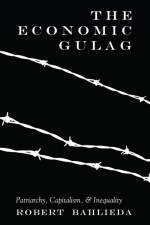
The Economic Gulag: Patriarchy, Capitalism and Inequality is a trenchant critical analysis of the devastating ravages of capitalist patriarchy in our modern society and its pervasive and increasingly destabilizing negative influence on our views and values regarding power, gender, wealth and inequality.
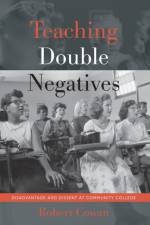
Teaching Double Negatives: Disadvantage and Dissent at Community College is an insightful collection that problematizes the assumptions of instructors and powerfully engages the intersectionality of students, appealing the readers across the educational spectrum.
Keywords in the Social Studies: Concepts and Conversations takes words commonly used in social studies education and unsettles them in ways that will redefine the field for years to come.
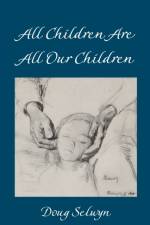
All Children Are All Our Children explores steps we can take in classrooms, schools, neighborhoods and communities to support the health of the children and of the families that send their children to our schools.
Ma is a curriculum. The Japanese concept of ma refers to the interval between two markers. In a dialectic exploration, the spaces between-private/public, teacher/student, old/new, self/other, among others are probed in ways that contribute to the significant research in teaching and learning that has been undertaken in the last decades.
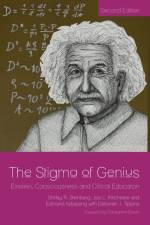
In The Stigma of Genius: Einstein, Consciousness and Critical Education, we muse over ways in which to be, to become, to recognize uniqueness and different paths to genius. Understanding that there is no prescribed procedure, we look at Einstein's life and knowledges to connect our pedagogies and students.
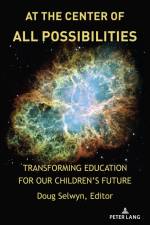
This book focuses on what learning our young people need if they are to become capable, responsible adults who are able to respond effectively to the crises we face today, and those that will arrive in the future.
"The three most venerated sutras of Zen in a true pocket-sized edition. The Heart Sutra, introducing the Prajnaparamita teaching of emptiness; the Diamond Sutra, introducing the bodhisattva path followed by the Buddha; and the Platform Sutra, introducing the teaching of Zen that students have been putting into practice for the past 1,300 years. In addition to new translations of all three texts, Red Pine has included an introduction that ties all three together and just enough footnotes to explain what needs explaining but not enough to get in the way"--
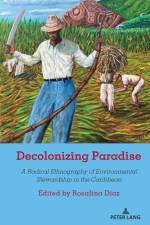
This edited book, by Rosalina Díaz, represents a radical form of ethnography, as it presents the voices of academic scholars and scientists side by side with those of grassroots activists, native healers and community herbalists, in addressing issues of cultural and indigenous identity, agroecology, sustainability and self-determination in the Greater Antillean region of the Caribbean. "In Decolonizing Paradise, Rosalina Díaz blends the voices of scientists with local healers and activists to explore a radical ethnography of plants and people in the Caribbean. Through their lived experiences in this crucially important bioregion, herbalists, brujas, and western-trained scientists resurrect and reveal indigenous and diasporic plant wisdom that has long been denigrated. This collection is an important ethnobotanical starting point for the colonized people of the Caribbean to redress centuries of cultural and environmental injustice."¿Robert Voeks, Author of The Ethnobotany of Eden: Rethinking the Jungle Medicine Narrative "At a time when the world is intensely focused on finding solutions to complex and existential environmental issues, Decolonizing Paradise is an indispensable tool for those wanting to engage in collective action in the Caribbean. This timely anthology of scholars, scientists, farmers, grassroots activists and environmentalists provides both historical context and an agenda for the sustainable environmental future of the region, with a particular emphasis on Puerto Rico.Decolonizing Paradise will quickly become essential reading for those interested in the Caribbean¿s environmental struggles, particularly as understood and analyzed by those who are currently in the trenches. Decolonizing Paradise also provides hope and inspiration for all those¿students, policy makers, activists and scholars¿who want to see change happen in the Caribbean."¿Felix V Matos Rodriguez, Chancellor of the City University of New York (CUNY), Author of Women and Urban Change in San Juan, Puerto Rico, 1820¿1868 "Decolonizing Paradise is a must-read primer for anyone interested in an insider perspective of environmental stewardship in the Caribbean region, as told by the voices of those currently active in the movement. In recognizing the long-standing environmental conflicts, clashes and actions of local activists and community groups, this book rectifies historical omissions and misperceptions, and challenges the still prevailing narrative of inaction and dependence that has wrongly stigmatized this population for centuries." ¿Alexis Massol-Gonzalez, Founding Director of Casa Pueblo of Adjuntas; Recipient of the Goldman Environmental Prize (2002)
Abonner på vårt nyhetsbrev og få rabatter og inspirasjon til din neste leseopplevelse.
Ved å abonnere godtar du vår personvernerklæring.