












Gjør som tusenvis av andre bokelskere
Abonner på vårt nyhetsbrev og få rabatter og inspirasjon til din neste leseopplevelse.
Ved å abonnere godtar du vår personvernerklæring.Du kan når som helst melde deg av våre nyhetsbrev.

On a rainy, miserable morning in Paris, a twenty-something bureaucrat decides there must be more to life than dull office work. Stevie Smith tries to figure out what he could do of great significance and hit upon the notion of a trip around the world using only human power-no motors, no sails, no balloons-maybe the last great first. With no experience, no particular expedition skills, and no money, the adventure begins. A pedal-powered boat, a bike, in-line skates, and a lot of non-heroics take Stevie and his buddy, Jason, where no one has gone before. No travel writing has more accurately captured the old adage, "it's the journey that matters, not the destination." Therein lies the simple beauty of this entertaining travel tale-a search for simplicity, integrity, and freedom.
Polish poet and essayist Zbigniew Herbert easily stands beside Nobel Prize laureates Milosz and Szymborska as part of a remarkable literary tradition. Though Herbert is very much an Eastern European writer, the urgency, vitality, and relevance of his work extend far beyond the borders of his particular region and his particular time. His fascination with other subjects—from painting to all things Dutch—enriched the scope and depth of his poetry, and made for compelling explorations in his essays and short prose pieces.The first collected English edition of his prose work, this outstanding volume consists of four books—Labryinth on the Sea, Still Life with a Bridle, King of the Ants, and Barbarian in the Garden. Brilliant and erudite, dazzling and witty, these essays survey the geography of humanity, its achievements and its foibles. From Western civilization's past, as witnessed through the Greek and Roman landscape, to musings on the artistic that celebrate the author's discriminating eye, poetic sensibility, and gift for irony, humor, and the absurd; from a sage retelling of myths and tales that became twentieth-century philosophical parables of human behavior to thoughts on art, culture, and history inspired by journeys in France, Italy, and the Netherlands, Collected Prose is a rich compendium that celebrates the mastery and wisdom of a remarkable artist.
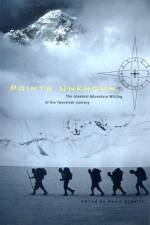
From Robert Falcon Scott's final journal entry to Jon Krakauer's reckless solo climb of the Devil's Thumb, David Roberts and the editors of Outside have gathered the most enduring adventure literature of the century into one heart-stopping volume. A frigid winter ascent of Mount McKinley; the vastness of Arabia's Empty Quarter; the impossibly thin air at Everest's summit; the deadly black pressure of an underwater cave; a desperate escape through a Norwegian winter-these and thirty-six other stories recount the minutes, hours, and days of lives pushed to the brink. But there is more to adventure than hair's-breadth escapes. By turns charming and tragic, whimsical and nerve-racking, this extraordinary collection gets to the heart of why adventure stories enthrall us. Includes works by Sebastian Junger, Jon Krakauer, Edward Abbey, Tim Cahill, Edward Hoagland, Ernest Shackleton, Freya Stark, and Wilfred Thesiger.
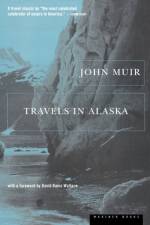
John Muir first saw Alaska in 1879, only twelve years after it was purchased from Russia by the United States. Four more times, in 1880, 1881, 1890, and 1899, he was drawn back to this land of rivers and glaciers, sunsets and northern lights, campfires and Arctic stars. Few people have lived so many adventures, yet Muir was not a mere collector of adventure; the hazards he encountered - and many were spine-tingling - came as a result of his intense desire to examine new aspects of the natural world.
In Greenville, New Hampshire, a small town in the southern part of the state, Henri Vaillancourt makes birch-bark canoes in the same manner and with the same tools that the Indians used. The Survival of the Bark Canoe is the story of this ancient craft and of a 150-mile trip through the Maine woods in those graceful survivors of a prehistoric technology. It is a book squarely in the tradition of one written by the first tourist in these woods, Henry David Thoreau, whose The Maine Woods recounts similar journeys in similar vessel. As McPhee describes the expedition he made with Vaillancourt, he also traces the evolution of the bark canoe, from its beginnings through the development of the huge canoes used by the fur traders of the Canadian North Woods, where the bark canoe played the key role in opening up the wilderness. He discusses as well the differing types of bark canoes, whose construction varied from tribe to tribe, according to custom and available materials. In a style as pure and as effortless as the waters of Maine and the glide of a canoe, John McPhee has written one of his most fascinating books, one in which his talents as a journalist are on brilliant display.
Many of the earliest books, particularly those dating back to the 1900s and before, are now extremely scarce and increasingly expensive. We are republishing these classic works in affordable, high quality, modern editions, using the original text and artwork.
Many of the earliest books, particularly those dating back to the 1900s and before, are now extremely scarce and increasingly expensive. We are republishing these classic works in affordable, high quality, modern editions, using the original text and artwork.
Abonner på vårt nyhetsbrev og få rabatter og inspirasjon til din neste leseopplevelse.
Ved å abonnere godtar du vår personvernerklæring.