























Gjør som tusenvis av andre bokelskere
Abonner på vårt nyhetsbrev og få rabatter og inspirasjon til din neste leseopplevelse.
Ved å abonnere godtar du vår personvernerklæring.Du kan når som helst melde deg av våre nyhetsbrev.

Porträt einer paradisisch anmutenden, doch vom Untergang bedrohten Inselkultur im PazifikFunafuti, eines der neun Atolle, die den Inselstaat Tuvalu bilden, ist mit kaum 2,8 Quadratkilometern ein erstaunlich kleines Stückchen Land mitten im Pazifischen Ozean. Neugierig auf die Menschen und ihre Kultur auf einer so abgelegenen Insel, reisten die Fotografin Julia de Cooker und ihre Schwester, die Schriftstellerin Émilie de Cooker, nach Tuvalu, wohl wissend um die bedrohliche Zukunft der Inselgruppe: In wenigen Jahrzehnten wird sie unter dem steigenden Meerespiegel versinken. Trotz dieser finsteren Aussichten konzentrierten sie sich darauf, die Lebensfreude des Inselalltags zu zeigen, was zu Fragen nach ihrer eigenen Art zu leben und einen Platz in der Welt zu beanspruchen führte. Das so enstandene Buch ist ein künstlerisches und philosophisches Porträt von "Funafuti i aso nei (heute)" sowie ein Plädoyer gegen globale Standardisierung und für lebendige Diversität.
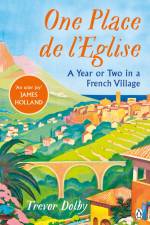
Brought to you by Penguin.A thousand years ago, around the time King Harold inconveniently got shot with an arrow and a group of ladies made a tapestry, in the south of France a man and his friends decided to build a house next to a church. Over the centuries many things happened in that house, none of which found its way into history books.With the coming of the first decade of the twenty-first century, One Place de l'Eglise had become rather derelict. The roof leaked, the mortar in the ancient walls was crumbling, a fertilizer bag stuffed a broken window. There was no electricity to speak of, the plumbing was a lead pipe in one room, the cellar doors had rotted. And there it stood. Shutters and doors firmly locked, the villagers of Causses-et-Veyran passing by to the church next door.Then, an impoverished - in his mind at any rate - Londoner and his wife went a little crazy and bought it. It was love at first sight.Over the years they gradually turn the house into a home. They navigate the language, floods and freezing winters. And eventually they find their place - their bar, their baker, their builder (ignore him at their peril).Slowly the family and the locals get to know one another and these busy English discover slower joys - the scent of thyme and lavender, the warmth of sun on stone walls, nights hung with stars, silence in the hills, the importance of history and memory, the liberation of laughter and the secrets of fig jam.One Place de L'Eglise is a love letter - to a house, a village, a country - from an outsider who discovers you can never be a stranger when you're made to feel so at home. Old houses never belong to people. People belong to them.(c) Trevor Dolby 2022 (P) Penguin Audio 2022
Abonner på vårt nyhetsbrev og få rabatter og inspirasjon til din neste leseopplevelse.
Ved å abonnere godtar du vår personvernerklæring.