


















Gjør som tusenvis av andre bokelskere
Abonner på vårt nyhetsbrev og få rabatter og inspirasjon til din neste leseopplevelse.
Ved å abonnere godtar du vår personvernerklæring.Du kan når som helst melde deg av våre nyhetsbrev.

DISCOVER the BEST places on the planet to buy records—Marcus Barnes’s updated guide is a MUST-READ for all vinyl lovers, crate diggers, and music fans.Looking for the best place in Europe to buy electronic music? Want to get lost in the racks of the world’s biggest independent record store? Are you constantly in search of the undiscovered, the original, the cult, the lost classics? Around the World in 80 Record Stores offers a unique look at where music lovers need to go to feed their addiction for new records. Boasting a truly global outlook—featuring stores everywhere from Iceland and India to the coolest cities in Europe, the US, and the UK, plus the mecca for crate diggers that is Japan—each entry includes plenty of interesting details about the record store, including the music genres sold, the store’s opening date, and facts about its history and quirks. Showcasing the best places to buy house, indie, jazz, rock, hip-hop, afrobeat, and everything in between, this is an essential companion for all record junkies.
A coming-of-age tale that follows its quintessential musical enthusiast narrator from his stormy, blue-collar childhood in Michigan to his striving twenties in 1990s New York and the making of Rent, his first astronomical triumph, and later on the Broadway sensation, Hamilton.
“Among the most profound and dazzling debuts I've ever read.” —Kiese Laymon, award-winning author of Heavy: An American Memoir An essay collection from culture critic Lawrence Burney that is a personal and analytical look at his home city of Baltimore, music from throughout the global Black diaspora, and the traditions that raised him.There are moments throughout our lives when we discover an artist, an album, a film, or a cultural artifact that leaves a lasting impression, helping inform how we understand the world, and ourselves, moving forward. In No Sense in Wishing, Lawrence Burney explores these profound interactions with incisive and energizing prose, offering us a personal and critical perspective on the people, places, music, and art that transformed him. In a time when music is spearheading Black Americans’ connection with Africans on The Continent, Burney takes trips to cover the bubbling creative scenes in Lagos and Johannesburg that inspire teary-eyed reflections of self and belonging. Seeing his mother perform as the opening act at a Gil Scott-Heron show as a child inspires an essay about parent-child relationships and how personal taste is often inherited. And a Maryland crab feast with family facilitates an assessment of how the Black people in his home state have historically improvised paths for their liberation. Taking us on a journey from the streets of Baltimore to the concert halls of Lagos, No Sense in Wishing is a kaleidoscopic exploration of Burney’s search for self. With its gutsy and uncompromising criticism alongside intimate personal storytelling, it’s like an album that hits all the right notes, from a promising writer on the rise.
8 lectures, 2 Q&A sessions, and 2 closing addresses, in various cities, December 3, 1906 - March 16, 1923 (CW 283)"A tone is at the foundation of everything in the physical world."This is one of many astonishing statements made by Rudolf Steiner in this collection of seven lectures on the inner realities of music. These lectures are an unusual treasure, since they are the only two groups of lectures that Steiner gave primarily on music, other than the lecture cycle for the tone eurythmy course, Eurythmy as Visible Singing.In the first group of three lectures, given in 1906, Steiner explains why music affects the human soul so powerfully. Music has always held a special position among the arts because it is the only art form whose archetype, or source, lies not in the physical world, as with architecture, sculpture, and painting, but purely in the spiritual world-the soul's true home. Music thus directly expresses through tones the innermost essence of the cosmos, and our sense of wellbeing when we hear music comes from a recognition of our soul's experience in the spiritual world.In the remaining lectures, given in 1922 and 1923, Steiner discusses our experience of musical intervals and shows how it has undergone profound changes during the course of evolution. The religious effects of music in ancient times and the union of music with speech are considered, as well as the origin of musical instruments out of imaginations that accompanied singing. New insights are offered on the nature of the major and minor modes and on future directions of musical development."Major and minor keys, this strange bond between music and human subjectivity, the actual inner life of feeling--insofar as this life of feeling is bound to the earthly corporeality--came into being only in the course of the fourth post-Atlantean epoch and are related to the experience of the third. The difference between major and minor keys appears; the subjective soul element relates itself to the musical element." -- Rudolf Steiner (lect. 5)This volume is a translation of 7 lectures (of 8) in Das Wesen des Musikalischen und das Tonerlebnis im Menschen, published by Rudolf Steiner-Nachlaftverwaltung, Dornach, 1969 (GA 283).
Advancing the New Jazz Studies by focusing on questions of intermediality and cultural catalysis, this book demonstrates the role jazz played in the re-making of West German culture in the post-war era.
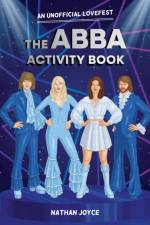
The next instalment in Pavilion's chart-topping activity book series by Sunday Times bestselling author Nathan Joyce
The modern music industry depends critically on computers. The development of conventional digital computing technology for music has been progressing in tandem with the evolution of computers since the 1950s. Therefore, future developments in quantum computing are most likely to impact the way in which musicians will create, perform, and conduct research.Classical computers manipulate information represented in terms of binary digits, each of, which can be equal to 1 (on) or 0 (off). They work with microprocessors made up of billions of tiny switches that are activated by electric signals. In contrast, a quantum computer deals with information in terms of quantum bits (qubits), which can operate at the subatomic level. In other words, they directly work in the realm of quantum physics. Since they can run algorithms that are non-tractable to run on digital computers, quantum computers are surfacing as a promising disruptive technology.Advances in Quantum Computer Music collates a comprehensive collection of chapters by pioneers of emerging interdisciplinary research at the crossroads of quantum computing and music. Together, these pioneers hope to anticipate and prototype the unprecedented new uses for this technology that are bound to emerge from their cutting-edge research.
Celebrating 50 years of Iron Maiden, this magnificent visual presentation, incorporating commentary by band members past and present, chronicles the evolution of heavy metal's most prestigious band. Iron Maiden is an institution. Hailed as pioneers of British new wave heavy metal, the band has come to embody a spirit of fearless creative independence and ferocious dedication to their fans that has won them a huge following around the world and across the generations. Iron Maiden traces the creative evolution of heavy metal's most influential and enthralling band, from 1975 to 2025. Presenting iconic album and single artworks, photographs of the band's instruments past and present, stage props, hand-written lyrics and artefacts from the archive and the band's personal collections, as well as landmark photographs by Ross Halfin and John McMurtrie, Iron Maiden is rife with revelatory stories and intriguing insights from pivotal band members and management. It is bookended by a foreword from band founder Steve Harris and an afterword by vocalist Bruce Dickinson. Organized chronologically, this supremely visual volume tells the entire story of the band from their first pub gigs in 1975 and their first record deal in 1979 through the recording and reception of the landmark third album The Number of the Beast in 1982 to their most recent 25th global tour. It traces the evolution of their iconic Eddie mascot, reproducing original sketches and artworks, and documents the band's spectacular and complex stage productions and extensive live tours, including the Somewhere Back in Time Tour of 2008, which made headlines around the world. Iron Maiden is the definitive legacy volume, celebrating the band's creativity, dedication, personality and success.
Abonner på vårt nyhetsbrev og få rabatter og inspirasjon til din neste leseopplevelse.
Ved å abonnere godtar du vår personvernerklæring.