







Gjør som tusenvis av andre bokelskere
Abonner på vårt nyhetsbrev og få rabatter og inspirasjon til din neste leseopplevelse.
Ved å abonnere godtar du vår personvernerklæring.Du kan når som helst melde deg av våre nyhetsbrev.

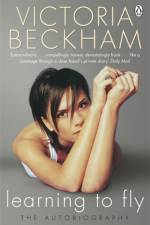
From the time she saw the movie Fame, the author wanted to be a star. A line from the theme song stayed with her - 'I'm gonna live for ever, I'm gonna learn how to fly.' This book gives us the chance to fly alongside her on her journey from lonely teenager to international star.
The story of Pussy Riot, punk icons and Russian dissenters, and the untold story of their infamous trial and on-going global significance
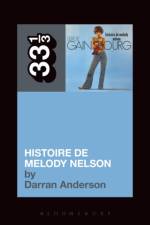
Outside his native France, the view of Serge Gainsbourg was once of a one-hit wonder lothario. This has been slowly replaced by an awareness of how talented and innovative a songwriter he was. Gainsbourg was an eclectic, protean figure; a Dadaist, poète maudit, Pop-Artist, libertine and anti-hero. An icon and iconoclast. His masterpiece is arguably Histoire de Melody Nelson, an album suite combining many of his signature themes; sex, taboo, provocation, humour, exoticism and ultimately tragedy. Composed and arranged with the great Jean-Claude Vannier, its score of lush cinematic strings and proto-hip hop beats, combined with Serge's spoken-word poetry, has become remarkably influential across a vast musical spectrum; inspiring soundtracks, indie groups and electronic artists. In recent years, the album's reputation has grown from cult status to that of a modern classic with the likes of Beck, Portishead, Mike Patton, Air and Pulp paying tribute. How did the son of Jewish Russian immigrants, hounded during the Nazi Occupation, rise to such notoriety and acclaim, being celebrated by President François Mitterand as "our Baudelaire, our Apollinaire"? How did the early chanson singer evolve into a musical visionary incorporating samples, breakbeats and dub into his music, decades ahead of the curve? And what are the roots and legacy of a concept album about a Rolls Royce, a red-haired Lolita muse, otherworldly mansions, plane crashes and Cargo Cults?
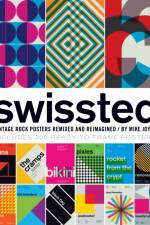
Swissted takes rock concert posters of the '70s, '80s, and '90s and remixes and reimagines them through a Swiss modernist lens. This book features 200 posters, all microperforated and ready to frame.
Benjamin Britten was one of the outstanding British composers of 20th century. He shot to international fame with his operas, performed by his own English Opera Group, and a series of extraordinary instrumental works. His music won a central place in the repertoire and affection of successive generations of listeners. This title tells his story.
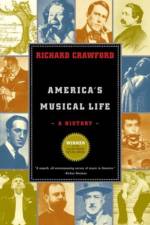
"A superb, all-encompassing survey of music in America." -Kirkus Reviews
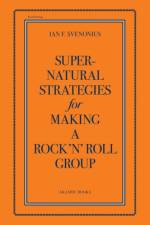
Washington, D.C.-based rock 'n' roll antihero Ian F. Svenonius provides an unparalleled and exquisitely provocative how-to guide for rock bands.
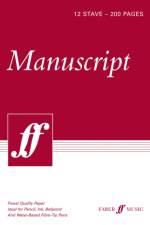
Suitable for course work or for performance parts, this title presents a manuscript paper in an A4 portrait pad on plain white paper. It includes 200 pages with 12 staves per page, which are also hole-punched.
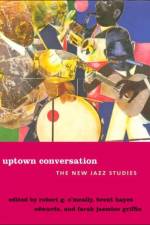
Offers insights in jazz historiography, highlighting the political stakes in telling the story of the music and evaluating its cultural import in the United States. This book contains articles such as Salim Washington's meditation on Charles Mingus and the avant-garde or George Lipsitz's polemical juxtaposition of Ken Burns' documentary "Jazz".
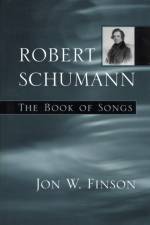
Arguably no other 19th-century German composer was as literate or as finely attuned to setting verse as Robert Schumann. Finson challenges assumptions about Schumann's Lieder, engaging traditionally held interpretations. Arranged in part thematically, rather than by strict compositional chronology, this book speaks to the heart of Schumann's music.
Camille Saint-Sans - perhaps the foremost French musical figure of the late nineteenth century and a composer who wrote in every musical genre, from opera and the symphony to film music - is now being rediscovered after a century of modernism overshadowed his importance. This book deconstructs the multiple realities behind the man and his music.
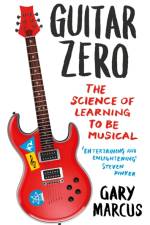
A renowned neuroscientist with no musical talent investigates what it takes to make musicOn the eve of his fortieth birthday, renowned cognitive scientist Gary Marcus decided to fulfil a lifelong dream and learn to play the guitar. He had tried many times before failing miserably. This time, he decided to use the tools of his trade to see if he might suceed. On his quest he jams with twelve-year-olds and takes master classes with guitar gods. A groundbreaking exploration of the allure of music, Guitar Zero is also an empowering case for the minds ability to grow throughout life.
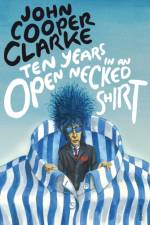
'Yes, it was be there or be square as, clad in the slum chic of the hipster, he issued the slang anthems of the zip age in the desperate esperanto of the bop. John Cooper Clarke: the name behind the hairstyle, the words walk in the grooves hacking through the hi-fi paradise of true luxury'Punk.
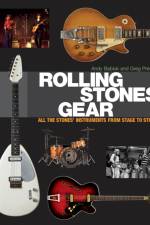
ROLLING STONES GEAR ALL THE STONES' INSTRUMENTS FROM STAGE TO STUDIO
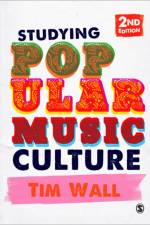
A fully revised and updated edition of this widely adopted textbook. The First Edition was published in 2003 by Hodder.
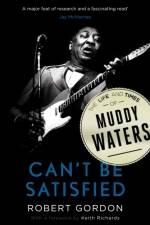
The definitive biography, by a long way, of the most influential blues musician of them all. In a nutshell: no Muddy Waters, no Rolling Stones
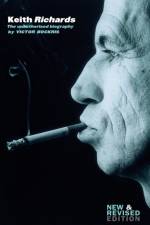
Victor Bockris's much admired biography of Keith Richards has been constantly revised since its original publication, now with an additional 12,000 words for a new edition of the Omnibus Press paperback that brings the story up to the present day.
Updated new edition 2021. The electric guitar is arguably the most important musical instrument of the modern age. This book explains how to buy the right instrument and set it up, and how to play. It demonstrates basic techniques and chords, and introduces genres such as rock 'n' roll, jazz, heavy rock, metal and blues.
Join the superhero world of Lang Lang and come on a piano adventure with The Lang Lang Piano Method Level 1. Level 1 introduces complete beginners to: *different five-finger positions *note reading *moving around the keyboard *developing both hands equally right from the start.
David Buckley examines the cult enigma that is Kraftwerk. Updated to include details of the group's recent concerts under the direction of Ralf Hutter.
Renaissance music in its cultural, social, and intellectual contexts.
"It's Time To Party," the first track off of I Get Wet, opens with a rapid-fire guitar line - nothing fancy, just a couple crunchy power chords to acclimate the ears - repeated twice before a booming bass drum joins in to provide a quarter-note countdown. A faint, swirling effect intensifies with each bass kick and, by the eighth one, the ears have prepped themselves for the metal mayhem they are about to receive. When it all drops, and the joyous onslaught of a hundred guitars is finally realized, you'll have to forgive your ears for being duped into a false sense of security, because it's that second intensified drop a few seconds later - the one where yet more guitars manifest and Andrew W.K. slam-plants his vocal flag by screaming the song's titular line - that really floods the brain with endorphins, serotonin, dopamine, and whatever else formulates invincibility.Polished to a bright overdubbed-to-oblivion sheen, the party-preaching I Get Wet didn't capture the zeitgeist of rock at the turn of the century; it captured the timelessness of youth, as energized, awesome, and unapologetically stupid as ever. With insights from friends and unprecedented help from the mythological maniac himself - whose sermon and pop sensibilities continue to polarize - this book chronicles the sound's evolution, uncovers the relevance of Steev Mike, and examines how Andrew W.K.'s inviting, inclusive lyrics create the ultimate shared experience between artist and audience.
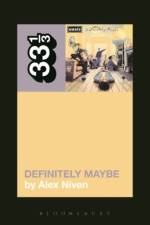
Oasis's incendiary 1994 debut album Definitely Maybe managed to summarize almost the entire history of post-fifties guitar music from Chuck Berry to My Bloody Valentine in a way that seemed effortless. But this remarkable album was also a social document that came closer to narrating the collective hopes and dreams of a people than any other record of the last quarter century. In a Britain that had just undergone the most damaging period of social upheaval in a century under the Thatcher government, Noel Gallagher ventriloquized slogans of burning communitarian optimism through the mouth of his brother Liam and the playing of the other Oasis 'everymen': Paul McGuigan, Paul Arthurs and Tony McCarroll. On Definitely Maybe, Oasis communicated a timeworn message of idealism and hope against the odds, but one that had special resonance in a society where the widening gap between high and low demanded a newly superhuman kind of leaping. Alex Niven charts the astonishing rise of Oasis in the mid 1990s and celebrates the life-affirming, communal force of songs such as "Live Forever," "Supersonic," and "Cigarettes & Alcohol." In doing so, he seeks to reposition Oasis in relation to their Britpop peers and explore one of the most controversial pop-cultural narratives of the last thirty years.
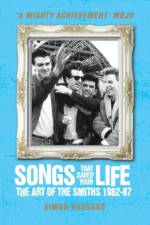
"First published in 2002 under the title The Smiths - songs that saved your life"--P. 7.
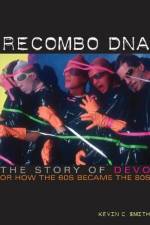
Beginning in 1970, with the transformative effects of the Kent State University shootings - which the band-members witness firsthand - and ending a decade later with Devo on the cusp of superstardom (with "Whip It"), this title traces the sounds and ideas that the group absorbed and in turn brought to prominence as unlikely rock stars.
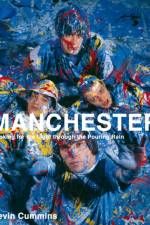
Manchester, its bands, its fashions, its attitude, has defined pop culture for the best part of four decades. Whether it be on a rain-soaked stage in Brazil, a rented room in Whalley Range, or on the dancefloor of the legendary Hacienda, Kevin Cummins' exquisite photographs capture the anarchic energy of the Manchester pop moment.
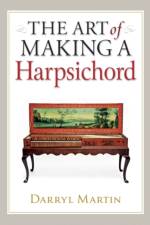
* A detailed exploration of how historical harpsichords were made, with instructions on how the modern reader can do the same. * Comprehensively illustrated with 400 photos and line drawings * Written by an internationally respected musical instrument museum curator and instrument researcher with considerable harpsichord-making experience.
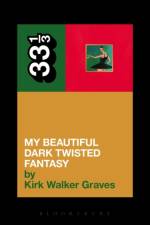
In the first decade of the twenty-first century, Kanye West created the most compelling body of pop music by an American artist during the period. Having risen from obscurity as a precocious producer through the ranks of Jay Z''s Roc-A-Fella records, by the time he released My Beautiful Dark Twisted Fantasy (MBDTF) in late 2010, West had evolved into a master collagist, an alchemist capable of transfiguring semi-obscure soul samples and indelible beats into a brash and vulnerable new art form. A look at the arc of his career, from the heady chipmunk soul exuberance of The College Dropout (2004) to the operatic narcissism of MBDTF, tells us about the march of pop music into the digital age and, by extension, the contradictions that define our cultural epoch. In a cloud-based and on-demand culture - a place of increasing virtualization, loneliness, and hyper-connectivity - West straddles this critical moment as what David Samuels of The Atlantic calls "the first true genius of the iPhone era, the Mozart of contemporary American music." In the land of taking a selfie, honing a personal brand, and publicly melting down online, Kanye West is the undisputed king. Swallowing the chaos wrought by his public persona and digesting it as a grandiose allegory of self-redemption, Kanye sublimates his narcissism to paint masterstroke after masterstroke on MBDTF, a 69-minute hymn to egotistical excess. Sampling and ventriloquizing the pop music past to tell the story of its future - very much a tale of our culture''s wish for unfettered digital ubiquity - MBDTF is the album of its era, an aesthetic self-acquittal and spiritual autobiography of our era''s most dynamic artist.
Abonner på vårt nyhetsbrev og få rabatter og inspirasjon til din neste leseopplevelse.
Ved å abonnere godtar du vår personvernerklæring.