









Gjør som tusenvis av andre bokelskere
Abonner på vårt nyhetsbrev og få rabatter og inspirasjon til din neste leseopplevelse.
Ved å abonnere godtar du vår personvernerklæring.Du kan når som helst melde deg av våre nyhetsbrev.

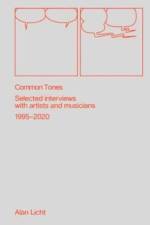
Conversations with the avant-garde's leading lights--from Suicide to Anohni--by experimental music's go-to interviewer, guitarist and sound artist Alan LichtFor the past 30 years, Alan Licht has been a performer, programmer and chronicler of New York's art and music scenes. His dry wit, deep erudition and unique perspective--informed by decades of experience as a touring and recording guitarist in the worlds of experimental music and underground rock--have distinguished him as the go-to writer for profiles of adventurous artists across genres. A precocious scholar and improvisor, by the time he graduated from Vassar College in 1990 Licht had already authored important articles on minimalist composers La Monte Young, Tony Conrad and Charlemagne Palestine, and recorded with luminaries such as Rashied Ali and Thurston Moore. In 1999 he became a regular contributor to the British experimental music magazine the Wire while continuing to publish in a wide array of periodicals, ranging from the artworld glossies to underground fanzines.Common Tones gathers a selection of never-before-published interviews, many conducted during the writing of Licht's groundbreaking profiles, alongside extended versions of his celebrated conversations with artists, previously untranscribed public exchanges and new dialogues held on the occasion of this collection. Even Lou Reed, a notoriously difficult interviewee, was impressed.Interviews by Alan Licht with Vito Acconci, ANOHNI, Cory Arcangel, Matthew Barney, Glenn Branca, Rhys Chatham, Tony Conrad, the Dream Syndicate's Karl Precoda, Richard Foreman, Henry Flynt, Milford Graves, Adris Hoyos, Ken Jacobs, Jutta Koether, Christian Marclay, Phill Niblock, Alessandra Novaga, Tony Oursler, Lou Reed, Kelly Reichardt, The Sea and Cake, Suicide, Michael Snow, Greg Tate, Tom Verlaine, Rudy Wurlitzer and Yo La Tengo's Georgia Hubley and Ira Kaplan.
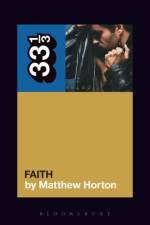
No period of Bob Dylan's six-decade career confounds fans more than the 1980s. The singer began the decade with Saved, the second in a trio of explicitly religious records, and a tour in which he declined to play his older songs because of concern they were anti-god.
As well as examining all of ELO's recorded catalogue, the author has spoken to many people who have been involved with the band over the decades, uncovering along the way previously unseen photographs and new information about the group and their recordings, making this one of the most comprehensive guides to ELO ever published.
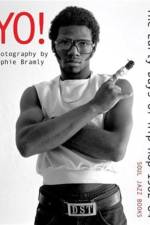
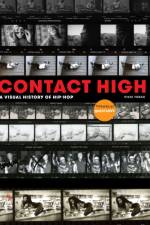
"This book features more than 150 rarely seen images documenting the rise of hip hop in the early 1980s, taken by French photographer Sophie Bramly. Bramly lived in New York during this period and became firmly embedded in the emergent scene. The book features many stunning, intimate images of a star-studded roll call of legendary hip hop figures, all of whom were only just getting known or in their ascendency. These include Kool Herc, Afrika Bambaataa, Grandmixer DST, Jazzy Jay, Red Alert, Grandmaster Melle Mel, Kurtis Blow, Lisa Lee, the Fat Boys, Run-DMC, Beastie Boys, and many more. Bramly knew that hip hop was becoming a cultural force rather than just a musical fashion, and spent many hours photographing the four essential elements of this new world: the emcees, the deejays, the graffiti artists, and the break dancers"--
Paul Harrisâ¿s ground-breaking and inspirational new approach encourages teachers to explore and transform how they teach. Paul identifies and reimagines the barriers or â¿conditionsâ¿ that can stand in the way of effective teaching, to allow for the most immersive and positive learning experience. Written in Paulâ¿s accessible and engaging style, ideas are tackled from both a practical and psychological perspective, rooted in Paulâ¿s renowned Simultaneous Learning methodology. For teachers of all disciplines and learners of all ages, this seminal book will begin your journey towards an unbounded, unconditional way of teaching. Unconditional Teaching is in my view one of those potentially transformative âbest books about teachingâ?, and I would encourage every instrumental teacher to make a priority of reading it. A miniature masterpiece, a profoundly rewarding read: I quite simply cannot recommend Unconditional Teaching highly enough!Andrew Eales, pianodao.com review, January 2022Whether youâ¿re a new teacher, or an experienced one, this book is a must-read. Prepare to be both challenged and inspired; everything you take from it will enrich and enhance your teaching. This is the book I wish Iâ¿d read before I taught my very first lesson, but itâ¿s of no less value now. David Barton, davidbartonmusic.co.uk, April 2022
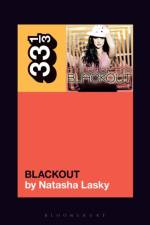
Britney Spears barely survived 2007. She divorced her husband, lost custody of her kids, went to rehab, shaved her head and assaulted a paparazzo. In the midst of her public breakdown, she managed to record an album, Blackout. Critics thought it spelled the end for Britney Spears' career.But Blackout turned out to be one of the most influential albums of the aughts. It not only brought glitchy digital noise and dubstep into the Top 40, but also transformed Britney into a new kind of pop star, one who shrugged off mainstream ubiquity for the devotion of smaller groups of fans who worshipped her idiosyncratic sound.This book returns to the grimy clubs and paparazzi hangouts of LA in the 2000s as well as the blogs and forums of the early internet to show how Blackout was a crucial hinge between twentieth and twenty-first-century pop.
Learn all you''ll ever really need to know as a ukulele player in this step-by-step, easy-to-understand, entry level introduction to music theory (includes free online video demos).No music reading necessary, just confusion-free language with diagrams and hands on examples to put theory into practice.This step-by-step guide is for you if:You''ve just picked up a ukulele and have learned to play a few chordsYou''ve been playing for a while and now want to develop your playing through a greater understanding of the art of making musicYou find yourself confused by the words and language other musicians use at jams, ukulele club, campfire song sessions etcYou''ve learned to play from chord sheets, song sheets, books or online videos and now want to understand more about what makes music workYou want to learn the basic nuts and bolts of music so that you can learn and remember songs more easily, work out other peoples songs and maybe even write some of your own (!)You''re looking for a step-by-step method for learning 95% of the music theory you''ll ever need to know, without the confusion and explained in simple terms which everyone can understandThis book will help you:Break free from song sheet slaveryNail the theory behind keys, chord families and useful chord progressionsLearn to understand the music you play and listen toUse your own knowledge and ability to learn songs more easilyBuild your knowledge step-b-step, chapter-by-chapterTest your knowledge with quizzes each step of the wayI''ll see you inside!
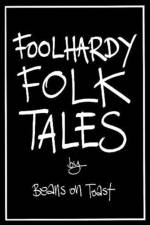
A collection of folk stories about art, money, drugs and love told first hand by the songwriter and storyteller Beans on Toast. "Beans is a legend and I love him"Kae Tempest"One of England's most loved troubadours"Blaine Harrison"A voice I'll always pay attention to, and you should too"Frank Turner
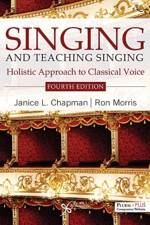
Now in its second edition, this book improves on a predecessor that has proven to be a resounding hit for singers and their teachers, speech-language pathologists, laryngologists, practitioners of Alexander, Yoga, Feldenkrais, and others, and, increasingly, as an adopted text for instructors and students.
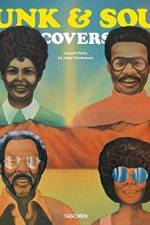
Psychedelia meets Black Power, sexual liberation meets social conscience, and street portraiture meets fantastical cartoon in this epic volume of groove. Complete with cultural context, design analysis, and interviews with key industry figures, the collection gathers more than 500 legendary record covers that visualized a golden era of African...
Discover the eight motivational styles and have tons of practical tools at your fingertips to boost motivation in your music studio or classroom.
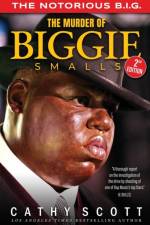
In this second edition of The Murder of Biggie Smalls, Cathy Scott delves behind the scenes to pore over police records, coroner reports, FBI files, and interviews Biggie's mother, Voletta Wallace, to reveal new facts surrounding the gangsta rapper's murder. The Notorious B.I.G. exploded onto the hip-hop scene in 1995 with his platinum-selling album Ready to Die. Biggie Smalls, born Christopher Wallace and performing as Notorious B.I.G., grew up in the Bed-Stuy neighborhood of Brooklyn, New York, where he dropped out of high school to pursue street culture and his rapping style. Biggie began emceeing his original raps, which were discovered by producer Sean "Puffy" Combs, who took Biggie's gangsta image to the next level. Fame followed two successful rap albums earning million of dollars, a 1996 Billboard Rapper of the Year Award, marriage to R&B singer Faith Evans, a public affair with rapper L'il Kim, and hanging out with Tupac Shakur. The high life for Biggie tragically ended March 9, 1997, after a Los Angeles post-awards party, where he was gunned down in a drive-by, much like friend-turned-enemy Shakur six months earlier. Twenty-four years later, L.A. police still have made no arrests, despite their early confidence that the case would be solved quickly, and after revealing identities of persons of interest who worked for the police department. They dropped the investigation before it ended, stalling the case. Bestselling True Crime author Cathy Scott shares it all in this second edition of The Murder of Biggie Smalls.
Crazy Rich Asians meets Gossip Girl by way of Jenny Han in this knock-out sequel, about a Korean American teen who is thrust into the competitive, technicolor world of K-pop, from Jessica Jung, K-pop legend and former lead singer of one of the most influential K-pop girl groups of all time, Girls Generation.Couture gowns, press parties, international travel. Rachel Kim is at the top of her game. Girls Forever is now the number-one K-pop group in the world, and her fame skyrockets after her viral airport styling attracts the attention of fashion's biggest names. Her life's a swirl of technicolour glamour and adoring fans. Rachel can't imagine shining any brighter.The only thing that's missing is love-but Rachel's determined to follow the rules. In her world, falling in love can cost you everything.Enter Alex. When Rachel literally falls head over designer heels into his lap on a crowded metro, she's tempted to give up her anti-love vows. Alex is more than just heart-stopping dimples and adorably quirky banter. He believes in Rachel's future-both in music and in fashion.But the higher you rise, the harder you fall. And when a shocking act of betrayal shatters her world, Rachel must finally listen to her heart.
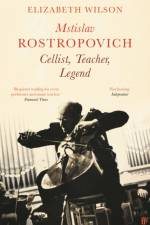
Published to coincide with Rostropovich's 80th birthday celebrationsMstislav Rostropovich, internationally recognised as one of the world's finest cellists and musicians, has always maintained that teaching is an important responsibility for great artists. Before his emigration in 1974 from Russia to the West, Rostropovich taught several generations of the brightest Russian talents - as Professor of the Moscow Conservatoire - over a continuous period of two decades. His students included such artists as Jacqueline du Pre, Nataliyia Gutman, Karine Georgian, Ivan Monighetti and many others Rostropovich's teaching represented not only his individual approach to cello repertoire and instrumental technique, but also comprised a philosophy of life. As soon as he returned from his frequent concert tours, he would launch himself with whirlwind energy into his teaching activities. His lessons, which were conducted as open masterclasses , were awaited eagerly as an event of huge importance. Class 19 of the Moscow Conservatoire, where they were held, was usually packed with students (violinists , conductors and pianists as well as cellists). Often other professors dropped in, as did visiting musicians. The lessons were performances in themselves: Rostropovich - usually seated at the piano - cajoled and inspired his students to give the best of themselves. His comments went far beyond correcting the students in making them understand the essence of the work they were playing. Often this was done through striking imagery, and as such the lessons were addressed to the wider audience present in the classroom as well as to the individual student. Drawing from her own vivid reminiscences and those of ex-students, documents from the Moscow Conservatoire and extensive interviews with Rostropovich himself , Elizabeth Wilson's book sets out to define his teaching, and to recapture the atmosphere of the conservatoire and Moscow's musical life.
Abonner på vårt nyhetsbrev og få rabatter og inspirasjon til din neste leseopplevelse.
Ved å abonnere godtar du vår personvernerklæring.