










Gjør som tusenvis av andre bokelskere
Abonner på vårt nyhetsbrev og få rabatter og inspirasjon til din neste leseopplevelse.
Ved å abonnere godtar du vår personvernerklæring.Du kan når som helst melde deg av våre nyhetsbrev.

Diese Sammlung bietet eine Auswahl an Klassische Meisterwerke von George Frideric Handel, die in einer vereinfachten Version für den Anfänger präsentiert werden.10 leichte Themen zum Solos, die von Klavier oder Gitarre begleitet werden können (Akkordsymbole).Ein komplementäres Repertoire nach Suzuki-Methode 1 & 2 Level.Enthält: Alla Hornpipe - Water Music, HWV 349Bourrée - Water Music, HWV 348Bourrée - Water Music, HWV 349Hallelujah - Messiah, HWV 56La Réjouissance - Music for the Royal Fireworks, HWV 351Lascia Ch'io Pianga - Rinaldo, HWV 7Minuet - Water Music, HWV 348Minuet - Water Music, HWV 349Minuet II - Music for the Royal Fireworks, HWV 351Sarabande - Suite in D minor, HWV 437
This is a book of concert reviews composed in real time on Sophia Marshall's iPhone on the nights of the shows, and posted on her blog, The Flash Boston (theflashboston.com), the same night. The pieces illustrate the vibrant youth culture and music of the decade 2010-2020 in detail and bright colors. Some are free extemporizations without punctuation, some formal critiques. Marshall loved the Boston music scene, and went to a show most nights during that decade. Sophia Marshall is a perceptual poet, characterized by her treatment of the senses. She has been compared to e.e. cummings, Gerard Manley Hopkins, Emily Dickinson, and Sappho. She is a credentialed journalist and music critic, as well as a poet, with credits in several jazz journals and other music publications, and she has published letters on politics in The Boston Phoenix. She has a blog, The Flash Boston (theflashboston.com), covering Boston music and culture. She is a transgender woman. She lives in Boston.
Teo (Barry) Vincent IV is a technical writer and composer from California. He is diversity embodied. Musically there is the wild, creative and adventurous side, as in his many compositions and improvisations / impromptus. He loves to rework songs in new ways and "break the rules" of music whenever possible. On the other hand, he was a top technical writer, quality control specialist stress-testing security in large accounting firms. You see this in music with an almost mechanical accuracy in rhythm. While Vincent was a technical trainer and writer in California's Silicon Valley, he also composed hundreds of his own songs, plus recorded and performed in diverse music groups including Salsa, High-Life, African, Funk, Jazz Fusion, Jazz, Blues, Soul, Calypso, Zouk, Soca & more. High-Tech-Accounting-Nerd by day & Wildly-Visionary-Music-Artist by night! Vincent's scores demonstrate his technical writing, composition & arranging skills and love of the master composers' works. When possible he includes guitar chords and guitar fretboards to allow the option of collaboration with many types of accompanists. Soloists can also use the chords to aid their improvisations, and the chords give musicians of all levels better understanding of the compositions' structures and forms. All Vincent wishes is that more people can enjoy beautiful music with creative ways to interpret it & have fun with it! Some ways to enjoy Theme Player: Explore melodies that you know and love. Play just the 1st page of Clarinet Concerto. Play Ave Maria's melody and block chords from the guitar chords. In Ave Maria or Laudate Dominum, do the basic version then grab a part from the Trio Score version to embellish it! Explore around and find whatís fun! For the Trio Scores: The piano part is fully complete in Mozart's 21st Piano Concerto starting at bar 24, just start on page 3! Play the violin melody and piano right hand from Bolero together. When you have 2 pianos or keyboards 1 person can play the bass & violin and another the piano part.
50 Christmas classics arranged for two alto saxophones. Easy enough for early-intermediate students to learn or for more advanced players to sight-read. Great for lessons, recitals, church services, Christmas parties, and caroling. Includes: All Through the NightAngels From the Realm of GloryAway in a MangerAway in a Manger (Cradle Song)Bring a Torch, Jeanette IsabellaCarol of the BellsChrist Was Born on Christmas DayChristians AwakeCoventry CarolDance of the Sugar Plum FairyDeck the HallsDing Dong, Merrily on HighGaudeteGesu BambinoGod Rest Ye, Merry GentlemenGood Christian Men RejoiceGood King WenceslasHark the Herald Angels SingI Heard the Bells on Christmas DayI Saw Three ShipsIn the Bleak MidwinterInfant Holy, Infant LowlyIt Came Upon the Midnight ClearJingle BellsJolly Old St. NicholasJoy to the WorldLo, How a Rose E'er BloomingO Come All Ye FaithfulO Come, O Come, EmmanuelO Holy NightO Little Town of BethlehemO Tannenbaum (O Christmas Tree)Once in Royal David's CitySilent NightSing We Now of ChristmasStill, Still, StillThe Birthday of a KingThe First NoelThe Friendly BeastsThe Holly and the IvyThe Snow Lay on the GroundThe Twelve Days of ChristmasToylandUp on the HousetopWassail SongWe Three KingsWe Wish You a Merry ChristmasWexford CarolWhat Child is This?While Shepherds Watched This is a single bound book. Photocopies are permitted for performance purposes only.
This work has been selected by scholars as being culturally important, and is part of the knowledge base of civilization as we know it.This work is in the "public domain in the United States of America, and possibly other nations. Within the United States, you may freely copy and distribute this work, as no entity (individual or corporate) has a copyright on the body of the work.Scholars believe, and we concur, that this work is important enough to be preserved, reproduced, and made generally available to the public. We appreciate your support of the preservation process, and thank you for being an important part of keeping this knowledge alive and relevant.
This work has been selected by scholars as being culturally important, and is part of the knowledge base of civilization as we know it.This work is in the "public domain in the United States of America, and possibly other nations. Within the United States, you may freely copy and distribute this work, as no entity (individual or corporate) has a copyright on the body of the work.Scholars believe, and we concur, that this work is important enough to be preserved, reproduced, and made generally available to the public. We appreciate your support of the preservation process, and thank you for being an important part of keeping this knowledge alive and relevant.
Margot E. Fassler's richly documented history--winner of the Otto Kinkeldey Award from the American Musicological Society and the John Nicholas Brown Prize from the Medieval Academy of America--demonstrates how the Augustinians of St. Victor, Paris, used an art of memory to build sonic models of the church. This musical art developed over time, inspired by the religious ideals of Hugh and Richard of St. Victor and their understandings of image and the spiritual journey. Gothic Song: Victorine Sequences and Augustinian Reform in Twelfth-Century Paris demonstrates the centrality of sequences to western medieval Christian liturgical and artistic experience, and to our understanding of change and continuity in medieval culture. Fassler examines the figure of Adam of St. Victor and the possible layers within the repertories created at various churches in Paris, probes the ways the Victorine sequences worked musically and exegetically, and situates this repertory within the intellectual and spiritual ideals of the Augustinian canons regular, especially those of the Abbey of St. Victor. Originally published in hardover in 1993, this paperback edition includes a new introduction by Fassler, in which she reviews the state of scholarship on late sequences since the original publication of Gothic Song. Her notes to the introduction provide the bibliography necessary for situating the Victorine sequences, and the late sequences in general, in contemporary thought.
This work has been selected by scholars as being culturally important, and is part of the knowledge base of civilization as we know it.This work is in the "public domain in the United States of America, and possibly other nations. Within the United States, you may freely copy and distribute this work, as no entity (individual or corporate) has a copyright on the body of the work.Scholars believe, and we concur, that this work is important enough to be preserved, reproduced, and made generally available to the public. We appreciate your support of the preservation process, and thank you for being an important part of keeping this knowledge alive and relevant.
Brings Glockenspiel / Xylophone Players / students together in Performance harmony. Ideal two bring beginner students together taking there 1st stepping stones into duet group performance.10 very easy duets only using notation G - A - B - C, with Quarter notes [ Crotchets ]: Half notes [ Minims ]: Whole Notes [ Semibreves ] Teachers will find this set of Duets an ideal resource in utilising the limited lesson time allotted to bring students together within a shared lesson. Building students conference to want to work onto there next stages in there musical journey into playing theGlockenspiel or Xylophone.Learning a musical instrument should be a fun / enjoyable experience, and on the outset of learning it is very easy for the student to loose direction to building towards group performance opportunities and to just work on academic goals within there lesson. GlockTastic gives you the stepping stones to bring students together in a academic and Fun musical performance experience.
This book is a journey back though time focusing on Kings County's (Brooklyn) Contribution to Hip Hop, a culture created by inner-city youth enduring the hardships of poverty. An incredible expedition into gang fights, train yards, block parties and sewing needles. Defining the term B- Boy and pinpointing the origins of style while examining the work of the first turntablists... A compilation of interesting personalities, their memories of the Brooklyn scene and their love for Hip Hop.
This work has been selected by scholars as being culturally important, and is part of the knowledge base of civilization as we know it.This work is in the "public domain in the United States of America, and possibly other nations. Within the United States, you may freely copy and distribute this work, as no entity (individual or corporate) has a copyright on the body of the work.Scholars believe, and we concur, that this work is important enough to be preserved, reproduced, and made generally available to the public. We appreciate your support of the preservation process, and thank you for being an important part of keeping this knowledge alive and relevant.
This work has been selected by scholars as being culturally important, and is part of the knowledge base of civilization as we know it.This work is in the "public domain in the United States of America, and possibly other nations. Within the United States, you may freely copy and distribute this work, as no entity (individual or corporate) has a copyright on the body of the work.Scholars believe, and we concur, that this work is important enough to be preserved, reproduced, and made generally available to the public. We appreciate your support of the preservation process, and thank you for being an important part of keeping this knowledge alive and relevant.
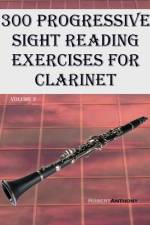
Volume Two starts out rhythmically simpler than Volume One ends, and then - of course - progresses to a more difficult level, adding dynamic markings, expanding the key signatures to C, G, F, D, Bb, A, Eb, E, Ab Major and their relative minor keys and modes, and adding the time signatures 3/8 and 9/8 into the mix. Instructions and a free preview are available in pdf form at the Robert Anthony Publishing website. Like in Volume One, the exercises are all eight measures (two phrases, or one period) in length. While they are composed to be melodic and pleasant to the ear, they are also composed to be difficult to memorize, and utilize many rhythms that seem to be absent from other sight reading books. Next, I have made the staff font slightly larger than standard. While this will largely go unnoticed in the printed version of this book, it should make the electronic versions significantly easier to read. Finally, there are many correct ways to use this book. The instructions and a preview in pdf form are posted on my website so that I can update the instructions as I discover additional strategies. For example, I sometimes receive emails in which people tell me how they like to use this book. My opinions will evolve the more I use this book to train my students, so I want the ability to easily update the instructions as needed. The link for the pdf download will be directly below the picture of the cover of this book. Instructional videos supporting this book will be posted, as they are created, in the same place.
The first modern guitar technique book based on probability! Open a random page and start playing with the proposed exercise.If you don't like it, close the book and open it again. Watch videos of the exercises and how to study. Il primo libro di tecnica per chitarra basato sulle probabilità ! Apri una pagina a caso ed inizia a suonare, se l'esercizio proposto non dovesse piacerti, chiudi e riapri il libro. Guarda i video degli esercizi e come studiare.
This work has been selected by scholars as being culturally important, and is part of the knowledge base of civilization as we know it.This work is in the "public domain in the United States of America, and possibly other nations. Within the United States, you may freely copy and distribute this work, as no entity (individual or corporate) has a copyright on the body of the work.Scholars believe, and we concur, that this work is important enough to be preserved, reproduced, and made generally available to the public. We appreciate your support of the preservation process, and thank you for being an important part of keeping this knowledge alive and relevant.
This work has been selected by scholars as being culturally important, and is part of the knowledge base of civilization as we know it.This work is in the "public domain in the United States of America, and possibly other nations. Within the United States, you may freely copy and distribute this work, as no entity (individual or corporate) has a copyright on the body of the work.Scholars believe, and we concur, that this work is important enough to be preserved, reproduced, and made generally available to the public. We appreciate your support of the preservation process, and thank you for being an important part of keeping this knowledge alive and relevant.
A Collection of 18th Century Dance Tunes takes you on a captivating journey through the elegant world of dance from the 18th century. This meticulously curated anthology, first published by John Walsh in 1754 and transcribed by Paul Dennant, brings together 200 enchanting melodies that once enlivened ballrooms and social gatherings.In this modern adaptation, Dennant skillfully revitalizes these timeless tunes, giving them a fresh twist while staying true to their historical essence. Immerse yourself in the vibrant rhythms of minuets, gavottes, hornpipes, and other popular dances of the era, expertly arranged for contemporary instruments. Whether you're a musician, dancer, or history enthusiast, This tune book offers an invaluable window into a bygone era. Lose yourself in the enchanting melodies, let the lively rhythms carry you away to a world of elegance and splendor.
Este método está diseñado para el público en general, brindando beneficios presentes y futuros a los estudiantes. Utilizaremos la flauta dulce, ya que puede producir las notas musicales con más facilidad. Usted puede estudiar de forma individual como grupal. El estudiante desarrollará la lectura y el ritmo, obteniendo el conocimiento necesario para poder ejecutar otros instrumentos, si así lo desea, y seguir desarrollando su habilidad musical.
Un racconto diviso in 7 capitoli, ognuno dei quali connesso ad un brano dell'album "Resilience" di Nazario Di Liberto.Cosa vuol dire "Una storia di resilienza"?La risposta sta nel percorso.L'autore vi guiderà attraverso un processo di rinascita, dalla disconnessione con la propria essenza vitale fino alla presa di coscienza che il reintegrarsi e riconnettersi con se stesso deve anche avere a che fare con il mondo che ci circonda, con la terra e l'accettazione della crudeltà della vita.
"Unfinished Songs" is a series of poems. At the time I wrote these, I didn't know how to turn them into finished songs. Which is why I didn't release music until later. Many of these poems were written in a dark place in my life. It's very raw. I write what I know. I write from experience. I hope that something you read in here resonates with you. I hope you find healing in poetry, as I have.
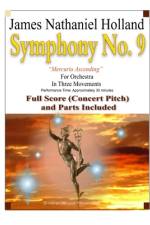
Mercurio Ascending (Mercury Rising) Ninth symphony of American, 21st century composer James Nathaniel Holland. For medium to small orchestra. The symphony begins with an light, fantastical and joyous first movement as would be associated with Hermes, or Roman Mercury, and his attributes, with contrasting minuet. A beautiful slow movement and into a shiny, stainless steel, metro and rousing third. Orchestration for medium group: fl12, ob12, clBb12, bsn 12, hrns 12, tpt Bb12, trom12, timp, perc (Tambourine, Castanets, Wind Chimes, Bass Drum, Large Gong, Snare, Cymbal, Triangle, Wood block), strings. Video Demo link: https: //youtu.be/tMZzntJrg2Q
This work has been selected by scholars as being culturally important, and is part of the knowledge base of civilization as we know it.This work is in the "public domain in the United States of America, and possibly other nations. Within the United States, you may freely copy and distribute this work, as no entity (individual or corporate) has a copyright on the body of the work.Scholars believe, and we concur, that this work is important enough to be preserved, reproduced, and made generally available to the public. We appreciate your support of the preservation process, and thank you for being an important part of keeping this knowledge alive and relevant.
This work has been selected by scholars as being culturally important, and is part of the knowledge base of civilization as we know it.This work is in the "public domain in the United States of America, and possibly other nations. Within the United States, you may freely copy and distribute this work, as no entity (individual or corporate) has a copyright on the body of the work.Scholars believe, and we concur, that this work is important enough to be preserved, reproduced, and made generally available to the public. We appreciate your support of the preservation process, and thank you for being an important part of keeping this knowledge alive and relevant.
This work has been selected by scholars as being culturally important, and is part of the knowledge base of civilization as we know it.This work is in the "public domain in the United States of America, and possibly other nations. Within the United States, you may freely copy and distribute this work, as no entity (individual or corporate) has a copyright on the body of the work.Scholars believe, and we concur, that this work is important enough to be preserved, reproduced, and made generally available to the public. We appreciate your support of the preservation process, and thank you for being an important part of keeping this knowledge alive and relevant.
From Bill Clinton playing his saxophone on The Arsenio Hall Show to Barack Obama referencing Jay Z's song "Dirt Off Your Shoulder," politicians have used music not only to construct their personal presidential identities but to create the broader identity of the American presidency. Through music, candidates can appear relatable, show cultural competency, communicate values and ideas, or connect with a specific constituency. On a less explicit level, episodes such as Clinton's sax-playing and Obama's shoulder brush operate as aural and visual articulations of race and racial identity. But why do candidates choose to engage with race in this manner? And why do supporters and detractors on YouTube and the Twittersphere similarly engage with race when they create music videos or remixes in homage to their favorite candidates? With Barack Obama, Ben Carson, Kamala Harris, and Donald Trump as case studies, Tracks on the Trail: Popular Music, Race, and the US Presidency sheds light on the factors that motivate candidates and constituents alike to articulate race through music on the campaign trail and shows how the racialization of sound intersects with other markers of difference and ultimately shapes the public discourse surrounding candidates, popular music, and the meanings attached to race in the 21st century. Gorzelany-Mostak explores musical engagement broadly, including official music in the form of candidate playlists and launch event setlists, as well as unofficial music in the form of newly composed campaign songs, mashups, parodies, and remixes.
This work has been selected by scholars as being culturally important, and is part of the knowledge base of civilization as we know it.This work is in the "public domain in the United States of America, and possibly other nations. Within the United States, you may freely copy and distribute this work, as no entity (individual or corporate) has a copyright on the body of the work.Scholars believe, and we concur, that this work is important enough to be preserved, reproduced, and made generally available to the public. We appreciate your support of the preservation process, and thank you for being an important part of keeping this knowledge alive and relevant.
The Ultimate Guide For Guitarists That want To Reach Virtuoso StatusHigh-Intensity Guitar Technique Book 3 is the final instalment in this essential guitar technique course. Subtitled Virtuoso Techniques, High-Intensity Guitar Technique Book 3 takes your playing from pro-level, covered in book 2 of the series into the stratospheric heights of world-class virtuoso playing.In this superb guide, highly experienced professional guitarist and teacher Anthony George demystifies the confusion surrounding the four main technical areas of lead guitar: legato, alternate picking, sweep picking and tapping.Taking influence from the methods of the greatest guitarists that have ever lived, Anthony George has compiled a wealth of technical knowledge in this guitar technique tour de force that will launch your guitar playing to a level you never thought possible.Subjects studied include: Full roll Legato for ultra-smooth playing.Alternate Picking through entire scale shapes across the whole neck.Sweeping combined with other techniques to create monster licks.Multi-string arpeggio tapping for mind-blowing phrases.Connecting sweep arpeggios along the channel for outrageous arpeggio lines.String Skipping for wide interval head-turning runs.Vast stretch and four notes per string hammer-ons and pull-offs the pinnacle of modern Legato guitar playing.Economy Picking three notes per string, allowing you to blaze through scales.Connecting large portions of the neck to create fret melting runs with every technique.Odd note groupings that produce stunning hyper-speed results.Detailed Explanation Need help finding the answers to your questions on the internet?Is it a mystery how these great players can light up the neck and use every fret easily and fluidly?One of the main issues with other instructional products is that the learner is left with so many questions after being shown an exercise. High-Intensity Guitar Technique 3 solves this issue by explaining each task in phenomenal detail, so the reader feels like Anthony is sitting in the room with them, giving them one-to-one tuition.How Does High-Intensity Guitar Technique Tackle Guitar Playing Issues?Each of the four main areas of guitar technique is covered in four stages of difficulty, so your learning is progressive, consistently achieving results.Hints, tips and tricks that unravel guitar mysteries.Over 240 examples delivered in a combination of Guitar Tablature, standard notation, and Fretboard Diagrams to support every learner's needsDetailed practice routines to followFull-length etudes and performance piecesGet your copy of High-Intensity Guitar Technique 3 right now and get these bonus digital learning resources FREE!The following digital bonuses enhance the book's results, so you see massive progress at a rapid pace. The bonuses can be accessed for FREE at the author's all-in-one online learning platform, Cutting Edge Guitar, using the included links in the book. Bonus 1 - Free downloadable audio of every example in the book.Bonus 2 - FREE access to the Cutting Edge Guitar Strategy Online Course.The Cutting Edge Guitar StrategyThis digital bonus course provides the one thing you cannot find anywhere else online: A structured plan that delivers consistent, rapid progress. With a three-stage approach, this Strategy shows any player from any genre an exact roadmap of lessons that guarantees you will be playing with next-level ability. Get ready to transform your guitar skills from intermediate to advanced! You are guaranteed to play like the virtuosos with a powerful combination of high-quality printed books and in-depth online learning materials! Get your copy now!
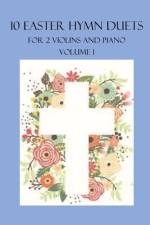
These classic Easter hymns have been arranged for intermediate-level violin duet with optional piano accompaniment. Great for preludes, offertories, postludes, recitals, and lessons. Are You Washed in the Blood?Down at the CrossHe Lives (I Know That My Redeemer Lives!)Jesus SavesO Sacred Head, Now WoundedO the Blood of JesusTell Me the Story of JesusThe Old Rugged CrossThere is a FountainWhen I Survey the Wondrous Cross Includes scores and parts. Because this is a single bound book, photocopies are permitted for performance purposes.
This work has been selected by scholars as being culturally important, and is part of the knowledge base of civilization as we know it.This work is in the "public domain in the United States of America, and possibly other nations. Within the United States, you may freely copy and distribute this work, as no entity (individual or corporate) has a copyright on the body of the work.Scholars believe, and we concur, that this work is important enough to be preserved, reproduced, and made generally available to the public. We appreciate your support of the preservation process, and thank you for being an important part of keeping this knowledge alive and relevant.
This book, and the others in its series, has been designed to train piano students to become proficient at reading music. It can be used to train sight-reading or over-all reading skill. This book's first section picks up where the previous left off and gets progressively more difficult as you work your way through it. The second section contains music from the Baroque, Classic, and Romantic Periods by the following composers: Turk, Gurlitt, Czerny, Duvernoy, Diabelli, L. Mozart, Liadov, Köhler, Giuliani, Latour, Sor, and J.S. Bach.
Abonner på vårt nyhetsbrev og få rabatter og inspirasjon til din neste leseopplevelse.
Ved å abonnere godtar du vår personvernerklæring.