













Gjør som tusenvis av andre bokelskere
Abonner på vårt nyhetsbrev og få rabatter og inspirasjon til din neste leseopplevelse.
Ved å abonnere godtar du vår personvernerklæring.Du kan når som helst melde deg av våre nyhetsbrev.

14 gems for flute and guitar (in standard notation and tablature), featuring music by Tchaikovsky, Rachmaninoff, Mussorgsky, Rimsky-Korsakov, Borodin, Glinka, Scriabin, and others. Includes: "Andante Cantabile" by Tchaikovsky; "Cantabile" (Op. 36, No. 2) by Cui; "Ãlégie" by Rachmaninoff; "Hélène-Polka" by Borodin; "La Séparation" by Glinka; "Lullaby" by Ilyinsky; "Mazurka in C Minor" by Glinka; "Melody in F" by Rubinstein; "Prelude" (Op. 11, No. 15) by Scriabin; "Romeo and Juliet (Love Theme)" by Tchaikovsky; "Sleeping Beauty Waltz" by Tchaikovsky; "Song of India" by Rimsky-Korsakov; "Une Larme" by Mussorgsky; "Waltz of the Flowers" by Tchaikovsky.
Welcome to the third part of The Cello Gym! Thank you for being still with me. And thanks for joining the program in case you are new.This book is for advanced to professional players. All keys are covered; however, enharmonically equivalents are left out. Fewer key signatures are preferred for better readability.The Cello Gym is a simple method. The idea is to practise different versions of the same scale for about 10 minutes every day - without thinking much, without stopping much, without getting distracted by tons of material. Further, these workouts are great for warming up, or for getting in shape in case you have only limited time to practise.Here is how to use The Cello Gym 3: ①Pick a key②Set your metronome (the pace is set to 60 b.p.m. - even without a metronome, you can use the second hand of a clock to guide you)③Play all two pages of scales referring to the same key, repeating where indicatedThe routine should take about 10 minutes.It might be a good idea to pick a key or a number of keys that correspond to the piece of repertoire you are working on. If you are working on the Dvorak Concerto, practise B-Minor, G-Major and B-Major. If you are working on the Schumann Concerto, pick A-Minor and F-Major. And if you are working on the Chopin Sonata, pick G-Minor, D-Minor, B-Major and maybe G-Major.You shouldn't jump between keys too frequently. It makes sense to stick with a key (or a number of keys) for some time. I always feel the need to be completely familiar with the key of the piece I'm working on, to explore its sound and character. After all, the great composers had a certain idea how to make their music sound - why was the Dvorak Concerto written in B-Minor? Why did Beethoven choose C-Major for his Triple Concerto?And, last but not least, don't shy away from keys that are used less frequently!Please feel free to replace my fingerings with your own. The ones printed in this book merely serve as a suggestion. At your level, you should have your own taste, like how much to incorporate the thumb, how much to use the third and fourth fingers in higher positions and so on.And, last but not least: DON'T GIVE UP!!! Stick to this method and you will see improvement!
Libro de calentamiento para trombonistas de jazz, classico etc.En el mundo de los instrumentistas de instrumentos de metal, se desarrollan muchas manías y enfermedades, como la parálisis de Bell, la distonía oromandibular, el bruxismo, el síndrome de Satchmo y la ansiedad escénica .Los instrumentistas de viento son los más afectados y representan el 70% de los pacientes en la profesión. Un estudio de 2009 de 450 músicos de Argentina encontró que el 53% había sufrido alguna vez lesiones en músculos, tendones y articulaciones, el 22% por trauma y el 17% por distonía. .La distonía es un síndrome menos frecuente, pero también afecta a los músicos, generando problemas en el sistema nervioso central, con movimientos involuntarios desencadenados por determinado acto repetitivo. La distonía oromandibular es una distonía focal caracterizada por espasmos involuntarios de los músculos masticatorios, faciales y linguales. Estas son diferentes formas de distonía oromandibular: abierta, con desviación lateral y cerrada dependiendo de los músculos afectados.La distonía del cierre oromandibular es causada porEspasmos distónicos de los músculos temporales ymaseterosPrincipalmente en este grupo sufren problemas en los músculos de los labios.Síndrome de Satchmo, que es un desgarro muscular debido al esfuerzo de dicho músculo para hacer sonar el instrumento.Distonia oromandibular Trastornos de la articulación temporomandibular, cuyos síntomas aumentan especialmente durante la práctica. Tocar instrumentos de viento daña los vasos sanguíneos del cerebro. Al igual que los deportistas, requiere un calentamiento regular y regular y sobre todo en los principiantes. ¡La coordinación de los músculos de la cara, labios y lengua ayuda a respirar! ¡Conocer la forma correcta de calentar evita secuelas médicas, como lágrimas, y mejoró el rendimiento!Todo este calentamiento está coordinado con los músculos faciales, el aire, los pulmones y el diafragma, que es uno de los músculos más fuertes del cuerpo humano. El diafragma, que se encuentra debajo de los pulmones, es el principal musculo de la respiracion. Es un sistema muscular en forma de cúpula, que es contrae de forma rítmica y continua y, la mayoría de las veces, de forma involuntaria. Al inhalar, el diafragma se contrae y se aplana, y la cavidad torácica se ensancha. Esta contracción crea un vacío que atrae aire hacia los pulmones. A medida que exhala, el diafragma se relaja y recupera su forma de cupula y el aire es expulsado de los pulmones. Algunas emociones como la tristeza, el miedo, la ansiedad o el estrés pueden influir en la actividad diafragmática o en su correcto funcionamiento. A su vez, estas emociones pueden provocar alteraciones en la percepción del dolor. La actividad del diafragma también la incluye fundamental en el mantenimiento de la postura y los cambios de posición corporal, tanto por su ubicación y sus zonas de inserción en el centro del cuerpo, como por sus contracciones aisladas; que se ha demostrado que producen alteraciones posturales dependiendo de la posición en la que nos encontramos. A nivel del sistema circulatorio, el diafragma facilita el retorno venoso y linfático; Esto se debe a que sus movimientos pueden provocar cambios en la presión corporal. Esta función es importante para la absorción de sustancias de las cavidades peritoneales, como es el caso de una buena circulación sanguínea en el hígado y el abdomen. Las presiones sobre las vísceras abdominales producidas por el movimiento del diafragma favorecen los movimientos peristálticos y la función digestiva. Si es así, entonces la función gastroesofágica es relevante, de modo que la parte crural del diafragma se previene al reflujo gastroesofágico e interviene en otros procesos importantes. El control total del diafragma es importante para tocar cualquier instrumento de viento.
A quick, easy approach to reading drum music. Maybe you're a brand new drummer, or maybe you've been playing for years; in either case, you want to learn to read drum music. Whether you're a novice performer or a professional musician, Stu and Jimmy's easy explanations and clear examples make "How To Read Drum Music" as easy as A-B-C.Each of the aspects of drum music are presented simply, clearly, as is the related musical notation. "How To Read Drum Music's" website (which is made available to all readers) provides free video instruction for each example in the book. If you're willing to spend a half hour to an hour a day, within a couple weeks Jimmy and Stu will have you reading drum music.
The first book BASIC is ideal for all beginners who want to start playing drums. It teaches the first Grooves & Fills and provides the necessary basic knowledge for a successful start on the drums. The note values range from quarter notes to 16th notes. The book also contains numerous tips on equipment, noise protection and your own rehearsal room. The BASIC book is recommended for students aged 10 and up. With the included 25 Audio Tracks and Bonus Videos for download, the exercises and grooves can also be listened to. Available online videos on YouTube complete the package to a state of the art book for modern drumming. The three book series "Learn Drums with Lesson Plan", is a new complete system for learning drums. Structured in constructive topics, the system delivers everything you need to become a well educated and modern drummer. With over 240 pages of material, the system is one of the most comprehensive textbooks for drums ever published.
Sheet music for Debussy's "Images - Book 2" for the piano. L. 111, CD 120. Debussy Images Book 2 sheet music. This volume contains the following pieces: 1.) Cloches à travers les feuilles2.) Et la lune descend sur le temple qui fut3.) Poissons d'or Reprinted from the excellent Durand & Fils edition.
Better than 50 years beyond his tragic death at the too-young age of 27, Jimi Hendrix still manages to turn heads and stir up controversy. Arguably the most innovative and influential guitarist to wear the "guitar god" mantle in rock 'n' roll, Hendrix - for reasons outlined in this book - was all of the above, and more. Hendrix created an entirely unique musical voice and language, blending such diverse (and divergent) genres as blues, jazz, R&B, soul, British Invasion rock, psychedelia, and even American folk music into the creation of a newly-exploding supernova of sound. The Jimi Hendrix Reader attempts is to provide the rock 'n' roll fan with an introductory tome. Hendrix's catalog of music may seem daunting - there are a lot of recordings out there to choose from - which is why The Jimi Hendrix Reader was built around an annotated discography to help separate the wheat from the chaff. An incomplete biography outlines the highs (and lows) of the guitarist's career, whereas reviews of a dozen key Hendrix albums provide greater context and insight into his music and enduring popularity. Rev. Keith A. Gordon has been writing about rock and blues music for over 50 years. A former contributor to the All Music Guide books and website, and the former Blues Expert for About.com, Rev. Gordon has written or edited 25+ previous music-related books and eBooks, including Blues Deluxe: The Joe Bonamassa Buying Guide, The Other Side of Nashville, and Scorched Earth: A Jason & the Scorchers Scrapbook.
This work has been selected by scholars as being culturally important, and is part of the knowledge base of civilization as we know it.This work is in the "public domain in the United States of America, and possibly other nations. Within the United States, you may freely copy and distribute this work, as no entity (individual or corporate) has a copyright on the body of the work.Scholars believe, and we concur, that this work is important enough to be preserved, reproduced, and made generally available to the public. We appreciate your support of the preservation process, and thank you for being an important part of keeping this knowledge alive and relevant.
How To Play Kalimba: Playing Techniques And Step By Step Instructions With 28 SongsThis meticulously crafted book is designed to take you from a beginner to a proficient kalimba player. Whether you're completely new to music or have prior experience, the detailed instructions and innovative techniques will empower you to create beautiful melodies on this mesmerizing instrument.Inside the pages of this book, you'll find: - A concise history and introduction to the kalimba, delving into its cultural significance and the various types of kalimbas.- An in-depth exploration of the kalimba's unique parts, giving you a solid understanding of how this instrument produces its distinctive sounds.- Step-by-step instructions for basic techniques, including proper finger placement, hand positioning, and playing techniques such as thumb rolls and fingerpicking.- Practical tips for getting started and developing your skills, offering guidance on effective practice routines, posture, and hand exercises to improve accuracy and timing.- A selection of easy songs tailored specifically for beginners, with detailed explanations of finger placement and melodies. These songs will build your confidence and help you develop a strong foundation in kalimba playing.- Gradually progressing to more challenging songs, the author introduces advanced techniques like harmonics and chord progressions, allowing you to expand your repertoire and unlock the full potential of the kalimba.-Among the songs you will learn are: 1."Twinkle, Twinkle, Little Star" - Traditional2."Happy Birthday" - Traditional3."Mary Had a Little Lamb" - Nursery Rhyme4."Row, Row, Row Your Boat" - Nursery Rhyme5."London Bridge is Falling Down" - Traditional6."Jingle Bells" - James Lord Pierpont7."Amazing Grace" - John Newton8."Ode to Joy" - Ludwig van Beethoven9."Hush, Little Baby" - Traditional10."You Are My Sunshine" - Jimmie Davis and Charles Mitchell11.Old MacDonald Had a Farm12.Pop Goes the Weasel13.The Wheels On The Bus14.Baa, Baa, Black Sheep15.This Old Man16.Brahms' Lullaby17.Yankee Doodle18.Frère Jacques19.It's Raining, It's Pouring20.Rock-a-Bye Baby21.Skip to My Lou22.The Muffin Man23.Mary, Mary, Quite Contrary24.Three Blind Mice25.The Itsy Bitsy Spider26.Hot Cross Buns27.Hickory Dickory Dock28.A-Tisket, A-TasketWhether you aspire to perform on stage, entertain friends and family, or simply find solace in the enchanting melodies of the kalimba, this book is your ultimate companion.
Sheet music for Franz Schubert's Piano Sonata In A Minor (D. 537) Op. 164.
This work has been selected by scholars as being culturally important, and is part of the knowledge base of civilization as we know it.This work is in the "public domain in the United States of America, and possibly other nations. Within the United States, you may freely copy and distribute this work, as no entity (individual or corporate) has a copyright on the body of the work.Scholars believe, and we concur, that this work is important enough to be preserved, reproduced, and made generally available to the public. We appreciate your support of the preservation process, and thank you for being an important part of keeping this knowledge alive and relevant.
This work has been selected by scholars as being culturally important, and is part of the knowledge base of civilization as we know it.This work is in the "public domain in the United States of America, and possibly other nations. Within the United States, you may freely copy and distribute this work, as no entity (individual or corporate) has a copyright on the body of the work.Scholars believe, and we concur, that this work is important enough to be preserved, reproduced, and made generally available to the public. We appreciate your support of the preservation process, and thank you for being an important part of keeping this knowledge alive and relevant.
Digitally Independent is a step by step guide to success for independent music artists.It discusses in detail about how independent artists can start from the beginning. In order to start their realization of being their own business. The book is written by Melissa B. an independent singer/ songwriter and network engineer, who has successfully structured a independent label. In addition to her music career, Melissa B. is extremely passionate about supporting young women interested in engineering & technology. This passion was the driving force behind her global non-profit organization "Girl Geek Dinners NYC" which has been sponsored by Google and Microsoft. Melissa B. has been highlighted in USA Today and IGN Magazine and at Google NYC in partnership with Society of Women Engineers for her advocacy in engineering. Digitally Independent is an inspiration to open the mind of the artist wanting to do this on their own. The book is designed to educate and inspire. The book is packed with great ideas and proven techniques. Don't get caught up in the illusion of the limelight. Study and learn the business for yourself as you are a brand. Digitally Independent assists aspiring artists with developing the needed skills in order to think outside the box and reach to greater levels of success.
A daily workout for musicians wanting to improve their Jazz Improvisation.
This work has been selected by scholars as being culturally important, and is part of the knowledge base of civilization as we know it.This work is in the "public domain in the United States of America, and possibly other nations. Within the United States, you may freely copy and distribute this work, as no entity (individual or corporate) has a copyright on the body of the work.Scholars believe, and we concur, that this work is important enough to be preserved, reproduced, and made generally available to the public. We appreciate your support of the preservation process, and thank you for being an important part of keeping this knowledge alive and relevant.
(Boosey & Hawkes Chamber Music). The full range of traditional fiddle repertoire is now at your fingertips! Using these generous collections, you can create your ownceilidh, barn dance, jazz club or Sarajevo street-cafe. Some of this music is familiar, some more exotic, but all of it is absolutely authentic, faithfully arranged and, above all, hugely enjoyable. Each title in the series is available in two formats: the Violin Edition (with an optional easy violin part and guitar chords); or the Complete Edition, which also includes both keyboard and violin accompaniments. Either format is hugely flexible, which means the music can be played as solos, duets or trios as well as with larger ensembles. Edward Huws Jones has travelled extensively researching fiddle-playing traditions. In each book he explains the background of the particular musical style, giving his own suggestions for a lively performance.
This work has been selected by scholars as being culturally important, and is part of the knowledge base of civilization as we know it.This work is in the "public domain in the United States of America, and possibly other nations. Within the United States, you may freely copy and distribute this work, as no entity (individual or corporate) has a copyright on the body of the work.Scholars believe, and we concur, that this work is important enough to be preserved, reproduced, and made generally available to the public. We appreciate your support of the preservation process, and thank you for being an important part of keeping this knowledge alive and relevant.
Studying avoids fatigue and muscle pain by practicing flexibility correctly generates a high level of resistance and comfort, avoiding the effort and pain of future injuries.Jose Pardal
Celebrating God's worth is the essence of worship. Songs that glorify God place him in his proper place as the focal point of the universe. And they place us in our proper place, kneeling at his feet in adoration.Open Your Hymnal contains 52 devotions that transport the worship models of classic hymns and gospel songs into the twenty-first century with relevant scriptural connections and practical applications. With honesty, insight, and humor, Denise Loock challenges readers to make worship an integral part of daily life.Introduce yourself to the rich spiritual heritage hymns contain or gain a fresh perspective on songs you've sung since childhood. Whether you sing in the choir loft, the worship team, or the pew, the biblical insights in this book will enhance your appreciation for the songs God's people have written and sung since the days of Moses.Invigorate your faith. Awaken a fresh wonder for God in your heart. Open a hymnal and worship with me.
This work has been selected by scholars as being culturally important, and is part of the knowledge base of civilization as we know it.This work is in the "public domain in the United States of America, and possibly other nations. Within the United States, you may freely copy and distribute this work, as no entity (individual or corporate) has a copyright on the body of the work.Scholars believe, and we concur, that this work is important enough to be preserved, reproduced, and made generally available to the public. We appreciate your support of the preservation process, and thank you for being an important part of keeping this knowledge alive and relevant.
A collection of 24 guitar solos written in notation and tablature for use during Eucharistic worship services. Includes access to the online audio recording of all the solos recorded by the author in a contemplative style.
This is amazing song for the holiday season and birthday and also love, my dears and enjoy music song and eye evil . This is a song book and this is amazing patriotism and popular. this is number. Another book and more music song book soon.
These eleven organ divertissements in various forms for recital, teaching and church use. They range in duration from 1-1/2 to 4-1/2 minutes, in difficulty from easy to challenging, in atmosphere from quietly reserved to boldly flamboyant.
This book is unique in focusing on just one band from one city ¿ but the story of Tat Ming Pair, in so many ways, is the story of Hong Kong's recent decades, from the Handover to the Umbrella Movement to 2019's standoff. A comprehensive, theoretically informed study of the sonic history and present of Hong Kong through the prism of Tat Ming Pair, this book will be of interest to cultural studies scholars, scholars of Hong Kong, and those who study the arts in East Asia.This is an open access book.
The purpose of this book is to provide a concise introduction to the mathematical theory of music, opening each chapter to the most recent research. Despite the complexity of some sections, the book can be read by a large audience. Many examples illustrate the concepts introduced. The book is divided into 9 chapters.In the first chapter, we tackle the question of the classification of chords and scales. Chapter 2 is a mathematical presentation of David Lewin's Generalized Interval Systems. Chapter 3 offers a new theory of diatonicity in equal-tempered universes. Chapter 4 presents the Neo-Riemannian theories based on the work of David Lewin, Richard Cohn and Henry Klumpenhouwer. Chapter 5 is devoted to the application of word combinatorics to music. Chapter 6 studies the rhythmic canons and the tessellation of the line. Chapter 7 is devoted to serial knots. Chapter 8 presents combinatorial designs and their applications to music. The last chapter, chapter 9, is dedicated to the study of tuning systems.
En este libro se encuentra la historia de más de 30 autores, compositores y traductores de himnos cristianos ordenados en orden cronológico, las circunstancias que inspiraron a su creación y cuando es de dominio público, la partitura a 4 voces.
The book covers the beginning of punk rock in Poland between 1978 and 1982. There is a timeline of gigs and various events. Fanzines pages show artistic style of that time. Texts including translated into English lyrics and poetry are illustrated with 178 photographs many not yet published by four photographers: Ada - Ania Dabrowska-Lyons, Iliko Kuruluszwili, Krzysztof Pawela, Henryk Wasążnik, Andrzej Zuzak. Chapter on Situationist tells about the history of the movement and their influence on punks. Chapter on Anarchism gives examples of various types of anarchy. Kropotkin, David E. Archer, Emma Goldman, Leo Tolstoy, Mikail Bakunin are mentioned. Chapter on Nihilism analyzes Bulent Diken's book "Nihilism" and unfolds the history of nihilism.
Offers a major new contribution to understanding Schubert's creative approach and the gothic imagination more generally.
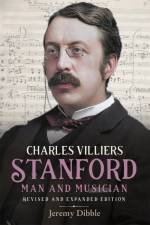
Substantially revised and expanded edition that sheds new light on Stanford's career as composer, conductor and teacher, as well as promoter of opera in English and arranger of Irish folk music.
Information is totally important no matter what you are involved in. When I decided to become a singer I just jumped in. I was blessed in getting a great voice teacher, but you can really be in trouble when you get a bad teacher and have your throat damaged and your hopes destroyed. I wrote this book to give prospective singers information which will help you on your road to success.
Abonner på vårt nyhetsbrev og få rabatter og inspirasjon til din neste leseopplevelse.
Ved å abonnere godtar du vår personvernerklæring.