
















Gjør som tusenvis av andre bokelskere
Abonner på vårt nyhetsbrev og få rabatter og inspirasjon til din neste leseopplevelse.
Ved å abonnere godtar du vår personvernerklæring.Du kan når som helst melde deg av våre nyhetsbrev.

This work has been selected by scholars as being culturally important, and is part of the knowledge base of civilization as we know it.This work is in the "public domain in the United States of America, and possibly other nations. Within the United States, you may freely copy and distribute this work, as no entity (individual or corporate) has a copyright on the body of the work.Scholars believe, and we concur, that this work is important enough to be preserved, reproduced, and made generally available to the public. We appreciate your support of the preservation process, and thank you for being an important part of keeping this knowledge alive and relevant.
This work has been selected by scholars as being culturally important, and is part of the knowledge base of civilization as we know it.This work is in the "public domain in the United States of America, and possibly other nations. Within the United States, you may freely copy and distribute this work, as no entity (individual or corporate) has a copyright on the body of the work.Scholars believe, and we concur, that this work is important enough to be preserved, reproduced, and made generally available to the public. We appreciate your support of the preservation process, and thank you for being an important part of keeping this knowledge alive and relevant.
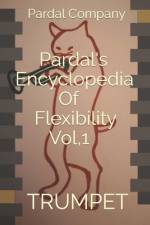
The good execution of an instrumentmusical, depends on cardiorespiratory capacity and correct practice of warm-up exercises.Studying avoiding fatigue and muscle pain by practicing flexibility correctly generates great resistance and comfort level, avoiding the effort and pain of future injuries. The fluency and comfort for correct performance can be developed with this method which is the first in a series of books. It is progessive and is focused on the needs of modern classical jazz music to avoid discomfort due to incorrect musical practices. Joseph Pardal
This work has been selected by scholars as being culturally important, and is part of the knowledge base of civilization as we know it.This work is in the "public domain in the United States of America, and possibly other nations. Within the United States, you may freely copy and distribute this work, as no entity (individual or corporate) has a copyright on the body of the work.Scholars believe, and we concur, that this work is important enough to be preserved, reproduced, and made generally available to the public. We appreciate your support of the preservation process, and thank you for being an important part of keeping this knowledge alive and relevant.
Seven masterpieces by Chopin, arranged for flute and guitar (in standard notation and tablature). Includes: Nocturne in B-flat Minor (Op. 9, No. 1), Nocturne in C-sharp Minor (Op. posth., B. 49), Nocturne in E-flat Major (Op. 9, No. 2), Waltz in A Minor (Op. posth., B. 150), Waltz in B Minor (Op. 69, No. 2), Waltz in E Major (Op. posth.; B. 44), Waltz in C-sharp Minor (Op. 64, No. 2).
This work has been selected by scholars as being culturally important, and is part of the knowledge base of civilization as we know it.This work is in the "public domain in the United States of America, and possibly other nations. Within the United States, you may freely copy and distribute this work, as no entity (individual or corporate) has a copyright on the body of the work.Scholars believe, and we concur, that this work is important enough to be preserved, reproduced, and made generally available to the public. We appreciate your support of the preservation process, and thank you for being an important part of keeping this knowledge alive and relevant.
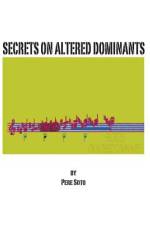
There is nothing more than a guide to learning how to improvise over altered dominant scales using a different approach to triads and linear patterns.
This work has been selected by scholars as being culturally important, and is part of the knowledge base of civilization as we know it.This work is in the "public domain in the United States of America, and possibly other nations. Within the United States, you may freely copy and distribute this work, as no entity (individual or corporate) has a copyright on the body of the work.Scholars believe, and we concur, that this work is important enough to be preserved, reproduced, and made generally available to the public. We appreciate your support of the preservation process, and thank you for being an important part of keeping this knowledge alive and relevant.
Stephen Janetzko - Komm, wir geh'n Laterne - Die ultimative Liedersammlung zu St. Martin. Das Liederbuch mit allen Texten, Noten und Gitarrengriffen zum Mitsingen und Mitspielen. Laternenlieder für Kinder - Martinslieder, Kinderlieder. Alle Lieder im Liederbuch: 1. Komm, wir geh'n Laterne 2. Sankt Martin ritt durch Schnee und Wind 3. Laterne, Laterne, ich gehe Laterne 4. Ich geh mit meiner Laterne 5. Wenn Martin kommt 6. Ein bisschen so wie Martin 7. Laternengesang 8. Laterne, Laterne, Sonne, Mond und Sterne 9. Laterne, Laterne, komm leuchte für mich 10. Dreh dich, Laterne (Laternentanz) 11. Brenn, Laterne 12. Sankt Martin ist da 13. Martin, lieber Martin (Wir wollen sein wie du) 14. Laterne, zeige mir den Weg 15. Wenn wir mit den Laternen gehn (Lied zum Laternenfest) 16. Laternenlicht, Laternenlicht 17. Kleines Laternenlied 18. Meine Laterne 19. Laternen leuchten hell 20. Ich schenk dir einen Stern 21. Bonusnoten: Komm, wir geh'n Laterne (in D-Dur) 22. Bonusnoten: Laterne, brenne auf! (neues Lied) - Viel Spaß beim Laternensingen!
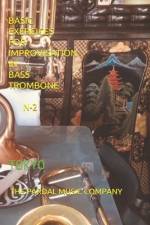
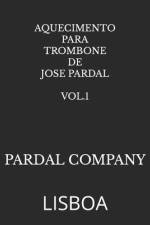
BOOK N-1 OF BASIC EXERCISES FOR IMPROVISATION IN THE BASS TROMBONE
Four contemporary compositions for soprano saxophone on the theme of cold: Frozen, Névé, Iceberg, Shelter.
This work has been selected by scholars as being culturally important, and is part of the knowledge base of civilization as we know it.This work is in the "public domain in the United States of America, and possibly other nations. Within the United States, you may freely copy and distribute this work, as no entity (individual or corporate) has a copyright on the body of the work.Scholars believe, and we concur, that this work is important enough to be preserved, reproduced, and made generally available to the public. We appreciate your support of the preservation process, and thank you for being an important part of keeping this knowledge alive and relevant.
"Seeing a lack of material that focus exclusively on paradiddles, especially the double and triple paradiddles, I wrote this book to help drummer's see the usefulness of those rudiments and the musical doors they unlock by using frameworks that I developed for myself. By the end of the book, you'll be able to play different accent patterns with the three paradiddle rudiments and play different phrases by combining them that can be used in a groove or solo context. I'm sure this book will be beneficial and a worthy addition to your library. Have fun!"-Jesus Gallimore Topics included: Playing a specific paradiddle for a bit and then switching to anotherSwitching from one paradiddle accent pattern to another immediatelyGiving a rhythm a specific paradiddle and accent and using them to read down rhythmsUsing what we learned and applying them on the drum set. Using the classic Paradiddle Pyramid with a twist
Title: 12 Etudes Caracteristiques Composer: Adolf von Henselt Original Publisher: Ashdown Performer's Reprints are produced in conjunction with the International Music Score Library Project. These are out of print or historical editions, which we clean, straighten, touch up, and digitally reprint. Due to the age of original documents, you may find occasional blemishes, damage, or skewing of print. While we do extensive cleaning and editing to improve the image quality, some items are not able to be repaired. A portion of each book sold is donated to small performing arts organizations to create jobs for performers and to encourage audience growth.
This work has been selected by scholars as being culturally important, and is part of the knowledge base of civilization as we know it.This work is in the "public domain in the United States of America, and possibly other nations. Within the United States, you may freely copy and distribute this work, as no entity (individual or corporate) has a copyright on the body of the work.Scholars believe, and we concur, that this work is important enough to be preserved, reproduced, and made generally available to the public. We appreciate your support of the preservation process, and thank you for being an important part of keeping this knowledge alive and relevant.
Sheet music for Franz Schubert's Piano Sonata No. 1 in E Major D. 157.
El libro Teresa Carreño: cartas y documentos. Compilación documental (1863-1917), antologÃa preparada por el historiador venezolano Jesús Eloy Gutiérrez, se propone divulgar una selección de documentos inéditos de la insigne venezolana, que son parte de los archivos resguardados en Caracas, para contribuir a su conocimiento histórico.Teresa Carreño (1853-1917) fue una venezolana que rompió todos los paradigmas de su época como artista y como mujer. Fue docente, compositora, cantante de ópera y ejecutante del piano reconocida internacionalmente; recibió la admiración de virtuosos músicos contemporáneos como Gottschalk, Rubinstein, Rossini y Liszt. Nació en Caracas el 22 de diciembre de 1853 y falleció en Nueva York, el 12 de junio de 1917, luego de una gira por Cuba que no culminó.La Carreño o la Walkiria del piano, como también como se le conoció, constituye uno de los principales valores de la música occidental, no obstante, su historia no ha contado con una buena prensa ni en su paÃs y en los lugares donde vivió.La documentación de Teresa Carreño no ha gozado del interés del mundo editorial, ni público ni privado. Sus huellas históricas han sido olvidadas por décadas. Los documentos firmados por ella, asà como los que recibÃa de infinidad de personalidades, nos pueden dar una visión más acertada del mundo y la realidad que le tocó vivir.La recopilación que se agrupa en este libro, un total de 70 documentos, principalmente traducidos del inglés, francés y español, abarcan el perÃodo histórico comprendido entre 1863 y 1917, lo que nos permite captar una visión lo bastante amplia del personaje. Los temas que se abordan van desde su vida sentimental, sus programas de conciertos, su visita a Venezuela, hasta los compromisos académicos o empresariales.Teresa Carreño: cartas y documentos, trabajo pionero en su estilo, es una obra imprescindible para el conocimiento definitivo del personaje a nivel global. Esta es su segunda edición. La primera fue realizada por La Campana Sumergida Editorial en el año 2018.
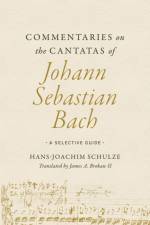
Internationally recognized Bach authority Hans-Joachim Schulze authored a 225-part series on the cantatas of Johann Sebastian Bach. In this collection, James A. Brokaw II translates a selection of the essays, illuminating a wide range of biographical and cultural features of Bach's life and creative milieu. Schulze's lively and engaging discussions provide a wealth of rewarding insights and perspectives focusing on individual cantatas, their texts, and the questions of chronology and context that attend them. The University of Illinois Press has paired the volume with a special web-based companion overseen by the translator and hosted by the Illinois Open Publishing Network. This online resource includes Brokaw's translations of all 225 of Schulze's essays alongside digital tools for searching, sorting, and bundling the commentaries according to date of composition, position within the liturgical church year sequence, and librettist.
High technical level exercise book, applied to improvisation in jazz, pop, rock, flamenco, bossa, salsa, contemporary music, etc. Joseph Pardal
Sheet music for Edvard Grieg's Lyric Pieces For The Piano, Op. 43. Grieg Lyric Pieces piano sheet music. This edition contains the following pieces: 1.) Sommerfugl / Butterfly2.) Ensom vandrer / Solitary Traveler3.) I Hjemmet / In My Native Country4.) Liden Fugl / Little Bird5.) Erotik / Erotikon6.) Til Foråret / To Spring
Classical music, jazz, film scores, and the masterpieces of musical theater are in danger of fading into an undeserved oblivion. This crisis extends not only to music, but also to an ignorance of good books, art, theater, and films. This crisis is exacerbated by our vanishing history, a decline in language, and a pervasive celebrity culture. If this problem is not solved, our nation's cultural and artistic heritage will be irretrievably lost. "Mark! My Words" by Mark Evans is the first book to address the challenge of this crisis. The author, a composer, writer, and broadcaster presents compelling evidence that change and progress are not synonymous and that "new and improved" often means a bigger box and fewer corn flakes .He explains why we have become a nation of hares instead of tortoises. In today's high tech world, students are emerging from school: - Unfamiliar with any music other than what they've heard on MTV. - Unable to write, spell, or speak using the English language correctly. - As experts on the lives of celebrities, but ignorant of the most basic facts of American history. - Spending countless hours texting, tweeting, and downloading on the latest digital devices, but without reading any book that hasn't been assigned to them in years. - With a healthy respect for the present, but a complete disdain for the past. In "Mark! My Words" readers will encounter: - True achievers in the arts who are ignored while we celebrate the accomplishments by geniuses of self-promotion. - Teenagers who are mesmerized by pop culture and say they would rather be the assistant to a celebrity than president of a university or a successful business enterprise. - Composers of classical music who have turned music into mathematics and have lost their audience as a result, while great composers are dismissed and ridiculed by critics. - Promoters of rock, pop, and rap music that have corrupted our musical culture while crying all the way to the bank. - Modern artists who promote the credo "Art is what you can get away with." - Graduates of prestigious colleges who are who are unfamiliar with the great events of American history, and who can't tell the difference between the words of Thomas Jefferson and those of Karl Marx. - Librarians who are busy taking our best books off the shelves of their libraries. - Teachers who smile and nod while children make mistakes in reading. - Lawyers and government bureaucrats who can't write a simple English sentence - English professors who have never read a play by Shakespeare. But "Mark! My Words" isn't just about our cultural problems; it also offers solutions to those problems. You'll meet real heroes in "Mark! My Words" like the inner city teacher who changed the lives of her students by starting her own school. You'll celebrate the achievements of composers, writers, and artists who have stood for integrity in an age of cultural confusion. The solution cannot be found in academia, government, or the entertainment industry. It can be found in our own energy, inspiration, and resolve. This book is dedicated to the proposition that we should pursue "cultural conservation," devoting the same energy to preserving our cultural resources that we devote to preserving our natural resources. "Mark! My Words" details what we can do as a society and what you can do as an individual to embark on an exciting journey of discovery that can truly impact your daily life. If you are a parent, a grandparent, a teacher, a student, or someone who cares about music, books, art, language, and our history as a nation, you will want to read this book.
Tanz den Löwentanz! Meine liebsten Mitmachlieder. Das Liederbuch mit allen Texten, Noten und Gitarrengriffen zum Mitsingen und Mitspielen. Brüllen wie ein Löwe, vor Freude in die Luft springen oder mit dem Po wackeln: Hier kommen 24 schwungvolle Mitmachlieder für Kindergarten, Eltern-Kind-Gruppe, Spielkreis und natürlich auch zu Hause, die Kinder in Bewegung bringen. Da fährt die kunterbunte Eisenbahn ihre Runden, die Tücher fliegen durch die Luft und das Zauberwort vertreibt schlechte Laune, die Rennschnecken sausen durch die Gegend und das Müllorchester gibt ein tolles Konzert. Mitmachspaß für Klein und Groß garantiert! Alle enthaltenen Lieder: 1. Hallo Kinder, jetzt geht's los 2. Löwentanz 3. Regentropfen 4. Meine Hände 5. Das beste Eis der Stadt 6. Ich bin die Kuh Nigunde 7. So sind Piraten 8. Tüchertausch 9. Die kunterbunte Bahn 10. Rennschnecken sausen 11. Mein Wackelzahn 12. Tanz den Blättertanz 13. Ich war's nicht 14. Ich bin ein Fahrradkind 15. Macht alle mit 16. Trecker fahr'n mit Florian 17. Wir sind das Müllorchester 18. Die Hexe Boom Boom Boom 19. Ich will `ne Biene sein 20. Zauberwort 21. Wir kommen in Bewegung 22. Nach dem Flitzen leise sitzen 23. Ich fahr nach Haus 24. Tschüs und bis bald - Viel Spaß beim Spielen, Singen und Aufführen!
This collection of works of J.S. Bach is intended for young pianists and contains a selection of works from "Little Preludes", which from more than one and a half of the century represent the basic position of piano study all over the world. J.S.Bach composed Preludes for pedagogical objectives and Albert Schweitzer (the greatest Bach expert) said that these little works like preludes manifest the genius of Bach.
This book is for kids or adults who are absolute beginners in music. We tried to write it as simply as possible. We use an "easy-to-play" visual aid so any beginner can play music quickly. Neither kids nor their parents have to read sheet music or have a musical background. No previous knowledge is necessary. This book includes complete melodies as well as substantial segments of uncomplicated, famous traditional folk songs from 30 different countries. Our goal was to assist you in acquainting you, your kids, or students with the musical traditions of diverse nations and cultures. Every song has a large and simple, letter-coded visual, along with traditional sheet music. The instruction is designed so that children begin with simple circles and gradually advance to reading notes using sheet music. We try to make this transition as easy as a game, where children advance to higher levels themselves. There is a total of 22 songs and 2 options to help children to begin to play right away.PLAYING BY LETTER CIRCLEPLAY WITH THE MUSICAL STAFFThe player can first follow the circles and then repeat with the classic note symbols and staff. The helpful letters are always above the notes.There are 3 parts in this book. They are equal to 3 levels.Level 1.Songs that are played in one octave. All songs here appear twice: once written with circles and the next time with classic music notes. This will help kids remember the staff notes.For example: Mary Had a Little Lamb - Ver 1 - CIRCLESMary Had a Little Lamb - Ver 1 - NOTESLevel 2In this part, you will find one version with both circles and notes and a more advanced version of the song with notes and musical notation.For example: Hot Cross Buns - Version 1 - CIRCLESHot Cross Buns - Version 1 - NOTESHot Cross Buns - Version 2 - NOTES (Here the player will play songs in a different key and learn how to transpose.)Generally, the version of the song written with sheet music is a little bit more complex than a letter-coded version. Such versions already have music notations such as rests or beams, etc. You can find an illustrated explanation of the notation at the end of this book.Level 3Here, the first two songs are versions of the same melody (different combinations of notes) written with circles and notes. This is important so that the beginner can see how the same melody can be played in different keys.First of all, this book is addressed to newcomers to any keyboard instrument (such as Piano or Synthesizer). We offer 22 one-hand piano songs. Also, it is a perfect self-training guide for children and beginner adults to mastering the challenges of percussion instruments such as xylophone, glockenspiel, melodica, or recorder.Additionally, you find funny riddles with engaging activities to teach musical notes and symbols. Table of contents Level 1Mary Had a Little LambOde to JoyThe Whills on the BusJolly Old Saint NicholasTen Little FingersLondon BridgeDo You Know the Muffin Man?we Wish You a Merry ChristmasThe First NoelBrahms LullabyRow Row Your BoatItsy Bitsy SpiderSilent NightOh Susannah Level 2Hot Cross BunsAre You Sleeping?Old McDonald Level 3Jingle BellsLa CucarachaYankee DoodleHappy BirthdayAmazing Grace Music Note ValuesMusical Puzzles
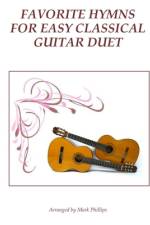
16 favorite hymns arranged for Easy Classical Guitar Duet by Mark Phillips. Includes: Abide with Me, All Creatures of Our God and King, All Glory Laud and Honor, All Things Bright and Beautiful, At the Cross (Alas, and Did My Savior Bleed), Beautiful Savior, Christ the Lord Is Risen Today, Crown Him with Many Crowns, God of Grace and God of Glory, Holy Holy Holy Lord God Almighty, A Mighty Fortress Is Our God, Nearer My God to Thee, Now Thank We All Our God, The Old Rugged Cross, Rock of Ages, Softly and Tenderly.
This work has been selected by scholars as being culturally important, and is part of the knowledge base of civilization as we know it.This work is in the "public domain in the United States of America, and possibly other nations. Within the United States, you may freely copy and distribute this work, as no entity (individual or corporate) has a copyright on the body of the work.Scholars believe, and we concur, that this work is important enough to be preserved, reproduced, and made generally available to the public. We appreciate your support of the preservation process, and thank you for being an important part of keeping this knowledge alive and relevant.
Vincent and the Givnology Charmony Division team have combined over half a century of expert experience in performing, composing, arranging and teaching. From this comes practical tips and techniques for a diverse array of musical and cultural uses. World Music Class is a very extensive all-in-one primer, history, reference and songbook for a wide variety of music. Includes: Resolmilafatimila (Form Figure No. 1), Pattern, Chords & Analysis, 3 staves. World Music Mastery, Patterns for playing with anyone, Piano, Chords, Guitar Fret-boards & Analysis, 1 page. Latin Piano (Montuno) 101, C I-IV-V-IV major & minor (with I-ii-V-ii variation), 2 staves. Montuno Circles Makes Blues Scale, Piano, Chords & Analysis, 2 staves. Yorùbá Diasporas, Flowery Salsa & Rumba Parts, Piano, Chords & Afro-Caribbean Rumba Percussion Rhythmic Diagram, 5 pages. Calypso Study in Soca (Soul-Calypso), Piano, Soloist, Chords, Guitar Fret-boards & Calypso Rhythmic Diagram, 1 page. Yemaya Orisha Ocean Goddess, Sacred Song Piano Solo, 3 pages. Montuno Etude #1, Piano Solo, 1 page. Swing Montuno, Advanced Stylistic Fusion, Piano, Chords & Bembe Percussion Roles Rhythmic Diagram, 2 pages. Montuno Etude #2, C Major I-VI-ii-V, Piano Solo, 1 page. Calypso Circles (Guitar Chucks), Piano and Chords, 1 page. Soca Clav (Soul-Calypso Keyboard Chuck), Keyboard, 3 staves. Super Clavinet Technique, Keyboard, Chords and Guitar Fret-boards, 1 page. Affirmatinas: Everything's Going Perfectly Now & Ever More, Piano, Vocal, Guitar Chord Fret-board, 1 stave. Having What I'm Wanting, Wanting What I'm Having, Piano, Vocal, Chords & Guitar Fret-boards, 3 staves. Bossanova Study/Etude: Lost In Love, Piano, Vocals, Chords. 2 pages. Affirmatina Song "My Successes Are Here," Piano, Lyrics and Chords, 2 pages. Classical Derivative Affirmatina #1, "I Manifest My Destiny," Piano and Vocals, 1 page. #2, "Chopin Made A Way," Piano and Vocals, 1 page. #3, "Let It Be's" (Liebestraum), Piano and Vocals, 2 staves. Chamber Concertoo in D Major, RV 93, Antonio Vivaldi, Piano, Chords and Guitar Fret-boards, 2 pages. Che Farò Senza Euridice?, Christoph Willibald Gluck, theme reduction to Piano Solo, 1 page. L'Inferno (Winter) from The 4 Seasons, Antonio Vivaldi, Piano, Chords and Guitar Fret-boards, 1 page. Il Trionfo del Tempo e del Disanganno (The Triumph of Truth & Time) "Lascia la spina..", George Frederic Handel, Piano, Vocals, Chords & Cello, 2 pages. Les Baricades Misterieuses, by Francois Couperin, Piano Solo, 2 pages. Gelido in Ogni Vena, from Farnace by Antonio Vivaldi, Piano, Chords & Vocals, 3 pages. Song To The Moon, from Rusalka, by Antonin Dvorak, Piano and Chords, 1 page. Clarinet Concerto in A Major, the Adagio, by Wolfgang Amadeus Mozart, Piano Solo, 2 pages. Laudate Dominum, Wolfgang Amadeus Mozart, Piano, Latin Lyrics and Chords, 3 pages. The Magic Flute, The Priest's Aria, Piano, Lyrics and Chords, 1 page. Ave Maria (Ellens Gesang for Sir Walter Scott poems), Franz Schubert, Piano, Latin Vocals and Chords, 2 pages. Casta Diva from Norma, by Vincenzo Bellini, Piano, Vocals and Chords, 2 pages. Andante Moderato from Symphony #9, by Ludwig Van Beethoven, Piano Solo, 1 page. Adagio from Symphony #1, by Georges Bizet, Piano Solo, 1 page. Romeo and Juliet Overture, Pyotr Tchaikovsky, Piano Solo, 1 page. Andalucia, by Ernesto Lecuona, Piano and Chords, 1 page. Carmen's Habanera by Bizet (Adapted to teach percussion), Vocals, Chords, Guitar Fret-boards, Claves and Percussion, 2 pages. Yemaya & Santa Lucia by Capua (Adapted to teach percussion), Yórùbá, Italian and English Vocals, Chords, Guitar Fret-boards, Agogo and Percussion, 2 pages. Fun and enlightening stories and backgrounds are included to keep the reader inspired and appreciating what the master have left for us. Information about world music cultures leaves us more aware of the environments and beliefs that the music arises from.
Livro de aquecimento para trombonistas de jazz, clássicos etc. No mundo dos instrumentistas de metais, muitos hobbies e doenças se desenvolvem, como paralisia de Bell, distonia oromandibular, bruxismo, síndrome de Satchmo e ansiedade de palco. Os tocadores de sopro são os mais afetados e representam 70 % dos pacientes na profissão. Um estudo de 2009 com 450 músicos da Argentina descobriu que 53% já sofreram lesões musculares, tendinosas e articulares, 22% por trauma e 17% por distonia. .A distonia é uma síndrome menos frequente, mas também afeta músicos, gerando problemas no sistema nervoso central, com movimentos involuntários desencadeados por determinado ato repetitivo. A distonia oromandibular é uma distonia focal caracterizada por espasmos involuntários dos músculos mastigatórios, faciais e linguais. Distinguem-se diferentes formas de distonia oromandibular: aberta, com desvio lateral e fechada dependendo dos músculos afetados.A distonia de fechamento oromandibular é causada porEspasmos distônicos dos músculos temporais emasseteresPrincipalmente neste grupo sofrem problemas na musculatura dos lábios.Síndrome de Satchmo, que é uma ruptura muscular devido ao esforço do referido músculo para soar o instrumento.Distonia oromandibular Distúrbios da articulação temporomandibular, cujos sintomas aumentam especialmente durante a prática. Tocar instrumentos de sopro danifica os vasos sanguíneos do cérebro. Como os atletas, eles exigem aquecimento regular e regular, especialmente para iniciantes. A coordenação dos músculos da face, lábios e língua ajuda a respirar! Saber a forma correta de aquecer previne sequelas médicas, como lágrimas, e melhora drasticamente o desempenho!Todo esse aquecimento é coordenado com os músculos faciais, o ar, os pulmões e o diafragma, que é um dos músculos mais fortes do corpo humano. O diafragma, localizado abaixo dos pulmões, é o principal músculo da respiração. É um músculo alongado, em forma de cúpula, que se contrai rítmica e continuamente e, na maioria das vezes, involuntariamente. À medida que você inspira, o diafragma se contrai e se achata, e a cavidade torácica se alarga. Essa contração cria um vácuo que puxa o ar para os pulmões. Ao expirar, o diafragma relaxa de volta à sua forma de cúpula e o ar é expelido dos pulmões. Algumas emoções como tristeza, medo, ansiedade ou estresse podem influenciar a atividade diafragmática ou seu bom funcionamento. Por sua vez, essas emoções podem causar alterações na percepção da dor. A atividade do diafragma também é fundamental na manutenção da postura e nas mudanças de posição corporal, tanto por sua localização e áreas de inserção no centro do corpo, quanto por suas contrações isoladas; que demonstrou produzir alterações posturais dependendo da posição em que nos encontramos. Ao nível do sistema circulatório, o diafragma facilita o retorno venoso e linfático; Isso ocorre porque seus movimentos podem causar alterações na pressão corporal. Essa função será importante para a absorção de substâncias da cavidade peritoneal, bem como para uma boa circulação sanguínea no fígado e no abdome. As pressões nas vísceras abdominais produzidas pelo movimento do diafragma favorecem os movimentos peristálticos e a função digestiva. Por sua vez, sua função gastroesofágica também é relevante, pois a parte crural do diafragma previne o refluxo gastroesofágico e está envolvida em outros processos importantes. O controle total do diafragma é importante para tocar qualquer instrumento de sopro. Jose Pardal
This work has been selected by scholars as being culturally important, and is part of the knowledge base of civilization as we know it.This work is in the "public domain in the United States of America, and possibly other nations. Within the United States, you may freely copy and distribute this work, as no entity (individual or corporate) has a copyright on the body of the work.Scholars believe, and we concur, that this work is important enough to be preserved, reproduced, and made generally available to the public. We appreciate your support of the preservation process, and thank you for being an important part of keeping this knowledge alive and relevant.
Abonner på vårt nyhetsbrev og få rabatter og inspirasjon til din neste leseopplevelse.
Ved å abonnere godtar du vår personvernerklæring.