













Gjør som tusenvis av andre bokelskere
Abonner på vårt nyhetsbrev og få rabatter og inspirasjon til din neste leseopplevelse.
Ved å abonnere godtar du vår personvernerklæring.Du kan når som helst melde deg av våre nyhetsbrev.

This series ANGEL'S LITTLE MEMORIES is written by the experienced author, Angela Lao. There are numerous true stories of her own. One day, Mum told me to write an autobiography. I started this idea. I didn't want to make it so boring, so I am using a fun way to tell my stories. I don't make it like MY LIFE by Bill Clinton. I am ambitious. I have achievements. But, I am not a big potato yet. So, I decided to make this autobiography like diaries from an ordinary person. I wish to write till 10000 true stories! Please support me if you want too!Angela Lao
PMRT es una publicación periódica cuyo objetivo es la difusión de estudios en torno a la música popular, considerando este término de un modo amplio, de tal forma que se pueden considerar incluidos dentro de él campos de trabajo muy diversos: Antropología de la músicaMetodologías para el estudio de la música popularTradición y oralidad: conservación y difusión del patrimonio musicalMúsicas urbanas e identidadesMedios audiovisuales y música popularPedagogía de la música popularEnfoques innovadores en torno a la música popularLos trabajos presentados serán originales e inéditos y tendrán un enfoque científico, pero a la vez un carácter divulgativo, cuya lectura sea útil tanto a investigadores como a estudiantes, siempre dentro de una perspectiva seria y rigurosa exenta de sensacionalismo.
This book is a collection of all Waltz songs composed by Pere Soto untill 2018.
Nine beautiful movements from Telemann's sonatas arranged for flute and guitar (in standard notation and tablature). Includes: Affettuoso in G Major (from Flute Sonata in G Major, TWV 41: G9), Andante in C Major (from Oboe Sonata in A Minor, TWV 41: a3), Cantabile in G Major (from Flute Sonata in G Major, TWV 41: G9), Dolce in A Major (from Violin Sonata in A Major, TWV 41: A6), Grave in A Minor (from Recorder Sonata in C Major, TWV 41: C2), Largo in D Minor (from Recorder Sonata in F Major, TWV 41: F2), Sarabande in A Minor (from Violin Sonata in A Minor, TWV 41: a1), Sarabande in D Major (from Violin Sonata in D Major, TWV 41: D1), Tempo giusto in A Minor (from Violin Sonata in E Minor, TWV
A collection of articles, talks, and ideas It's safe to say the classical music industry has had a rough few years. The COVID-19 pandemic halted performances and interrupted every part of our daily lives. This shock to the system made us adapt, discover new ways of doing things, learn new skills, and find any way to keep the music playing and our organisations running. Over 2 years later, many people and organisations in the classical music world are now trying to "get back to normal" and return to the old way they used to do things. From them, this shock to the system was just a temporary blip in extraordinary circumstances and it's now time to go back to business as usual. But for some, they began to question the whole system. Why are audiences shrinking? Why haven't we made the most of digital opportunities? What is the concert going experience in the modern world? Is there a better way of doing things? The classical music industry faces many challenges. For it to survive, we need to start having conversations on what the future looks like and how we get there. This book exists to be a starting point for those conversations. It's for those who are curious, questioning the status quo, and wondering what the future of classical music may look like..
This work has been selected by scholars as being culturally important, and is part of the knowledge base of civilization as we know it.This work is in the "public domain in the United States of America, and possibly other nations. Within the United States, you may freely copy and distribute this work, as no entity (individual or corporate) has a copyright on the body of the work.Scholars believe, and we concur, that this work is important enough to be preserved, reproduced, and made generally available to the public. We appreciate your support of the preservation process, and thank you for being an important part of keeping this knowledge alive and relevant.
This work has been selected by scholars as being culturally important, and is part of the knowledge base of civilization as we know it.This work is in the "public domain in the United States of America, and possibly other nations. Within the United States, you may freely copy and distribute this work, as no entity (individual or corporate) has a copyright on the body of the work.Scholars believe, and we concur, that this work is important enough to be preserved, reproduced, and made generally available to the public. We appreciate your support of the preservation process, and thank you for being an important part of keeping this knowledge alive and relevant.
This work has been selected by scholars as being culturally important, and is part of the knowledge base of civilization as we know it.This work is in the "public domain in the United States of America, and possibly other nations. Within the United States, you may freely copy and distribute this work, as no entity (individual or corporate) has a copyright on the body of the work.Scholars believe, and we concur, that this work is important enough to be preserved, reproduced, and made generally available to the public. We appreciate your support of the preservation process, and thank you for being an important part of keeping this knowledge alive and relevant.
"A powerful traversal of life in the pandemic... he has a keen intellect that he applies with fluency and wit - all of this shines through in his writing." - Mark Valencia, Opera Magazine Stranded in London when the Coronavirus pandemic hit, Welsh opera singer Paul Carey Jones began chronicling the voyage of the classical music industry through the perils - and opportunities - of a global crisis. Based on his hit blog series 'Coronaclassical', this book is his lockdown story so far. "An addictively brilliant writer" - Support Action; "Something good to come out of lockdown." - John Suchet; "His view is alert and complex, evaluating developments with a searching but sceptical eye. There's no shortage of good ideas in his approach to a problem that has found operatic managements the world over wrong-footed, literally giving away the valuable assets of their recorded performances. A steadily rising Wotan, he explores Wagner's most complex character in further essays which also cover Tosca's death and other matters largely vocal and all worth encountering." - George Hall, BBC Music Magazine
This work has been selected by scholars as being culturally important, and is part of the knowledge base of civilization as we know it.This work is in the "public domain in the United States of America, and possibly other nations. Within the United States, you may freely copy and distribute this work, as no entity (individual or corporate) has a copyright on the body of the work.Scholars believe, and we concur, that this work is important enough to be preserved, reproduced, and made generally available to the public. We appreciate your support of the preservation process, and thank you for being an important part of keeping this knowledge alive and relevant.
New Solution for beginners! Learn piano in MINUTES with this unique illustrated guide. * Wish you knew the basics? * Don't have a lot of extra time (or patience)? Fast & fun tutorial - easy learning tricks + memory tips! Quick visuals - so you don't need a piano to follow along. 10 minutes is all it takes because a picture is worth a thousand words. Learning piano from "text-heavy" books can be dry & complicated. With new Smart Funnies 10-minute lessons, you'll know piano basics in a flash! Smart Funnies offers a "less is more" approach to learning - using SIMPLE VISUALS and humorous "funnies" to introduce new concepts. Funnies are not just ENTERTAINING, they're EASIER to remember. A friendly gopher character guides you through each image quickly & easily, sharing important points along the way. This series offers three 10-minute lessons without text overload: piano KEYS + piano NOTES + piano SYMBOLS (also available as separate lessons in print and digital formats). Great for ALL AGES - whether you've never taken lessons, are taking lessons now, or forgot lessons from your past. A refreshingly FUN, FAST & EASY way to learn!
This work has been selected by scholars as being culturally important, and is part of the knowledge base of civilization as we know it.This work is in the "public domain in the United States of America, and possibly other nations. Within the United States, you may freely copy and distribute this work, as no entity (individual or corporate) has a copyright on the body of the work.Scholars believe, and we concur, that this work is important enough to be preserved, reproduced, and made generally available to the public. We appreciate your support of the preservation process, and thank you for being an important part of keeping this knowledge alive and relevant.
This work has been selected by scholars as being culturally important, and is part of the knowledge base of civilization as we know it.This work is in the "public domain in the United States of America, and possibly other nations. Within the United States, you may freely copy and distribute this work, as no entity (individual or corporate) has a copyright on the body of the work.Scholars believe, and we concur, that this work is important enough to be preserved, reproduced, and made generally available to the public. We appreciate your support of the preservation process, and thank you for being an important part of keeping this knowledge alive and relevant.
You and your friends are pop music fans. In January 1958, you would have rushed to the newsagent to buy the latest edition of your favourite music paper. It could have been the 'New Musical Express', 'Record Mirror' or Melody Maker - which ever it was you just had to find out if Elvis had gone straight into the charts at Number 1. Five years later, these same papers reported the news that The Beatles had their first number 1 with 'Please Please Me'. These were exciting times to be a music fan. Sunday afternoons were when you listened to Alan Freeman on 'Pick of the Pops' as he counted down the charts. If that wasn't enough, you could tune to Radio Luxembourg on 208 meters to hear Keith Fordyce, Barry Alldis, Don Wardell or Paul Burnett give their version of the story. In this book for the very first time, you can see how each of the music papers and the radio recorded the music milestones of the classic years of pop - 1956 to 1969.
This work has been selected by scholars as being culturally important, and is part of the knowledge base of civilization as we know it.This work is in the "public domain in the United States of America, and possibly other nations. Within the United States, you may freely copy and distribute this work, as no entity (individual or corporate) has a copyright on the body of the work.Scholars believe, and we concur, that this work is important enough to be preserved, reproduced, and made generally available to the public. We appreciate your support of the preservation process, and thank you for being an important part of keeping this knowledge alive and relevant.
Simple, fun, crazy, silly songs for group singing, each with only two chords each. Perfect for beginners who want to learn a slew of songs in a short amount of time or seasoned veterans preparing to lead a group jam or sing-a-long with songs anyone can pick up in a trice. Link to a free video playlist of selections from this book is included for free.Songs using F & C71.A Ram Sam Sam2.An Austrian Went Yodeling3.Frankenstein (Clementine)4.Hangman5.I Know an Old Lady6.I Went to the Pictures Tomorrow7.If You Love Me (Alouette)8.Jolly Peanut, A9.Mactavish is Dead10.Mango Walk11.More We Are Together, The12.My Aunt Came Back13.Old Ark's a Moverin'14.One Bottle of Pop15.Shoes of John16.Sim Sa-La-Bim17.Telephone Song, The18.There's a Hole in the Middle of the Sea19.Throw it Out the Window20.Who Did Swallow Jonah21.Wise Old Owl Songs using C & G722.A Sailor Went to Sea23.Alice the Camel24.Chumbara25.Every Little Cell26.Hurrah for the Cook27.I'm the Monster of Loch Ness28.Mama Paquita29.My Hat, it has Three Corners30.Pay Me My Money Down31.Three Blind Mice Bonus 1-Chord SongGrizzly Bear (Am)
If you want to play one of the most famous tangos arranged for this formation, read on! Often finding effective arrangements for clarinet quartets can be really difficult and complicated. Especially if you look for songs that can excite the audience and that are easy to listen to.This arrangement will give you the opportunity to enrich your repertoire, without neglecting professionalism!You also have the possibility to listen to an audio preview of this song by copying this address: http: //www.giordanomuolo.com/en/online-shop_fl_en_1/Full scoreSeparate partsAudio preview at the following address: http: //www.giordanomuolo.com/en/online-shop_fl_en_1/Arrangement also valid for flute quartet or 3 flutes and bass flute.Even if you tried to look for other professional tracks to enrich your repertoire without success, this arrangement will make the difference in your concert and will thrill the audience!Buy this book right now!
11 Christmas arrangements for TTBB a cappella: Angels We Have Heard On High, Auld Lang Syne, Away In A Manger, Deck The Halls, Go Tell It On The Mountain, God Rest Ye, Merry Gentlemen, Hallelujah Chorus (Abridged), Hark! The Herald Angels Sing, I Saw Three Ships, The First Noel, and The Twelve-ish Days Of Christmas. Ideal for holiday caroling!
Is your young drummer hungry for more solos and activities outside of the Rock'n'Rollin Level 1 Book? Have no fear! Introducing...the Rock'n'Rollin' Level 1 ENCORE Book!The ENCORE Book includes 20 MORE SOLOS and 18 MORE ACTIVITIES to tide your drummer over until they get into Level 2. Solos in Level 1 ENCORE use the simplified 3-line staff found in Unit 6 of the Level 1 method book and incorporate all the instruments on a drumset.Rock'n'Rollin 1 ENCORE can be used in tandem with the Level 1 method book, or as a transition from Level 1 into Level 2.You can also use this book as a stand-alone method book for young drummers who are starting off their lessons.
This work has been selected by scholars as being culturally important, and is part of the knowledge base of civilization as we know it.This work is in the "public domain in the United States of America, and possibly other nations. Within the United States, you may freely copy and distribute this work, as no entity (individual or corporate) has a copyright on the body of the work.Scholars believe, and we concur, that this work is important enough to be preserved, reproduced, and made generally available to the public. We appreciate your support of the preservation process, and thank you for being an important part of keeping this knowledge alive and relevant.
For almost 5 years I put on my thinking cap and read everything about sync music. I watched every "free" video and paid a lot of money to be in groups that discussed it. Making music for sync is like rewiring your brain. You know how music on the radio sounds because it moves you every day at home, in the car or just playing in your ear. Ironically, subconsciously, we know how sync music sounds also because it moves us every day when we watch a movie, a tv show, or a commercial. Sync music is vastly different from what is on the radio and that is the challenge. I won't reveal any secret techniques with this book. I just want the next Sync Agent or Music Supervisor to not have to stop what they are doing to explain the differences. This is just for those in need of being spoon-fed on this topic. Hopefully, this book will fill that enormous need...
Adam and Jayne made a life changing decision. They decided to sell their home in Hastings and buy a small camper van with the proceeds. With nothing to fall back on, no plan B and a world of uncertainty they hit the road to try to make a living as musicians, playing small time gigs in bars, cafes and busking in between. Join them from day one of their unique and inspirational journey as they cut the ties and head off into the unknown across the UK, mainland Europe, New Zealand and beyond. The Road is an Unfinished Song is a travelogue and memoir of their first two years on the road.Adam Piggott is a folk musician, acoustic guitarist, songwriter and author. Together with his wife Jayne they perform as the duo Wildwood Jack. Having started their journey playing bars, cafes and busking on the streets they now play concerts, village halls and folk clubs far and wide.The Road is an Unfinished Song is his first book.
In the world of brass instrument players, many manias and diseases develop, such as Bell's palsy, oromandibular dystonia, bruxism, Satchmo syndrome and stage anxiety. Wind players are the most commonly affected and represent 70% of the patients in the profession. A 2009 study of 450 musicians from Argentina, resulted in that 53% had ever suffered injuries to muscles, tendons and joints, 22% were due to trauma and 17%, due to dystonia. Dystonia is a less frequent syndrome, but it also affects musicians, generating problems in the central nervous system, with involuntary movements triggered by a certain repetitive act. Oromandibular dystonia is a focal dystonia characterized by involuntary spasms of thethe chewing, facial and lingual muscles. Different forms of oromandibular dystonia are distinguished: opening, with lateral deviation and closing depending on the affected musculature.Oromandibular closing dystonia is caused byDystonic spasms of the temporal muscles andmassetersMainly in this group suffer problems in the muscles of the lips. Satchmo Syndrome which is a muscle tear due to the effort of said muscle to make the instrument sound.Oromandibular dystonia disorders of the temporomandibular joint, the symptoms of which increase especially during practice. Playing wind instruments damages the blood vessels of the brain. Like athletes, they require regular and regular warm-up and especially in beginners. The coordination of the muscles of the face, lips and tongue helps breathing! Knowing the correct way to warm up prevents medical consequences, such as tears, and significantly improves the execution! All this heating is coordinated with the facial muscles, air, lungs and the diaphragm, which is one of the strongest muscles in the human body. The diaphragm, which is located below the lungs, is the main muscle of respiration. It is a long dome-shaped muscle that contracts rhythmically and continuously and, most of the time, involuntarily. On inhalation, the diaphragm contracts and flattens and the chest cavity widens. This contraction creates a vacuum that sucks air into the lungs. On exhalation, the diaphragm relaxes and returns to its dome shape and air is expelled from the lungs. Some emotions such as sadness, fear, anxiety or stress can influence diaphragmatic activity or its proper functioning In turn, these emotions can lead to alterations in the perception of pain. The activity of the diaphragm is also essential in maintaining posture and changes in body position, due both to its location and its insertion areas in the center of the body, as well as its isolated contractions; which have been shown to produce postural alterations depending on the position in which we find ourselves At the level of the circulatory system, the diaphragm facilitates venous and lymphatic return; This is because their movements can produce changes in body pressure. This function will be important for the absorption of substances from the peritoneal cavity, as well as for a good circulation of blood in the liver and abdomen. The pressures on the abdominal viscera produced by the movement of the diaphragm favor peristaltic movements and functioning. digestion.In turn, the gastroesophageal function it presents is also relevant, since the crural part of the diaphragm prevents gastroesophageal reflux and intervenes in other important processes. It is important to have total control of the diaphragm to play any wind instrument. Jose Pardal
This book is the first volume of a series of high-level progressive technique books for trombone, these exercises should be practiced at different speeds and articulations in classical, jazz, Latin style etc.Joseph Pardal
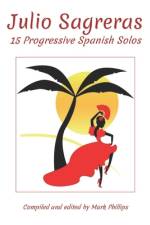
Fifteen progressive Spanish guitar solos (from early intermediate to advanced intermediate), in standard notation and tablature. Includes: Study in E Minor (No. 70 from Las primeras lecciones), Study in A Minor (No. 73 from Las primeras lecciones), Study in A Minor (No. 74 from Las primeras lecciones), Study in A Minor (No. 75 from Las primeras lecciones), Study in A Minor (No. 10 from Las terceras lecciones), Study in A Minor (No. 1 from Las segundas lecciones), Study in A Minor (No. 7 from Las segundas lecciones), Study in A Minor (No. 11 from Las segundas lecciones), Study in D Minor (No. 14 from Las segundas lecciones), Study in A Minor (No. 1 from Las terceras lecciones), Study in A Minor (No. 7 from Las terceras lecciones), Study in E Minor (No. 22 from Las terceras lecciones), Bebita, Nostalgia (from 3 Piezas fáciles), Maria Luisa (from 3 Piezas fáciles).
Here is another indispensable cross-reference manual to the music of the 1980's. This era created what some have called the next generation of Classic Rock. While some songs from the early 1980's definitely fit into the Classic rock format, the 1980's really introduced a new format. It brought in the hair bands, glam rock, new wave, and a lot of pop. Both the music and bands became more stylistic. Synthesizers found greater use, leading to an increase in electronic music. Even traditional rockers like Neil Young released electronic albums (Trans - 1982). Through it all, some of the biggest stars in music emerged - Madonna, Janet Jackson, Paula Abdul, and Whitney Houston, to name a few.
Flexibility: Mechanism, maintenance, technique and warm-up exercises for the study of the trombone.Jose Pardal
"Behind the Hits: Songwriting Secrets from the Pros" by Corey "Joka Beatz" Dixon is a comprehensive guide into the fascinating world of professional songwriting.With over twenty years of industry experience, Dixon takes readers on an enlightening journey through the intricate craft of songwriting - from the spark of an initial idea to the completion of a fully produced song. This book demystifies the songwriting process, providing insights into how hit songs are crafted and the techniques used by the pros to make songs resonate with listeners.This in-depth guide covers a broad array of topics, including song structures, lyric writing, melody creation, the importance of collaboration, overcoming creative blocks, and the practicalities of producing a song. Dixon infuses each chapter with rich detail, practical advice, and inspiring anecdotes from his personal journey in the music industry.Whether you're an aspiring songwriter looking to write your first song, an established artist seeking to refine your craft, or simply a music lover curious about the creative process behind your favorite hits, "Behind the Hits" offers valuable insights into the art and science of songwriting. Dixon's passion for music and songwriting shines through every page, making this book not just an informative read, but also an inspiring journey into the heart of music creation.
This work has been selected by scholars as being culturally important, and is part of the knowledge base of civilization as we know it.This work is in the "public domain in the United States of America, and possibly other nations. Within the United States, you may freely copy and distribute this work, as no entity (individual or corporate) has a copyright on the body of the work.Scholars believe, and we concur, that this work is important enough to be preserved, reproduced, and made generally available to the public. We appreciate your support of the preservation process, and thank you for being an important part of keeping this knowledge alive and relevant.
One of the most iconic hymns of Christmas arranged by American composer James Nathaniel Holland and expanded with an original new chorus and new text by him. This arrangement/new work contains both traditional melodies (Flow Gently and Away in a Manger). Here presented for soloist (or solo treble instrument in C) SATB choir and full orchestra. A meandering string counter-melody accompanies close choir harmonies and a simple beautiful traditional melody. Sentimental, quiet perfect for choir boy soloist or perhaps children's choir. Intermediate level. Full score in concert pitch and individual parts including vocal parts included. Versatile enough to be used with the other arrangements in this key.Instr: fl12, ob, eh, cl12, bsn12, hrn12, tpt12, trom 12, timp, perc. (glk, tri., hand cym.) harp and strings. Duration: 6 minutes and 49 seconds. Composer website: https: //www.facebook.com/jamesnathanielholland/ YouTube video presentation: https: //youtu.be/XHRqsVSDGY8
Abonner på vårt nyhetsbrev og få rabatter og inspirasjon til din neste leseopplevelse.
Ved å abonnere godtar du vår personvernerklæring.