










Gjør som tusenvis av andre bokelskere
Abonner på vårt nyhetsbrev og få rabatter og inspirasjon til din neste leseopplevelse.
Ved å abonnere godtar du vår personvernerklæring.Du kan når som helst melde deg av våre nyhetsbrev.

Drums by Alex Biggs Book 2 Special Edition: How to play the drums, Grade 1 level up to Grade 2 - with free audio downloads for all the numbered exercises. This books helps you to play in a really easy-to-follow format. Learn properly and quickly from a professional drummer and teacher! There are 5 books in the series with the special edition version being updated and reformatted. It took many years to perfect the learning process even further. Students are always way ahead of others on different books. They are the ones chosen for performances time and time again If you're looking for the best drum book for grade 1 up to grade 2, you have found it! Author and educator Alex Biggs has written an easy-to-follow beginners drum books that' is methodically designed to teach you all the essential rhythms, fills and grooves you'll need to start playing the drums. Teach yourself to play drums with this jam-packed book with many of the fundamental drum skills and exercises you will need to learn to become an amazing drummer and musician.You'll learn: Note values including dotted notes and restsPerformance directions & TheoryMusical terms and meaningsHow to read drum notationEssential Rhythms including 16th notesDrum FillsCoordination ExercisesSnare Drum RudimentsHi-Hat & Cymbal TechniquesSight-readingHow to play to a songPlus!3 songs to play along toCreate your own drum partsA practice chart to keep trackProgress notesmore great books to continue your journey99 Free audio exercises on tracks for this drum instruction book included! Book 1 is beginner level to grade 1Book 2 is Grade 1 - 2Book 3 is grade 2 - 3Book 4 is grade 3 - 4Book 5 is grade 4 - 5
This book is inspired by the skyscrapers of New York City. Joseph Pardal
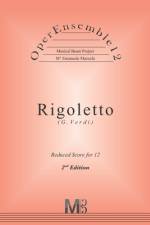
Reduced Score of Verdi's "Rigoletto" for the Standard 12 Instruments Ensemble (OperEnsemble12) - 2nd Edition. High quality, full assistance with the free OpEn12 Licence Code inside. For further information, see www.musicalbeam.com
Let's face it: even after hours of sweat and anguish your mix still isn't sounding like you want it. Perhaps it's nearly there, but there's something small that stops it from being a great mix. That 'something small' can be something big if it's the difference between a poor sounding mix and a pro sounding mix. Maybe you're simply missing some essential knowledge, or perhaps you've got into bad habits that are screwing things up every time. Frustrating! 44 Reasons Your Mixes Suck, is the book to catapult you out of your mixing rut! This book contains a list of common (and not so common) reasons why mixes sound second-rate. And every 'reason' has a solution on how to fix it. So what are you waiting for? Grab the book, get your mix up, and let's get into it.
This work has been selected by scholars as being culturally important, and is part of the knowledge base of civilization as we know it.This work is in the "public domain in the United States of America, and possibly other nations. Within the United States, you may freely copy and distribute this work, as no entity (individual or corporate) has a copyright on the body of the work.Scholars believe, and we concur, that this work is important enough to be preserved, reproduced, and made generally available to the public. We appreciate your support of the preservation process, and thank you for being an important part of keeping this knowledge alive and relevant.
(Ukulele Songbook with lyrics) Official ukulele songbook to Miss Kitty's latest EP Game of Chess, with full lyrics.Featuring complete arrangements of: Game of Chess, Bury The Hatchet, Donut In My Head & I Feel So Numb.Buy the album now at www.iammisskitty.com
This work has been selected by scholars as being culturally important, and is part of the knowledge base of civilization as we know it.This work is in the "public domain in the United States of America, and possibly other nations. Within the United States, you may freely copy and distribute this work, as no entity (individual or corporate) has a copyright on the body of the work.Scholars believe, and we concur, that this work is important enough to be preserved, reproduced, and made generally available to the public. We appreciate your support of the preservation process, and thank you for being an important part of keeping this knowledge alive and relevant.
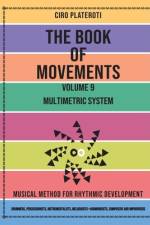
MULTIMETRIC SYSTEM is a music pedagogical method designed based on sets of rhythmic movement patterns of different metrics: binary, ternary, and irregular. By combining patterns of such characteristics, new rhythmic forms of varied metrics emerge in composite, irregular, and additive measures. In a straightforward manner, we learn to play rhythms in metrics ranging from 1/8 to 8/8 that, when combined, result in new metrics such as 15/8, 14/16, 13/8, 12/16, 11/8, 10/8, etc. Thanks to another system of body coordination called the "Double Binary Motor System" (which is also used in the first 4 volumes of the collection), irregular metrics, which have always required significant intellectual effort to approach, can be easily learned and combined with as organic a feeling as musical. In this way, exotic yet highly musical rhythms emerge through simple combinations of the right hand and the left hand. And the best part is that no knowledge of traditional musical notation is required. Once a movement pattern (MP) is physically incorporated, another creative process begins, involving modification through a series of adjustments, expression parameters, and ornamentations for embellishment. The discourse can also be influenced through syntactic formulas. **CREATIVITY FOR INSTRUMENTALISTS, COMPOSERS, AND IMPROVISERS**Movement patterns have always been part of the secret treasure of professional drummers, but today they are adopted by different instrumentalists, whether rhythmic, melodic, or harmonic. Pianists, guitarists, bassists, electronic music producers, and percussionists playing drums with both hands (such as Hang, Congas, etc.), as well as multi-timbral sets, find here a source of inspiration and training with powerful creative triggers to compose highly original musical phrases. UNLOCK A FRESH MUSICAL IDEA EVERY DAY AT YOUR FINGERTIPSDue to the inherent automatism in our nature, we often resort to the same ideas. However, if we have thousands of tangible possibilities within our sight, we can easily find inspiration. By experimenting with this conception, we can quickly renew our musical language, giving shape and life to our solos, phrases, compositions, and improvisations. ATTENTION: After practicing the 9th volume of THE BOOK OF MOVEMENTS, you will notice changes in your self-perception as both hemispheres of the brain are exercised.**
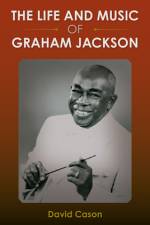
Agroundbreaking Black artist and his career in the Jim Crow South This book is the first biographyof Graham Jackson (1903‒1983), a virtuosic musician whose life story displays the complexities of being aBlack professional in the segregated South. David Cason discusses how Jacksonnavigated a web of racial and social negotiations throughout his long career andhighlights his little-known role in events of the twentieth century. Widely known for an iconic photo taken of him playing the accordionin tears at Franklin D. Roosevelt's funeral, which became a Lifemagazine cover, Jackson is revealed here to have a much deeper story. He was aperformer, composer, and high school music director known for his skills on thepiano and organ. Jackson was among the first Black men to enlist in the Navy duringWorld War II, helping recruit many other volunteers and raising over $2 millionfor the war effort. After the war he became a fixture at Atlanta music venuesand in 1971, Governor Jimmy Carter proclaimed Jackson the State Musician ofGeorgia. Cason examines Jackson's groundbreaking roles with a critical eye, taking into account how Jackson drew on his connections with white elitesincluding Roosevelt, Coca-Cola magnate Robert Woodruff, and golfer Bobby Jones, and was censured by Black Power figures for playing songs associated withConfederate memory. Based on archival, newspaper, and interview materials, TheLife and Music of Graham Jackson brings into view the previously unknownstory of an ambitious and talented artist and his controversial approach to thepolitics and culture of his day. Publication of this work made possible by aSustaining the Humanities through the American Rescue Plan grant from theNational Endowment for the Humanities.
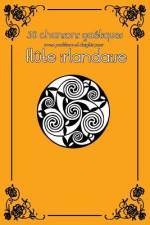
Découvrez la musique folklorique à la flûte irlandaise avec ce recueil illustré de chansons issues d'une tradition vivante. Sans connaissance préalable du solfège, vous pouvez immédiatement commencer à jouer vos premières mélodies. Les mélodies de ce recueil, et des autres dans la série, ont été choisies et arrangées en vue de permettre au débutant d'accèder facilement et rapidement à la musique sans passer par un lourd apprentissage technique. Des tablatures avec les doigtés à la flûte sont proposées pour chaque morceau. Liste des airsAn bhfaca tú mo Shéamaisín?An cailín ruaAn seanduine dóiteBáidín fheilimíBean PháidínCuaichín Ghleann Néifin1Cill CháisCúnlaÉamonn an chnoicJimmy mo mhíle stórEibhlín a rúnÓró! 'sé do bheatha 'bhaileNíl 'na láNead na lachan sa mhútaSiúil a rúnSiúbhán Ní DhuibhirAn spailpín fánachThugamar féin an samhradh linnDéirín déCailleach an airgidAn maidrín ruaÓró mo bháidínCailin na gruaige doinneAr éirinn ní n-eósainn cé h-íBeidh aonach amárachTrasna na dtonntaTá mé i mo shuíDúlamán na binne buíBuachaill ón ÉirneBheir mé ó La flûte irlandaise (tin whistle ou simplement whistle) est une petite flûte droite a six trous, qui dans sa forme actuelle date du 19ème siècle. De par son prix abordable et sa facilité de prise en main, c'est l'instrument le plus répandu en Irlande, et est souvent l'instrument de choix pour débutants et pour enfants.
This third volume of seven in the series covers the evolution of British music and the music industry over the first eighty years of the nineteenth century. At the end of the previous century musical life in London consisted of concerts (often funded by subscribers who paid a certain amount per season for a seat), vernacular and Italian opera, and, in summer, the pleasure gardens. Other major cities in the islands, such as Dublin and Edinburgh, offered a similar range of entertainments. Popular ballads and airs were sold as broadsheets, and could increasingly be heard in urban streets blaring out from barrel organs, a relatively new invention. Employment prospects for a musician were largely confined to the theatre, the church and, possibly, as a musician/tutor in a private household. Home music making was largely a pursuit of the wealthy. Fast-forward eighty years and the musical landscape of the British Isles had changed completely. In 1880 concerts were still largely the preserve of the moneyed elites, but the emerging middle classes and the new generations of factory workers now had the music halls and the new kind of musical theatre provided by the likes of Gilbert and Sullivan. Performers could become household names, and musicians and jobbing composers could make a decent living. Music education had been restricted to private lessons and on-the-job-training in 1800, but in 1880 there were internationally known schools such as the Royal Academy of Music and the Royal College of Music in London. Music in the home, too, had changed radically. The new Victorian middle classes in their suburban villas inevitably owned a piano, and a piano required sheet music to play. Undemanding instrumental music, and sentimental and moralistic ballads were the order of the day. Many of the great European composers spent time in Britain in the eighteenth century, and this is something that continued during the nineteenth. Mendelssohn, Weber, Berlioz, Liszt and others all spent very profitable periods in the country. There had been no one at home of a comparable stature, if one discounts foreign-born, but adopted sons like Handel and Johann Christian Bach, since the days of Purcell. William Sterndale Bennett was the most important figure furing the first half of the century, not so much for his compositions, but for the high standards he brought to music teaching, and for the invigorating influence he had on concert life. His pupils included Sullivan and Hubert Parry, and these two, along with Charles Villiers Stanford and Alexander Mackenzie, were responsible to a large degree for the renaissance of musical life that began in the last quarter of the century.
This work has been selected by scholars as being culturally important, and is part of the knowledge base of civilization as we know it.This work is in the "public domain in the United States of America, and possibly other nations. Within the United States, you may freely copy and distribute this work, as no entity (individual or corporate) has a copyright on the body of the work.Scholars believe, and we concur, that this work is important enough to be preserved, reproduced, and made generally available to the public. We appreciate your support of the preservation process, and thank you for being an important part of keeping this knowledge alive and relevant.
Title: Gradus ad Parnassum Composer: Muzio Clementi Original Publisher: Peters The complete Gradus ad Parnassum by Clementi, with German and French text, as originally published by Peters in 1868. Performer's Reprints are produced in conjunction with the International Music Score Library Project. These are out of print or historical editions, which we clean, straighten, touch up, and digitally reprint. Due to the age of original documents, you may find occasional blemishes, damage, or skewing of print. While we do extensive cleaning and editing to improve the image quality, some items are not able to be repaired. A portion of each book sold is donated to small performing arts organizations to create jobs for performers and to encourage audience growth.
Grunge. Flannel. Generation X. In 1993, Seattle was the capital of the world, Nirvana was king, and slackers were everywhere. When the Red Hot organization, a group of activists dedicated to raising money and awareness of AIDS, released their third compilation CD featuring the biggest bands of the era--Soundgarden, Smashing Pumpkins, Beastie Boys, The Breeders, Nirvana and more it quickly became the touchstone of a generation. Rolling Stone called No Alternative a "jaw-dropping compilation of musical gems." This book takes a look back at what happened to the bands involved with No Alternative. It includes new interviews with the musicians and others behind the record, and chronicles the downfall of an industry, the taming of a devastating illness, and the arrival of another global pandemic. It's about growing up, saying goodbye, and proving once more that you can't go home again (even if that's where you left all of your CDs).
22 sacred songs by Bach from the Schemelli Songbook for flute and guitar (in standard notation and tablature). Includes Ach, dass nicht die letzte Stunde (Oh, That Is Not the Last Hour); Auf, auf! die rechte Zeit ist hier (Up, Up! The Proper Time Is Here); Beschränkt, ihr Weisen dieser Welt (Confine, Ye Wise Men of the World); Brich entzwei, mein armes Herze (Break in Two, My Poor Heart); Dich bet ich an, mein höchster Gott (I Worship Thee, My God Most High); Dir, dir, Jehova, will ich singen (To Thee, Thee, Jehovah, I Will Sing); Eins ist not! ach Herr, dies Eine (One Thing Is Needful, O Lord, This One Thing); Gott wie gross ist deine Güte (God, How Great Thy Goodness Is); Ich halte treulich still (I Shall Remain Faithfully Silent); Ich lass dich nicht (I Shall Not Leave Thee); Ich liebe Jesum alle Stund' (I Love Jesus Always); Ich steh' an deiner Krippen hier (I Stand Here by Thy Crib); Jesu, Jesu, du bist mein (Jesus, Jesus, Thou Art Mine); Komm, süsser Tod (Come, Sweet Death); Kommt, Seelen, dieser Tag (Brethren, When This Day Comes); Kommt wieder aus der finstern Gruft (Come Again from Out the Dark Tomb); Liebster Herr Jesu (Dearest Lord Jesus); Mein Jesu! was für Seelenweh (My Jesus, How Great Anguish of Soul); O finstre Nacht (O Gloomy Night); O liebe Seele, zieh' die Sinnen (Beloved Soul, Thy Thoughts Withdraw Now); Selig, wer an Jesum denkt (Blessed, He Who Thinks on Jesus); Vergiss mein nicht, vergiss mein nicht (Forget Me Not, Forget Me Not).
This work has been selected by scholars as being culturally important, and is part of the knowledge base of civilization as we know it.This work is in the "public domain in the United States of America, and possibly other nations. Within the United States, you may freely copy and distribute this work, as no entity (individual or corporate) has a copyright on the body of the work.Scholars believe, and we concur, that this work is important enough to be preserved, reproduced, and made generally available to the public. We appreciate your support of the preservation process, and thank you for being an important part of keeping this knowledge alive and relevant.
This work has been selected by scholars as being culturally important, and is part of the knowledge base of civilization as we know it.This work is in the "public domain in the United States of America, and possibly other nations. Within the United States, you may freely copy and distribute this work, as no entity (individual or corporate) has a copyright on the body of the work.Scholars believe, and we concur, that this work is important enough to be preserved, reproduced, and made generally available to the public. We appreciate your support of the preservation process, and thank you for being an important part of keeping this knowledge alive and relevant.
50 Christmas classics arranged for two cellos with piano accompaniment. Easy enough for early-intermediate students to learn or for more advanced players to sight-read. Includes scores and individual parts. Great for lessons, recitals, church services, Christmas parties, and caroling. Includes: All Through the NightAngels From the Realm of GloryAway in a MangerAway in a Manger (Cradle Song)Bring a Torch, Jeanette IsabellaCarol of the BellsChrist Was Born on Christmas DayChristians AwakeCoventry CarolDance of the Sugar Plum FairyDeck the HallsDing Dong, Merrily on HighGaudeteGesu BambinoGod Rest Ye, Merry GentlemenGood Christian Men RejoiceGood King WenceslasHark the Herald Angels SingI Heard the Bells on Christmas DayI Saw Three ShipsIn the Bleak MidwinterInfant Holy, Infant LowlyIt Came Upon the Midnight ClearJingle BellsJolly Old St. NicholasJoy to the WorldLo, How a Rose E'er BloomingO Come All Ye FaithfulO Come, O Come, EmmanuelO Holy NightO Little Town of BethlehemO Tannenbaum (O Christmas Tree)Once in Royal David's CitySilent NightSing We Now of ChristmasStill, Still, StillThe Birthday of a KingThe First NoelThe Friendly BeastsThe Holly and the IvyThe Snow Lay on the GroundThe Twelve Days of ChristmasToylandUp on the HousetopWassail SongWe Three KingsWe Wish You a Merry ChristmasWexford CarolWhat Child is This?While Shepherds Watched This is a single bound book. Photocopies are permitted for performance purposes only.
This work has been selected by scholars as being culturally important, and is part of the knowledge base of civilization as we know it.This work is in the "public domain in the United States of America, and possibly other nations. Within the United States, you may freely copy and distribute this work, as no entity (individual or corporate) has a copyright on the body of the work.Scholars believe, and we concur, that this work is important enough to be preserved, reproduced, and made generally available to the public. We appreciate your support of the preservation process, and thank you for being an important part of keeping this knowledge alive and relevant.
Sheet music for Joseph Haydn's Piano Sonata No. 29 in E-flat major, Hob.XVI: 38, L. 51. Reprinted from the excellent C.F. Peters edition.
This work has been selected by scholars as being culturally important, and is part of the knowledge base of civilization as we know it.This work is in the "public domain in the United States of America, and possibly other nations. Within the United States, you may freely copy and distribute this work, as no entity (individual or corporate) has a copyright on the body of the work.Scholars believe, and we concur, that this work is important enough to be preserved, reproduced, and made generally available to the public. We appreciate your support of the preservation process, and thank you for being an important part of keeping this knowledge alive and relevant.
This work has been selected by scholars as being culturally important, and is part of the knowledge base of civilization as we know it.This work is in the "public domain in the United States of America, and possibly other nations. Within the United States, you may freely copy and distribute this work, as no entity (individual or corporate) has a copyright on the body of the work.Scholars believe, and we concur, that this work is important enough to be preserved, reproduced, and made generally available to the public. We appreciate your support of the preservation process, and thank you for being an important part of keeping this knowledge alive and relevant.
Get your students composing quicker than you can say "Compose"! Through the MINI MUSIC books, students are introduced to various concepts through composition. In Book 4, students write 88 short songs through given sets of notes on the Grand Staff which leads up to playing 5-finger scales of C and G Major, and D Minor. This book is set up for students to write out notes in 4 measures using 4/4 and 3/4 times. The final four songs are blank 8 measure songs for students to write "longer" pieces. There is also a good mix of titled and untitled songs. Most songs give students prompts to give them inspiration before writing, and some include a blank title for students to come up with their own. Creativity is the goal here, and students should enjoy the composing process. This book gives students a chance to do so, in small chunks so you can fit them in lessons!
Finger Exercise Collection for Piano: Five Note Finger Exercises for C, F, & G major! * These five note exercises are for the five note scale, finger positions for these keys. * They include primary chords for C, F, & G major.* 24 exercises each for C, F, & G major (same exercises, different keys).
If you want to play famous songs from the classical repertoire, then keep reading!Often finding effective arrangements for saxophone quartets can be really difficult and complicated. Especially if you look for songs that can excite the audience and that are easy to listen to.This arrangement will give you the opportunity to enrich your repertoire, without neglecting professionalism!You also have the possibility to listen to an audio preview of this song by copying this address: http: //www.giordanomuolo.com/en/online-shop-sax_2_en/complete scoreseparate partsaudio preview possibility at the following address: http: //www.giordanomuolo.com/en/online-shop-sax_2_en/Even if you tried to look for other professional tracks to enrich your repertoire without success, this arrangement will make the difference in your concert and will thrill the audience!Buy this book right now!
This work has been selected by scholars as being culturally important, and is part of the knowledge base of civilization as we know it.This work is in the "public domain in the United States of America, and possibly other nations. Within the United States, you may freely copy and distribute this work, as no entity (individual or corporate) has a copyright on the body of the work.Scholars believe, and we concur, that this work is important enough to be preserved, reproduced, and made generally available to the public. We appreciate your support of the preservation process, and thank you for being an important part of keeping this knowledge alive and relevant.
Alger 'Texas' Alexander was one of the original blues stars of the 1920s. As an original honker and shouter, he was a major influence on many blues stars to follow: Lightning Hopkins, Lowell Fulsom and Frankie Lee Sims. He worked with legends Eddie Lang, Lonnie Johnson, King Oliver and The Mississippi Sheiks. For many years Alexander has been a ghost whose past was shrouded in mystery. He took only one photograph in his lifetime. Texas music historian Coy Prather spent 4 years researching Alexander's past. Reading through census pages and searching courthouses and even the Texas Prison system for records. He discovered the oft repeated story of Alexander's imprisonment for murder was a myth. Prather worked to uncover the lost years and found Alexander's life was far more tragic than previously thought. It is story of man who scaled the heights of success in the music business and fell back to the Texas earth where he came from. An exciting story of a man who influenced the entire blues music industry and who wrote some of the greatest blues songs of all time.
This work has been selected by scholars as being culturally important, and is part of the knowledge base of civilization as we know it.This work is in the "public domain in the United States of America, and possibly other nations. Within the United States, you may freely copy and distribute this work, as no entity (individual or corporate) has a copyright on the body of the work.Scholars believe, and we concur, that this work is important enough to be preserved, reproduced, and made generally available to the public. We appreciate your support of the preservation process, and thank you for being an important part of keeping this knowledge alive and relevant.
This collection of 32 pieces will transport intermediate pianists to a world of creativity and inspiration. This carefully curated selection is designed to challenge and motivate with a range of styles and genres. You'll find beloved favorites alongside exciting new discoveries. The Imaginative Repertoire series will spark your imagination and take your piano playing to new heights.Pedagogical InformationKey Signatures: C/Am, G/Em, F/Dm, D/BmSixteenth NotesSustained octave patternsTime Signatures: 4/4, 3/4, 6/8, 12/8Rapidly changing chord progressions
"Mi deseo es compartir con ustedes, a quienes se les ha dado la oportunidad de estudiar este método comprensible." El Ukelele", que disfruté escribiendo, lo ayudará a avanzar en el camino hacia sus habilidades musicales.Este libro es una gran herramienta que puede ayudarte a aprender a tocar "El Ukulele" podrás aplicar las enseñanzas con otros, amigos, familiares, estudiantes, músicos, tu decides en fin. Espero que de la misma manera tengas un crecimiento agradable y cómodo en tu viaje musical, con esta maravillosa información de "El Ukulele" te deseo que lo disfrutes de todo corazón."Se disfruta cuando se aprende y se aprende cuando se disfruta" Autor: Raymond Vazquez
Abonner på vårt nyhetsbrev og få rabatter og inspirasjon til din neste leseopplevelse.
Ved å abonnere godtar du vår personvernerklæring.