












Gjør som tusenvis av andre bokelskere
Abonner på vårt nyhetsbrev og få rabatter og inspirasjon til din neste leseopplevelse.
Ved å abonnere godtar du vår personvernerklæring.Du kan når som helst melde deg av våre nyhetsbrev.

When early settlers came to America they often brought few material items, but they brought many customs, traditions, and music of their homeland here. These things, mainly the music took root in America's soil and grew. These emigrants came for many different reasons. Some came to escape poverty and find a better life. Many were forced out of their homeland by war. There were many who had no choice but were torn from their families and homes and brought here. Unlike some versions of history state, this was not a land someone had "discovered." There were indigenous groups with established cultures who had lived here for thousands of years. In spite of the misconception that all Indians wore feathers, lived in teepees, and had the same culture, Native American music and culture differed regionally and from tribe to tribe. They each had their own music as well. America really was a melting pot then. The music of Native Americans, white settlers, and the Black enslaved people mingled to create new forms and songs from Delta blues and "hillbilly" music, to rock. My biggest question is does the music reflect the culture, or does the culture reflect the music? This is the history of American music. It's the music of the people. From its birth in the 1700s through the 1970s. As you look at the history of music, you look at American history. It's not always a pretty story. Sometimes labor pains are hard, but in the end, it shouts loud and clear, "I was Born in the USA!"
From Arlo Parks, Grammy Award-nominated recording artist and ?voice of a generation??a stunning debut book of poetry and a world-building companion to her sophomore album My Soft Machine.?Poetry was my place, my little clearing in the forest, where I could quietly put everything I was holding. I'm not sure what gave me the courage to open up that space to you but here I am, doing it. I am proud to show you this personal lens that life shimmers through. This book is no longer mine. It is yours.??Arlo ParksThe Magic Border is the debut book from the Grammy-nominated, Mercury Prize winning musician and poet Arlo Parks. This remarkable collection features Arlo's handpicked original poems alongside exclusive photographs by friend and collaborator Daniyel Lowden in addition to the complete lyrics to her critically lauded sophomore album My Soft Machine. A deeply personal literary tapestry, The Magic Border beautifully showcases the full breadth of Arlo's singular artistry.
BOOK N-8 OF BASIC EXERCISES FOR IMPROVISATION IN THE TENOR TROMBONE
This book is the first volume of a series of high-level progressive technique books for trombone, these exercises should be practiced at different speeds and articulations in classical, jazz, Latin style etc. Joseph Pardal
Songbook with 38 Songs from the Middle Ages and the Renaissance - simply notated for the Soprano or Tenor Recorder with baroque fingering.Each tone of the melodie is shown with fingering images for the recorder, these are placed under the classical music notation.The sounds of the songs are available online in a sound player with adjustable playback speed.Videos explain how to read music, download files with the recorder fingerings are also available online. Web address and access data in the book.For slightly advanced and advanced player.Song list: Allererst leb ich in mir / An die Engel - De Angelis / Caritas Abundat / Christ ist erstanden / Der Scheffer von der nuwen Stat / Der Winter ist vergangen / Ductia / Edi beo thu hevene quene / Ein feste Burg ist unser Gott / Es ist ein Ros' entsprungen / Estampie / Galliard / Gavotte / Greensleeves / Grüß Gott, du schöner Maien / Herr Mannelig / Ich spring an diesem Ringe / Kreistanz / Kume Kume Geselle min / La Mourisque / Le Tabmourin / Maienlied / Nach grüner Farb mein Herz verlangt / Nun will der Lenz uns grüßen / Palästinalied / Pastime with good company / Pavane / Robin is to the greenwood gone / Rondo / Salterello / So treiben wir den Winter aus / Spielmannslied / Spielmannsweise / Springtanz aus Italien / Unter der Linden / Viva la musica / Vom Himmel hoch, da komm ich her / Wie schön blüht uns der Maien
In a year be able to play in all the keys. Improve your technique with 5-finger exercises in the major and minor keys. Each month has a featured key and matching folk tune. A practice journal is included.
Sheet music for Edvard Grieg's Lyric Pieces For The Piano, Op. 12. Grieg Lyric Pieces piano sheet music. This edition contains the following pieces: 1.) Arietta2.) Vals / Waltz3.) Vægtersang / Watchman's Song4.) Elverdans / Fairy Dance5.) Folkevise / Folk Song6.) Norsk / Norwegian7.) Stambogsblad / Album Leaf8.) Fædrelandssang / National Song
"Steigere deine Fähigkeiten im Flötenspiel mit diesem ultimativen Leitfaden und meistere die Kunst des Flötenspiels wie ein Profi. Wenn du Schwierigkeiten hast, mit dem Blockflötenspiel anzufangen und eine effektive Methode lernen möchtest, wie du dir Noten einprägen, spielen und kombinieren kannst - um Musik zu machen, die das Herz berührt - dann ist dieser Leitfaden genau das Richtige für dich. Es gibt nur wenige Momente, die so beruhigend und angenehm sind, wie einen erfahrenen Spieler zu hören, der deine Ohren mit einem Holzblasinstrument erfreut. Das Vergnügen ist doppelt so groß, wenn du selbst der Spieler bist. Von Volksliedern über Schlaflieder bis hin zu mitreißender Popmusik - die Blockflöte ist ein ikonisches Holzblasinstrument, das seinen Weg in viele schöne Musikstücke gefunden hat. Vom Erlernen der richtigen Haltung der Blockflöte bis zum ersten Ton nimmt dich Jason Randall an die Hand und zeigt dir alles, was du über das Spielen der Blockflöte wissen must - auf eine Art und Weise, die Spaß macht, unterhaltsam und leicht verständlich ist. In Wie man Blockflöte spielt wirst du folgendes entdecken: Die faszinierende Geschichte der BlockflöteErklärungen, die mit anschaulichen und leicht verständlichen Illustrationen ergänzt werdenEinfache Übungen mit Audiobeispielen zum Nachmachen und Üben in deinem eigenen TempoMusikstücke, die du mit deiner Blockflöte ausprobieren kannst, mit Hörbeispielen, die von leicht bis schwer reichen und so angeordnet sind, dass sie dich nicht überfordern... und vieles mehr! Obwohl es für Anfänger konzipiert ist, ist Wie man Blockflöte spielt ein umfassender Leitfaden, der allen Blockflötenspieler (unabhängig von ihrem Können) etwas bietet und dir helfen wird, ein besserer Blockflötenspieler zu werden. "Bist du bereit, deine Spielfähigkeiten auf das nächste Level zu bringen? Scrolle nach oben und klicke auf den Button, um dir den Leitfaden zu holen!
"Eagles for Beginners: An Easy Guitar Tablature Guide" is the ultimate resource for aspiring guitarists who are fans of the legendary Eagles. This comprehensive guide offers a step-by-step approach to learning and playing the most popular Eagles songs on the guitar, carefully tailored to the needs of beginners. With detailed instruction, explanations, and tips, this book is an indispensable resource for those seeking to improve their guitar skills while enjoying the timeless music of the Eagles.Inside this extensive guide, you will discover a hand-picked collection of the band's most accessible and well-loved songs. Each selection includes easy-to-follow Eagles guitar tabs, complete with chord diagrams and Eagles chords and strumming patterns to help you understand the fundamentals of guitar playing. The songs have been chosen not only for their simplicity but also for their capacity to inspire and motivate new guitarists as they embark on their musical journey.In addition to the tablature, "Eagles for Beginners" provides invaluable guidance on how to read guitar tabs, with clear explanations of the symbols and techniques commonly encountered in tab notation. This essential primer on beginner guitar lessons will equip you with the knowledge and confidence needed to tackle any tablature you come across in the future.Furthermore, this Eagles guitar guide offers insightful background information on the Eagles, their musical style, and the stories behind their most famous songs. These fascinating tidbits will deepen your appreciation for the band's rich legacy and enhance your overall learning experience.Some of the standout features of "Eagles for Beginners: An Easy Guitar Tablature Guide" include: A diverse selection of Eagles songs, from beloved classics like "Take It Easy" and "Tequila Sunrise" to lesser-known gems that showcase the band's versatility and songwriting prowess.Detailed, easy-to-understand Eagles guitar tabs with accompanying chord diagrams and strumming patterns to aid your learning process.Comprehensive beginner guitar lessons on how to read and interpret guitar tabs, ensuring a strong foundation for future musical exploration.Engaging background information on the Eagles, their history, and the stories behind their most popular songs.Whether you're an absolute beginner or a budding guitarist looking to expand your repertoire with an Eagles songbook for guitar, "Eagles for Beginners: An Easy Guitar Tablature Guide" is an essential addition to your collection. With its expertly crafted content and user-friendly approach to acoustic guitar lessons, this guide will set you on the path to guitar mastery, one Eagles song at a time. So grab your guitar, open the book, and let the timeless music of the Eagles inspire you to new heights on your musical journey.
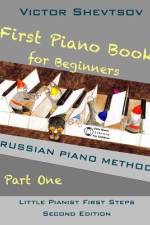
The First Piano Book for Beginners is the latest version of the Little Pianist First Steps method books. Although the First Piano Book for Beginners presents the same pedagogical ideas and contains the same as in previous edition instructive repertoire, a different form of the book was used. Instead of "lesson by lesson" structure the material is presented in the consecutive order of piano playing skills, which are explored in the book. This gives the teachers more freedom and flexibility in adjusting the speed of learning to the abilities and individual needs of different students.One of the most important strategic pedagogical goals presented in The First Piano Book for Beginners is to build in strict order the process of mastering by the student the basic piano playing skills. It is also essential to understand that only freedom of all playing movements and flexibility of hands and arms can make the acquisition of correct piano playing skills and habits possible.Freedom and flexibility of hands is the fundamental principle of piano playing.The teaching strategies and carefully selected repertoire in our book allows the teacher to focus on developing in students the ability to relax hand and to keep it flexible. We understand how important it is to start working on this essential technical device from the first stage teaching beginners and to keep working on it throughout all the years of training young musicians. Only freedom and flexibility of playing movements allows to produce beautiful tone, coordinate different articulations and lay the foundation for all piano technical skills.The above-stated principle of hand freedom and flexibility dictates a particular order of learning different technical elements on the piano, and the selection of the repertoire, so as to better suit this goal.To develop the student's ability to play the piano without tension, we start with exercises and little tunes based on detached notes. At first, all tunes are written for either only the right or only the left hand.Such material allows both the teacher and the student to focus on the mechanism of hand relaxation in its most pure and simplified form. Here is the order in which we introduce basic piano playing skills in our method: Non legato (detached) notes Two-note and three-note slurs Staccato notes Legato notes
This work has been selected by scholars as being culturally important, and is part of the knowledge base of civilization as we know it.This work is in the "public domain in the United States of America, and possibly other nations. Within the United States, you may freely copy and distribute this work, as no entity (individual or corporate) has a copyright on the body of the work.Scholars believe, and we concur, that this work is important enough to be preserved, reproduced, and made generally available to the public. We appreciate your support of the preservation process, and thank you for being an important part of keeping this knowledge alive and relevant.
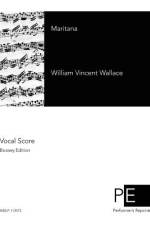
Title: Maritana Composer: William Vincent Wallace Original Publisher: Boosey The complete vocal score to Wallace's Maritana, as originally published by Boosey in 1880. Performer's Reprints are produced in conjunction with the International Music Score Library Project. These are out of print or historical editions, which we clean, straighten, touch up, and digitally reprint. Due to the age of original documents, you may find occasional blemishes, damage, or skewing of print. While we do extensive cleaning and editing to improve the image quality, some items are not able to be repaired. A portion of each book sold is donated to small performing arts organizations to create jobs for performers and to encourage audience growth.
Ten Songs by English Renaissance composer-lutenist-singer John Dowland, arranged for voice and classical guitar (in standard notation and tablature). Includes: Away with These Self-Loving Lads, Come Again Sweet Love, Come Heavy Sleep, Dear If You Change, Flow My Tears, Go Crystal Tears, If My Complaints, The Lowest Trees Have Tops, Weep You No More, Who Ever Thinks or Hopes. Note: These arrangements have been transposed down from the original keys, and, as such, they are most suitable for soloists with an alto or bass (8vb) range. For sopranos and tenors (8vb), guitarist uses capo to raise pitch a few steps to singer's desired key.
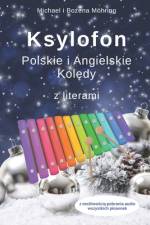
Kolekcja 66 najpopularniejszych utworów świątecznych na ksylofon. Pod wszystkimi nutami znajdują się litery, dzięki czemu wszystkie utwory można zagrac bez znajomości nut. Dodatkowo wszystkie utwory dostępne są w postaci plików audio, które można bezplatnie pobrac ze strony autorów. Link znajdziesz w książce. Zakres powinien obejmowac c d e f g a h c d e f g, dla niektórych utworów wystarczy zakres c d e f g a h c, dla wszystkich utworów potrzebne są również nuty cis, dis, gis, fis.Piosenki: A cóż z tą Dzieciną * A wczora z wieczora * Ach, ubogi żlobie * Ach! zla Ewa * Aniol pasterzom mówil * Bóg się rodzi, gwiazda wschodzi * Bóg się rodzi * Bóg się z Panny narodzil * Bracia, patrzcie jeno * Chrystus się nam narodzil * Cicha noc * Dzieciątko się narodzilo * Dzisiaj w Betlejem * Gdy się Chrystus rodzi * Gdy śliczna Panna * Gore gwiazda Jezusowi * Hej, bracia, czy śpicie * Hej, w dzień narodzenia * Jakaż to gwiazda * Jam jest dudka Jezusa mojego * Jezu, śliczny kwiecie * Jezus Malusieńki * Lulajże Jezuniu * Mędrcy świata * Mizerna, cicha stajenka licha * Narodzil się Jezus * Nowy Rok bieży * Nuż my, bracia pastuszkowie * O gwiazdo Betlejemska * Oj, maluśki, maluśki * Pasterze mili * Pasterze paśli trzody na przylogu * Pójdźmy wszyscy do stajenki * Pólnoc już byla * Przybieżeli do Betlejem * Przystąpmy do szopy * Tryumfy Króla Niebieskiego * W dzień Bożego Narodzenia * W żlobie leży * Wśród nocnej ciszy * Z narodzenia Pana * *** * Angels We Have Heard on High * Away in A Manger * Brightest and Best of the Sons of the Morning * Carol of the Bells * Go, Tell It on the Mountain * God Rest You Merry, Gentlemen * Hark! The Herald Angels Sing * I heard the Bells on Christmas Day * It Came Upon a Midnight Clear * Jingle Bells * Joy To The World * O Christmas Tree * O Come, All Ye Faithful * O Come, Little Children * O Holy Night * Old English Carol * Santa Claus * Silent Night * Sing We Now of Christmas * The Coventry Carol * The First Noel * The Holly and the Ivy * The Twelve Days of Christmas * We Three Kings of Orient Are * We Wish You a Merry Christmas
This work has been selected by scholars as being culturally important, and is part of the knowledge base of civilization as we know it.This work is in the "public domain in the United States of America, and possibly other nations. Within the United States, you may freely copy and distribute this work, as no entity (individual or corporate) has a copyright on the body of the work.Scholars believe, and we concur, that this work is important enough to be preserved, reproduced, and made generally available to the public. We appreciate your support of the preservation process, and thank you for being an important part of keeping this knowledge alive and relevant.
This work has been selected by scholars as being culturally important, and is part of the knowledge base of civilization as we know it.This work is in the "public domain in the United States of America, and possibly other nations. Within the United States, you may freely copy and distribute this work, as no entity (individual or corporate) has a copyright on the body of the work.Scholars believe, and we concur, that this work is important enough to be preserved, reproduced, and made generally available to the public. We appreciate your support of the preservation process, and thank you for being an important part of keeping this knowledge alive and relevant.
When the original version of this composition was first written in 2009, Alexandra, my wife, commented that it sounded like music for the Elizabethan court. I have since developed it with that observation in mind. It is not intended to imitate accurately the music of that period, but rather to create an atmosphere that evokes the sixteenth-century court. Although the work is called a symphony, it does not follow strictly the symphonic structure of modern works. In the seventeenth century, the word "symphony" referred to a work in which several instruments played together and it is this interpretation which prevails here, although there are certainly some aspects of the modern perception present. In the Elizabethan period, a "symphony" designated any member of the harpsichord family - spinets, virginals and the like. It is therefore fitting that a harpsichord is included in the composition.
This and That seizes the opportunity to turn the house lights on the spectacle of show that is pop cancel culture to dare to look backstage at the varied components involved in the production of abuse. Using the highly publicized R. Kelly case, and written as a graphic personal letter to Robert Kelly, the author provides a gripping critical analysis of the insidious culture of sexual abuse, through cultural elements of celebrity, law, religion, community, family, and mental health. The book-length collection of letters is made personal by its creative incorporations of first-hand experiences told through the writer's lens which is shaped by study and work in the fields of African American culture, trauma, education, pop culture, creative production, and identity construction. As a follow up to Star Struck: An American Epidemic (2004) which came to be regarded as a prescient warning, this book attempts to serve as both a cautionary tale and a building tool that implores the concept of Sankofa as it looks at and goes back through the past in earnest effort to help lay a foundation that can support the fullness of a more healthy and whole future for all.
Looking at the rhymes I wrote in 2012 I am quite surprised at the number which were married to WildScreW musical melodies, effectively turning the poems into songs. "Free Fall", "Beast With Two Backs", "Stung!", "Cougar!" and "On My Own" were all developed from original Thomas Wild guitar melodies, so called ALPHAs, and were professionally recorded on the studio CD which was released at the start of 2017. "On My Own" is a guitar melody which has haunted Thomas, so he claims, since he started to learn to play the guitar and was his personal favourite melody.The WildScreW ALPHAs "Last Man Standing", "Demon Eyes", "Nothin's Gonna Change" and "Adulterous" are, in my opinion, still, today, all useable and listenable ALPHAs and hopefully will one day also be recorded as part of a professional CD album."Hold You In My Arms" is the first poem/song I wrote for Thomas Wild to a guitar melody which wasn't quite rounded enough and my vocals were also somewhat choppy so were mutually agreed to assign the ALPHA to the digital dustbin."Marchin' In" and "Keep Your Distance" were both written for a project band called PackEis and a detailed study of those lyrics is available in a separate book.
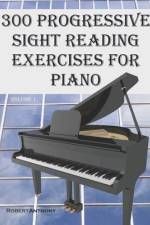
The primary goal of this book is to train the ability to read music and free the musician from being dependent on tablatures or other communication systems that are not used in the academic or professional worlds. This book has been designed to train aural skills concurrently with reading skills. Instructions and preview are available at the Robert Anthony Publishing website. Volume 1 is comprised of 300 progressive exercises that cover the keys of C Major, F Major, G Major, A Minor, D Minor and E Minor. Time signatures include 4/4 (Common Time), 3/4, 2/4, 6/8, and 2/2 (Cut Time). Volume 2 expands into all keys of up to four sharps (#) and four flats (b). The exercises are all eight measures (two phrases, or one period) in length. While they are composed to be melodic and pleasant to the ear, they are also composed to be difficult to memorize, and utilize many rhythms that seem to be absent from other sight reading books.. LARGE PRINT versions are available. They are linked on the aforementioned site, or can be searched for on Amazon. Finally, some fundamental pages on scales and rhythms have been included for convenience. The scale pages are the only place in this book where tablature has been used.
Having spent a career as a guest conductor with over 100 orchestras and served as a Music Director with two orchestras, I have collected a wide variety of experiences. These experiences have included teaching conducting to Senator Joe Biden, conducting the seventh inning stretch for the Philadelphia Phillies in 1973 for the national league Pennant and being interviewed on QVC and HSN. The memoirs are filled with musical as well as social stories about the travels that I have experienced. As the first American artist behind what was "the Iron Curtain" to travel around Pablo Escobars rancho, the memoirs are filled with annecdotes and stories about artists as well as locations. It has been a pleasure to commit to paper the stories with Ray Charles, Van Cliburn,me Ben E. King, Andre Watts, Itzhak Perlman and Martina MacBride.
This book is inspired by the skyscrapers of New York City. Joseph Pardal
Slammin' Simon teaches aspiring rockstars all the rudiments, grooves and fills they need to get drumming in no time!His fun instructional resources are perfect for use in the lesson room, by instructors who work with young students, as well as at home, by parents of children learning to play percussion.In his 20 Essential Drum Rudiments guide, Simon and his pet turtle, Rudi, introduce their favorite Roll, Diddle, Flam and Drag rudiments. These hand patterns (or "stickings") provide drummers with a solid foundation for their future percussion study and development.
The Indie Post Magazine is an exciting and inspirational entertainment magazine that features powerful interviews with well-established celebrities as well as independent entertainment professionals around the world all on one platform. No matter whether you are interested in reading about award-winning actors, film producers, musicians, recording artists, entertainment business executives, music producers, or business executives, we have it all! The indie post is unique in that it serves as a platform where both independent artists and well-established artists are equally able to have their achievements recognized. While reading The Indie Post, you'll learn about the journeys of those within the entertainment industry and the challenges they've encountered and experienced while striving to attain their goals. Sip a cup of coffee or tea and be inspired by the magazine everyone is talking about, The Indie Post!
This work has been selected by scholars as being culturally important, and is part of the knowledge base of civilization as we know it.This work is in the "public domain in the United States of America, and possibly other nations. Within the United States, you may freely copy and distribute this work, as no entity (individual or corporate) has a copyright on the body of the work.Scholars believe, and we concur, that this work is important enough to be preserved, reproduced, and made generally available to the public. We appreciate your support of the preservation process, and thank you for being an important part of keeping this knowledge alive and relevant.
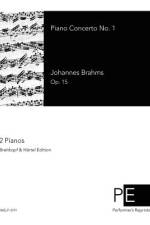
Title: Piano Concerto No. 1, Op. 15 Composer: Johannes Brahms Original Publisher: Breitkopf & Härtel As arranged for 2 Pianos by Otto Singer and originally published by Breitkopf & Härtel. Piano 1 is the original solo part, with a Piano 2 reduction of the orchestral accompaniment. Performer's Reprints are produced in conjunction with the International Music Score Library Project. These are out of print or historical editions, which we clean, straighten, touch up, and digitally reprint. Due to the age of original documents, you may find occasional blemishes, damage, or skewing of print. While we do extensive cleaning and editing to improve the image quality, some items are not able to be repaired. A portion of each book sold is donated to small performing arts organizations to create jobs for performers and to encourage audience growth.
This work has been selected by scholars as being culturally important, and is part of the knowledge base of civilization as we know it.This work is in the "public domain in the United States of America, and possibly other nations. Within the United States, you may freely copy and distribute this work, as no entity (individual or corporate) has a copyright on the body of the work.Scholars believe, and we concur, that this work is important enough to be preserved, reproduced, and made generally available to the public. We appreciate your support of the preservation process, and thank you for being an important part of keeping this knowledge alive and relevant.
Was zu Ostern geschah - Christliche und weltliche Osterlieder für Groß und Klein: Das Liederbuch mit allen Texten, Noten und Gitarrengriffen zum Mitsingen und Mitspielen. Alle im Buch enthaltenen Lieder: 1. Was zu Ostern geschah 2. Hurra, Jesus lebt! (Ostern und Auferstehung) 3. Manchmal (Ende und Anfang) 4. Wir freun uns schon auf Ostern! 5. Hopplahopp, der Osterhase 6. Hier ein Ei und dort ein Ei (Die Ostereier-Suche) 7. Has, Has, erzähl mir was! (Ostern und der Osterhase) 8. Der Oster-Rock'n'Roll 9. Sieben kleine Osterhasen 10. In der Ostereierwerkstatt 11. Viele Eier nur für dich (Lied an jemanden, den man lieb hat) 12. Frühlingslachen - Die Osterzeit im Bauergarten (Pips, der kleine Osterhase) 13. Wir freun uns auf das Osterfest 14. Im Frühling 15. All die kleinen Häschen (Der Hasentanz) - Die meisten Lieder sind separat auf diversen CDs oder als Download erschienen.
The primary goal of this book is to train the ability to read music for piano without being dependent on finger numbers being provided, such as what one would find in a 'Piano-Vocal-Guitar' book - which is the majority of song books for Pop, Rock, R&B, Country, and so on (for example: Elton John, The Beatles, and Taylor Swift, etc.). Instructions and preview are available at the Robert Anthony Publishing website. Each volume is comprised of 300 progressive eight-bar exercises that train reading skills for both hands equally: Half of the pieces emphasize the right hand, the other half emphasize the left. There are currently three volumes. Finger numbers have been included for a small portion of the pieces from the first volume, only to provide examples of correct fingering. LARGE PRINT versions of all three volumes are available. They are linked on the aforementioned site, or can be searched for on Amazon. Q: Who is this book for?A: This book is for anyone who wants to train their ability to read music well without being dependent on finger numbers being provided. The Jazz Real Books, pop song books, and many Classical pieces do not have fingerings provided. Q: Can I just play Bach to train the hands equally?A: Perhaps! The difference is that Bach's pieces that use imitative counterpoint (Two-Part Inventions, for example) are quite demanding of both hands in each individual piece, and generally take significant practice to be able to execute. The exercises in this book differ in that the primary melody is in one hand, while the other plays a much simpler part. Q: Am I supposed to have my teacher write in the fingerings?A: No, your teacher is supposed to train you to not need them to be there in the first place. Q: What if I don't have a teacher?A: If you can afford one, I recommend getting one. If not, I have free videos linked on the Robert Anthony Music site and will be adding more. Q: Since the pairs of exercises have the same rhythm and melody, can't I just read the right hand and play it with the left?A: That approach will not work at all once you've gotten to where both hands play at the same time. Instead of trying to cheat, the design of the book is so that someone who can read a bit of treble clef can use that knowledge to help their bass clef reading, or vice versa... and it works as intended. Q: Why do some of the exercises sound 'weird' to my ears?A: First, they are purposely composed to be unpredictable and difficult to memorize, thus keeping the book effective for a long time. Second, some of the music is modal, some of it uses Set Theory, and some of it hints at atonal music. A professional piano teacher should be trained in these composition techniques. Q: Why are there one-star reviews that just name another book that they 'like better'?A: That's a good question. It's probably the same reason you'll find some books with several five-star reviews posted within a week of a new book being published - sometimes even before the publishing date. That said, it's probably smart to buy several books on sight reading. Having different content and different approaches certainly won't make you worse! Q: Can I just read the songs from my method book?A: Of course! But is it helping your sight reading to play familiar songs that are easy to memorize? And do you really want to play "On Top of Old Smokey" if you're not a child? These books are meant to free you from method book systems.
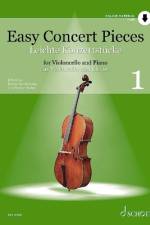
(String). Easy pieces from the Renaissance to the Modern Eras, carefully selected according to technical and musical demands. Includes access to online audio of full performances. Volume 1 - 16 pieces in 1st position by Bach, Beethoven, Gretchaninoff, Heller, Schubert and more. "Studio teachers will love the quality and diversity of the repertoire; kids will enjoy playing the pieces. This collection has 'fun' written all over it, but also offers serious opportunities for introducing advanced concepts like syncopation, swing-time, and some avant-garde techniques." American String Teacher
Abonner på vårt nyhetsbrev og få rabatter og inspirasjon til din neste leseopplevelse.
Ved å abonnere godtar du vår personvernerklæring.