





















Gjør som tusenvis av andre bokelskere
Abonner på vårt nyhetsbrev og få rabatter og inspirasjon til din neste leseopplevelse.
Ved å abonnere godtar du vår personvernerklæring.Du kan når som helst melde deg av våre nyhetsbrev.

Mozart, is a classical and a rare book, that has been considered important throughout the human history, and so that this work is never forgotten we at Alpha Editions have made efforts in its preservation by republishing this book in a modern format for present and future generations. This whole book has been reformatted, retyped and redesigned. These books are not made of scanned copies of their original work, and hence their text is clear and readable. This remarkable book falls within the genres of Music, Literature of music
Three Great Epoch-Makers in Music, is a classical and a rare book, that has been considered important throughout the human history, and so that this work is never forgotten we at Alpha Editions have made efforts in its preservation by republishing this book in a modern format for present and future generations. This whole book has been reformatted, retyped and redesigned. These books are not made of scanned copies of their original work, and hence their text is clear and readable. This remarkable book falls within the genres of Music, Literature of music
Rustic Chivalry (Cavalleria Rusticana): Melodrama in One Act, is a classical and a rare book, that has been considered important throughout the human history, and so that this work is never forgotten we at Alpha Editions have made efforts in its preservation by republishing this book in a modern format for present and future generations. This whole book has been reformatted, retyped and redesigned. These books are not made of scanned copies of their original work, and hence their text is clear and readable. This remarkable book falls within the genres of Music, Literature of music
Ma vie musicale, est un livre classique et rare, qui a été considéré comme important tout au long de l'histoire de l'humanité, et pour que cet ouvrage ne soit jamais oublié, chez Alpha Editions, nous avons fait des efforts pour sa préservation en rééditant ce livre dans un format moderne pour les générations présentes et futures. . Tout ce livre a été reformaté, retapé et repensé. Ces livres ne sont pas constitués de copies numérisées de leur oeuvre originale et leur texte est donc clair et lisible. Ce livre remarquable s'inscrit dans les genres de Music, Literature of music
भारतीय संस्कृति पर प्रत्यक्ष रूप से विभिन्न युगों की सांस्कृतिक प्रवृतियों की छाप पड़ी है प्रत्येक युग में संगीत की विभिन्न प्रवृत्तियों और भूमिकाओं का भारतीय संस्कृति पर अलग-अलग प्रभाव पड़ा है। संगीत के किस रूप के किस युग में क्या भूमिकाएं रही है और समाज व संस्कृति के लिए उसकी क्या उपियोगिता और प्रासंगिकता रही यह संगीत के लिए एक चुनौती बना रहा। इन सभी बातों पर विचार करते हुए संगीत को सदैव समाज और संस्कृति में आए बदलावों और रूझानों के अनुरूप ही समाज के समक्ष रखने का प्रयास किया और उसकी भूमिका को अग्रणी स्थान दिया। संगीत के संदर्भ में वस्तुत वही अनुसंधानात्मक दृष्टि उसे हर बद]लते युग में प्रासंगिक बनाती रही।
From the Jean Bechtel School for Music Press: Welcome to "Five-Finger Compositions: Primer Level" by Misha Kolesoski, a captivating introduction to piano repertoire tailored for beginners. Serving as a precursor to the esteemed Books 1 and 2 in the series, this collection presents fourteen accessible pieces carefully crafted to nurture foundational skills.From the whimsy of "The Dollhouse" to the tranquility of "Waiting for Sunset," each composition offers a unique musical landscape for exploration. Whether it's the rhythmic energy of "Round and Around" or the dreamy ambiance of "The Sweetest of Dreams," there's something to delight every aspiring pianist.In addition to the enchanting repertoire, this book includes five pages of dexterity exercises to enhance hand agility and technique. With "Five-Finger Compositions: Primer Level," embark on a journey of musical discovery and lay the groundwork for a fulfilling and enduring relationship with the piano.
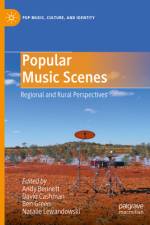
This book examines regional and rural popular music scenes in Europe, Asia, North America and Australia. The book is divided into four parts. Part 1 will focus on the spatial aspects of regional popular music scenes and how place and locality inform the perceptions and discourses of those involved in such scenes. Part 2 focuses on the technologies and forms of distribution whereby regional and rural popular music scenes exist and, in many cases co-exist in forms of trans-local connection with other scenes. Part 3 considers the importance of collective memory in the way that regional and rural popular music scenes are constructed in both the past and the present. Part 4 examines themes of industry and policy, in relation to culture and music, as these impact on the nature and identity of rural and regional popular music scenes.
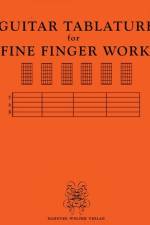
Music Composition book for Guitarists; formatted with detailed finger and fret work intended. This 8.25" x 11" composition book contains 100 manuscript pages, 6 Guitar TABs, and 5 staves of tabs for notation and fingering, formatted specifically for guitar composition. Black ink, printed on 60 pound (74-90 GSM) cream paper. Ideal for any guitarist, song writer, musician, composers, music teachers, and music students. Codify your ideas and bring new music to life using this convenient, high-quality book. Any serious musician will appreciate the styles adapted from the most renowned music publishers. Create, collaborate, share, and enjoy the gift of music with others.
Dive into the festive spirit with the Second Edition of '10 Christmas Songs for Clarinet Quartet.' This collection presents a harmonious blend of classic and timeless holiday melodies arranged for clarinet quartet. Featuring beloved tunes such as 'Angels We Have Heard On High, ' 'The First Noel, ' and a jazzy 'Hark! The Herald Angels Sing, ' this compilation invites both players and audiences to experience the joy of the season.With carefully cultivated arrangements, including an abridged 'Hallelujah Chorus, ' this edition offers a delightful mix of traditional carols and celebratory songs. Whether you're performing in a clarinet band or simply seeking arrangements for seasonal gatherings, this collection promises to elevate your Christmas musical experience.Embrace the magic of the holidays with these beautifully crafted renditions that capture the essence of Christmas in every note!Song list: Angels We Have Heard On High, Auld Lang Syne, Away In a Manger, Deck The Halls, Go Tell It On The Mountain, God Rest Ye Merry, Gentlemen, Hallelujah Chorus (Abridged), Hark! The Herald Angels Sing, I Saw Three Ships, and The First Noel.
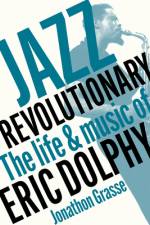
Jazz Revolutionary is the first full biography of Eric Dolphy, passionately tracing his creative life from Los Angeles clubs of the late 1940s and 50s, to New York in the early 1960s, and on to Paris, where sixty years ago he died from the complications of undiagnosed diabetes. It presents an engaging examination of this innovative musician and composer, from his family background to posthumous memorials, and provides insight into his recordings both as sideman and leader.Dolphy emerged at the frontiers of post-bop and free jazz, collaborating with John Coltrane, Charles Mingus, Ornette Coleman, and Gunther Schuller, among others, during the early 1960s. This book accounts for his successes, trials, and tribulations. His critical reception is presented as an element of his career's ups and downs, ultimately leading to an attempt at a new life in Paris. The albums on which he appears are interpreted title by title, track by track, without unnecessary musical terminology or musical examples; instead of cold discographic charts, readers are brought into each recording with a descriptive prose framework reflecting Dolphy's performances on alto saxophone, flute, and bass clarinet.Eric Dolphy was perhaps jazz's first true multi-instrumentalist and a pioneer of avant-garde technique. He is also widely remembered by those who knew him as a kind, gracious human being. In Jazz Revolutionary, his artistic accomplishments, his friendships and family life, and his timeless music are brought together in one place for the first time.
Explores the intersection of the world of opera, literature and partisan politics to show how Italian opera was put to use in the 'culture wars' of the day. This last of a trilogy of books on opera and politics in Britain examines the cultural politics of opera during the ministerial reign of Sir Robert Walpole from 1720 to 1742. The book explores the intersection of the world of opera, literature, and partisan politics to show how Italian opera - with its associations with the court, ministry and Britain's social-political elite - was put to use in the 'culture wars' of the day: how Italian opera was used for partisan political advantage; how political work could be accomplished by means of opera. It shows that attacks on opera had ulterior targets. The book surveys a range of often overlooked verse and prints to show how critique or satire of opera were a means for oppositional writers to delegitimize the Walpole ministry. Polemicists framed opera as a consequence of the corruption, luxury and False Taste generated by Walpole's ministry. It closes in the watershed year 1742: Handel had produced the last of his Italian operas the previous year, Walpole fell from power, and Alexander Pope published the last book of his Dunciad project.
Connects discussions of vocality and operatic culture with broader aesthetic and cultural shifts in society. In the decades that span the turn of the twentieth century, the Italian tradition of operatic singing became 'modern'. This book identifies and explores the formative elements of this multifaceted 'modernity', and its connections with the emergence of verismo, a realistic trend that affected every aspect of creative and intellectual life in fin-de-siècle Italy. Thisnovel approach to artistic representation meant that singers had to redefine the operatic voice, exchanging the bel canto ideal of 'pure' vocal quality with an irreversible gendered connotation and an erotically charged expressive force. Pivotal to this shift was the gradual development of a homogeneous vocal colour through the compass, an aesthetic principle that was alien to the voice culture of the previous centuries. Star singers such as Enrico Caruso, Titta Ruffo, Emma Carelli and Eugenia Burzio were instrumental in this radical transition. The book explores how and why modern singers consciously pursued a new vocal expressivity, illuminating the ways in which the changes they introduced in their vocal techniques yielded novel stylistic gestures, and ultimately shaped operatic culture.Through a comparative analysis of early vocal recordings and late nineteenth- and early twentieth-century vocal methods and drawing on archival research in London, Milan, Rome and Buenos Aires, the book connects discussions of vocality and operatic culture with broader aesthetic and cultural shifts in society. Italian Opera Singing at the Time of Verismo, will be of interest to scholars and students of opera history, performance studies and recording history, as well as voice coaches and professional singers.
A case study of a pioneering musician and an interdisciplinary appraisal of the larger social role of the artist. Dame Evelyn Glennie (b.1965) is the world's first full-time solo multi-percussionist, a sound creator and expert listener whose work continues to expand and diversify the remit of the contemporary performer in the twenty-first century. This book presents the first comprehensive study of Glennie's contribution to the evolution of an eclectic, experimental and fascinating instrumental discipline which wilfully eludes standardization. Glennie's sound journey also resonates in contexts extending beyond the discipline of music. She is a prominent female role model, an entrepreneur, a business and brand, a philanthropist and a profoundly deaf performer who has reframed discourse on what it means to truly listen. This book is both a case study of one pioneering musician and an interdisciplinary appraisal of the larger social role of the artist. An important reference source for percussionists, it is also intended to serve as a means of allowing the interested reader to engage with a medium that has become the heartbeat of contemporary culture.
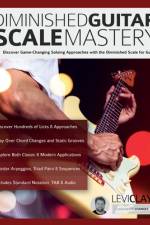
Unlock The Secrets of Diminished Scale Soloing for GuitarTired of the same old guitar scales, licks, and patterns?Want more depth and sophistication in your soloing? The mysterious world of diminished scales can be scary musical territory, and one often unexplored by guitarists... but it's a subject that will quickly enrich your musical language and vocabulary with powerful, captivating sounds... and it's not as tough as you think!"A treasure trove for guitarists aspiring to master the elusive art of the diminished scale."Levi Clay's new ground-breaking title, Diminished Guitar Scale Mastery is a comprehensive yet highly musical exploration of the Whole-Half and Half-Whole Diminished scales that helps you quickly master their construction and application, leveraging their unique symmetrical patterns for jaw-dropping licks.You'll master hundreds of helpful examples that include sequences, pattern-based playing and arpeggios.Diminished Guitar Scale Mastery takes you on a musical journey to apply Diminished techniques on different chords, before moving on to master more advanced approaches, such as note-targeting, triads, chromatic ideas, and triad pairs. The focus throughout is on introducing these concepts musically and intuitively into your playing, to develop a meaningful language to enhance your current soloing skills. Not Just What to Play... Discover When to Play It!Diminished Guitar Scale Mastery teaches you the where and when of adding this tasty spice to your playing. Master its application over both Dominant and Diminished 7 Chords, along with useful "outside" approaches that work in any context - even combined with pentatonic ideas. In all, you'll learn over 185 powerful licks, lines and phrases that will enhance your playing.Diminished Guitar Scale Mastery Offers: Comprehensive understanding of both Whole-Half and Half-Whole diminished scalesApplication: Learn practical techniques for playing diminished ideas in various contextsIntegration of diminished scales with other musical concepts like major scales, modes, and pentatonics for creative solosEnhanced guitar fretboard navigation with detailed exercises on diminished scale patterns and triad pairsProficiency with diminished triads and arpeggios, essential for creating more complex and interesting phrasesDiscover the art of tension and resolution with the strategic use of diminished scalesBuild confidence in improvisation by crafting compelling solos and improvisations in jazz, rock, blues, and fusionComplete Audio DownloadIn addition to clear TAB, notation, and fretboard diagrams, Diminished Guitar Scale Mastery comes with 190 audio examples and backing tracks you can download for free.Whether you are looking to break out of a creative rut, improve your technical skills, or simply expand your musical knowledge, Diminished Guitar Scale Mastery offers the tools and insights to achieve your goals and supercharge your playing.Buy it Now!
A sympathetic but clear-eyed exploration of Paul McCartney's work in the 1990s, arguably his most important since the rise of the Beatles. Paul McCartney's 1990s was an era like no other, perhaps even the most significant decade of his entire career after the 1960s. Following a shakier 1980s, the decade would see McCartney reemerge with greater energy, momentum, and self-belief. JR Moores's sympathetic but not uncritical new book explores McCartney's '90s, with its impressive studio and live albums, colossal tours, unexpected side-projects and imaginative collaborations, forays into classical composition, some new Beatles numbers, and a whole lot more besides. Moores reveals how McCartney's reputation began to be perceived more generously by the public, and he argues that Macca's output and activities in the '90s would uncover more about the person behind them than in any other decade.
A history of the Aix-en-Provence Festival of opera and music, from its inception in 1948 to 2018. In this new study, the first book on the Aix Festival in English, Simon Trowbridge discusses artistic policy and describes each edition of the festival, with an analysis of opera productions and concerts. Aix is viewed within the context of French cultural politics. With colour illustrations.
A practical manual for building musical understanding and physical skills, intended for conductors at all stages of development. This book is a practical manual for anyone who stands on a podium helping an ensemble make music. The four main chapters address the major obligations of the conductor: (1) bringing the musical tones to life in the most beautiful, most moving way possible; (2) freeing the mind to fully absorb all the tones; (3) freeing the body of unnecessary tension; and (4) effectively using the freed mind and body to influence the sounds. Each chapter begins with a summary of the underlying principles, presents real-life applications, and offers exercises for developing skills. Video demonstrations of the exercises as well as downloadable scores and parts are available on a companion website. The parts, in multiple transpositions, allow for hands-on experience where standard instrumental complements are unavailable. Markand Thakar, music director of the Baltimore Chamber Orchestra, is an internationally renowned pedagogue of conducting. A protégé of the legendary Sergiu Celibidache and former assistant conductor of the New York Philharmonic, Thakar is author of Looking for the "Harp" Quartet: An Investigation into Musical Beauty (University of Rochester Press, 2011) and Counterpoint: Fundamentals of Music Making (Yale University Press, 1990).
The Godfather of New York City hardcore and founding member of Agnostic Front invites you into his lower east side pad to regale you with tales from his extraordinary life among mobsters, punk rockers, and a bevy of iconic artists and personalities--none of whom is as interesting or fascinating as the inimitable Vinnie Stigma! Born Vincent Capuccio on December 3, 1955, Vinnie Stigma--as his countless friends and fans lovingly refer to him--is the founder and guitarist of New York City's legendary hardcore band Agnostic Front. He's also one of the Big Apple's earliest punk rockers, having frequented such eclectic downtown haunts as Max's Kansas City, The Electric Circus, and of course, CBGB while it was still known as Hilly's on the Bowery during the early 1970s. The Most Interesting Man in the World stretches from Vinnie's upbringing in Little Italy amongst the tight-knit Italian families, as well as some prominent wiseguys, to teaming up with Cuban-born vocalist Roger Miret to carry punk's angrier successor across the globe; from no-show jobs in his youth obtained by people who "protected" him, to lighting up some of the world's biggest stages. However, Vinnie Stigma is not your run-of-the-mill rocker of many decades. He has dabbled in cooking, professional wrestling, acting, martial arts, yoga, and other creative disciplines. He is a father and a cancer survivor who helped pioneer skinhead and tattoo culture in America, and has mentored hundreds of fledgling musicians and artists. Vinnie insists he is an entertainer first and foremost, which he learned from his childhood idols Jimi Hendrix, Bruce Lee, and Frank Sinatra. Featuring vintage photos throughout, a handful of signature Italian recipes, even a four-page comic book and crossword puzzle, The Most Interesting Man in the World is a journey through a life unlike any other. No one sees or experiences the world quite like Vinnie Stigma.
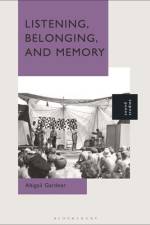
Listening, Belonging, and Memory puts connected listening at the center of current debates around whose voices might be listened to, who by, and why. Arguing that listening has to be understood in relation to the self, nation, age, witnessing, and memory, it uses examples from digital storytelling, listening projects, and critical media analysis to highlight connections between listening and power. It centers on voices, stories, and silence, how they interweave, and are activated, maneuvered, reconfigured, and denied. It focuses on the small, microengagementsthat crouch within the superstructures of violent border control and the censorious policing of sonic citizenry, identifying cracks in the reshuffling of histories and hierarchies that connected listening affords.
Drawing together insights from the history of emotions, cultural history, and studies of philosophical idealism, 'affective relationality' - the channelling of emotion through music's social and cultural synergies - emerges as key to Romantic aesthetic thought. Now familiar concepts such as theatrical illusion, genius, poetic criticism, and the renewed connection of art to mythology and religion opened new spaces for audiences' feelings, as thinkers such as Rousseau, Herder, Germaine de Staël, Joseph Mainzer, Pierre Leroux and George Sand sought alternatives to the political status quo. Building on the sentimental tradition in eighteenth-century art and politics, the Romantics created ways of listening to music imbued not just with melancholic longing for transcendence but also with humour, gothic fantasy, satire, and political solidarity. The consequences have extended far beyond the classical concert hall into numerous domains of popular culture from melodrama, romances and political songwriting to musical theatre and film.
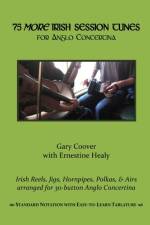
A companion and follow-up to 75 Irish Session Tunes for Anglo Concertina (Rollston Press, 2015), this book presents an additional 75 popular session tunes especially notated for the 30-button C/G Anglo concertina. It includes additional reels, jigs, hornpipes, polkas, slip jigs and airs found in typical Irish sessions, all shown in standard musical notation plus the same easy-to-understand tablature system for C/G Anglo concertina that is used in all the other Rollston Press concertina books. 36 of the tunes can be played on a 20-button Anglo. THE TUNES: The Ashplant, Ballydesmond Polka #2, Bank of Ireland, Bantry Bay, Behind the Haystack, Blind Mary (Mhaire Dhall), Brosna Slide, Castle Kelly, Coleraine, Concertina Reel, Cup of Tea, Dennis Murphy's Slide, Dingle Regatta, Drops of Brandy, Farewell to Ireland, Fig for a Kiss, The Flowing Tide, Foxhunter's Jig, Glass of Beer, Green Fields of America, Harvest Home, High Reel, Humours of Tulla, Inisheer, The Irish Mazurka, John Egan's, Killavil Postman, Kitty's Wedding, Little Diamond, Londonderry Air, Love Will You Marry Me, Maid in the Meadow, Maid of Mount Kisco, Mairi's Wedding, Minstrel Boy, Miss Monaghan, Morning Dew, Murroe Polka, Music in the Glen, Musical Priest, Ned of the Hill, O'Keefe's Slide, Off to California, Old Concertina Reel, Old Torn Petticoat, The Orphan, Over the Moor to Maggie, Paddy Fahey's #1, Parnell's March, Pigeon on the Gate, Planxty Charles Coote, Planxty Irwin, Rakes of Kildare, Rakish Paddy, Riding on a Load of Hay, Saddle the Pony, The Scholar, Ship in Full Sail, Ships Are Sailing, Silver Spire, Sixpenny Money, Smash the Windows, South Wind, St. Anne's Reel, Star Above the Garter, Star of Munster, Swallowtail Jig, Swallowtail Reel, Swinging on a Gate, Tenpenny Bit, Terry Teahan's, Tobin's Favorite, Tom Sullivan's Polka, Top of Cork Road (Father O'Flynn), Trip to Sligo, Walsh's Hornpipe.
This is the definitive, fully illustrated account of the Beatles' concerts and controversies, and of how the United States dominated their lives in so many ways. Written by one of the acknowledged experts on the Fab Four, Liverpool's own Spencer Leigh, this volume includes interviews with fellow musicians, promoters, and audience members, together with rare photographs and memorabilia. Early in 1964, with Beatlemania raging in the UK, the Beatles topped the US charts with "I Want to Hold Your Hand" and became a sensation on American TV with The Ed Sullivan Show--on which they appeared no fewer than three occasions, on consecutive Sundays in February 1964. In April 1964, they held all Top Five positions on the Billboard Hot 100 and were playing such prestigious venues as Carnegie Hall, the Hollywood Bowl, and Shea Stadium. As Epstein predicted, they had become bigger than Elvis--after their first appearances of 1964 (at Carnegie Hall and in Washington, DC), the band went on to do a full North American tour in 1964, a shorter tour in 1965, and a final, 13-date tour in 1966 (each of which is covered in detail), transforming them into global superstars--but when John Lennon commented that the band was "bigger than Jesus," things turned sour, and there were public burnings of their records. The final chapter and epilogue of the book take the story of "the Beatles in America" up to the band's breakup and beyond, including John and Yoko's June 1, 1969, "Bed-In" in Montreal and the release of the couple's single "Give Peace a Chance."
Edward MacDowell's European Piano Music is a critical study of the piano music that MacDowell composed during his European sojourn (1876-1888), steeped in reception history and with a special emphasis of programmaticism.The book expands current knowledge of MacDowell's childhood in four chapters based on his previously uninvestigated sheet music collection, thereby achieving a better balance among the stages of MacDowell's life than is evident in most books of the life-and-works variety. Prolific contemporaneous music criticism, meticulously preserved in MacDowell's scrapbooks, is likewise undervalued in the MacDowell literature, but it furnishes penetrating observations about the expressive and programmatic content of numerous compositions, especially as it was revealed to critics when MacDowell performed his own works. Lastly, the book offers explanations for why MacDowell immersed himself in European culture for decades and then, at a crucial juncture in his career, embraced diverse American heritages and worked toward a conception of a pluralistic music that was American "in a creative sense." The book's content and methodology would appeal most directly to specialists within the broad fields of musicology and music theory, particularly within American art music and its composers; nineteenth century music; program music; reception history; and piano literature.
The Routledge Companion to Autoethnography and Self-Reflexivity in Music Studies represents a substantial contribution to the field of writing self-reflexively about an individual's practice within music studies. In six sections, 34 original chapters by a diverse set of contributors consider writing about personal activities from the points of view of performance, composition, musicology, and pedagogy, drawing on a range of traditions from Western art-music to popular music to ethnomusicology. A robust critical framework is presented, with coverage of: - Historical and critical perspectives - different methodologies and their ascendancy within the academy - leading debates, issues and approaches - future directions. The Companion cultivates new modes of engagement in music research, enabling scholars and practitioners at all levels to identify and articulate their relationship to the wider sociocultural contexts in which they operate.
The untold story of Chicago's pivotal role as a country and folk music capital. Chicago is revered as a musical breeding ground, having launched major figures like blues legend Muddy Waters, gospel soul icon Mavis Staples, hip-hop firebrand Kanye West, and the jazz-rock band that shares its name with the city. Far less known, however, is the vital role Chicago played in the rise of prewar country music, the folk revival of the 1950s and 1960s, and the contemporary offspring of those scenes. In Country and Midwestern, veteran journalist Mark Guarino tells the epic century-long story of Chicago's influence on sounds typically associated with regions further south. Drawing on hundreds of interviews and deep archival research, Guarino tells a forgotten story of music, migration, and the ways that rural culture infiltrated urban communities through the radio, the automobile, and the railroad. The Midwest's biggest city was the place where rural transplants could reinvent themselves and shape their music for the new commercial possibilities the city offered. Years before Nashville emerged as the commercial and spiritual center of country music, major record labels made Chicago their home and recorded legendary figures like Bill Monroe, The Carter Family, and Gene Autry. The National Barn Dance--broadcast from the city's South Loop starting in 1924--flourished for two decades as the premier country radio show before the Grand Ole Opry. Guarino chronicles the makeshift niche scenes like "Hillbilly Heaven" in Uptown, where thousands of relocated Southerners created their own hardscrabble honky-tonk subculture, as well as the 1960s rise of the Old Town School of Folk Music, which eventually brought national attention to local luminaries like John Prine and Steve Goodman. The story continues through the end of the twentieth century and into the present day, where artists like Jon Langford, The Handsome Family, and Wilco meld contemporary experimentation with country traditions. Featuring a foreword from Grammy-nominated singer-songwriter Robbie Fulks and casting a cross-genre net that stretches from Bob Dylan to punk rock, Country and Midwestern rediscovers a history as sprawling as the Windy City--celebrating the creative spirit that modernized American folk idioms, the colorful characters who took them into new terrain, and the music itself, which is still kicking down doors even today.
A new analysis of Mahler's symphonies, placing each within the context of his musical way of being in and experiencing the world. Between 1888 and 1909 Gustav Mahler completed nine symphonies; the tenth was left incomplete at his death in 1911. Mahler's Symphonic World makes a radical claim: that over his lifetime, the composer pursued a single vision, a single ideal symphony, striving to capture in his music a philosophical outlook on human existence. Writing at the turn of the twentieth century, Mahler found himself in a spiritual situation in which all trust in firm foundations had evaporated. In Karol Berger's analysis, each of Mahler's symphonies reflects his preoccupation with human suffering and transience and his search for sources of possible consolation. Through detailed analysis of individual symphonies, Berger traces how the same images and plots appear in different works and how the borderlines between symphonies can become porous. Mahler's Symphonic World uncovers the single ideal symphony that Berger asserts the composer was pursuing all his life, locates Mahler's music within the matrix of intellectual currents that defined his epoch, and offers a revelatory picture of his musical way of being in the world.
Abonner på vårt nyhetsbrev og få rabatter og inspirasjon til din neste leseopplevelse.
Ved å abonnere godtar du vår personvernerklæring.