


























Gjør som tusenvis av andre bokelskere
Abonner på vårt nyhetsbrev og få rabatter og inspirasjon til din neste leseopplevelse.
Ved å abonnere godtar du vår personvernerklæring.Du kan når som helst melde deg av våre nyhetsbrev.

Unwritten Literature of Hawaii: The Sacred Songs of the Hula (1909) is a collection of hulas and essays by Nathaniel B. Emerson. Translating previously unwritten songs, interviewing native Hawaiians, and consulting the works of indigenous historians, Emerson provides an entertaining and authoritative look at one of Hawaii's most cherished traditions. "For an account of the first hula we may look to the story of Pele. On one occasion that goddess begged her sisters to dance and sing before her, but they all excused themselves, saying they did not know the art. At that moment in came little Hiiaka, the youngest and the favorite. [...] When banteringly invited to dance, to the surprise of all, Hiiaka modestly complied. The wave-beaten sand-beach was her floor, the open air her hall; Feet and hands and swaying form kept time to her improvisation." As an American born in Hawaii who played a major role in the annexation of the islands as an author of the 1887 Constitution of the Hawaiian Kingdom, Emerson likely saw himself as a unifying figure capable of interpreting for an English-speaking audience the ancient and sacred tradition of the hula, a Polynesian dance often accompanied with instruments and chanting or singing. Combining critical analysis with samples of popular hulas in both Hawaiian and English, Emerson works to preserve part of the rich cultural heritage of the Hawaiian Islands.Since our inception in 2020, Mint Editions has kept sustainability and innovation at the forefront of our mission. Each and every Mint Edition title gets a fresh, professionally typeset manuscript and a dazzling new cover, all while maintaining the integrity of the original book. With thousands of titles in our collection, we aim to spotlight diverse public domain works to help them find modern audiences. Mint Editions celebrates a breadth of literary works, curated from both canonical and overlooked classics from writers around the globe.
Initially based on Scènes de la vie de bohème (1851), La bohème follows the trials and tribulations of young artists struggling to make ends meet. Despite their circumstance, they celebrate small wins, while seeking love and opportunity.La bohème is an Italian opera that centers a group of up-and-coming artists. This includes Rodolfo, a poet, Mimì, a seamstress, Marcello, a painter and Musetta, a singer. Together, they attempt to earn a living from their respective crafts. Rodolfo and Marcello struggle to maintain their relationships with Mimì and Musetta, who are likely to attract wealthier suitors. In the midst of romance troubles and a professional drought, Mimì¿s health becomes a cause for concern.La bohème is a captivating story about friendship, love and survival. Giuseppe Giacosa and Luigi Illicäs opera offers a compelling narrative with memorable moments. It¿s a romantic tale that highlights hope in the face of tragedy. With an eye-catching new cover, and professionally typeset manuscript, this edition of La bohème is both modern and readable.
"'So how do you discern a shape for / what is often called god' asks the poet in a book that is as metaphysical as it is very much of this moment, of this, our crisis. How so? Because every crisis is first of all metaphysical. Kazim Ali speaks in the same breath of the injustice of our world and of 'the actual syllables Orpheus sang/ to the dead to be allowed into hell.' This is a metaphysics of a scream. It speaks against world that wrongs us, yes-but also of 'what language cannot / hold onto,' of 'ecstatic sound aiming to reach from the muck of the earth.' What is this speech like? It takes many forms: lyrical, cinematic, choral. The Voice of Sheila Chandra is a sequence of sequences, a book where three long poems come together to make a statement that is far larger than the sum of its parts. It is a brilliant book." -Ilya Kaminsky, author of Deaf Republic and Dancing in Odessa
'Was Bowie an aloof and unavailable artist, or a 'Starman' who descended to bring good news to the masses? This book presents Bowie as revealed by the testimony of his closest friends and partners, a Bowie with humour, grace and humility and a highly focused Bowie - a borrower of ideas combining ideas from multiple sources creating new visions.
"Fascinating details and anecdotes accompany this engaging account of the emergence of dramatic new ideas and forms in music over the centuries..."David Politzer, winner of the 2004 Nobel Prize in Physics."A thought-provoking, stimulating, and highly original exploration of deep metaphorical links between music and physics...Highly recommended."Prof. Ian Stewart FRS, author, What¿s the Use?"An astonishing book!"Tristan Murail, composer and co-creator of the "spectral" technique.Have you ever wondered about the connection between Pauli's exclusion principle and Schoenberg's dodecaphony? Or the symphonic echoes of Heisenberg's uncertainty principle in the compositions of Stockhausen and Cage? This book not only poses these questions but skillfully uncovers the artistic answers, exploring interdisciplinary connections that bridge the gap between modern physics and contemporary music. Dive into philosophical discourses on time, witness the metamorphosis of Boolean algebra, bits, and qubits into musical notation, and discover the limitations of the 12-tone scale mirrored in the speed of light. The author's unique methodology offers a fresh perspective, linking the language of mathematics and physics to the creation of musical scores.This book transcends the boundaries of physics and music, revealing the inevitable fusion of modern physics and avant-garde music in the twentieth century. Through meticulous research, the author showcases the profound impact of revolutionary ideas such as quantum physics and relativity on all aspects of life and demonstrates that modern physics and contemporary music were born not out of chance¿their emergence and development were inevitable events. Delving into the historical accounts, he explores the musical endeavors of great physicists like Max Planck and Albert Einstein, unraveling the quantum entanglement of physics mirrored in the extended techniques of contemporary music and unveiling the musical universe of Werner Heisenberg through captivating personal encounters with his descendants.Crafted for general readers and seasoned experts alike, the book maintains clarity and style, ensuring accessibility without sacrificing depth. This pioneering exploration not only draws connections between modern physics and music but also serves as a unique bridge for scientists, musicians, and the curious general audience. Requiring no formal background in physics or music, the book is a compelling read for those intrigued by the uncharted territories where science and art converge, offering a concise and illuminating journey into the shadows of the void.
The textbook provides students with insight into and overview of the basics of social research on music. It addresses the Who, What, When, Where, Why, How of music research through four perspectives from the sociological study of music: a historical survey of the social study of music (when), theoretical points of view (what), and methodological (how), and pragmatic aspects (who, why & how). The other Ws (where and why) are included within the four main perspectives. The four perspectives ¿ history, theory, methodology, and practice ¿ are complementary. Some of the names included in the theory and practice of music are also listed as a part of the history of music sociology, and vice versa. In this way, the book encompasses what Howard S. Becker has conceptualized as an art world, Kurt Blaukopf as musical practice, and Christopher Small as musicking. Covering all the relevant details yet concise in structure, this book is ideal for students of the sociology of music, musical education, musicology and of arts and aethestics.
Down On The Corner is the story of music performed on the streets, in subways, in parks, in schoolyards, on the back of flatbed trucks, and beyond, from the 1920s to the present day.One day around 1970, my father announced to me that he'd like to take me to Maxwell Street Market, an open-air flea market adjacent to Downtown Chicago. He wanted to show me where his parents used to take him shopping as a child. When he parked his car in the University Of Illinois lot, the first thing I heard, long before I could see where it was coming from, was the sound of a slide guitar--not just any guitar but a National steel resonator guitar. We followed the music and found ourselves standing on the west side of Halsted Street, midway between Roosevelt and Maxwell, where Blind Arvella Gray was playing the folk/blues song 'John Henry'--a song that seemed to have no beginning and no end. Sensing that his audience was generally passing by rather than gathering around, Gray kept playing that one song for his entire shift. He'd even altered the lyrics to refer to the local streets. In that moment, I developed a lifelong affinity for the informality, spontaneity, and audience participation of busking.Drawing on years of interviews and eyewitness accounts, Down On The Corner introduces readers to a wide range of locations and a myriad of musical genres, from folk to rock'n'roll, the blues to bluegrass, doo-wop to indie rock. Some of the performers he features--Lucinda Williams, Billy Bragg, The Violent Femmes--went on to become international stars; others settled into the curbs, sidewalks, and Tube stations as their workplace for the duration of their careers. Anyone who has lived in or travelled through a city will have encountered street musicians of one kind or another. For the first time, veteran journalist and music-industry publicist Cary Baker tells the complete history of these musicians and the music they play, from tin cups and toonies to QR codes and PayPal.'This book allows us to hear the full story of feeding the street, as it has been done for over a century in the United States. It gives us a glimpse into the lives of the buskers who have enriched our daily existence with music and performance art. It's a dollar in the hat, with the acknowledgment that the world is always a better place when busking is a part of the picture. Special thanks to Cary Baker for giving a new voice to a music tradition that will continue to live on forever and will find new homes wherever the music takes it.' Dom Flemons, from his foreword to this book
Instrumental music teaching and learning is a major part of music education in almost all cultures and traditions and many young people's lives are enriched by playing a musical instrument. How musical instruments are taught varies considerably across different musical traditions, and digital technologies and social media mean that young people now have much more choice about how they learn musical instruments.Instrumental Teaching: Perspectives and Challenges has an international authorship. Its chapters explore major themes in instrumental music teaching including creativity, assessment, motivation, access and inclusion and the use of music technology. Other chapters examine recent research into instrumental teaching and learning, historical perspectives and the relationship between the teacher and musician identities.This book is an important publication for all involved in music education, and in particular it provides an opportunity for those whose role includes teaching musical instruments to reflect on their practice. It will also be an invaluable resource for those engaged in research into instrumental teaching and learning as well as those supporting the professional development of instrumental music teachers.
BOWIE IS STILL OUT THERE...Following open heart surgery, poet and writer Peter Carpenter was given one instruction - 'Walk, if you want to stay on this planet'. And so when his hero and inspiration David Bowie died in 2016, he knew what he had to do. The man who was to so many a companion and guide had left no shrine, no focal point of understanding. To reconnect with Bowie, he would take a walk into the past, to the streets, towns and places where David Jones became something more.Walking to recover, to stay alive, Peter realised he was also recovering his lost hero. Leaving behind Heddon Street and Brixton, well-known Bowie shrines, he moved out through South London edgelands and suburbia to remoter Bowie haunts: Croydon, Aylesbury, Pett Level, Southend-on-Sea. Finding the windows Bowie had stared out from in Clareville Grove; the streets in Beckenham where he'd scurried by. He sifted through debris on a patch of waste ground in Tunbridge Wells where Bowie's parents first met. He turned the handle and entered Shirley Parish Hall to find the same stage where a young Davy Jones and the Kon-Rads set up to play back in 1962; and travelled to Berlin, to emerge from the S-Bahn to gape at the ruined portico of the Anhalter Bahnhof and asked 'What is this?' In Bowieland, Carpenter's peripatetic trampings seem to echo Bowie's own wandering creative spirit, the walks often uncovering hidden layers, and making fresh connections to key Bowie stories, uncovering and influences conscious and subconscious. Through walking, an understanding is reached of where Bowie sits in the culture, his place among the poets, painters, artists and musicians who came before him, who inhabited the same spaces and in doing so passed on their wisdom to Bowie. Through Carpenter's travels these suburban lands became a new, very real place, that anyone can visit if they take the time... Welcome to 'Bowieland'
The first book on Oasis by their trusted chronicler and celebrated photographer, Kevin Cummins, with input from Noel Gallagher. Exploring the run-up to the release of their first album, Definitely Maybe in 1994.
Keeping Time: Dialogues on music and archives in Honour of Linda Barwick explores current issues in ethnomusicology and the archiving and repatriation of ethnographic field recordings. The 19 chapters by 36 authors consider archiving practices as a site of interaction between researchers and cultural heritage communities; cross-disciplinary approaches to understanding song; and the role of musical transcription in non-Western music. This volume is international in scope with case studies with Indigenous and minority peoples from Papua New Guinea, China, India, the Torres Strait and mainland Aboriginal Australia; the latter being the focus of the majority of chapters. Topics include the revival of songs from early written sources, creation of new songs based in old genres, the concept of "sing" in other languages, spirits as the origin of song knowledge, and how to manage ethnographic records over time. Keeping Time approaches Indigenous practices from a range of disciplines, including linguistics, history and performing arts, as well as Indigenous Studies, cultural revitalisation (including reclamation of Indigenous languages), Indigenous knowledge and application to climate change. Offered in honour of Emeritus Professor Linda Barwick, the founder of the Indigenous Music, Language and Performing Arts series, Keeping Time offers a diverse range of opinions on ethnographic research practices and their value to society.
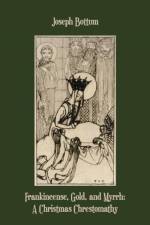
For over thirty years, Joseph Bottum has been writing widely acclaimed Christmas essays, columns, short stories, and carols for American magazines and newspapers. Now, for the first time, St. Augustine's Press has gathered a selection of these classic pieces--with a vast range across the Christmas spectrum. There's the comic: "Tinsel. No one needs tinsel. Even the word is a tinselly kind of word." There's the sentimental: "Her hair was the same thin shade of gray as the weather-beaten pickets of the fence around her frozen garden." There's the reminiscent: "Christmas was books, and books Christmas, in those days now mostly washed down to the cold sea." Along the way, there's the theological, the learned, the mystical, and the musical. "Tastefulness is just small-mindedness pretending to be art," he writes in praise of mad and cluttered holidays. "Christmas will not be defined by our failures to apply its lessons and carols," he explains about Yuletide poetry. To see these essays, short stories, and carols gathered in one place--in a beautiful illustrated edition from St. Augustine's Press--is to see the whole of the vision that Joseph Bottum has been painting for decades: a picture of Christmas as a thin place in the wall between the natural and the numinous, where a burning grace slips into a cold winter world.
In this unique, illustrated collection, Literary Witches co-creator Katy Horan resurrects the real and fictional women (and men) of twenty traditional murder ballads, exploring their legacy in modern American music and culture. Murder Ballads is a guide to the origins and cultural impact of murder ballads as a music genre, covering its roots in patriarchal violence and white supremacy, as well as its contemporary relationship to true crime. From "Delia's Gone" to "The Death of Queen Jane," each of twenty carefully chosen ballads is accompanied by one of Horan's beautifully macabre illustrations, a brief but thoroughly researched reflection, and suggestions for further listening. Mysterious and alluring as the songs themselves, Murder Ballads will delight history enthusiasts, armchair musicologists, true crime fans (and critics), as well as anyone who appreciates the darker side of folk music.
The Beatles are known for cheeky punchlines, but understanding their humor goes beyond laughing at John Lennon's memorable "rattle your jewelry" dig at the Royal Variety Performance in 1963. From the beginning, the Beatles' music was full of wordplay and winks, guided by comedic influences ranging from rhythm and blues, British radio, and the Liverpool pub scene. Gifted with timing and deadpan wit, the band habitually relied on irony, sarcasm, and nonsense. Early jokes revealed an aptitude for improvisation and self-awareness, techniques honed throughout the 1960s and into solo careers. Experts in the art of play, including musical experimentation, the Beatles' shared sense of humor is a key ingredient to their appeal during the 1960s-and to their endurance.The Beatles and Humour offers innovative takes on the serious art of Beatle fun, an instrument of social, political, and economic critique. Chapters also situate the band alongside British and non-British predecessors and collaborators, such as Billy Preston and Yoko Ono, uncovering diverse components and unexpected effects of the Beatles' output.
This is a pioneering work on the study of popular music in 19th-Century Spanish piano music, providing an exploration of specific folk-inspired works with an inquiry into the historical cross-pollination between popular and classical musical idioms. It will prove invaluable to pianists, scholars, performers and students in general.
Disaster Songs as Intangible Memorials in Atlantic Canada draws on a collection of over 500 Atlantic Canadian songs relating to disasters from 1891 up until the present, and describes the characteristics that define them as intangible memorials.
This monograph offers a comprehensive study of the topos of the malmariée or the unhappily married woman within the thirteenth-century motet repertory, a vocal genre characterized by several different texts sounding simultaneously over a foundational Latin chant.
Why Sámi Sing is an anthropological inquiry into a singing practice found among the Indigenous Sámi people, living in the northernmost part of Europe.
This volume examines the use of Black popular culture to engage, reflect, and parse social justice, arguing that Black popular culture is more than merely entertainment.
This book presents the first study of music in convent life in a single Hispanic city, Barcelona, during the early modern era. It explores how convents were involved in the musical networks operating in sixteenth-century Barcelona and reveals the intrinsic role played by nuns and lay women in the city's urban musical culture.
This book demonstrates the processes of intercultural musical collaboration and how these processes contribute to facilitating positive relationships between Indigenous and non-Indigenous peoples in Australia.
This book brings the Tagore's unique music - Rabindrasangit - to a global audience, with a lucid introduction by Ananda Lal as well as selected songs in international transcription and English translation.
Abonner på vårt nyhetsbrev og få rabatter og inspirasjon til din neste leseopplevelse.
Ved å abonnere godtar du vår personvernerklæring.