









Gjør som tusenvis av andre bokelskere
Abonner på vårt nyhetsbrev og få rabatter og inspirasjon til din neste leseopplevelse.
Ved å abonnere godtar du vår personvernerklæring.Du kan når som helst melde deg av våre nyhetsbrev.

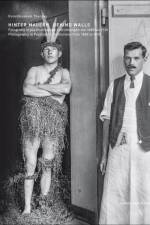
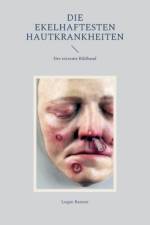
Viele psychiatrische Kliniken in der Schweiz beherbergen einen Fundus an historischen Fotografien, die bis ins 19. Jahrhundert zurückreichen und die bis anhin noch nie untersucht wurden. Glasdiapositive und -negative, lose Papierabzüge und Fotoalben gewähren faszinierende Einblicke in die Zeit der Modernisierung dieser Einrichtungen - und zugleich in die Geschichte der Fotografie. Das damals neue Medium wurde von Psychiaterinnen und Psychiatern eingesetzt, um Diagnosen anhand von Merkmalen zu erfassen, aber auch, um der Öffentlichkeit das Leben hinter Anstaltsmauern näherzubringen. Mit zunehmend handlicheren Kameras konnten auch die bescheidenen Freizeitaktivitäten, Festivitäten und kreativen Freiräume festgehalten werden.Das Buch Hinter Mauern und die gleichnamige Ausstellung in der Sammlung Prinzhorn (Heidelberg), im Thurgauer Kunstmuseum (Warth) und im Schweizerischen Psychiatrie-Museum (Bern) machen diese Zeitzeugnisse nun erstmals der Öffentlichkeit zugänglich. Aus unterschiedlichen Blickwinkeln untersuchen die Autorinnen und Autoren kritisch die Verwendungszwecke des Mediums Fotografie in der Psychiatrie.
During the colonial period in the Americas, a "Cimarrón" was a Black fugitive slave who lived a free life in isolated corners of society. After independence, when slavery was abolished in Mexico, the Afro-descendant population began to group mainly in two parts of the Mexican territory: Veracruz and the Costa Chica. It was in this last one where I had my first encounter with Afro-descendant culture and where I was aware of its importance and invisibility in the history of Mexico; despite being recognized as the third root, it was not until 2015 that the process for its recognition within the constitution began. Driven by after the first encounter I had with the community, I started the research that gave rise to this project, in which photography was the tool that allowed me to translate into images some historical elements that refer to the current construction of the identity of those who are called Afromexicans. El Cimarrón y su Fandango speaks to us in an allegorical way of the past of a Black community and its journey through colonial history, its integration into the territory and its current sense of identity within it. - Mara Sánchez Renero
"The photographer Ming Smith has practiced her craft for more than fifty years, producing a body of work distinguished by its uncanny merging of subject and style. Her Invisible Man, Somewhere, Everywhere (1991) was made in the depths of winter. Depicting a lone figure whose form dissolves into the ink-black shadows of a frigid city street at night, the photograph testifies to the artist's lifelong entanglement with the truths and tensions that animate African American experiences. This latest volume in MoMA's One on One series invites readers to discover, through the close reading of one picture, Smith's ethereal yet enduring contributions to the history of photography."-- Page 4 of cover.
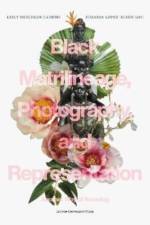
Black Matrilineage, Photography, and Representation questions how the Black female body, specifically the Black maternal body, navigates interlocking structures that place a false narrative on her body and that of her maternal ancestors. Drawing on a wide range of scholarly inquiry and contemporary art, this book addresses these misconceptions and fills in the gaps that exist in the photographic representation of Black motherhood, mothering, and mutual care within Black communities.The essays and interviews, paired with a curated selection of images, address the complicated relationship between Blackness and photography and in particular its gendered dimension, its relationship to health, sexuality, and digital culture ¿ primarily in the context of racialized heteronormativity. This collection, then, challenges racist images and discourses, both historically and in its persistence in contemporary society, while reclaiming the innate brilliance of Black women through personal stories, history, political acts, connections to place, moments of pleasure, and communal celebration.This visual exploration of Black motherhood through pictures made by Black woman¿identifying photographers thus serves as a reflection of the past and a portal to the future and contributes to recent scholarship on the complexity of Black life and Black joy.Lesly Deschler Canossi is a photography educator, cultural producer and co-founder of Women Picturing Revolution. She is faculty at the International Center of Photography, New York.Zoraida Lopez-Diago stands at the intersection of visual, social, and environmental justice; she is a photographer, independent curator, activist, and co-founder of Women Picturing Revolution.
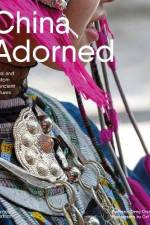
Combining decades of ethnographic research with newly commissioned photography, this is a celebration of the lives of ethnic-minority groups in China. Aesthetic influences drawn from China have long resonated throughout Western art, design and thought. China Adorned challenges the monolithic idea of ?Chinese' culture and fashion, turning the lens on the rich clothing traditions of the country's ethnic-minority peoples. Drawing on more than three decades of research by cultural anthropologist Professor Qiyao Deng, the book documents and demystifies the customs and rituals of more than thirty minority peoples through their clothing and accessories. Deng's never-before-published archival photos sit alongside contemporary imagery by photographer Cat Vinton that showcases fabrics, jewelry and the surrounding landscapes, helping readers to better understand the deep connections between people, place, ritual and adornment. Contributor essays delve further into textiles and techniques, the role of the artisan and the extraordinary resilience of material cultures that face disappearance, offering a timely reminder of the importance of preserving these traditions for generations to come.
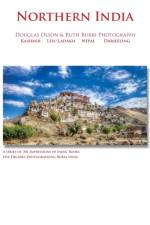
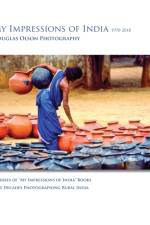
Kashmir is in the Northwestern region of India. It's an area with rich fertile agricultural valleys and snow-clad mountains. Kashmir borders Afghanistan, Pakistan and China. The locations for my photos in Kashmir were Srinagar, Pahalgam, Gulmarg and Martand. I have seen many changes from 1973 to 2012. In 1973 it was a quiet peaceful area with rich agricultural fields and small villages. As the population grew the people began building houses and shops along the roadsides and have encroached on the agricultural areas. On my last trip there I saw many large houses that were at least 5,000 square feet, so there is a lot wealth in the area. The Lehi/Ladakh area is now known as the Leh District and is unlike any other part of India. It's a Buddhist area and has many monasteries throughout the area. The largest is the Hemis Monastery. The Hemis festival takes place in June/July and is dedicated to Lord Padmasambhava (Guru Rimpoche.) The monks ware colorful costumes, masks and dance to music played by musicians to traditional Tibetan music with four pairs of cymbals, large pan drums, 5 small trumpets and large size wind instruments. Leh is 11,500 ft / 3524 m above sea level and you must give yourself a few extra days to acclimatize before you climb the steps to the monasteries. It's my recommendation to start your journey in Srinagar as its 6,600 feet above sea level. Stay there for three nights then drive to Leh with an overnight stop along the way. Rest for one day in Leh then drive to the Nubra Valley. You will pass over Khardung La pass at 18, 380 ft / 5606 m then to the Nubra valley. The Diskit and Samtenling monasteries are the main ones to see. When you return to Leh you should be acclimatized to visit the Leh Palace & Monastery, Thiksey, Shey, Thesey and Hemis Monasteries. I highly recommend The Hotel Royal in Leh. The Nubra Valley is about 93 miles (150 km) north of Leh, India. The Shyok River meets the Nubra or Siachan River to form a large valley that separates the Ladakh and the Karakoram Ranges. The average altitude of the valley is about 10,000 ft. / 3048 meters above sea level. Like the rest of Ladakh the Nubra valley is a high desert with rare precipitation and scant vegetation except along river beds, and on high slopes. The villages are irrigated and very fertile, producing wheat, barley, peas, mustard, for oil and a variety of fruits. Most of the Nubra Valley is inhabited by Ladakhis who speak Ladakhi; the majority of them are Buddhist. Nagakot is a village about 32 km east of Katmandu, Nepal in the Bhaktapur District. The elevation is 2,195 meters, it is considered one of the most scenic spots in the Bhaktapur District. Its renowned for its sunrise views of the Himalayas including Mt. Everest as well as other snowcapped peaks of the Himalayan range of Eastern Nepal. Darjeeling is a city in the Indian State of West Bengal and was a part of Nepal until the British took it from Nepal under their rule in India. It's internationally known as a tourist area with beautiful tea plantations and monasteries in the area. The Darjeeling Himalayan Railroad connects Darjeeling (6,812 ft. / 2011 meters) with Siliguri (600 ft. / 183 meters) it has 919 curves, 556 bridges, 3 loops and 5 Z sections. I did a trek from Darjeeling to Kalimpong, it's a great way to meet local people and visit the tea plantations. My trek took me to the Peshok Tea Plantation and the Bhutia Busty Monastery along the way to Kalimpong. I highly recommend hiring a guide which will help you navigate the trails.
In October of 1970, I received a call from Frank Wyle, CEO and founder of Wyle Laboratories in El Segundo, California. One of their subsidiaries, American Tool Company in Cincinnati, Ohio, was importing machine tools from Hindustan Machine Tool (HMT) in India. They needed photographs of their facilities for marketing. Two weeks later, I was on my way to India. In our spare time, Frank and I drove through the countryside; it was like stepping back into time. The photo opportunities were fantastic! At that time, there were only a few cars in the villages, mostly bullock carts and bicycles. Upon my return to Los Angeles, I decided to put together a collection of photographs called "Rural India." My next assignment in India, "India: The Sexy Subcontinent," was for Playboy. The photographs appeared in Oui magazine. Our locations were in the Konarak Area and the Maharajah of Jamnagar's palace. These photos are not in the book. I returned several more times in 1972 and 1973 to the villages to continue my "Rural India" project. When I returned in 1973, I contacted the Government of India Tourist Office and Pan American World Airways to sponsor me in a museum show, "Rural India." I got the sponsorship and was featured in an exhibit in 1974 at The Museum of Science and Industry in Los Angeles. The Government of India Tourist Office sent me to India many times in the '70s, '80s, '90s to photograph tourist locations. I have returned to India in 2009, 2010, 2012, 2018 on my own to continue my "My Impressions of India" project. Check out the locations on page 16 of the book. India and my many experiences there have had a big influence on my life. On my first trip, I was in a boat on the Ganga River at Varanasi. At sunrise, I looked over the edge of the boat and saw my reflection in the water. The person looking back at me was an Indian man. I knew at that time I had a past life in India. The experience gave me the chills. When I was in the villages, I saw the kids at play with each other, and their happy smiles had an effect on me. That led me to ask myself: Are we happier with all our possessions or are they happier without them?
New ways of understanding Caribbean visual culture, from historical photographs following emancipation to contemporary transnational perspectives, on the occasion of a major exhibition at the Art Gallery of Ontario, CanadaAnchored by an extensive selection from the world-class Montgomery Collection of Caribbean Photographs at the Art Gallery of Ontario, Fragments of Epic Memory situates a range of prints, postcards, daguerreotypes and albums from the period just after emancipation in 1838 within a broader context of visual culture in the Caribbean.This critical volume includes works by Caribbean artists such as Wifredo Lam from Cuba, and Sir Frank Bowling and Aubrey Williams from Guyana--who represent the first generation of migrant modernist artists--alongside 21st-century artists such as Paul Anthony Smith from Jamaica (based in the US), Zak Ové from Britain (of Trinidadian heritage), Nadia Huggins from Trinidad (based in St. Vincent) and Sandra Brewster from Canada (of Guyanese heritage), among others. Their works, along with texts by prominent writers of Caribbean descent, serve as counterpoints to the historical photographs and the violence of the imperial project, constituting a conceptual generational bridge across history, geography, time and space.
The images of 'tempête après tempête' were shot during Rebekka Deubners second journey to Fukushima-ken, in the summer of 2019. On 03. 11. 2011 a part of the north-east-coast was impacted by three major catastrophes: a naval quake, a tsunami, and lastly the explosion of the Fukushima Daiichi nuclear power plant. Deconstruction does not only causes annihilation, it also creates the occasion for new forms of life to emerge. 'tempête après tempête' portrays Fukushima through close-ups of inhabitants, scattered pieces of land, details of sea landscapes, moving elements of nature such as insects, humans, seaweed, pieces of bodies,... they all merge into a new and hybrid body. For Deubner taking close-ups is a way of working that is essential to her practice. Looking at things from a near perspective, gives her the opportunity to feel their materiality and texture directly through her eyes. It is as if the lens of the camera is an extension of her touch. It also allows her and her subjects to experience a form of contemplation. Taking time to create a testimony of this land where all the scattered pieces were never been understood as a whole.
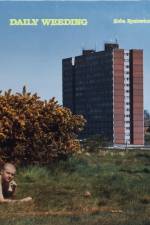
The definitive, full-career retrospective of the life and work of Chris Killip (1946-2020), one of the UK's most important and influential post-war documentary photographers. 'I didn't set out to be the photographer of the English de-Industrial Revolution. It happened all around me during the time I was photographing' Chris Killip, 2019 Grounded in sustained immersion and participation in the communities he photographed, Chris Killip's keenly observed work chronicled ordinary people's lives in stark, yet sympathetic, detail. His photographs are recognized as some of the most important visual records of 1980s Britain; as editor of this book Ken Grant reflects, they tell the story of those who 'had history "done to them", who felt its malicious disregard and yet, like the photographer with whom they shared so much of their lives, refused to yield or look away.' Published to coincide with the first full retrospective of Killip's life and work at the Photographers' Gallery, London, this book, designed by Niall Sweeney & Nigel Truswell at Pony Ltd, presents photographs from each of his major series alongside lesser-known works. It includes a foreword by Brett Rogers, in-depth essays by Ken Grant tracing Killip's life and career, and texts by Gregory Halpern, Amanda Maddox and Lynsey Hanley.
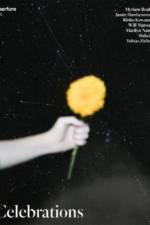
Aperture magazine presents “Celebrations,” an issue that considers how photographs envision ceremonies, festivities‚ and allow us to discover euphoria in the everyday.Throughout the issue, photographers portray exuberance against a backdrop of political strife in Beirut, pursue the thrill of wanderlust, excavate family histories, and respond to the powerful, constant urge to gather. Whether in Kinshasa’s vibrant nightlife of the 1950s and ’60s or London’s sweaty dance floors of our era, jubilation carries on, despite an ongoing, and unpredictable, pandemic.In “Celebrations,” Lynne Tillman contributes a survey of landmark images of celebration through the years, by artists from Malick Sidibé and Peter Hujar to LaToya Ruby Frazier. Several profiles and essays—including Alistair O’Neill on Jamie Hawkesworth, Moeko Fuiji on Rinko Kawauchi, Tiana Reid on Shikeith, Mona El Tahawy on Miriam Boulos, and Anakwa Dwamena on Marilyn Nance’s views of Lagos, Nigeria during FESTAC '77—reveal the celebratory gestures embedded in vibrant portraiture, serene slants of light, unbound queer desire, and joyous cross-cultural exchange.
Reinhard Heydrich along with Heinrich Himmler, whose deputy he was, will always be regarded as one of the most ruthless of the Nazi elite. Even Hitler described him as 'a man with an iron heart'.He established his fearsome reputation in the 1930s, as head of the Sicherheitsdienst (SD), the intelligence organization which neutralized opposition to the Nazi Party by murder and deportation. He organized Kristalnacht and played a leading role in the Holocaust, chairing the 1942 Wannsee Conference which formalized plans for the 'Final Solution'. In addition, as head of the Einsatzgruppen murder squads in Eastern Europe he was responsible for countless murders.Appointed Deputy Reich-Protector of Bohemia and Moravia, he died of wounds inflicted by British trained SOE operatives in Prague in May 1942. The reprisals that followed his assassination were extreme by even the terrible standards of Nazi ruthlessness.Heydrich's shocking and leading role in the Nazi regime is graphically portrayed in this Images of War book.
With conscription introduced, Zeppelins carrying out bombing raids on key towns and cities across England, the Battle of Jutland seeing fourteen British ships sunk and the Battle of the Somme claiming 20,000 British dead on the first day alone, the resolve of the British and allied troops in 1916 was being sorely tested.
This âEUR¿highlightsâEUR(TM) edition of the bestselling portfolio book presents the very best images from the latest Wildlife Photographer of the Year competition.
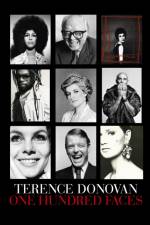
A compact collection of over 100 of Terence Donovan's best portraits.
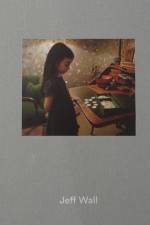
Accompanying the artist's first major US overview in 15 years, this volume celebrates over four decades of Wall's uncanny everyday dramasVancouver-based artist Jeff Wall (born 1946) has been making arresting, conceptually and politically complex pictures for over four decades. Using large-format photography that embraces both the deliberateness of painting and the immediacy of the moving image, he is known for immersive, sharply detailed scenes featuring figures enacting everyday dramas. Departing from the convention of street photography and its aspirations of authenticity, Wall instead favors the artificial and the cinematic; he meticulously plans and constructs his pictures, scouting locations, casting actors as subjects and organizing the shoots with the rigor of a movie production.Jeff Wall accompanies the artist's monographic exhibition at Glenstone, a survey of works made between 1978 and 2018. It is also his largest exhibition in the US since his widely acclaimed 2007 midcareer survey at the Museum of Modern Art. Comprising nearly 30 artworks, the catalog appraises the full range of the artist's pioneering oeuvre, from early pictures displayed in backlit lightboxes and black-and-white silver gelatin prints to more recent large-scale inkjet color prints. Jeff Wall also features an introduction by Glenstone cofounder and director Emily Wei Rales and an essay by art critic and poet Barry Schwabsky.
Abonner på vårt nyhetsbrev og få rabatter og inspirasjon til din neste leseopplevelse.
Ved å abonnere godtar du vår personvernerklæring.