











Gjør som tusenvis av andre bokelskere
Abonner på vårt nyhetsbrev og få rabatter og inspirasjon til din neste leseopplevelse.
Ved å abonnere godtar du vår personvernerklæring.Du kan når som helst melde deg av våre nyhetsbrev.

"Part photographic survey, part theoretical inquiry, Tokyoids focuses on the field of robotic aesthetics from a conceptual point of view, and identifies the robotic face as a critical apparatus of modern culture"--
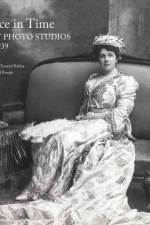
A stunning collection of vintage studio photographs from Egypt, including princes, pashas, and members of the now vanished ruling class, presented in a sumptuous edition From the invention of the camera, photographers, like painters, have sought to portray other people, and early studio photographs, with their highly stylized props, poses, and costumes, offer a beguiling window onto the prevailing fashions, tastes, and attitudes of their time. The portraits in this book, Egyptian studio photos from the mid-nineteenth century to the Second World War, tell such a story, their popularity and art then driven by the burgeoning presence of photo studios across the country. In their rich variety, they offer vivid evidence of the democratization of the image as access to the technology spread from members of Egypt's royalty to an ever-wider circle of subjects. But, more than that, they freeze time, by capturing human subjects that are no longer there. These portraits, and the studios that created them, evoke haunting fragments of a vanished past and invite us to endless speculation and contemplation. In the age of the selfie, their power to speak to us from the mists of time cannot be overstated. Includes over 200 stunning images, from the work of 81 photographic studios.
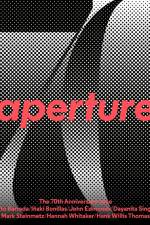
Anniversary issue features seven original commissions by leading photographers and artists, and seven essays about Aperture’s legacy by award-winning writers and criticsThis fall, Aperture celebrates seventy years in print with an issue that explores the magazine’s past while charting its future. Reflecting on the founding editors’ original mission and drawing on Aperture’s global community of photographers, writers, and thinkers, this issue features seven original artist commissions as well as seven essays by some of the most incisive writers working today––each engaging with the magazine’s archive in distinct ways. Among the original artist commissions, Iñaki Bonillas selects iconic images and texts from the Aperture’s archive from the 1950s to produce open-ended narrative collages. Dayanita Singh reflects on the 1960s and the family album as a serious photographic form. Yto Barrada enacts sculptural interventions to issues and spreads from the 1970s, using remnants of the late artist Bettina Grossman’s color paper cutouts. Mark Steinmetz draws inspiration from the magazine’s Summer 1987 issue, “Mothers & Daughters,” to compose a photo essay of his wife, the photographer Irina Rozovsky, and their daughter Amelia. Considering the matrix of censorship, art, and religion in the 1990s, John Edmonds creates a tableau about family, faith, and grief. Hannah Whitaker explores the turn of the century, and the ways in which our anxieties about technology create speculative worlds. And Hank Willis Thomas draws on Aperture’s issues from the 2010s to create a series of collages that reference traditional quilt patterning, revivifying history and remixing the present.Looking back upon Aperture’s legacy, Darryl Pinckney reconsiders the photographer and editor Minor White, whose vision shaped the magazine for nearly two decades, beginning in the 1950s. Olivia Laing writes about the 1960s and the tensions between reportage and artistry in the work of Dorothea Lange, W. Eugene Smith, and others. Geoff Dyer revisits to the 1970s, which he considers a decade of new ideas and deeper reflection on the medium, looking into the works of William Eggleston and Ralph Eugene Meatyard. Brian Wallis looks back at the politics, art, identity, and the “culture wars” of the 1980s, while Susan Stryker reflects on Aperture’s archive from the 1990s and its foregrounding of identity beyond the gender binary, evoking Catherine Opie, Elaine Reichek, and Aperture’s pathbreaking “Male/Female” issue. Lynne Tillman illustrates how photographers searched for the tangible in an increasingly digital world in the 2000s, and the Pulitzer Prize-winning critic Salamishah Tillet shows how the photo album became a source of connection and narrative amid the information overabundance of the 2010s.
The Photographs in Silent Stages are platforms specifically built as settings for narratives; they are akin to theatrical stages or movie sets. At the same time, they are artifacts from various stages of my life, visual traces of the sedimentary layers that have quietly accumulated over time, each atop its predecessors. As stage or movie settings, these images aim to spark viewers' imagination, to spur them to conjure up a story, a narrative laced with mystery and alienation. That's why I make the lighting dramatic, why I shoot in black and white, why some elements may be too dark and/or fuzzy to see clearly. I generally start with the background, searching the streets for a suitably dramatic setting. Then I wait for something to happen, perhaps for players to enter or exit. Sometimes I arrive too late; the last player has exited. As artifacts from my own story, the images give voice and body to times, experiences and feelings I hardly knew subsisted within me. It was only years after the project was undertaken that I began to understand how the choices I make - of subjects, settings, lighting, composition - reflect the particularities of my life and sensibility. In this sense, these images are relics from a personal archeological dig, a visual memoir of sorts -- an unsurprising undertaking perhaps for a septuagenarian.All of the images were shot over the past five years, either in or around New York or Paris. This reflects the dual nature of my life and culture, split between my native home and my adopted one. I have spent half of my adult life in France and identify as both French and American. My objective is not to highlight the Franco-American split but rather to demonstrate the parallels and how they compose into a single identity.
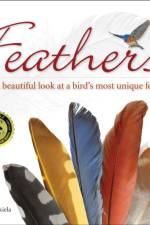
This coffee table book walks readers through the world of bird feathers, with stunning photographs and informative text in concise blocks.
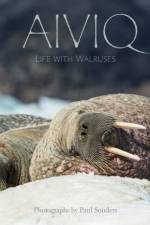
This book features stunning wildlife photography by acclaimed photographer Paul Souders, accompanied by first-hand accounts from people living alongside this enormous sea mammal.
A visually stunning, landmark photography book of transgender New Yorkers, complete with thought-provoking and revealing interviews that honor the transgender community and the courage it takes to find oneself and defy societal norms. A growing portion of the LGBTQ+ community identifies as transgender; they are fathers and mother
To commemorate the 50th anniversary of the Pride March, People of the Pride Parade is a visual celebration of the diverse, vibrant, and exuberant attendees of New York City's Pride. In the style of Humans of New York, this gorgeous bright book filled with 200 photos honors the colorful celebrants of the New York City P
Following the success of her bestselling 2015 gift book The Wild in You: Voices from the Forest and the Sea, renowned poet Lorna Crozier offers another masterful collection of poems inspired by nature, this time set in the Frontenac Arch Biosphere Reserve in Southeastern Ontario.
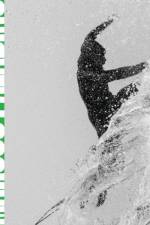
Marcus Paladino's unique and stunning portfolio contains some of the photography world's most compelling surfing images.
Wonder Around Every Corner takes you behind the scenes with travel photographer Michael Sidofsky, better known by his Instagram handle @mindz.eye. A prolific photographer who travels the world taking photos of some of the most breathtaking places on Earth, Wonder Around Every Corner, shares some of Sidofsky’s most iconic photographs and details the editing process and technique behind each photo. Featuring more than 60 color images from places like Paris, Barcelona, San Francisco, Switzerland, Toronto, and more, Sidofsky will inspire readers to take exceptional photos of their own, showing that the next moment of wonder really can be found around any corner.
The idea of America, and the American identity, has been central to this country's cultural conversation and debate since its inception. America - past, present, and future - is an ongoing experiment in free will and liberty for all who reach its welcoming shores, plow its fertile soil, and raise their children to achieve that great promise of the American Dream. In The American Experiment, photographer Brandon Ralph presents an exploration of the patriotic symbols, the vast and varied landscape, and the tapestry of humanity that poses the question anew: What makes an American?The result is a finely wrought collection of moments and Americans captured in time, separated by decades and by state lines, by events of national significance and by the invisible routines of day-to-day life. In Ralph's starkly beautiful and unwaveringly sensitive images, there is a sense of timelessness that speaks to our collective nostalgia, our unflagging optimism, and our unending pursuit of freedom for all people.
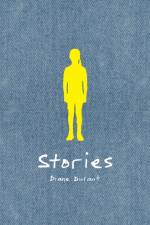
Putting a new spin on old histories as my ten year old daughter stands in for a youthful me-the one I remember and the one I was never quite allowed to be-"Stories, 1986-88" pairs deadpan portraits with short narrative texts to bring the past into the present as we relive and rewrite my childhood stories through a restorative approach to image-making and storytelling.
Since moving to New York from Kuwait City Maha Alasaker learned that the everyday American has no conception of what daily life is like for women in modern-day Kuwait. Seeking to address this, Alasaker began making portraits of women in their bedrooms and asking them about their lives. This intimate collection of environmental portraits provides a never-before-seen look at what it means to be a young woman in Kuwait.
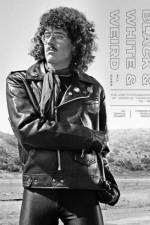
As featured in Rolling Stone, Entertainment Weekly, The A.V. Club, Nerdist, Gizmodo, Ultimate Classic Rock, and more!"Weird Al" Yankovic is one of music's most beloved figures. A skilled accordion player and songwriter, the California native is known for his meticulous parodies of popular songs, hilarious originals, and, of course, for upbeat polkas!For much of Al's career, one man has been by his side, photographing and documenting the fun and weirdness: longtime drummer Jon "Bermuda" Schwartz. Since meeting Al in 1980, Jon has taken more than 20,000 images of Al in his element: on tour, in the studio, and on video sets. Black & White & Weird All Over presents hundreds of images of Al, culled from Jon's personal collection of black-and-white photography. These photos only existed on contact sheets ¿ out of mind and out of sight ¿ until now! From behind-the-scenes shots taken on the sets of Al's iconic videos for "Ricky," "I Love Rocky Road," "Eat It," and "Living With A Hernia," to studio sessions for Al's IN 3-D and Polka Party! LPs, Black & White & Weird All Over is the ultimate photographic essay of Weird Al's undisputed comedic genius.
A Crack in the World explores empathy for all sentient beings and the planet in the face of global warming.
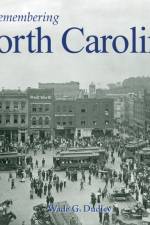
"Here's to the land of the longleaf pine" holds an amazing power to inspire North Carolinians. Words are fine for inspiration, and for recording the achievements of those who once heard or spoke such words. However, a single photograph offers a window into the past, which is difficult to capture in words alone.With a selection of fine historic images from his best-selling book Historic Photos of North Carolina, Wade G. Dudley provides a valuable and revealing historical retrospective on the growth and development of North Carolina. This volume, Remembering North Carolina, provides more than 125 such glimpses of life in the Tar Heel State. From the mid-1800s through the mid-1900s, from Cape Hatteras to Asheville, from scenes of farm families working the fields to Orville Wright in flight at Kill Devil Hills, these historic black-and-white images seek to capture the essence of change in the land of the longleaf pine.
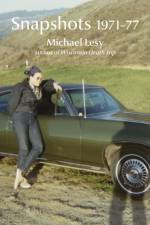
In the summer of 1971, Michael Lesy and a friend found most of the snapshots in Snapshots 1971–77 in a dumpster behind a gigantic photo-processing plant in San Francisco. The photos were in the trash because the machines that printed them made them so fast — duplicates, triplicates, quadruplicates — that the people on the processing line couldn¿t stop them.Week after week, Lesy took home thousands of snapshots from the dumpster. He studied them as if they were archeological evidence. By the end of the summer, he¿d formed his own collection of images of American life.He took that collection with him when he returned to Wisconsin to finish his graduate work in American history. His understanding of the snapshots from California as reflections of the troubled state of American society influenced the PhD research he was doing in Wisconsin — research that became the American classic Wisconsin Death Trip (1973).Over the next six years, Lesy added to his collection of California snapshots with hundreds of snapshots that had been left unclaimed and then discarded by a photo processor in Cleveland. While Lesy looked through other people¿s lives in pictures, the world was coming apart at the seams. The Vietnam War, the murderous rampage of the Manson Family, and the Attica State Prison uprising filled news headlines — and the general public carried on their lives, with hope and abandon and everything in between: chaos, cruelty, familial bonds and breaks, materialism, lawlessness, unwitting humor.Lesy¿s collection of snapshots from the 1970s is a time capsule of things familiar and alien. Now, fifty years later, everything and nothing about our lives has changed.In Wisconsin Death Trip Lesy pulled back the curtain of ¿the good old days¿ to reveal the stark reality of American life from 1890 to 1910. The anonymous images in Snapshots 1971–77 serve as prophesies of present-day broken dreams, toils, and tribulations.
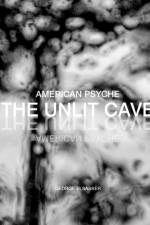
American Psyche consists of visual metaphors mirroring Elssaser's emotional reactions to America's colonialism and it still lasting effects.
Kingdom of Sand and Cement by Peter Bogaczewicz explores the challenges Saudi Arabia faces today as it rapidly transforms from a conservative and tribal desert culture to an influential world power. In less than a century the Saudis have experienced profound change as they transitioned from living in traditional mud buildings to commencing work on the world's tallest skyscraper. Examining this legacy through large-format color photographs, Peter Bogaczewicz documents a country of sharp contrasts where visual traces of an old reticent society can be seen in the midst of a burgeoning modern culture reflecting the ambitious agenda of the new King and his charismatic son and successor, the Crown Prince, a decisive risk-taker whose bold policies have received a warm welcome by some, yet have alienated others.
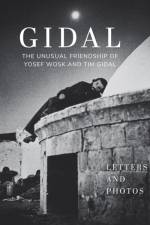
An intimate selection of letters between Tim Gidal, a pioneering force in photojournalism, and scholar and art collector Yosef Wosk. ¿Although four decades separated us, Tim and I were inexorably drawn together through the magnetic forces of art and culture; travel; history; exile and war; loves and loves lost; writing, teaching and forgetting; collecting and letting it all go."¿Yosef Wosk, from the Preface Nachum Tim Gidal, Jewish pioneer of modern photojournalism, was born in Munich in 1909 and died in Jerusalem in 1996. He began taking photographs in the late 1920s, at a time when technological advances made photography equipment more compact and affordable than ever before. With his handheld Leica, Gidal was able to travel in interwar Europe, capturing rare images of Polish Jews prior to the annihilation of WWII.Yosef Wosk is a rabbi, philanthropist, educator, author, scholar, community leader and prominent figure in the BC arts scene. Wosk first encountered Gidal¿s work in the photo ¿Night of the Kabbalist¿ in a magazine in 1991 and, captivated, was determined to meet the photographer on an upcoming sabbatical in Israel. However, most of the trip passed without any signs that his search would be successful. One day, Wosk saw a small poster on a lamppost showcasing Israeli photography in a local gallery, and through the proprietor, finally met the person who he would later consider his close friend, teacher, and confidant¿Nachum Tim Gidal.On one level, the letters¿selected from the hundreds the correspondents exchanged over two decades¿memorialize Gidal as an artist, scholar, historian of photography and ¿hero among the Jewish people." However, they also capture the essence of Gidal and Wosk¿s friendship. Readers will be drawn into a rich conversation touching on philosophy, advice, personal issues, reading recommendations and more, with Gidal always brilliant, witty and cantankerous and Wosk curious, appreciative and intelligent. This fascinating and beautifully designed volume will appeal to those with an interest in modern Jewish history as well as anyone interested in early 20th-century photography.
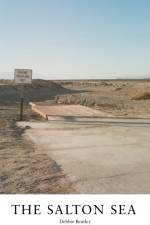
The book addresses an enviornmental and public health crisis in the Imperial Valley of California. The photographs provide a portrait of the Salton Sea in 2018: the first year after water transfers to the lake ceased. From this year forward, playa exposure will escalate and toxic dust in the wind will increase
This is the story in pictures of Atlantic City, the iconic American shore resort, as it emerges from its latest crisis. The city of 40,000 people has been through many transformations in its history: 19th-Century health retreat, Prohibition-Era speakeasy, mid-century nightclub hub and East Coast gambling Mecca. The near-depression of the late 2000s and increasing competition from the spread of gambling across the country upended many schemes of casino impresarios and other developers. Many blocks of the city were leveled for casinos that never opened. The rate of defaults on home loans was the highest in the nation for a time. At the lowest point of the financial crisis the State of New Jersey took over the city's finances. Now it seems the tables may have begun to turn. These pictures are an attempt to capture the city and the people who live there.
N O K documents how American military families cope with loss and memory through the handling of personal effects.
Paul Gruhler opened his first studio in 1962 at the age of 21 - a year later he had a solo show at the DeMena Gallery in lower Manhattan. From the beginning, Gruhler, a self-taught artist, was compelled by what came to be known as geometric abstraction, in which the deliberative arrangement of color, line, texture, and scale, in paintings and collage, evoke from these disparate elements a sense of meditative harmony. For sixty years, he has continued to explore the subtle differences that can be made from color and line. Gruhler was fortunate in the early years to have met and become good friends with three older artists who were also important teachers and mentors - first Michael Lekakis, then Harold Weston and Herb Aach. Lekakis, a celebrated sculptor, who already had had exhibitions at the Guggenheim Museum, the Whitney Museum of American Art, and the Museum of Modern Art's exhibition Americans 1963, took Gruhler under his wing, navigating him through New York's thriving avant-garde art scene. As Carolyn Bauer writes, "Michael Lekakis was instrumental in encouraging Gruhler to attend art events, while taking him to invite-only museum openings." He also introduced him to renowned artists - among them, Alexander Calder, Isamu Noguchi, Louise Nevelson, and Barnett Newman - whose works influenced the young Gruhler, as did such artists as Mark Rothko, Clyfford Still, and Ad Reinhardt. Lekakis was also instrumental in Gruhler's first show, giving titles to his paintings and writing catalog copy that drew upon his own abstract poetics. "These canvases," he wrote, are "multi colored fire densely cascades to suspension hanging a counterpoint of rhythmic patterns in space covering it like a shroud united by a golden fragmentation." Over these years Gruhler has had numerous solo and group shows in the U.S. in New York and Vermont, in Mexico, and abroad in Finland, Germany, Sweden, and The Netherlands. HARMONICS is both a retrospective and a current view of Paul Gruhler's intensive art. "My work," he says, "has been a meditative exploration of vertical and horizontal relationships in space, in order to achieve both harmony and tension within color, line and form."
Abonner på vårt nyhetsbrev og få rabatter og inspirasjon til din neste leseopplevelse.
Ved å abonnere godtar du vår personvernerklæring.