





















Gjør som tusenvis av andre bokelskere
Abonner på vårt nyhetsbrev og få rabatter og inspirasjon til din neste leseopplevelse.
Ved å abonnere godtar du vår personvernerklæring.Du kan når som helst melde deg av våre nyhetsbrev.

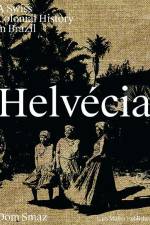
The most "African" of the Brazilian villages in the south of Bahia bears a Swiss name: Helvécia. It was founded 200 years ago by Swiss and German colonists, and the coffee grown on its vast estates produced great wealth for them. This would not have been possible without exploitation: in the mid-nineteenth century, for 200 white colonists, there were 2,000 slaves of African origin. Black people still make up the majority of the population today; many do not know the origins of their community.With great sensitivity and in dialogue with the inhabitants, Swiss photographer Dom Smaz goes in search of traces of the past, capturing the lives of the local people. Smaz's pictures and text contributions by internationally renowned post-colonialism-expert Shalini Randeria, among others, allow a new look at history and the origins of Switzerland's wealth, revealing global histories of interconnectedness and power relations of the past that continue into the present.
«Mein erster Gebrauch einer Kamera fand im Jahr 1954 statt, als ich darüber nachdachte, was ein neues Gebäude in New York - das Seagram Building - sein könnte. Als ich über Ostern in Rom war, begann ich, durch das Objektiv einer Kamera, die ich davor kaum benutzt hatte, die Qualität von Gebäuden zu beobachten: Wie sie auf dem Grundstück sassen, ihre Gliederung und wie architektonische Details mit dem Gebäude als Ganzes zusammenhingen.» - Phyllis LambertDiese Neugier ist eine Konstante in der Arbeit von Phyllis Lambert, die ihre Karriere dem Studium und der Auseinandersetzung mit den sich verändernden Bedingungen von Stadtlandschaften gewidmet hat. In dieser Sammlung persönlicher Fotografien, die sie über mehrere Jahrzehnte hinweg während ihrer täglichen Routine, auf Reisen oder bei der Arbeit aufgenommen hat, wird die Beobachtung zu einer Suche nach dem Verständnis und der Offenlegung dessen, was andernfalls übersehen werden könnte.
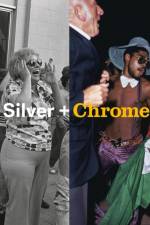
Between 1973 and '76, Mitch Epstein photographed in American cities-New York, Los Angeles and New Orleans, among others. In 1973 he was initially shooting in black-and-white as a student of Garry Winogrand when he asked his teacher, "Why not color?" With Winogrand's blessing, Epstein shot his first rolls of Kodachrome. Silver + Chrome is a chronicle of his three years alternating between color and black-and-white, before eventually committing to color.This book contains Epstein's earliest work, virtually none of which has been seen before. In these kinetic tableaux, the artist's exuberance is tamed, just barely, by his formal intelligence. He depicts American city life as it undergoes taboo-shattering sexual liberation, economic crises and the repercussions of a boondoggle war in Vietnam, immersing us in the urban chaos of this complicated time.
Between the 1970s and '90s, Mitch Epstein photographed the rituals of excess and alienation, jubilance and desire that defined late twentieth-century America. These pictures marked the beginning of his photographic inquiry into the American psyche and landscape that has now lasted half a century. Recreation captures the vitality of modern America in a pre-smartphone, less self-conscious time. In these early works, Epstein's wit reigns, along with his singular way of making the mundane startle and the extraordinary appear to perfectly fit in.This new edition expands on the original Recreation book published by Steidl in 2005. More than a third of these photographs have never been published, and all of them have been re-worked with fidelity to the pictorial quality of the films of the era.
Groundbreaking photojournalism from a pioneering Brazilian photographerThis anthological volume retraces the entire career of French Brazilian photographer and filmmaker Miguel Rio Branco (born 1946), who is known for his photojournalism in Brazil and has worked as a correspondent for Magnum Photos since 1980.
The little-seen early works of an acclaimed Spanish photojournalistJavier Campano (born 1950) is known for his documentary work on the streets of Madrid. This volume compiles a selection of photographs from his early career, focusing on lesser-known aspects of his practice as well as his photographic output during his travels internationally.
Celebrity portraiture from the acclaimed British photographer and author, with David Bowie, Cate Blanchett, Iggy Pop and moreThis coffee table volume is the first monograph dedicated to British photographer Chris Floyd's (born 1968) 30-year career. Featuring over 200 photographs, it includes his sessions with Paul McCartney, David Attenborough, Debbie Harry, David Hockney, David Bowie, Marcus Rashford, Cate Blanchett, Oasis, Iggy Pop and many more. The photographs are accompanied by a collection of stories that paint a broader and sometimes funnier picture of his oeuvre."For a long time people have told me how much they love reading what I write, as much as looking at the photographs I produce, and that they would love to own a book of this work and these tales," he writes. "After nearly 30 years in the game, perhaps now is the time to parlay the most interesting, funny, odd, disturbing, confrontational, collaborative and life affirming photographic moments."
"In book form, Kitchen Table is more intimate.... Unlike the experience of meandering through a museum, stepping back to appreciate the images and nearing the text panels to skim them, the pace of exploration is now in a person's hands." -Hilary Moss, New York TimesThis publication is dedicated solely to the early and canonical body of work by American artist Carrie Mae Weems (born 1953). The 20 photographs and 14 text panels that make up Kitchen Table Series tell a story of one woman's life, as conducted in the intimate setting of her kitchen. The kitchen, one of the primary spaces of domesticity and the traditional domain of women, frames her story, revealing to us her relationships--with lovers, children, friends--and her own sense of self, in her varying projections of strength, vulnerability, aloofness, tenderness and solitude.As Weems describes it, this work of art depicts "the battle around the family ... monogamy ... and between the sexes. Weems herself is the protagonist of the series, though the woman she depicts is an archetype. Kitchen Table Series seeks to reposition and reimagine the possibility of women and the possibility of people of color, and has to do with, in the artist's words, "unrequited love."
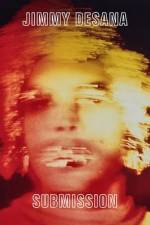
"This is the first overview of the work of Jimmy DeSana, a pioneering yet underrecognized figure in New York's downtown art, music and film scenes during the 1970s and 1980s. The book situates DeSana's work and life within the countercultural and queer contexts in the American South as well as New York, through his involvement in mail art, punk and No Wave music and film, and artist collectives and publications. DeSana's first major project was 101 Nudes, made in Atlanta during the city's gay liberation movement. After moving to New York in 1973, DeSana became immersed in queer networks, collaborating with General Idea and Ray Johnson on zines and mail art, and documenting the genderqueer street performances of Stephen Varble. By the mid-1970s, DeSana was a fixture in New York's No Wave music and film scenes, serving as portraitist for much of the period's central figures and producing album covers for Talking Heads, James Chance and others. His book Submission, made with William S. Burroughs, humorously staged scenes out of a S&M manual that explored the body as object and the performance of desire. DeSana was also an early adopter of color photography, creating his best-known series, Suburban, in the late 1970s and early 1980s. This body of work explores relationships between gender, sexuality and consumer capitalism in often humorous, surreal ways. After DeSana became sick as a result of contracting HIV, he turned to abstraction, using experimental photographic techniques to continue to push against photographic norms."--
An exclusive backstage pass featuring 200 full-color photographs of the unique spaces where some of the world's most iconic musicians recorded.
((Please scroll down for english version))Andrea Diefenbachs Bilder aus den ländlichen Regionen der Republik Moldau sind eine Zeitreise an einen Ort, der seit seiner Unabhängigkeit vor 30 Jahren in einer Identitätskrise steckt. Diese visuelle Bestandsaufnahme ist bereits ihr zweites Buch über das zwischen EU und Russland, Stillstand und Fortschritt, Korruption und Rechtsstaatlichkeit hin-und hergerissene Land. Ihre ruhigen, zuweilen auch skurrilen Beobachtungen zeugen von großer Empathie für Moldau und das Lebensgefühl seiner Menschen. In ihrer Unaufgeregtheit passen sich die Bilder dem zwischen Aufbruch und Stagnation pendelnden Tempo des moldauischen Alltags an. »Realitatea« versammelt nicht nur fotografische Vignetten aus einem Land im Schwebezustand sondern setzt diese durch Faksimiles moldauischer Zeitungen und Texte auch in Kontext zu den politischen Ereignissen der vergangenen zehn Jahre.Andrea Diefenbach (*1974) arbeitet für Magazine und Organisationen im In- und Ausland. Seit 2016 lehrt sie Fotografie an der Hochschule Luzern. »Realitatea« ist ihr drittes Buch. Diefenbachs Arbeiten wurden unter anderem in der Hamburger Kunsthalle, dem Folkwang Museum Essen, dem Reiss Engelhorn Museum Mannheim sowie dem Münchner Stadtmuseum gezeigt.Andrea Diefenbach's images from the rural regions of the Republic of Moldova are a journey through time to a place that has been in an identity crisis since its independence 30 years ago. This visual survey is already her second book about the country torn between the EU and Russia, stagnation and progress, corruption and the rule of law. Her calm, at times whimsical observations demonstrate great empathy for Moldova and its people's way of living. In their tranquility, the images adapt to the tempo of Moldovan everyday life, which oscillates between upheaval and stagnation. »Realitatea« not only gathers photographic vignettes from a country in a state of limbo, but also contextualizes them within the political events of the past ten years through facsimiles of Moldovan newspapers and analytical texts.Andrea Diefenbach (*1974) works for magazines and organizations in Germany and internationally. She has been teaching photography at the Lucerne University of Applied Sciences and Arts since 2016. »Realitatea« is her third book. Diefenbach's work has been shown at the Hamburger Kunsthalle, the Folkwang Museum Essen, the Reiss Engelhorn Museum Mannheim, and the Munich Stadtmuseum, among others.
This book is the fifth book of a series of books on the introduction to drawing. This fifth book will teach beginner artists and intermediate artists how to draw still life, landscapes, portraitures and animals using pastels in a logical way and help them transition from drawing to painting through various exercises and assignments. Teaching drawing in this manner will build the artists' technical, compositional and comprehensive drawing skills.
This book is the sixth book of a series of books on the introduction to drawing. This sixth book reviews principles of design and elements of design that artists must keep in mind when creating artworks. These design principles and design elements help artists to create better artistic and aesthetically pleasing artworks.
This book is the second book of a series of books on the introduction to drawing. This second book will teach beginner artists and intermediate artists how to draw and shade forms, heads and figures using charcoal in a logical way through various exercises and assignments. Teaching drawing in this manner will build the artists' technical, compositional and comprehensive drawing skills.
This book is the first book of a series of books on the introduction to drawing. This first book will teach beginner artists and intermediate artists how to draw still life using pencils in a logical way through various exercises and assignments. Teaching drawing in this manner will build the artists' technical, compositional and comprehensive drawing skills.
Remarkable Treks is a compendium of exhilarating walks from around the planet - some lasting weeks, some lasting just a few days, but all of them set against spectacular backdrops.
For our fifth issue of Space Magazine, we knocked on the doors - at home and at work -of those who refuse to follow a conventional path. On these pages, you'll find a roll call of one-of-a-kinds doing it their way. To them we raise a glass. Here's to everyone who has a terror of repetition - making it up as they go along. _x000D_Our cover star, the stylist Camille Bidault-Waddington, is just such a non-conformist. Ask fashion insiders, and they will tell you that Camille lands some of the most competitive gigs in the industry. But it's not her impressive CV that convinced us to put her on the cover - shot in Camille's Paris apartment by Casper Sejersen. Instead, it's Camille's authentic approach, looking for "real" inspiration instead of trawling Pinterest. _x000D_For our second cover, we took a trip with a raconteur. His name is Ricky Clifton, a man who texts in capital letters and calls himself THE ONLY DUMPSTER DIVER. Ricky is one of the New York art scene's true cult figures - an interior designer to the art world, decorator, florist, ceramicist, inventor, antique dealer and former taxi driver. This spring, photographer Victoria Hely-Hutchinson and set designer Julia Wagner jumped on Ricky's bandwagon, drinking tea with art power couple Helen and Brice Marden, hanging out by gallery owner David Zwirner's multi-coloured swimming pool and drinking at the hypnotic bar in Rachel Fienstein and John Currin's home. With our portraits of Camille and Ricky, we dedicated our fifth issue to the radicals, people with originality in their bones and outrageous ideas in their brains - from the worlds of design, architecture, fashion and culture. Some may be under-the-radar, others influential and recognised. But the individuals we meet in this issue all live in colour. _x000D_
From Abraham Lincoln, Martin Luther King, and Princess Diana to Napoleon Bonaparte, Eva Peron, and John Gotti, this book provides a guide to the graves of some of the most renowned figures (good and bad) throughout history. Some, such as communist leaders Ho Chi Minh and Vladimir Lenin, are interred in great mausoleums, where they are visited by millions each year; others are buried in little-known country graveyards. Featuring photographs of graves, cemeteries, graveyards, and mausoleums, Graves of the Great & Famous is a compact guide to the final resting place of the famous--and infamous.
Why do cats purr? How much can you learn about a cat's mood from the direction it flicks its tail? How do cats show trust with their eyes? Why do cats rub against their owners' legs? From Siamese to Russian Blue, Manx to American Bobtail, Burmese to Bombay, the book expertly explores and celebrates this most beloved pet. With fascinating captions on every page, even cat lovers will learn something new.
A visual and verbal narrative of the grit and gentleness that comprises Southwestern Latinx communities through photographs by Tony Salazar and a series of poems from José Olivarez.
MARKETING & PROMO: National, regional, and subject-specific print features, excerpts, review coverage, broadcast and television interviewsPublicity and promotion in conjunction with author's speaking engagementsSocial media campaigns, blogger outreach, digital collateral for online useOutreach to subject-specific organizations, markets and festivalsDigital collateral (social media banners, quote nuggets)Excerpts availableElectronic bladsElectronic ARCsOnline bannerPress releasePodcast
MARKETING & PROMO:National, regional, and subject-specific print features, excerpts, review coverage, broadcast and television interviewsSocial media campaigns, blogger outreach, digital collateral for online usePublicity and promotion in conjunction with author's speaking engagementsOutreach to subject-specific organizations, markets and festivalsDigital collateral (social media banners, quote nuggets)Excerpts availableElectronic ARCOnline bannerPress releasePodcast
In this remarkable tale of creativity and chaos, do-it-yourself innovation and extraordinary attempts at world domination, Needles and Plastic tells the inside story of one of New Zealand - and the world's - great independent music labels. Hundreds of full color & black and white photos illustrate the story! Founded in 1981 by Roger Shepherd in Christchurch, New Zealand, Flying Nun Records unleashed an extraordinary wave of music that had an impact around the world.Needles and Plastic is the first comprehensive history of the early years of the label and its bands covering the critical period from 1981-1988 when many of the most influential and critically acclaimed artists emerged on Flying Nun, bands like - from The Clean, The Chills, The Verlaines, Straitjacket Fits and Bailter Space. The influence of the obscure label became apparent in the 1990s, when big-time indie acts like Pavement, Cat Power or Yo La Tengo started covering Flying Nun bands. In entries on over 140 records from The Clean's 'Tally Ho!' 7" in 1981 to The Verlaines Bird-Dog LP in 1988, Matthew Goody tells the story through the records themselves. His book draws on years of in-depth research to reveal the stories of the bands, the recordings, the songs, and the audience, with a host of significant characters contributing along the way - Shepherd, Chris Knox, Doug Hood, Hamish Kilgour and many more. In this remarkable tale of creativity and chaos, do-it-yourself innovation and extraordinary attempts at world domination, Needles and Plastic tells the inside story of one the world's great independent music labels.
Using his camera as a passport, Encounters is Tom Bowdenâ¿s (known as TBow) portrait diary of human life in America. Known for his inimitable style, TBow somehow turns potentially unwilling subjects into compliant participants in his portrait making. Encounters is a unique look at people, documented through the lens of an ambitious observer of the human condition. In her essay in the book, the renowned documentary photographer Maggie Steber writes: âNowadays, much of street photography is detached. Not TBowâ¿s. He is a visual minstrel and troubadour. People are comfortable with him and they reveal their stories." Interspersed throughout the book are short texts that tell stories about some of his subjects. For the portrait of âScott with His Pistol, Austin Texas, 2016,â? TBow writes: âThis photograph was made the day â¿open carryâ¿ was legalized in Texas. I asked Scott what he thought about gun control and he told me, âGun control is knowing where your gun is pointed at all times.â?
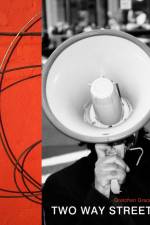
A love letter to New York City, Two Way Street merges two bodies of Gretchen Graceâ¿s street photography revealing the iconic moments of the everyday. Â Â Gretchen Grace is an American photographer living in New York City. Two Way Street combines early black and white film work from the 1990s/early 2000s, and more recent street abstractions captured digitally. Through candid portraits of the people of New York and found compositions from the fabric of the city, the combined work tells the timeless story of the everyday in the city that never sleeps. Â Â With essays by Julia Coddington and Carin Berger.
Abonner på vårt nyhetsbrev og få rabatter og inspirasjon til din neste leseopplevelse.
Ved å abonnere godtar du vår personvernerklæring.