







Gjør som tusenvis av andre bokelskere
Abonner på vårt nyhetsbrev og få rabatter og inspirasjon til din neste leseopplevelse.
Ved å abonnere godtar du vår personvernerklæring.Du kan når som helst melde deg av våre nyhetsbrev.

Napoli è una città dai mille volti e dalle mille personalità e in questo progetto di Luigi Iorio si riconoscono tutte quelle infinite sfaccettature che rappresentano la città. "Napoli un reportage infinito" racconta le architetture e gli umori che si ritrovano per le strade della metropoli partenopea in una camminata al limite della commozione tra vicoli sgarrupati e sontuose dimore museo. La storia e il futuro della città si mescolano bene nella visione fotografica dell'artista che ci racconta la sua storia attraverso i sentimenti ambivalenti del emigrante e del turista.
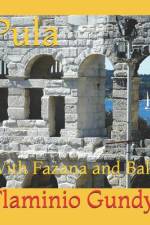
Pula (Croatia) is the historical chief town of Istria, erected by Romans in the first century BC on the peninsula inhabited by Histri, who had their center in Nesazio, near Pula. Shortly afterwards the city was incorporated by Augusto into the X Regio Venetia et Histria in order to create a bridgehead easily accessible by sea, together with Aquileia, to defend oriental boundaries of the nascent Roman Empire from the constant barbaric pressure.It is possible that Pola, not by chance also widespread on seven hills like Rome, had to relive in the design of its founders the splendor of Imperial Rome, with the erection of the most significant buildings of the Urbe, such as the Arch of Sergi, the Temple of Augustus and well two theaters. Instead, the Amphitheater of Pola, ended in 14 AD (contemporary of Verona's Arena) was erected almost sixty years before the Flavian Amphitheater in Rome (called the Colosseum), started by Vespasian in 72 AD and inaugurated by Tito in 80 AD. These photos want to document the oldest historical monuments in Pula together with the element that determined the primary development since antiquity: the bay on Adriatic Sea, object also of commercially and militarily activities by Serenissima Republic of Venice for over five centuries.Almost all the photos are accompanied by the best recipes of the Istrian tradition, such as the very first courses: bobici, fuzi sa paprikas kokoska, jota, manestra Istarska, pljukanci, posutice, strukli, the very tasty second courses: cevapcici, peka, sarma, bacalar Istarska, dagnje Busara, lignje s krumpira, skampi na buzaru, srdele s lukom, the delightful side dishes: fritaja s divljim sparogama, punjene articoke and the peerless sweets: palacinke na refoska, pinca, strudla.
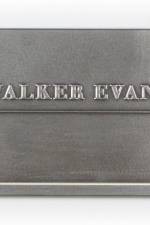
Documenting Walker Evans's lifelong fascination with the picture postcardThe eight scrupulously tritone dry-trap printed postcards that make up A Gallery of Postcards were originally produced by Walker Evans in 1936 by contact printing sections of his 8 x 10-inch negatives onto the smaller Kodak gelatin silver postcard stock. This edition comes with an essay by Jeff L. Rosenheim, curator of The Metropolitan Museum of Art's 2000 Walker Evans exhibition, from which these postcards are drawn. "Like a poet refining an idea word by word, Evans often clarified and intensified the meanings of his pictures by trimming his prints just slightly to present the leanest possible image," Rosenheim writes. "With the postcards he took that impulse to another level. Evans was a master of the edge and one of the mediums greatest precisionists."
Uma firma surgida do nada, de um amor correspondido no tempo, na solidão. Esses encontros são belos e nos trazem vida à alma. Luz na vida, na escuridão; flores e paz, e filhos de paixão.
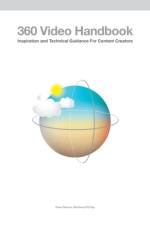
This guide is designed to assist you in taking your 360-degree digital video content to the next level through inspiration, recommendation and shared experience, along with discussion of frequently asked questions and key technical information. The book is organised into 5 colour coded sections: 1. InspirationBe inspired by examples of 360-degree video in 2D and 3D along with descriptions and summaries of key considerations for each example. This section is designed to help you to improve your planning and overall understanding of creating content.2. 3D 360 Music VideoA detailed description of the design, development and production of a 3D 360 music video using Vuze camera, Google Tilt Brush, Google Blocks and Adobe Premier Pro.3. Frequently Asked QuestionsFrequent questions asked by 360 camera users are covered in this section including issues related to resolution, audio, copyright and more. Additional information related to the FAQs can be found in the Knowledge section where topics are covered in more detail.4. KnowledgeImproving your understanding of video technology can improve the quality of the video, the clarity of audio, reduce noise and increase efficiency by reducing the amount of post-production necessary to complete your project. This will improve your efficiency in creating exciting and compelling content.5. AppendixThis section contains examples of documents such as a permissions / talent release form, equipment checklist and other useful information when preparing for your 360-degree video.About the AuthorThe author of this book, Peter Simcoe (BA Hons PGDip), graduated from Loughborough University with a First Class Honours Degree in Industrial Design and Technology in 1995 and after spending the next 2 years researching industrial design at the University, completed a Post Graduate Diploma in Media Production at the University of Central England in Birmingham. His career in video production and design has included teaching Computing for Designers at Massey University in Wellington, New Zealand and James Cook University in Townsville, Australia. In the past few years he has been producing communications and process analysis videos for Airbus, graphic design for a variety of companies across the UK and photography for companies such as Toyota Motor Manufacturing."360 Video Handbook is really a milestone for me, not only as a 360 video producer, but also as a graphic designer, traditional video producer, photographer and musician. The experiments with Vuze and other 360 cameras over the last 2 years, combined with 23 years experience of creating traditional video, photography and design, led me to believe I have something to contribute to the 360 community. This book contains the personal wish-list of project examples, frequently asked questions and the technical knowledge I would have wanted to know when I began my 360 video journey and as a result is a document containing the experience, advice and inspiration. It is also the coffee table book I always wanted to write - something easily accessible in different ways, from quick inspirational photo galleries through to detailed discussion and case studies. I aimed to create a visually stimulating book with intrinsic design value combined with solid technical considerations and hopefully you will enjoy reading it."- (Peter Simcoe, Author of 360 Video Handbook)
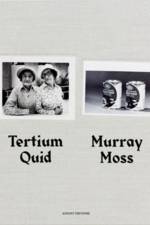
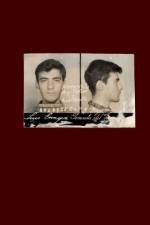
"A press photograph is defined by its function, which is to infuse a text with visual meaning in the telling of a news story," Murray Moss writes in his introduction. Assembled from his own unique collection of archival, annotated, and published prints that were acquired in the past two years from the photo morgues of a moribund newspaper industry, these original photographs are "for the first time shown publicly without the newspaper text they were originally assigned to accompany. Rather, I have paired these images, at my own discretion, with other orphaned press images, putting them in dialogue, and in the process creating for each image a new narrative-a new life, a third story, a tertium quid. "In turns humorous, striking, mysterious, and always surprising - these photographs reveal an undiscovered side of their personality through these pairings. Unwittingly, they have become starring characters in new narratives that are both revealing and delightful. "Some are duets, or fugues. " Moss writes, "Some dance a pas de deux. Many are six degrees incarnate. And others are conversations between strangers who share a bench in the park and discover common ground. "Reproduced at the actual size of the original photos, with both the front and the often annotated back presented with equal importance, these artifacts, "retired now from their labors, are akin to those exceptional functional objects that have served their time and have later come to be appreciated, even coveted and exalted, for the extraordinary qualities that lie outside of their original function. "Tertium Quid is a personal tribute by Murray Moss to a lost newspaper culture, a love letter to the often unsung press photographer, and a transformative elixir to the power of the image. *Tertium Quid is published in a limited edition of 1250 copies, each sequentially numbered. *
Picturing America argues that photography is a prevalent practice of making places, determining how we situate ourselves in the world. As a prime site of knowledge and change, it enacts our perception as well as transformative conception of American environments.
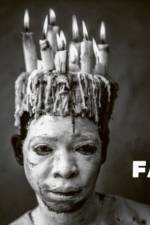
Ma¿rio Macilaus Langzeitprojekt Faith bescha¿ftigt sich mit Praktiken des Animismus (Glaube an die Beseeltheit der Natur) innerhalb traditioneller Religionen im modernen Mosambik. Es zeigt unterschiedliche regionale Vorstellungen von Gott und dem Kosmos und wie uralte mosambikanische Traditionen bewahrt werden. Ma¿rio Macilau (*1984) begann seine fotografische Laufbahn, als er 2007 in den Straßen von Maputo, Mosambik, das Handy seiner Mutter gegen seine erste Kamera eintauschte. Er arbeitet vor allem an Langzeitprojekten u¿ber die Einflu¿sse von Lebens- und Umweltbedingungen auf soziale Randgruppen in Afrika. Macilaus Werk wurde vielfach ausgezeichnet und ausgestellt, so zum Beispiel bei der 56. Biennale Venedig, bei Volta NY und bei der Photo London. Sein erstes Buch, Growing in Darkness, erschien 2016 im Kehrer Verlag. Er lebt und arbeitet in Maputo, Mosambik.
Published in conjunction with exhibitions held at the Phoenix Art Museum in 2018
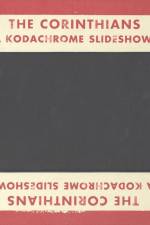
In The Corinthians, curators Ed Jones and Timothy Prus present more than 200 slides taken with Kodachrome film. The images in this collective visual portrait describe the new prosperity of a postwar United States, highlighting barbecues, big cars and families on vacation.
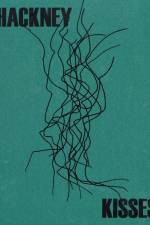
British documentary photographer and artist Stephen Gill (born 1971) presents a collection of found photographs from postwar Hackney, a borough in East London, in the 1950s. Photographer unknown, these high-quality, medium-format images all depict couples kissing on their wedding days, surrounded by overexposed wedding cakes, guests and decadent flower arrangements.
Dubbed the "poet of Prague," Josef Sudek (1896-1976) was one of the most important and celebrated of Czech photographers. Sudek produced his best work during his middle-aged years, having grown up and out of the rules of modernism and into a style of his own. Whereas his photographs from the 1930s are mainly a reflection of the external world, by the 1940s he was returning to himself, finding his own unique creative path. It was during this period that he made his most famous photograph, a view of the world seen through his studio window, the window ledge doubling as a stage for still-life objects--a setup which he repeated to great effect. Not even the pressures of World War II and the difficult postwar years--including the demands of socialist realism in the arts--interrupted the continuity of his oeuvre, documented in this back-in-print volume.
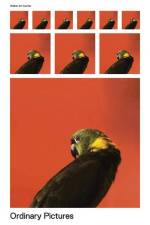
"Published on the occasion of the exhibition Ordinary Pictures, curated by Eric Crosby and organized by the Walker Art Center, Minneapolis. Walker Art Center, Minneapolis, Minnesota, February 27-October 9, 2016"--Colophon.
For the thousands of US sailors bound for the Pacific theatre of World War II, the Hawaiian Islands were the staging ground for an unknown fate. Their perception of Honolulu as a tropical paradise quickly deflated upon their arrival. The anticipation of a moonlit Diamond Head, available hula girls and free-flowing and affordable rum quickly materialized into crowded streets, beaches cordoned off with barbed wire and endless lines to nowhere. Still, as with many ports of call, diversions were plentiful, and set against the warm trade winds, sailors took advantage of them on their last stop to hell. Shore Leave is the first photobook to capture the Honolulu of this time and place. It is a one-of-a-kind visual document of a port that, for many sailors who passed through, was their initiation into manhood. Classic 1940s images of Hawaiian hula girls complement scrapbook photos of jaunty, uniformed sailors touring the island on a motorcycle or playing pool. Young women masquerading as bonafide hula girls pose with sailors in photobooth arcades, a ritual that for many would be the last human embrace before being deposited onto the battefield. Whether on the crowded streets of Waikiki or in line at the famed Black Cat Cafe, the young American men appear content for the moment with the liberties that their 48 hours away from the ship afforded. Meticulously culled from a 30-year collection of scrapbooks, photo albums and ephemera, Shore Leave--beautifully packaged with its clothbound, tipped-on cover--presents the dreams and realities of young men on their way to war in a Honolulu as exotic and forbidden as it was banal and lonely.
All 82 photographs included in this two-volume set date from the Second World War; none were taken by professional photographers. In the back of each volume the images are exhibited at their actual size, showing front and back. In the front sections, the images are enlarged. This edit provides a guidebook to the stratified emotions of warfare.
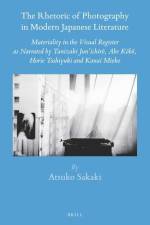
Through close reading of photography-inspired texts by Tanizaki, Abe, Horie and Kanai, The Rhetoric of Photography in Modern Japanese Literature by Atsuko Sakaki examines the Japanese literary engagement with photography as a means of bringing forgotten subject-object dynamics to light.
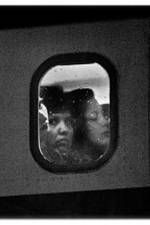
"John Schabel's (born 1957) series of photographs depicting anonymous airline passengers effectively captures the curious blend of impersonal efficiency and poignant humanity that pervades the experience of contemporary commercial air travel. Like products on an assembly line, the planes carrying Schabel's subjects churn down the runway; and with the same regularity the individual passengers emerge, identically framed, from his camera and onto the gallery wall. Interestingly, it is precisely this mechanized process that lays bare the active, but often overlooked, emotional and intellectual relationship between human beings and flight." --Laura M. Andre
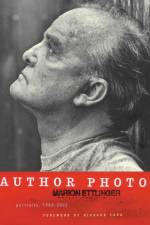
The writing life has long captured our collective imagination. What is it about writers, we wonder, that empowers them to work words into shapes and patterns that move us? The most affecting photographs possess that same power -- to reach out upon first sight, to capture our hearts and minds, to leave us smitten. Such is the feeling that comes from gazing at the work of Marion Ettlinger, a photographer celebrated for her "literary portrait power" (The Wall Street Journal). Author Photo collects, for the first time in book form, more than two hundred of Ettlinger's most famous photographs. Immortalized in these pages are many of America's greatest writers, including Raymond Carver, Francine Prose, Walter Mosley, Mary Karr, John Irving, Joyce Carol Oates, Truman Capote, Cormac McCarthy, Patricia Highsmith, Ken Kesey, Edwidge Danticat, and Jeffrey Eugenides. According to one of Ettlinger's Pulitzer Prize-winning subjects, "starkness and a sense of shadows" are at the core of her artistic allure. Shot exclusively in natural light and in black-and-white film, each of these images is an intimate artwork, putting the reader closer than ever before to the writers they revere and admire. A photographic paean to the literary spirit, Author Photo opens a rare and revealing window onto the timelessness of creativity.
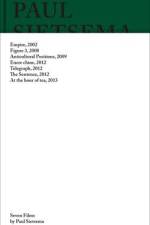
Los Angeles-based artist Paul Sietsema (born 1968) compounds organic and artificial detritus in his artwork. Using photographs and other objects that reference specific bodies of knowledge as starting points for his carefully crafted drawings and sculptures, he then films these images and objects, arranging and comparing both the physical works and the ideas, information and knowledge associated with them. Through his multistep, multimedia approach, Sietsema explores what it means to make art today, amid the barrage of images and the telescoping of past, present and future that instant access to information seems to provide. His film projects are both a consideration of time and how we apprehend it and an effort to return significance to the activity of image-making in an age of digital immediacy. This slim, clothbound hardcover is the first publication on Sietsema's film works, and includes stills from seven films accompanied by three curatorial essays.
Abonner på vårt nyhetsbrev og få rabatter og inspirasjon til din neste leseopplevelse.
Ved å abonnere godtar du vår personvernerklæring.