











Gjør som tusenvis av andre bokelskere
Abonner på vårt nyhetsbrev og få rabatter og inspirasjon til din neste leseopplevelse.
Ved å abonnere godtar du vår personvernerklæring.Du kan når som helst melde deg av våre nyhetsbrev.

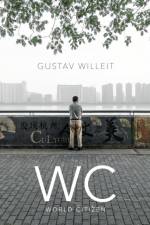
WC. World Citizen presents photographs taken by Gustav Willeit while traveling across Italy, China, Japan, California, Iceland, and Uganda. Every corner of the planet hides traces of the past, and Willeit perfectly captures these evanescent memories. Regardless of latitude and longitude, the presence of humans, civilizations and anthropogenic interventions in natural ecosystems has caused an exceptionally rapid loss of biodiversity. And yet he is aware that humanity does not own Earth, and never has ¿ despite the fact we have always thought so. An awareness reflected in pictures depicting how our home has become more and more of a precarious habitation. The book is a journey delving into nature¿s folds and cracks, increasingly impacted by humanity¿s arrogant stewardship. We are WCs: world citizens, as described by Japanese composer Sakamoto. And yet as WCs we run the risk of, slowly but inexorably, transforming into another WC of lesser noble nature.
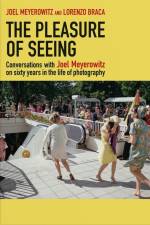
Joel Meyerowitz is one of the pioneers of color photography, as well as an essential reference figure for street photography, large-format photography, and portraits. The Pleasure of Seeing is his first biography, the book offers a look behind the scenes of the life and career of one of Americäs photographic living legends. In conversation with historian and photographer Lorenzo Braca, Meyerowitz speaks vividly about his beginnings, studying art history, meeting Robert Frank, photographing on the streets of New York City with Tony Ray-Jones and Garry Winogrand, traveling extensively across America and Europe, learning from John Szarkowski, director of photography at MoMA, working on numerous exhibitions and publications, photographing at Ground Zero in 2001 and 2002, and about the most recent still lifes and self-portraits projects. The book contains over one hundred pictures, including Joel¿s most iconic photographs as well as new and previously unpublished material. This comprehensive visual biography testifies to the author¿s continuing evolution throughout the six decades of his career and discusses his work in relation to his personal life, to the history of photography, and to the incessant transformation of the medium. Meyerowitz reveals anecdotes, personal memories, and the story behind many of his famous photographs.
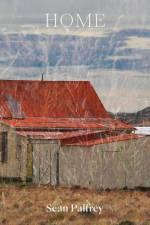
In Home, Palfrey shares his beautiful images and stories of the many people and places he has encountered around the world in his work as a paediatrician and travels over the past 45 years. Polymath Sean Palfrey's work as a paediatrician and natural scientist informs this fascinating first entry, Home, into his forthcoming series of photography books. In Home, Palfrey shares his beautiful images and stories of the many people and places he has encountered around the world in his work and travels over the past 45 years. A lifetime of observation and experience with children is channelled into his lyrical image-making and poetic text. Home ruminates on the variety of human and animal experiences across the globe, taking us from North and South America, to East Africa and South Asia, among other places. The result is a joyous and moving book that leaves us with a poignant message: that all living creatures need to have safe places that they consider 'home', where they can be protected, loved, sheltered, preserved, fed and surrounded by communities of adults.
'[a] glimmering monograph, which celebrates the performance and artistry of its dancers.' - Vanity Fair 'This book will serve as a starting point for conversations around the Black female body with Raquel at the forefront of provocative image-making' - Aesthetica 'By focusing on the performers themselves, the series elevates the images from straight reportage to curated and highly intentional... Raquel's captivating imagery portrays the empowerment and inclusivity in strip clubs that society has tended to ignore.'- Creative Review In ONYX, photographer Adrienne Raquel explores the intensity and escapism of the nightclub experience, documenting the power of the performers at Houston's famed Club Onyx. Raquel's photography is usually editorial, with high-power celebrities as her subjects. Her work has broken glass ceilings for Black female photographers. Now, for this passion project commissioned by Fotografiska New York, she has turned her lens towards a community of underrepresented artists in her hometown. At Club Onyx, strippers step on stage displaying their bodies, strength, and seduction, but there's a virtue to this particular space. "They don't get naked" is a common idiom to describe the club's ambiance. Performers there take the word "stripper," and negotiate what that means to them, on their own terms. Raquel captures elements of southern strip culture and the power of these performers with her signature glossy photographic style. From powerful images of the dancers mid-movement to detailed shots and intimate portraits, Raquel's striking images put the divine beauty and compelling energy that enlivens Houston's nightlife on full display. She also takes viewers behind the scenes, giving us a window into the community the dancers have built in the privacy of the locker room. There they prepare for the evening together before moving to the stage, each dancer in her moment. Uniting their star power to conquer one customer at a time, dancers continue into the early morning, performing and collecting bills. ONYX displays the empowerment and inclusivity in strip clubs that society has ignored. As captured by Raquel, the night club experience is revealed with layered meaning - granting the chance for these performers to be seen as elevated as the culture they influence.
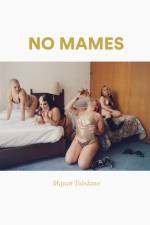
No Mames is a celebration of the flourishing LGBTQ+ individuals who are energizing the Mexico City's art and design industries 'In her new book, Mayan Toledano shows a tender side of the Mexico City queer scene' - Vogue (USA) 'Immortalizing queer Mexican artists in places they can fully call their own, Toledano offers a vision of the world through a radical lens of play and unmistakable tenderness that perfectly embodies the book's title.' - Hyperallergic 'With subjects sometimes shot over several years, intimacy was built organically. This imbues the photos with a special familial quality, the kind of photos taken by a close friend or a lover. Thanks to Mayan's careful touch, No Mames unfolds as a document of queer joy and togetherness.' - i-D Through her reportage, fashion and portrait work, Israeli Moroccan photographer Mayan Toledano shares the stories of her queer community, exploring their interior lives with empathy and respect. Her photography is characterized by its colorful dreaminess, and she often captures her young subjects in their bedrooms. Although Toledano is based in New York, she has found herself increasingly drawn to Mexico City, a place she considers a creative safe haven. No Mames pays tribute to the local LGBTQ artists, designers and creatives who are currently contributing to Mexican culture-many of whom are couples, roommates, childhood friends. The series' portraiture follows a two-fold process: first, she captures her subjects as they present themselves in everyday life; then, she photographs them as they would like to appear, facilitating the construction of their fantasy selves. This collaborative act of wish-fulfillment sometimes coincides with real-life transformations; for instance, she follows one of subjects, Havi, over the course of her gender transition, during which she underwent breast augmentation surgery.
Charles Holden's designs for the London Underground from the mid-1920s to the outbreak of World War II represent a high point of transport architecture and Modernist design in Britain. His collaboration with Frank Pick, the Chief Executive of London Transport, brought about a marriage of form and function still celebrated today. Pick used the term `Medieval Modernism¿ to describe their work on the underground system, comparing the task to the construction of a great cathedral. London Tube Stations 1924 ¿ 1961 catalogues and showcases every surviving station from this innovative period. These beautiful buildings, simultaneously historic and futuristic, have been meticulously documented by architectural photographer Philip Butler.Annotated with station-by-station overviews by writer and historian Joshua Abbott, the book provides an indispensable guide to the network's Modernist gems. All the key stations have a double page spread, with a primary exterior photograph alongside supporting images. A broader historical introduction, illustrated with archival images from the London Transport Museum, gives historical context, while a closing chapter lists the demolished examples alongside further period images.These stations, as famed architectural historian Nicholas Pevsner later noted, would "pave the way for the twentieth-century style in England".
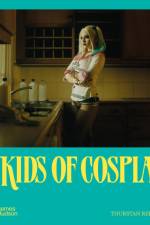
The first book on cosplay that elevates it to an art form through surreal photographs of more than seventy cosplayers set in everyday locations.
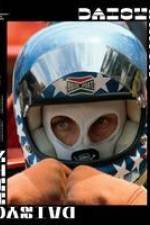
Daisy Chain is the new platform from Phillip Bogart Duncan and Charles Daigrepont Desselle. Published by Damiani, it is a print publication and online presence exploring the future of photography at the intersection of art and fashion. Decadent and surprising, lushly-produced yet unfussy, Daisy Chain offers an authoritative and fresh take on the indisputable influence of art photography, pitched against the backdrop of art history. With both a curatorial eye and an instinct for the new, Duncan and Desselle seek to re-investigate the canon: previously overlooked work is celebrated, and rising talent is supported. Never indulgent, their selection pinpoints the current moment, as well as the foundation it springs from. Printed in Italy and distributed worldwide, Daisy Chain presents a roster of thought-provoking contributors. Its inaugural issue includes original work from Emma Summerton, Shaniqwa Jarvis and Kuba Ryniewicz¿¿and promises a visual feast targeting accomplished fashion figures and dilettantes alike.
One of the best collections of pictures of fishing vessels ever assembled
'Until the last Oak falls' is a collection of powerful, compelling and important photographs, many never seen before, that I made documenting the early days of the British direct action environmental movement from 1995 - 1999. This was some of the first direct action environmental activism in the UK which more than 20 years later played a role in inspiring, along with the American civil rights movement, Extinction Rebellion and other activist movements. In the early 1990s, British activists were inspired by the philosophy of the American organisation Earth First and began mass direct action. The first anti-road protests was at Twyford Down in 1992, then the M11 in East London in 1994, Stanworth Valley in 1995 and 'the mother of all road protests' at the Newbury Bypass 1996 (to name but a few). These new tactics of taking to the trees in an attempt to stop them being felled to build roads had never been witnessed before. Simultaneously, from 1995-1999, Reclaim the Streets took direct action to highlight the negative impact of cars on urban spaces as well as their CO2 emissions by shutting down major roads in London and other cities with huge protests that turned into mass parties of resistance. Given the climate change crisis we find ourselves facing it's easy to get despondent and say, 'what's the point of direct-action activism?' Despite thousands of activists being involved across a number of campaigns in the 90's, and over 800 arrests at the Newbury bypass alone, those roads were still built. However, in 1997 Steven Norris, the Conservative party minister who approved the Newbury Bypass, went onto the BBC's Panorama news program to say the bypass should never have been built. Furthermore, a leaked government memo from the UK Department of Transport said the road protests had been effective in the awareness they created. As a result of direct action something extraordinary happened. The British government scrapped 77 proposed roads. Hundreds of thousands of trees and all of the rich biodiversity they supported were saved. Also, Reclaim the Streets played its part in getting bits of London pedestrianised, and the introduction of congestion charges. They also played an important role in inspiring the anti-globalisation movement in America. In other words, direct action is very effective at changing government policy, raising public awareness and creating change. The protestors of the 90's were labelled by the government and media as tree huggers, extremists, crusties, nut cases and scroungers of the state. It's not so different for today's activists. Unbelievable as it is shocking, since the industrial revolution which began in 1751 half of all CO2 emitted has been done so in the last 25 years! That is exactly when those activists were screaming from the treetops that we need to stop our hellish pursuit of expanding consumption with ever increasing CO2 emissions and biodiversity loss. In other words, those extremist tree hugging scrounging nuts cases were bang on the money. We are now at the point where if we don't reduce the CO2 emissions by 50% by 2030 then we cross a tipping point with unimaginable consequences. Currently we are set to increase emissions by 16% by 2030. Until the Last Oak Falls is a celebration and acknowledgement of those that did all they could 25 years ago to warn us. And for the newer generation of environmental activists, this book will shine a light on the roots of the movement they rightly fight so hard for. Having a clear sense of the lineage and ancestry of the direct-action environmental movement is important as it strengthens those who currently fight in the knowledge that they do so on the shoulders of many who came before them. What was activism like back then and why is it so important now? This book will help to answer those questions.
As one of the most ingenious artists of the silent film era, Buster Keaton stands out for his legendary comedies. While drawing on vaudeville traditions, he also knew how to exploit techniques the new medium film offered to create ¿ visually surprising ¿ comic situations, many of which became an unforgettable part of film history. Transferring and adapting his theatrical skills to the screen, he invented a whole new repertoire of aesthetic devices. Numerous elements of his approach to the art of mise-en-scène would turn up again, albeit in modified and more radical forms, in dramatic theories and plays of playwrights such as Bertolt Brecht, Luigi Pirandello, Eugène Ionesco, Samuel Beckett, and Antonin Artaud. This study looks at how Buster Keaton anticipated an aesthetic multiplicity that would come to shape dramatic concepts, the art of representation, and the language of performance in modern European theatre.
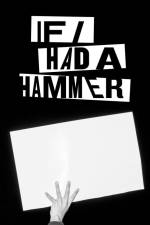
The FotoFest Biennial 2022 central exhibition, If I Had a Hammer, considers the ways artists utilize images to unpack the ideological underpinnings that inspire collective cultural movements around the globe. Together, the twenty-three included artists propose alternative techniques of seeing and engaging with the world, working with both conventional and new media to shed light on the systems that encourage social theories and political imaginaries to become dogma at the click of a shutter or tap of a button.The exhibition borrows its title from Pete Seegar and Lee Hays's 1949 protest song of the same name, which was written as a response to growing ideological divides and violence against progressive artists and thinkers in the U.S. during the era of Red Scare McCarthyism. Throughout this period, artists, activists, authors, and musicians, including Seegar and Hays, were made to testify in broadcasted congressional hearings and defend their right to free speech and protest. This exhibition uses the historical context within which "If I Had a Hammer" was written as a starting point to explore how those who assert ideological supremacy often do so by employing the very tools used by the communities and individuals they hope to suppress. They use the tools of discursive circulation: broadcast media, text, song, art, and images.
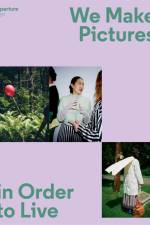
This spring, Aperture magazine presents issue #250, “We Make Pictures in Order to Live,” which explores the relationship between photography and storytelling across generations and geographies. Featuring visual stories that excite, surprise, and illuminate daily life, this issue’s title is a nod to the late, celebrated writer Joan Didion, who declared, “We tell ourselves stories in order to live.” Aperture contributors explore the quiet poetry— or clamorous disorder—of the everyday, and attest that making photographs is a way of being aliveIn a sweeping introductory essay, Brian Dillon asks how we might view Didion through photography, and what images come to mind when we think of her writing. Thessaly La Force profiles Bieke Depoorter, who sees documentary photography both as a listening exercise and a form of investigation, blurring the lines between authorship, fiction, and truth. Alistair O’Neill takes stock of Nick Waplington’s vibrant records of subcultures on both sides of the Atlantic. Lena Fritsch writes about the “exquisite world-making” of photographer Eikoh Hosoe’s collaborative practice. Tiana Reid reconsiders Charles “Teenie” Harris’s vivid, midcentury portraits of Black life in Pittsburgh, several of which are published for the first time in this issue. Among the portfolios, Casey Gerald discusses Adraint Bereal’s images depicting the agony and ecstasy of being a Black college student in the US today. Yvonne Venegas searches for family ghosts in the Mexican landscape, which poet and novelist Daniel Saldaña París describes as “an exercise in freedom and intelligence.” Kamayani Sharma looks at Gauri Gill’s images of a community masquerade in the Indian state of Maharashtra, and its potential to reverse power dynamics inherent in seeing and being seen. Durga Chew-Bose meditates on the photographs of Mary Manning—also featured on the cover— and their poetic sensitivity toward story and the everyday. For Endnote, Aperture poses six questions for the painter Jordan Casteel. In The PhotoBook Review—included within every issue of Aperture—Bruno Ceschel speaks with photographer, bookmaker, and publisher Alejandro Cartagena about his work. Lou Stoppard reviews a trio of photobooks about domestic spaces, and Aperture’s editors review a range of recent publications.
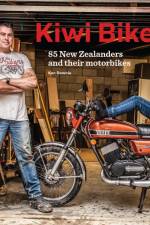
From Vincents and Moto Guzzis to the legendary Britten and the BSA Goldstar 350, Kiwi Bikers captures the love affair New Zealanders have with motorcycles. From north to south, and from veteran bikes to the latest high performers, this book showcases 85 incredible motorbikes and their passionate owners. Shot by motorbike enthusiast and respected magazine photographer Ken Downie across New Zealand in a major two-year project, the 85 astounding portraits include some of the most famous names in New Zealand motorcycle sport and photo essays of the last-ever Brass Monkey rally, races at Pukekohe, and the Burt Munro Challenge.
Learn to unleash the full power of Pinnacle Studio by following practical examples. As Studio develops, so does the Revealed series, with all the features of this popular software covered in detail. Start from scratch, or dip in and out - this book works both as a manual and a series of tutorials.From Basic Principles right through to understanding the latest additions to the program, Pinnacle Studio Revealed is packed with tips and examples, using both the sample footage and easily downloaded content. Topics include keeping your movies in sync, troubleshooting, Motion Titles, Masking and Motion Tracking, Multi-Cam, Split Screen templates and working with MyDVD as well as Legacy Disc Authoring.This revised version covers the 26.2.298 patch
A Legends of Warfare guide to the most iconic military flying boat ever produced.
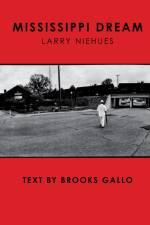
Mississippi Dream is French photographer Larry Niehues' second book following Nothing Has Changed, his "love letter to America". For this book, Niehues chose to go deeper into his fascination with the Delta region of the United States and focus on the great state of Mississippi. In this passionate exploration inside the culture of the Deep South, Niehues captures aspects of Mississippi far beyond landscapes and blue skies. These are images that were taken throughout 2020 and 2022 while confronting a pandemic, as well as major flooding that deeply affected the Mississippi Delta.This raw and passionate body of work captures a range of moments; from epic performances by Blues legends at iconic local juke joints, to more intimate settings. It documents century-old Baptist traditions and everyday life in what is often referred to as "The Most Southern Place on Earth." The photographs tell a story that feels both nostalgic and surreal, and is sure to inspire a deep sense of what life is like in the Magnolia State. "America is still out there... you just have to look for it." - Larry Niehues
Shivers is a series of landscape fragments, of objects, captured in a ghostly zone. During his drifts through various tourist sites, various nature reserves around the Mediterranean Sea, Sébastien Arrighi is sensitive above all to the margins of these stereotyped spaces. Traces, shocks, sounds. An energy charged the landscape, with a dull intensity, like a shiver going through the body in the dark.
Abonner på vårt nyhetsbrev og få rabatter og inspirasjon til din neste leseopplevelse.
Ved å abonnere godtar du vår personvernerklæring.