








Gjør som tusenvis av andre bokelskere
Abonner på vårt nyhetsbrev og få rabatter og inspirasjon til din neste leseopplevelse.
Ved å abonnere godtar du vår personvernerklæring.Du kan når som helst melde deg av våre nyhetsbrev.

"In the interstices between film and photography, ad stereotypes and clichés of a Californian paradise, Jack Pierson (born 1960) produces pictures that are deliberately sensual and sentimental. Through a subtle hybridization of genres they raise the central question of autobiographical sincerity as the work's theme and site. By arresting intimate moments, they compose a familiar, private world, happy and nostalgic. By disclosing (or pretending to disclose) something of the artist, they acquire a natural quality that turns them into secret confessions. We are simultaneously in the artist's studio and in the middle of his life, and, I'd be tempted to add, in the idealizing and loving grace of his gaze." --Henry-Claude Cousseau
This book is an interdisciplinary study of the engagement with and representation of the face across literature, photography, and theatre. It looks at how the face is an active agent, closely connected with the history of the media and the social interactions reflected in media images. Focusing on the dynamic period of the interwar years, it explores a range of case studies in Poland, UK, and the US, and examines artists like Stanis¿aw Ignacy Witkiewicz (Witkacy), Virginia Woolf, Debora Vogel, Sir Cecil Beaton, Theodore W¿adys¿aw Benda, and Edward Gordon Craig. Teresa Brü argues that these writers and photographers defended the face against threats from modern life ¿ not least, the media. She focuses on transformations of the face in life writing across a range of media and draws attention to the artists¿ autobiographical narratives.
Beginning in 1972, Richard Serra has made over 320 print editions at the Los Angeles artists' workshop and fine-art publisher Gemini G.E.L.-more than any other artist. Gemini co-founder Sidney B. Felsen has had the good fortune and privilege of witnessing the birth of each and every of these editions, camera in hand. Early on, Felsen realized there was an intrusive element to photographing someone engaged in the private, meditative moments of making art, and his ally became the close friendships with artists he developed throughout the decades, along with his subtle manner: "Taking photographs," says Serra, "is Sidney's way of watching over not watching us." Although sculpture is the most public aspect of Serra's practice, drawing and printmaking play crucial roles, both as independent pieces and in working towards sculpture. Richard Serra at Gemini presents a selection from nearly 3,000 photos by Felsen, revealing ways in which Serra has remade the conventions of printmaking, and celebrating 50 years of ongoing friendship and collaboration.
This book combines the traditional Slavic tale "We Three Brothers" by Karel Jaromír Erben with illustrative photographs and drawings by Jan Jedlicka. The story is just one of dozens collected and retold by Czech folklorist and poet Erben (1811-70) and is a cautionary tale of three young brothers, sons of a peasant who leave home to find their way in the world, only to meet a mysterious man with a limp who seals their unfortunate fates. Jedlicka visualizes the story in muted black-and-white images of a landscape of empty hills and rocky outcrops through which we imagine the brothers traveling. These he complements with more whimsical drawings of the characters of the tale: the brothers and their father, the limping man, a peddler and magistrate. The result is an unconventional modernization of a little-known tale, whose charm and moral still have an uncanny resonance today.Sprachen: Deutsch, Englisch, Tschechisch
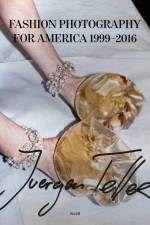
This book celebrates Juergen Teller's long-term collaboration with creative director Dennis Freedman for W magazine and later for luxury department store Barneys in New York. Between 1999 and 2016 the pair created a sweep of iconic series, all captured in Teller's trademark realistic style. In his photographs for W, Teller consistently went against the grain, resisting large-budget shoots and seeking out authentic, anti-commercial narratives and pared-down locations-as in his unforgettable first editorial in 1999 which features Stephanie Seymour, Shalom Harlow and Naomi Campbell (among other supermodels) as office workers at the magazine. Seen as a whole, Teller's W commissions reveal the evolution of his creative freedom, from shooting Haute Couture clients, Kate Moss at the Monaco Grand Prix and Tilda Swinton as a socialite collector, to portraits of William Eggleston and Roni Horn.Teller and Freedman's work for Barneys catalogues between 2011 and 2016 epitomizes their risk-taking approach in unusual fashion locations such as Belgrade, Panama City and Tirana. The resulting images show playful juxtapositions and unexpected scenarios, as models and actors explore their environments in comic poses, producing a kind of non-conformist advertising. Throughout Fashion Photography for America 1999-2016 Teller has photographed original W magazines and Barneys catalogues from his archives, a low-fi method that emphasizes the physical process of looking over his past work and allows us to share in the surprises of his retrospection.
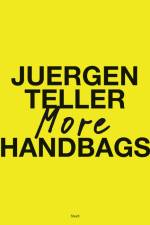
This revised and expanded edition of Juergen Teller's bestselling Handbags features a careful selection of images from the original 2019 book, alongside his favorite photographs made since. As before, Teller's advertising campaigns for distinguished brands such as Coach, Dolce & Gabbana, Loewe, Saint Laurent and Vivienne Westwood are shown with images of handbags deftly styled for fashion editorials-all worn by celebrities and models or photographed as still-life objects. Teller acknowledges the visible shift towards celebrity endorsement in recent years, which has led to exciting new encounters with a multitude of actors, musicians, artists, writers and filmmakers.In his unmistakable subversive, raw style, Teller presents the ultimate fashion accessory as an everyday item rather than as a glamorized commodity, often in surprising contexts (a handbag perched atop supermarket vegetables) or with humorous intent (a bag sitting on a taxidermy crocodile). This time around, More Handbags has the compact size of a handbag itself, making it more accessible and tactile-and aptly more affordable for all of us who might not be able to buy the real thing.
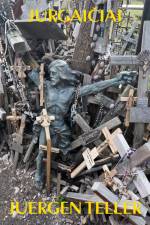
The infamous Hill of Crosses is a pilgrimage and tourist site near siauliai, Lithuania, which originated after the November Uprising of 1830-31, an extensive yet unsuccessful attempt to overthrow Russian rule. Crosses is Juergen Teller's intimate response to this place of remembrance, which he visited with his Lithuanian wife Dovile Drizyte and her parents in autumn 2022. With his ever curious, surveying eye, Teller captures the intense spirituality of this sacred destination. Responding to over 100,000 crucifixes within just one acre, his images embody this tangled web of religious iconography, including a dense multitude of crosses, stone sculptures of Jesus Christ draped in rosary beads, and large wooden carvings. Teller singles out details of small effigies of Christ and other emblematic features, deftly framing them against the landscape in an act of candid self-reflection. The series takes on an even deeper personal significance in the context of the 2022 passing of fashion designer Vivienne Westwood, with whom Teller had collaborated since 2007, and his gallerist since 2013 Suzanne Tarasieve. He embeds portraits of these powerful yet vulnerable women into his collection of symbolic images, a compelling tribute to two personalities who continue to inspire his work.
The Light Across is Chris Klatell's personal reflection on the act of looking at lighthouses at night, as they send their beams across the water. Simultaneously a work of history, a philosophical inquiry and a travelogue, the book questions how we think about similarity and difference in an era of rapid and destabilizing change. Structured as a rotation, like the spinning lens of a lighthouse, the work follows Klatell and the photographer Donovan Wylie as they circumnavigate Ireland and Britain, scrambling over rocks to capture flashes from the opposing shore. The camera and the lighthouse lens, born out of similar developments in nineteenth-century optical theory, emerge as mirrors, structuring identity along the axes of time and distance. The text explores both the difficulty of making these images, and the difficulties the images cause, once made.Ranging from ancient Alexandria to Northern Ireland during the Troubles, from Virginia Woolf to Enid Blyton, and from J. M. W. Turner to Eadweard Muybridge, Klatell's lighthouses flicker between acts of engineering to guide ships and warn them of danger, to symbolic gestures. Unions and disunions, joinders and separations pile up; Brexit, Covid and Trump come and go; promises to children are made, broken and redeemed. History and literature offer a path, then yank it away. Through it all, the lighthouse flashes on, ambivalent and obsolete, revealing we may not always be the character in a novel we imagined ourselves to be.
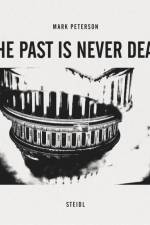
The Past is Never Dead is a trilogy of books by Mark Peterson examining the American political landscape over the past ten years as the country's experiment with democracy has evolved into a cold civil war. The first book "Political Theatre" documents the lead-up to the 2016 presidential election and traces the rise of Donald Trump as a leader of the new right. The second volume "White Noise" began as a means to understand the divisive mood of the country following the election and captures the white nationalism and autocracy which evolved during Trump's time in office. Peterson explores the rhetoric of the White House on immigration and Muslim bans, and how this echoes and intersects with nationalism, Western chauvinism, neo-Nazis, and all those calling for an ethnostate in America. Finally, in "The Fourth Wall," we see the voters leave their chairs in the audience and take to the stage, becoming their own political figures-subjects include "Stop the Steal" protesters and the 6 January 2021 attack on the United States Capitol. The Past is Never Dead tackles America's schisms head-on, portraying a country on edge. With his trademark flash and high-contrast approach, Peterson's dramatic images are X-rays of America's complex political culture: "Democracy is a messy form of government," he declares, "and I try and capture it in all its chaos."
Wounded four times, and twice pronounced dead, Tim Page, the legendary photographer of the Vietnam War, was the original gonzo photojournalist. But while famed as the inspiration behind Dennis Hopper's character in Apocalypse Now, and the man who brought the sixties counterculture to Saigon, he was also deeply haunted by the war, especially the loss of his friend and fellow photojournalist Sean Flynn, the son of the actor Errol Flynn, who went missing in Cambodia in 1970.The Final Page contains the last interview that Tim Page gave before his death on 24 August 2022 at the age of 78. Speaking with American writer Jacques Menasche, Page, facing the end, shares an elegiac remembrance of bygone times, as well as the scars-both psychic and physical-which he carried. The book includes images from Vietnam by Page, portraits of the photographer by his friend and editor, Stephen Dupont, and a personal recollection by his colleague Martin Stuart-Fox. The result is a paean to an extraordinary man and an extraordinary life.
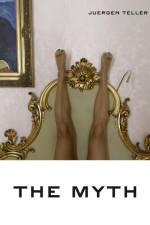
The latest collaboration with his wife Dovile Drizyte, The Myth is Juergen Teller's playful interpretation of the "legs up" fertility myth. Following the humorous 2021 series "We are building our future together" in which the Tellers dressed up as construction workers on building sites, this project reflects the next stage of their relationship as they start a family together. The enchanting location is the Grand Hotel Villa Serbelloni on Lake Como where the Tellers created images in each and every of the hotel's 97 unique rooms-in some we see the whole of Drizyte's naked body, while in others her cropped legs or feet appear unexpectedly: peeking behind duvets, curtains and furniture, tender juxtapositions in Teller's loving gaze.The theatricality and ambiguity of these performed scenarios recalls Teller's seminal 2004 series "Louis XV" shot with Charlotte Rampling at the Hôtel de Crillon, Paris. This conscious revisiting of a prior experience is firmly embedded in Teller's mythology, yet this time there is an air of serendipity. Run by the same family for four generations and shaped by tradition, the Grand Hotel Villa Serbelloni is filled with art alluding to motherhood and the family unit. Paintings and sculptures of pregnancy, babies, storks and cherubs became an unexpected good luck charm for the Tellers' future parenthood and lend their amorous beauty to these deeply personal images, embodiments of the trust and creative connection between Teller and Drizyte.
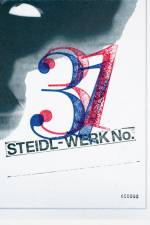
STEIDL-WERK No.31: GHOSTS IN THE MACHINE is Theseus Chan and Gerhard Steidl's latest adventure in redefining what constitutes a book. The normal starting-point for any book is blank sheets of paper, yet for STEIDL-WERK No.31 that is not the case. Instead, Chan and Steidl have taken already printed "make-ready" sheets from a recent Steidl book-the sheets produced on press while the printing plates build up the right levels of ink to deliver optimal results. Each make-ready sheet shows a different collection of inks and they are normally discarded; here they are the very heart of the book. On top of these sheets (fed into the press in a random order) is printed a new series of Chan's ink drawings-shifting, bleeding, abstract forms or "ghosts," which interact with the underlying images and texts in unpredictable ways. The result is an experiment with technical and optical accidents; each book in the edition, like Chan's drawings, is unique. Presented in a cardboard box with ten posters, ten postcards and a zine, as well as a copy of Steidl Magazine No.7 edited by Chan, STEIDL-WERK No.31 is a treasure trove of offset innovation.Limited edition of 500
Big Boyz Place Fashions are having a couple of runway shows. I went to every show taking pictures of all the cute models. With permission of the designer Biscocho Rufino, I was allowed to formulate a nice runway book of his Teddybear Models.
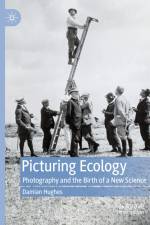
This book examines the role of photography and visual culture in the emergence of ecological science between 1895 and 1939.
Graphis Journal #379Take a deep dive into the minds of some of today's renowned designers, photographers, art directors, and more. A quarterly print and digital magazine we hope inspires your creativity — The Journal is filled with thought-provoking, intimate, meaningful interviews and stories that take you inside the minds, work, and spaces of top designers, agencies, photographers, artists, and other outstanding creatives around the globe.Each Journal issue is beautifully printed and features 12 lead stories and Q&As from creatives in their own words plus images of some of their finest work. You'll learn the celebrations, challenges, and what's inspired them along the way
This is the first English-language biography of the Japanese artist Yasushi Tanaka and his American wife Louise G. Cann with never-before published details. Their unconventional marriage in the early 20th century challenged Victorian Era norms and defied anti-Asian prejudices.
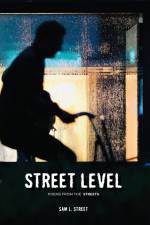
My name is Sam Lee, and my artist's name is Sam L. Street. I am a sociologist who has a deep love for poetry and a dedicated passion for street photography. Since 2014, I have been capturing moments and taking photographs, yet I have never felt compelled to share them with the world. However, street photography has transformed me into an eternal tourist in my hometown Amsterdam.Amidst the bustling streets, I find comfort in the art of street photography. As I roam alone, with my trusty lens as my companion, I am free to capture the beauty and essence of the world around me. With every click of the shutter, I am able to freeze a moment in time and create a story through my lens. For me, there is nothing more captivating than the raw and candid moments that present themselves in the streets.
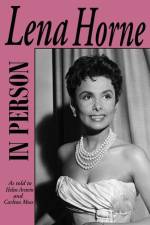
In this deeply personal and inspiring memoir, the iconic Lena Horne opens her heart and soul to share the remarkable story of her life, as she recounts her journey to stardom and the challenges she faced along the way. As told to acclaimed writers Helen Arstein and Carlton Moss, "In Person-Lena Horne" is a powerful and candid account of a trailblazing artist who broke barriers and left an indelible mark on the world.From her early days as a young girl in Brooklyn, New York, to her meteoric rise to fame as a groundbreaking African-American entertainer, Lena Horne's life was a tapestry of triumphs and tribulations. Her unmistakable talent for singing and captivating beauty brought her into the spotlight, but her unyielding commitment to social justice and civil rights set her apart from her contemporaries.In these pages, Lena recalls the exhilarating moments on the silver screen, her electrifying performances on Broadway, and the accolades that celebrated her talent. But "In Person-Lena Horne" delves deeper, exploring the private struggles she faced in an industry marked by racial prejudice and discrimination.With unflinching honesty, Lena shares her experiences of navigating a world that often sought to diminish her worth, recounting the moments of heartache and injustice she encountered as an African-American woman in the entertainment industry. She speaks of her determination to break through racial barriers and the pivotal roles she played in advancing the civil rights movement.Beyond the glitz and glamour of Hollywood, Lena Horne's story is one of resilience and courage, of love and loss, and of finding her voice amidst adversity. Through personal anecdotes and introspective reflections, she imparts valuable life lessons and wisdom, offering a beacon of hope to readers of all backgrounds."In Person-Lena Horne" is a celebration of a legendary artist and a testament to the power of perseverance and authenticity. Lena's spirit and grace will resonate with readers, leaving an indelible imprint on their hearts long after they turn the final page.
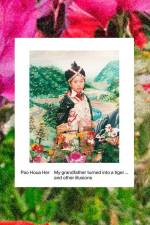
Pao Houa Her's first major monograph, My grandfather turned into a tiger ... and other illusions, explores the fundamental concepts of home and belonging: illusion, desire, and loss. Pao Houa Her's work draws inspiration from a myriad of sources: apocryphal family lore; portraits of the artist's community and self; and reimagined landscapes, with Minnesota and Northern California standing in for Laos. The compelling and personal narratives are grounded in the traditions and contemporary metaphors of the Hmong diasporic community. My grandfather turned into a tiger brings together four of the artist's major series, including the title work which reimagines her family's history before leaving Laos. Other work deals with a scandal within the Hmong community in which hundreds of elders were swindled as part of a fraudulent investment scheme built around the promise of a new Hmong homeland. In another series, tonally rich black-and-white still lifes of silk flowers collected by her mother are presented alongside images of flowers that adorn the digitally manipulated, hyper-colored popular backdrops used in Hmong photo studios and on dating apps. This beautifully designed monograph showcases Her's keen eye on the line between ersatz and authenticity; as the artist has stated, photography is "a truth if you want it to be a truth." My grandfather turned into a tiger is the result of the Next Step Award, a partnership between Aperture and Baxter St at the Camera Club of New York, in collaboration with the 7|G Foundation. Each cover is unique, featuring up to thirty-two jacket iterations, but is anchored by the same sticker on the front and back.
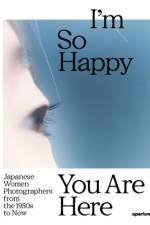
"I'm So Happy You Are Here presents a counterpoint, complement, and challenge to historical precedents and the established canon of Japanese photography"--
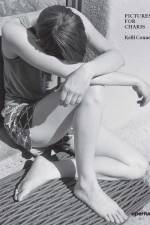
Pictures for Charis offers a groundbreaking new work by artist Kelli Connell, synthesizing text and image, while raising vital questions about photography, gender, and portraiture in the twenty-first century. Pictures for Charis is a project driven by photographer Kelli Connell's obsession with the writer Charis Wilson, Edward Weston's partner, model, and collaborator during one of the most productive segments of his historic career. Connell focuses on Wilson and Weston's shared legacy, traveling with her own partner, Betsy Odom, to locales where the latter couple made photographs together more than eighty years ago. Wilson wrote extensively about her travels and about her, and Weston's, photographic concerns. In chasing Charis Wilson's ghost, Connell tells her own story, one that finds a kinship with Wilson and, to her surprise, Weston, too, as she navigates her own life and struggles as an artist against a cultural landscape that has changed and yet remains mired in the many of the same thorny issues regarding the nature of desire and inspiration, and the relationship of artist and landscape. This rich weave of narrative and images complicates and breathes new life into a well-known set of photos, while also presenting an entirely new and mesmerizing body of work by Connell, her first work combining image and text as a mode of visual research and storytelling. Copublished by Aperture and the Center for Creative Photography, Tucson
Abonner på vårt nyhetsbrev og få rabatter og inspirasjon til din neste leseopplevelse.
Ved å abonnere godtar du vår personvernerklæring.