





Gjør som tusenvis av andre bokelskere
Abonner på vårt nyhetsbrev og få rabatter og inspirasjon til din neste leseopplevelse.
Ved å abonnere godtar du vår personvernerklæring.Du kan når som helst melde deg av våre nyhetsbrev.

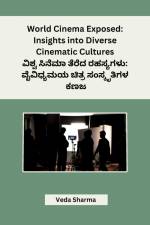
Cinema is one of the most influential forms of human culture. It has the power to unite people from all over the world and plays a major role in shaping our understanding of our society. World cinema is vast and diverse. It encompasses films from different countries, cultures, and languages. World cinema is also diverse in terms of its content, style, and techniques. The breadth of world cinema The breadth of world cinema can be seen in the diversity of its content. World cinema includes films of fiction, history, social issues, politics, and more. For example, Chinese films often reflect their country's historical and cultural heritage. American films typically reflect American culture and society. The influence of world cinema World cinema has a significant impact on people all over the world. It can: Encourage understanding and tolerance: World cinema can help people to understand different cultures and perspectives. This can lead to greater understanding and tolerance between people from different backgrounds.Inspire creativity and innovation: World cinema can inspire people to be more creative and innovative. It can also help people to see the world in new and different ways.Promote cultural diversity: World cinema can help to promote cultural diversity and understanding. It can help people to appreciate the richness and variety of cultures from all over the world.
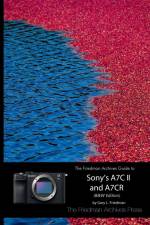
Gary has been writing ebooks on the Sony cameras ever since Sony bought Minolta (!), and he's known for making this very capable but complex camera very easy to understand and to use. Every feature is explained in clear detail, his own personal camera settings are shared, and he even explains WHY you'd want to invoke a given feature. Learn from a pro and get the most out of this impressive piece of engineering!
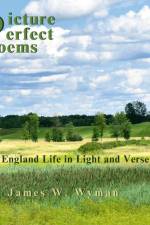
Jim Wyman is the last full-time resident on a one-lane, dirt, dead-end road at the tip of a long peninsula in the middle of a very large lake in northern Vermont. He was born and raised in the foothills of the Longfellow Range of the Appalachian Mountains in western Maine. Never having lived more than 50 miles away from 45 degrees north latitude, he has grown to appreciate the texture of the woods, fields, and hills of Northern New England, and the myriad of colors-ranging from the cold black and white of winter to the light-filled prism of a hardwood forest in fall.In an effort to capture and share his mind's eye view of this beauty, Jim studied film photography and quickly realized he was allergic to darkroom chemicals. Then came digital photography. As a published poet, Jim admired the work of Ann Atwood and her gift for combining poetry with photography. It was then he began to experiment with the possibility of blending his poetry with his photography using digital photographic applications and techniques. His intention was to meld the visual impact of New England landscape photography with the mind's eye view-the poem. This book is the result of his efforts.
50 images mignonnes avec Livre de Coloriage Militaire par MandyKfmLe livre de coloriage de l'armée est un moyen unique d'exprimer votre créativité et de vous détendre en même temps. Les pages du livre contiennent des illustrations détaillées de l'armée qui attendent que vous les coloriez.Idéal pour tous les niveauxQue vous soyez débutant ou artiste confirmé, ce livre de coloriage est idéal pour tous ceux qui aiment l'armée. Chaque image a été soigneusement conçue pour vous permettre d'utiliser les couleurs et les techniques de votre choix et de créer votre propre interprétation.Pas d'impression à travers Chaque image est placée sur sa propre pageUn cadeau idéalNos livres sont d'excellents cadeaux d'anniversaire pour les filles, les adolescents, les adultes ou tous ceux qui aiment le coloriage.Commandez dès aujourd'hui et laissez-vous inspirer par ce livre de coloriage unique de l'armée !
Gabriella è una donna che ha vissuto molte vite e affrontato molte prove, tutte superate grazie ad un unico principio: la vita è sempre bella e va vissuta intensamente. La Rose de la Mariée è la sua storia, la storia dei suoi amori, dei suoi viaggi, dei suoi successi, delle sue sconfitte, dalla nascita fino ai giorni nostri.
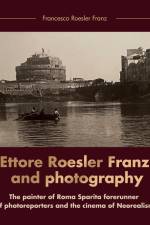
Ettore Roesler Franz ha segnato profondamente il mondo dell'arte e della comunicazione visiva. Il suo talento ha dato vita alla serie di acquerelli "Roma Sparita", in cui ha catturato l'essenza dei luoghi e dei suoi abitanti in modo autentico e personale, in un'ottica di denuncia sociale. In questo saggio Francesco Roesler Franz ci accompagna oltre i suoi pennelli, in un viaggio inedito alla scoperta del potenziale poliedrico dell'artista, un uomo che ha preso in mano un kinegrafo e che ha avuto il coraggio e la grande sensibilità di dare una voce e un volto agli anonimi della storia, agli emarginati. Un uomo che con il suo talento ha disseminato nel mondo dell'arte moltissimi tesori e che con le sue capacità visionarie si è affermato come il precursore del fotoreportage e del cinema neorealistico.
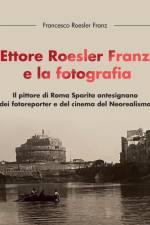
Ettore Roesler Franz ha segnato profondamente il mondo dell'arte e della comunicazione visiva. Il suo talento ha dato vita alla serie di acquerelli "Roma Sparita", in cui ha catturato l'essenza dei luoghi e dei suoi abitanti in modo autentico e personale, in un'ottica di denuncia sociale. In questo saggio Francesco Roesler Franz ci accompagna oltre i suoi pennelli, in un viaggio inedito alla scoperta del potenziale poliedrico dell'artista, un uomo che ha preso in mano un kinegrafo e che ha avuto il coraggio e la grande sensibilità di dare una voce e un volto agli anonimi della storia, agli emarginati. Un uomo che con il suo talento ha disseminato nel mondo dell'arte moltissimi tesori e che con le sue capacità visionarie si è affermato come il precursore del fotoreportage e del cinema neorealistico.
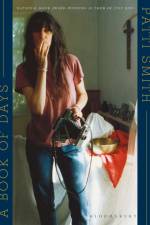
A deeply moving and brilliantly idiosyncratic visual book of days by the National Book Award-winning author of Just Kids and M Train. More than 365 images chart Smith's singular aesthetic - inspired by her wildly popular InstagramIn 2018, without any plan or agenda for what might happen next, Patti Smith posted her first Instagram photo: her hand with the simple message "Hello Everybody!" Known for shooting with her beloved Land Camera 250, Smith started posting images from her phone including portraits of her kids, her radiator, her boots, and her Abyssinian cat, Cairo. Followers felt an immediate affinity with these miniature windows into Smith's world, photographs of her daily coffee, the books she's reading, the graves of beloved heroes - William Blake, Dylan Thomas, Sylvia Plath, Simone Weil, Albert Camus. Over time, a coherent story of a life devoted to art took shape, and more than a million followers responded to Smith's unique aesthetic in images that chart her passions, devotions, obsessions, and whims. Original to this book are vintage photographs: anniversary pearls, a mother's keychain, and a husband's Mosrite guitar. Here, too, are never-before-seen photos of life on and off the road, train stations, obscure cafés, a notebook always nearby. In wide-ranging yet intimate daily notations, Smith shares dispatches from her travels around the world.With 365 photographs, taking you through a single year, A Book of Days is a new way to experience the expansive mind of the visionary poet, writer, and performer. Hopeful, elegiac, playful - and complete with an introduction by Smith that explores her documentary process - A Book of Days is a timeless offering for deeply uncertain times, an inspirational map of an artist's life.
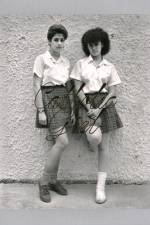
In Catholic Girls Andrea Modica presents her first monograph, produced in large format platinum palladium prints. This series of portraits was shot in the early 1980s in Catholic schools in Brooklyn and Connecticut.
Since 2000, computer searches are leading to develop systems capable of recognising and interpreting human emotions. Clément Lambelet gets interested in process of facial automatic recognition and reflects upon its generalisation regarding to its development in every social media (Facebook, Instagram, Snapchat). For the book Happiness is the only true emotion, he worked on a panel of portraits given by the Pain Express Set from Stirling University in Scotland, he selected one emotion per person, reframed images and saved only the face. The artist manipulated each photograph and worked on its materiality to get more expressive images. These portraits become a vector of emotion. Each picture is then submitted to the Microsoft Cognitive Emotion API challenging the accuracy of these systems. The Emotion API only recognises Happiness with certitude.
On March 6th 1984 miners at Cortonwood Colliery in Yorkshire went on strike. Six days later, on March 12th, NUM President, Arthur Scargill, made the strike official across Britain. And so began the UK's biggest strike since the General Strike of 1928. It ran for almost a year until March 1985 - a year of bitter conflict between the miners and Margaret Thatcher and her government and marked the end of the mining era in Britain. 24 year-old Michael Kerstgens was studying photography in Germany at the time. But he had strong links with South Wales having been born in Llanelli and spending his early years there. His father had also spent twelve years working in South Wales for an engineering company involved with the mining industry. As a sixteen year old Gerstgens took a summer job at the company's Swansea office. He also experienced the underground life of the miners at Cynheidre Colliery. It's not surprising therefore that once Kerstgens heard about the strike he went to South Wales to find out what was going on and to start what would be his first major photography project. Kertsgens' friends and contacts enabled him access to much that was closed off to the press and when he later moved on to Yorkshire he lived with the family of a striking miner whose wife, Marsha Marshall, was one of the leading lights of Woman Against Pit Closures (WAPC). He even met Arthur Scargill. The resultant photographs offer a powerful insight into what was a brutal strike that tore a rift through British society, entire mining communities, and even individual families.
The Victorian and Edwardian periods saw the development of the steam locomotive in Britain from a comparatively simple machine to a powerful main line express capable of speeds of a hundred miles an hour. The book starts with an introduction dealing with the main line of development and that is followed by a picture section with over 190 photographs. Each illustration has an extended caption giving details of the engine and its history. The material is arranged geographically, starting with the railways of southern England and ending with Irish railways. The Channel Islands, the Isle of Wight and the Isle of Man are also included, and there is a section on English light railway. The photographs are all of the locomotives in their working days, many showing them in action on both passenger and goods trains. This splendid collection shows the rich diversity of Britainâ¿s railways and how different companies and their engineers produced engines of great individuality. This is a book that will be enjoyed by all lovers of the golden age of steam railways.
This book is a comprehensive history of all the 0-6-0 tender locomotives built by the Great Western Railway or by railways absorbed by the GWR from the very earliest broad gauge engines designed by Daniel Gooch to the Collett 2251 class of the 1930s some of which were still under construction at nationalisation. It includes the Joseph Armstrong â¿Standard Goodsâ¿ and the famous Dean Goods, many of which served overseas in the two world wars. The text of 40,000 words describes the design, construction and operation of eight GW and five â¿Absorbedâ¿ broad gauge classes, and thirteen GW and thirteen â¿Absorbedâ¿ standard gauge classes. The book has over 250 black and white and 30 colour photos, weight diagrams and drawings.
Bringing together an international team of scholars, this book offers new perspectives on the impact that the Bauhaus and its teaching had on a wide range of artistic practices.
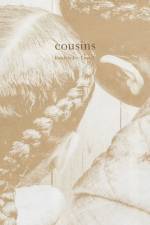
"I've been photographing my daughter and nieces for a decade. There's something sacred about the lives of girls, and their innocent, confident relationships to themselves, their world and one another is gravitational. Between them is an intimate and spiritual knowledge, both ordinary and extraordinary, and I aim to capture the brilliance of their communion. I hope when they look back on this work, they'll see their beauty, and their devotion to each other, and find themselves here, in this work we made together, reflected with love." - Kristen Joy Emack Kristen Emack documents the moments of tenderness and kinship between her daughter and her cousins as they navigate childhood, bringing up social and racial issues rooted in the visual representation of our world.
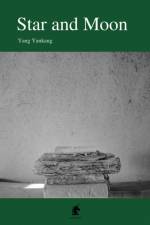
- As the final part of photographer Yang Yankang's Faith Trilogy, Star and Moon is of great significance. The three themes are interconnected and complementary, reflecting the core of the creator's search for creativity through photography: humanity and love. The photographer uses classic images to interpret and understand people of faith, while also exploring the ideas behind humanistic photography- Yang Yankang has been awarded China's Most Influential Photographic Figures three times. The publication of Star and Moon is an important addition to China's documentary photography, as well as a record of and testimony to our timesStar and Moon presents the daily life of the Hui people and expresses a kind of "emptiness" that transcends time and meaning. Lonely, mysterious, quiet and elegant, the simple images are like a faded postcard, bringing a deep Zen feeling to the heart. At first glance, the images of Star and Moon are plain and seemingly picturesque. However, if you sit quietly for a moment and feel the breath conveyed by the black and white shadows, you will experience a heavy breath running through it, adsorbing the viewer's eyes tightly, following the photographer's lens in the cycle of the stars and the moon, experiencing the destiny of the Islamic nation together. Yang Yankang expands the scope of experimental exploration of the language of modern Chinese photography, and creates a revelatory way of perceiving the art of practical photography. His works on the three major religions have historically placed them in a prominent position in the history of modern Chinese art, and he has become one of the leading photographic artists in China and even in the world.
The Victorian and Edwardian periods saw the development of the steam locomotive in Britain from a comparatively simple machine to a powerful main line express capable of speeds of a hundred miles an hour. The book starts with an introduction dealing with the main lines of development in the north of Britain and that is followed by a picture section with over a hundred photographs. Each illustration has an extended caption giving details of the engine and its history. The material is arranged geographically, with sections dealing with the north of England, Wales, Scotland, Ireland and a separate section on light railways. The photographs are all of the locomotives in their working days, many showing them in action on both passenger and goods trains. This splendid collection shows the rich diversity of Britainâ¿s railways and how different companies and their engineers produced engines of great individuality. This is a book that will be enjoyed by all lovers of the golden age of steam railways.
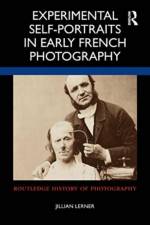
This book explores a range of experimental self-portraits made in France between 1840 and 1870, including remarkable images by Hippolyte Bayard, Nadar, Duchenne de Boulogne, and Countess de Castiglione.
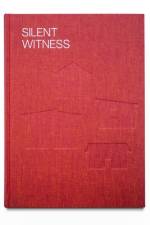
In Silent Witness photographs of private houses and public buildings in which war crimesâ¿specifically rapes of women of all ethnic groups living in Bosnia and Herzegovinaâ¿were committed during the Bosnian War (1992-1995) are combined with testimonies from the women who survived.
On New Years Eve in 2020, Valentin Goppel began to photograph his friends and acquaintances in an attempt to both process and represent the disorientation he felt during the time of Covid.
The year in which photographer Jillian Edelstein turned 40 she came across an image of her greataunt Minna, of whose existence she had been unaware. The photograph of Minna became thecatalyst for a journey to unearth her family history and the discovery of an unknown branch ofher family living in Ukraine.
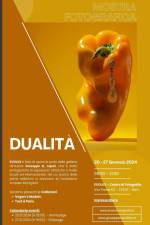
"EVOLUX - Centro Polifunzionale di Fotografia di Domenico Fornarelli" è lieta di presentare la mostra di arte fotografica "Dualità" aprendo le porte della galleria all'autore Giuseppe Q. Lupoli che è stato protagonista di esposizioni artistiche a livello locale ed internazionale, nel cui storico delle prime esibizioni si annovera la Fondazione Amedeo Modigliani.La mostra si terrà a Bari in Via Piave 62 al piano terra dal 20 al 27 Gennaio 2024 e presenterà due collezioni: "Vegan's Models" e "Tout à Paris".Le due collezioni presentate sembrano apparentemente dotate di differente identità poiché appartengono a due generi, processi e linguaggi differenti. Infatti, da un lato l'autore non fornisce risposte, ma pone domande nel sistema consumistico; dall'altro cattura istantanee e fascinose atmosfere di un'elegante città senza tempo.A ben vedere, in realtà, i due progetti sono unitari e complementari, la cui chiave di lettura è concettuale, rendendo lo spettatore direttamente coinvolto. Sabato 20 Gennaio 2024 alle ore 19:00 si terrà il vernissage della mostra con un buffet ed un rinfresco per la presentazione di tutti i protagonisti coinvolti e si invita alla partecipazione.Nei giorni successivi sarà possibile visionare le opere con un'eventuale conversazione con l'autore su richiesta.Sabato 27 Gennaio 2024 alle ore 19:00 si terrà il finissage, in cui si ringrazieranno tutti coloro che hanno voluto partecipare.
The taste of Studio Jeppe Hein des Künstlerpaars Silke und Jeppe Hein ist kein typisches Kochbuch, ebenso wenig wie ein reines Kunstbuch. Neben Rezepten aus der Studio-Küche, gibt es einen exklusiven Einblick in das Atelier und die Kunst, die dort entsteht. Fotos von Kunstwerken, dem Studioleben und von Ausstellungsprojekten mischen sich mit Fotos von Zutaten, dem Dachgarten, der Küche und dem gemeinsamen Mittagessen. Die KünstlerInnen Sophie Kitching, Jose Dávila, Lilibeth Cuenca Rasmussen und Anselm Reyle realisierten jeweils ein eigenes Künstleressen. Der Autor und Philosoph Finn Janning trägt mit The Philosophy of the Saucepan bei. Das Buch illustriert Silke und Jeppe Heins große Leidenschaft für Kunst und Kochen und zeigt, welche wichtige Rolle das gemeinsame Essen in ihrem Leben und ihrer Arbeit spielt. Text: Siobhan Dammert, Jose Dávila & Santiago Moro, Catharina Förster, Silke & Jeppe Hein, Finn Janning, Sophie Kitching, Wiebke Petersen, Lilibeth Cuenca Rasmussen, Anselm Reyle, Ingo Tolkmitt, Selina Welke.
Abonner på vårt nyhetsbrev og få rabatter og inspirasjon til din neste leseopplevelse.
Ved å abonnere godtar du vår personvernerklæring.