










Gjør som tusenvis av andre bokelskere
Abonner på vårt nyhetsbrev og få rabatter og inspirasjon til din neste leseopplevelse.
Ved å abonnere godtar du vår personvernerklæring.Du kan når som helst melde deg av våre nyhetsbrev.

Right of Way exposes the crisis of traffic violence that is plaguing our cities, inspiring regular citizens to action.
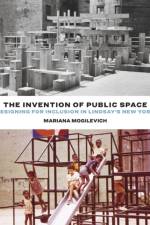
"The interplay of psychology, design, and politics in experiments with urban open space"--
A provocative case for historical ambiguity in architecture by one of the field's leading theoristsConceptions of modernity in architecture are often expressed in the idea of the zeitgeist, or "e;spirit of the age,"e; an attitude toward architectural form that is embedded in a belief in progressive time. Lateness explores how architecture can work against these linear currents in startling and compelling ways. In this incisive book, internationally renowned architect Peter Eisenman, with Elisa Iturbe, proposes a different perspective on form and time in architecture, one that circumvents the temporal constraints on style that require it to be "e;of the times"e;-lateness. He focuses on three twentieth-century architects who exhibited the qualities of lateness in their designs: Adolf Loos, Aldo Rossi, and John Hejduk. Drawing on the critical theory of Theodor Adorno and his study of Beethoven's final works, Eisenman shows how the architecture of these canonical figures was temporally out of sync with conventions and expectations, and how lateness can serve as a form of release from the restraints of the moment.Bringing together architecture, music, and philosophy, and drawing on illuminating examples from the Renaissance and Baroque periods, Lateness demonstrates how today's architecture can use the concept of lateness to break free of stylistic limitations, expand architecture's critical capacity, and provide a new mode of analysis.
In this wide-ranging and authoritative book, the first of its kind in English, Wood tracks the evolution of the historical study of art from the late middle ages through the rise of the modern scholarly discipline of art history.
In this volume, Otto Saumarez Smith recounts the fraught history of the urban development of British city centres in the 1960s, uncovering the planning philosophy, and the political, cultural, and legislative background that created the conditions for these transformations to occur across the country.
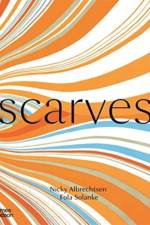
A work on scarves in the 20th century, that features artists designs, important textile designers and designer brands, as well as the wider role of scarves in social history and advertising.
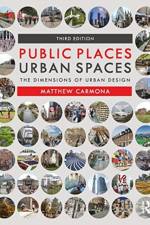
An introduction to the principles of urban design theory and practice. It enables the students and lecturers to practically apply principles of urban design to their projects. It focuses on sustainable design and practice. It is suitable for those on urban design courses and for professionals who want to update and refresh their knowledge.
Traces the social and cultural history of fashion and its complex relationship to modernity. This work explores the grunge look inspired by bands like Nirvana, the 'boho chic' of the mid 90's, retro-dressing and the meanings of dress from the veil to Beck's pink-varnished toenails.
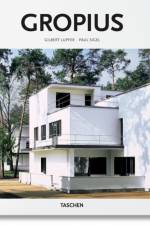
Born and educated in Germany, Walter Gropius (1883-1969) belongs to the select group of architects that massively influenced the international development of modern architecture.
Presenting through the eyes of a connoisseur looking for quality and bepoke goods in Londons key stylistic historic periods, this title tells the stories of the personalities, shop-keepers and mastercraftsmen who have animated the business of luxury goods for centuries.
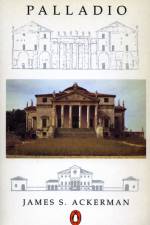
Palladio (1508-80) combined classical restraint with constant inventiveness. In this study, Professor Ackerman sets Palladio in the context of his age - the Humanist era of Michelangelo and Raphael, Titian and Veronese - and examines each of the villas, churches and palaces in turn and tries to penetrate to the heart of the Palladian miracle. Palladio's theoretical writings are important and illuminating, he suggests, yet they never do justice to the intense intuitive skills of "e;a magician of light and colour"e;. Indeed, as the photographs in this book reveal, Palladio was "e;as sensual, as skilled in visual alchemy as any Venetian painter of his time"e;, and his countless imitators have usually captured the details, but not the essence of his style. There are buildings all the way from Philadelphia to Leningrad which bear witness to Palladio's "e;permanent place in the making of architecture"e;, yet he also deserves to be seen on his own terms.
'If artists betray the social conscience and the basic principles of being human, where does art stand then?' Ai Weiwei - artist, architect, curator, publisher, poet and urbanist - extended the notion of art and is one of the world's most significant creative and cultural figures. In this series of interviews, conducted over several years with the curator Hans Ulrich Obrist, he discusses the many dimensions of his artistic life, ranging over subjects including ceramics, blogging, nature, philosophy and the myriad influences that have fed into his work. He also talks candidly about his father, his childhood spent in exile and his criticism of the Chinese state. Together, these extraordinary discussions give a unique insight into the outstanding complexity of Ai Weiwei's thought and work, and are an essential reminder of the need for personal, political and artistic freedom.
Colour mixing is a key skill for the botanical artist. In this practical guide, Jackie Isard explains how to observe and use colour accurately. She shows artists how to make informed choices when selecting pigments, as well as how to learn about colour mixing and its application. Detailed instruction and advice are given on understanding colour and pigments. The author explains how to 'see' colour and tricky mixes, from greens and reds to the difficult botanical greys. Includes advanced colour application techniques - colour enhancement, shadow colours and colour temperature transition. Finally, step-by-step guides illustrate how to paint with layers, how to use underlaying colours to enhance, and colour and fine detailing.
A major new volume on Isamu Noguchi's skyviewing sculptures, which also addresses the theme of space, and our place in the universe.
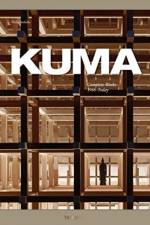
From his Great (Bamboo) Wall house to the Japan National Stadium for the Tokyo Olympic Summer Games, originally planned for 2020, Japanese architect Kengo Kuma pioneered a truly sustainable approach to contemporary architecture, translating local craftsmanship and resources into a new tactile architecture. Discover the scope of his practice-...
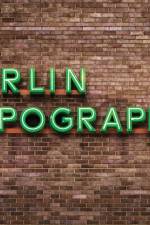
Explore the visually arresting typefaces that give Berlin its unique character.
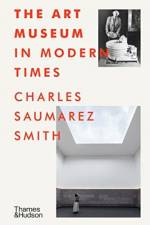
Drawing on his unique experience at the helm of three major British art institutions, Charles Saumarez Smith traces how art museums across the world have changed over the past eighty years.
Abonner på vårt nyhetsbrev og få rabatter og inspirasjon til din neste leseopplevelse.
Ved å abonnere godtar du vår personvernerklæring.