













Gjør som tusenvis av andre bokelskere
Abonner på vårt nyhetsbrev og få rabatter og inspirasjon til din neste leseopplevelse.
Ved å abonnere godtar du vår personvernerklæring.Du kan når som helst melde deg av våre nyhetsbrev.

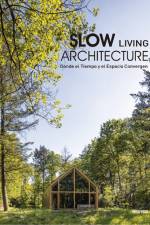
In a world where haste prevails, the architecture of Slow Living emerges as a beacon of calm and reflection, connecting us with nature and authenticity. Discover inspiring projects that seamlessly integrate homes and public spaces, prioritizing eco-friendly materials and sustainable practices. Join us on this journey towards a new understanding of architecture, where every detail counts in creating experiences that connect us with the essential.
A narrative of the early modern Indian sculpture known as the Mithuna couple. Meena Kandasamy writes about the Mithuna couple, a seventeenth-century ivory sculpture from Tamil Nadu, India, depicting lovers. Kandasamy unfurls a multi-layered, multi-directional narrative built from images, questions, and contradictions evoked by the sculpture. "How can we look at this work and not talk about who produced it?" Kandasamy asks and then examines how caste and class are carved into the object as indelibly as its physical details. Such knowledge complicates easy associations of love that may be evoked by the couple. Refusing any impulse to idealize or exoticize, Kandasamy connects the carving to personal and political stories that expose painful realities of who gets to love whom, and how. She sets the intimate alongside the institutional to interrogate terms such as decolonize, restitution, and preservation. Through an astonishing stylistic mix, including Twitter, academic discourse, poetry, and memoir, she talks back, forward, and sideways with the object.
A reflection on the reconstruction of the Berlin Palace and its contradictory use as an ethnological museum. Having recently accepted German citizenship, writer and activist Priya Basil explores the Humboldt Forum from a deeply personal perspective. She delves into the question of what such a building, such a project, means for an understanding of the past and for belonging in the present. This much disputed, contested, celebrated monument now exists--but what exactly does it monumentalize? Basil writes, "In German, the word Schloss means a palace, and also a lock. The central question: Can a lock also be a key?"
Discover the extraordinary journey of British design through eight decades of innovation, influence and impact, as the Design Council's legacy unfolds from postwar recovery to shaping a sustainable future. Eight Decades of British Design: Design Council, 1944 to Today celebrates the 80th anniversary of the Design Council, the UK's national strategic advisor for design. This lavishly illustrated book traces the evolution of British design from postwar recovery to global phenomenon, showcasing the pivotal role of publicly funded institutions in shaping the country's design legacy. Established in 1944, the Design Council's initial mission was to improve design in British industry. Over eight decades, it has fulfilled this mission and more, connecting designers with communities, influencing government policies and promoting sustainability through initiatives like 'Design for Planet'. The book explores how organisations like the Design Council, Victoria & Albert Museum and leading design universities have fostered worldclass design education and training. It features iconic designs from the Routemaster bus to Alexander McQueen's fashion collections, as well as emerging 'classics of the future' making an impact in the fight against climate change. Divided into nine chapters, one for each decade from the 1940s to today, the book includes contributions from renowned design historians and firsthand accounts from design luminaries such as Paul Smith and Thomas Heatherwick. It also showcases previously unseen images from the Council's rich 80-year archive. Eight Decades of British Design not only celebrates the past but also looks to the future, examining how British design can continue to address the challenges of our time.
This book draws on the relationship between culture and the environment and its connection with health and well-being and explores specific Indigenous cultural and social dimensions of well-being. The chapters feature case studies, theoretical and application-based research, and photo essays.
This book draws on the relationship between culture and the environment and its connection with health and well-being and explores specific Indigenous cultural and social dimensions of well-being. The chapters feature case studies, theoretical and application-based research, and photo essays.
Afrofuturism in Black Panther: Gender, Identity, and the Re-making of Blackness, through an interdisciplinary and intersectional analysis of Black Panther, discusses the importance of superheroes and the ways in which they are especially important to Black fans. Aside from its global box office success, Black Panther paves the way for future superhero narratives due to its underlying philosophy to base the story on a narrative that is reliant on Afro-futurism. The film's storyline, the book posits, leads viewers to think about relevant real-world social questions as it taps into the cultural zeitgeist in an indelible way. Contributors to this collection approach Black Panther not only as a film, but also as Afrofuturist imaginings of an African nation untouched by colonialism and antiblack racism: the film is a map to alternate states of being, an introduction to the African Diaspora, a treatise on liberation and racial justice, and an examination of identity. As they analyze each of these components, contributors pose the question: how can a film invite a reimagining of Blackness?
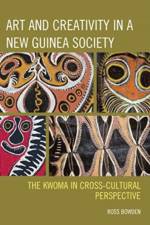
The Kwoma, the subject of this book, are one of a number of peoples in the Sepik River region of northern Papua New Guinea who have created some of the most distinctive visual art in the Pacific. Through case studies of their painting, sculpture, architecture and ritual this book examines in detail how people in this society understand their art as a cultural phenomenon. This includes how they understand its origins in the spirit world, how they judge quality in art and how they understand artistic creativity. The book contrasts Kwoma beliefs with the radically different approach to art found in the modern West. The modern Western concept of art first emerged not in the eighteenth century in the Enlightenment, or even later, as anthropologists and art historians often assume, but several centuries earlier in the Renaissance. The book gives an account of radical changes that took place culturally in Europe between the twelfth and sixteenth centuries in the way human intellectual creativity was understood, and how this gave rise to a new concept of art, one that remains unchanged in the modern West today.
"This much-anticipated volume is exactly what we need to incorporate Latinx art as a key, required component in the curriculum. Authored by two of the most recognized intellectual leaders in the field, this project is an essential resource for scholars working across the fields of art history and visual culture studies and could not come at a better time."--Arlene Dávila, author of Latinx Art "In their Handbook of Latinx Art, Rocío Aranda-Alvarado and Debroah Cullen-Morales highlight for us the voices of artists and critics, along with the possibilities within exhibition making encompassed under the rubric of Latinx creativity. In these expansive discussions of art of the last century we uncover ever more of the Americanness in American art. A Handbook of Latinx Art is a stellar compilation that comes at the right time. It is a much-needed volume that helps us continue writing and imagining the ongoing story of American art through a generous Latinx lens."--Kellie Jones, author of South of Pico: African American Artists in Los Angeles in the 1960s and 1970s "This collection is an invaluable resource that positions 'Latinx art' as a complex and diverse practice at the intersections of American, Caribbean, and Latin American art. Drawing on key works, it introduces readers to an eye-opening critical dialogue taking place in the United States since the 1970s among artists, curators, and scholars."--Chon Noriega, coauthor of Home--So Different, So Appealing
"This much-anticipated volume is exactly what we need to incorporate Latinx art as a key, required component in the curriculum. Authored by two of the most recognized intellectual leaders in the field, this project is an essential resource for scholars working across the fields of art history and visual culture studies and could not come at a better time."--Arlene Dávila, author of Latinx Art "In their Handbook of Latinx Art, Rocío Aranda-Alvarado and Debroah Cullen-Morales highlight for us the voices of artists and critics, along with the possibilities within exhibition making encompassed under the rubric of Latinx creativity. In these expansive discussions of art of the last century we uncover ever more of the Americanness in American art. A Handbook of Latinx Art is a stellar compilation that comes at the right time. It is a much-needed volume that helps us continue writing and imagining the ongoing story of American art through a generous Latinx lens."--Kellie Jones, author of South of Pico: African American Artists in Los Angeles in the 1960s and 1970s "This collection is an invaluable resource that positions 'Latinx art' as a complex and diverse practice at the intersections of American, Caribbean, and Latin American art. Drawing on key works, it introduces readers to an eye-opening critical dialogue taking place in the United States since the 1970s among artists, curators, and scholars."--Chon Noriega, coauthor of Home--So Different, So Appealing
Drawing on qualitative research conducted in the impoverished areas of Manila, Philippines, Fuyuki Makino examines how experimental methods in modern architecture have helped form micro-relationships, social networks, and social structures among the inhabitants and considers whether the architects' aim to promote certain social behaviors was successful or not.
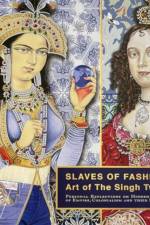
This art book presents the award-winning portrait-based series 'Slaves of Fashion' by British artists The Singh Twins. -- .
Many planning systems are currently locked into growth-dependence, encouraging market-led development which can widen social inequalities and produce adverse environmental outcomes. This accessible book introduces students to the debates around growth and planning and sets out the solutions to promote genuinely sustainable communities. It includes:¿ a positive proposal for reform of the planning system;¿ focussed discussions from the UK and Europe providing lessons for future planning;¿ analysis of the challenges of implementing reform. Covering chapters on cooperatives, community land trusts, local economic development and community assets and infrastructure, as well as commoning, it provides a roadmap for planning system reform with social justice and sustainability at its heart.
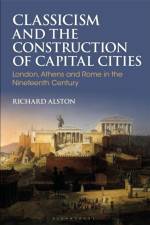
Exploring the intriguing interplay between tradition and modernity in the 19th-century capitals of London, Athens and Rome, Richard Alston delves into the political decisions and architectural choices that shaped these cities as self-consciously modern nations. Despite breaking with traditions and embracing new values, politicians and architects strategically incorporated classical styles to address issues of city and nation values, citizenship and belonging. Classicism's appeal to authoritarian politics and its subsequent transformations under nationalism offer a compelling narrative of utopian dreams clashing with the complexities of the modern urban landscape.Through a series of case studies, this book illuminates how classicism became a potent tool for expressing elitist nationalism in London, excluding many Greeks from their own state in Athens, and unifying a technocratic Rome. As the grand visions of these capitals collided with the realities of the modern city, Richard Alston unravels the mythic allure and ultimate failure of these architectural endeavours. This book presents a riveting exploration of the classical architectural choices that reflected the aspirations and challenges of a rapidly changing world, leaving a lasting impact on the capitals and the nations they represented.
For over forty years, 'Ben Evans' was a symbol of architectural magnificence, and was considered 'the finest store in Wales and the West of England'. However, this iconic building met a tragic end during the Three Nights' Blitz in February 1941, when enemy aircraft devastated over 41 acres of Swansea's town centre, leaving the once-grand emporium in ruins.The legacy of the Ben Evans store endures through a poignant collection of photographs, featuring striking images of the store's impressive Castle Bailey Street frontage alongside haunting scenes of its destruction. These visual records serve as a powerful reminder of its former splendour and the devastating impact of war on the town's landscape.Despite its significance, comprehensive information regarding both the Ben Evans store and its founder is scarce. This book presents an investigation into this iconic establishment, and the narrative of the store spans from Benjamin Evans' initial ownership in 1866 to the store's closure over 90 years later.
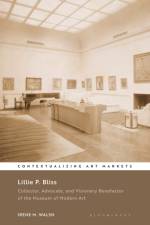
She helped found MoMA and pioneered the promotion of work of American and French modern artists at the turn of the 20th century, but until now, her life and legacy remain woefully under examined. An early pioneer and patron of French and American modernism, Lillie P. Bliss (1864-1931) was one of three female cofounders of MoMA in 1929, and went on to furnish the museum with one of the finest collections of modern art in the world. Presenting case-studies alongside data-driven analysis drawn from original research into the American art market, this book reconstructs Bliss's influential career in rich and compelling detail. It weaves together extensive archival material related to the art and the artists that Bliss collected and patronised - such as Paul Cezanne, Pierre-Auguste Renoir, Edgar Degas, Georges Seurat, and Odilon Redon - the art market of the time and the evolution of the New York museum ecosystem, and highlights the importance of private collecting in the development of American museums.By revisiting MoMA's foundational history, author Irene Walsh explores how Lillie P. Bliss's visionary bequest of over 120 artworks upon her death in 1931 profoundly influenced and shaped the institution, questioning why her pioneering role has been overshadowed by other collectors. Combining biography, market knowledge, institutional analysis, and art history, it enriches our understanding of early 20th-century dealer dynamics and collection strategies in New York, illuminates the role of collections in shaping art narratives, while offering contemporary insights into women's agency in the arts. Global, interdisciplinary, and timely, the book provides fascinating first-hand research into a collector of great importance, and will make a long standing contribution to studies in the art market and 20th-century collecting.
Abonner på vårt nyhetsbrev og få rabatter og inspirasjon til din neste leseopplevelse.
Ved å abonnere godtar du vår personvernerklæring.