
















Gjør som tusenvis av andre bokelskere
Abonner på vårt nyhetsbrev og få rabatter og inspirasjon til din neste leseopplevelse.
Ved å abonnere godtar du vår personvernerklæring.Du kan når som helst melde deg av våre nyhetsbrev.

Aby Warburg's research and writings centred on images, their origins and metamorphoses, and their explanations and interpretations.
This edited collection explores the visibility of modernization in architecture produced in different capitalist regions across the world and provides readers with a historico-theoretical and historico-geographical discussion.
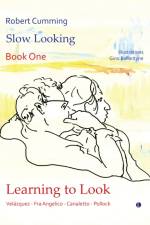
Learning to Look, Book One of Robert Cummings' new series Slow Looking, takes you on a journey dedicated to helping you explore art on your own terms.
The collective volume seeks to respond to these questions by exploring crip time in disability performance as both a concept and a phenomenon.
It provides an engaging and contextualised insight into a South African township-based arts centre that has survived the vicissitudes of steady militarisation in townships worst years of apartheid as well as the exhilaration of a new democratic policy while attempting to circumnavigate different policies & funding dispensations.
This book attempts to delineate three main characteristics for an architecture of the EXTERIORLESS.These three aspects-Interface, Expanded Domains, and New Forms of Urbanity-constitute the three main sections of the book.
This book constructs a number of discourses, dialectics, and analyses across the disciplines of urban form, architecture, and urban experience, thus incorporating both conservation and design issues. It will be of interest to architecture, urbanism, urban geography, design studies, landscape architecture, Asian/SEA Studies.
"A smart, crackling chronicle of fast game, the '80s art market, [and] the attraction of destruction." -- The Village Voice A New York Times Notable BookThe definitive biography of Jean Michel Basquiat--both a compulsively readable portrait of the artist and a vivid documentation of the 1980s East Village art scene, the graffiti movement, and the art galleries and auction houses that helped fuel his meteoric rise--now back in print with a new introduction by the author. In less than a decade, the prodigious painter Jean-Michel Basquiat went from a teenage graffiti artist to an international art star at the peak of the heady, excessive 1980s art boom. A legend in his own lifetime, Basquiat was a fixture of the downtown scene, full of rock music, couture fashion, outrageous art, and heady drugs. Along the way, Basquiat was involved with several of the time's most infamous personalities, from Keith Haring and Andy Warhol to his brief romantic fling with Madonna.Nearly thirty years after his death, the story of Basquiat's life and art continue to inspire artists across the globe. Known as a defining twentieth-century artist and more successful posthumously than he was in his lifetime -- with international retrospectives, critical acclaim, and million dollar sales -- Basquiat's work has permeated our cultural sphere, from homages paid in hip-hop to references across art and product mediums throughout the country.In Basquiat: A Quick Killing in Art, Hoban paints a skillful portrait not only of the artist but of the era, deftly exploring the graffiti street art movement of the 80s, the culture downtown that formed the backdrop to his career, and the elite galleries and houses that stoked the contagious enthusiasm around his life and art.
Universal Principles of Storytelling for Designers provides essential storytelling techniques to elevate design projects, making them engaging and memorable.
This book investigates human-machine systems through the use of case studies such as crankshaft maintenance, liner piston maintenance, and biodiesel blend performance.
This book considers the impact of religious reform on the devotional art and architecture of sixteenth-century Venice. Interrogating early modern censorship, artistic liberty, notions of decorum tied to depictions of the body, and the role of sacred images in the shaping of local identity, it showcases a study through which to explore these themes.
Expanding on the well-established discussion of the translation from drawings to buildings, this book fills a lacuna in current scholarly publications, questioning the significance of the lives of drawings and models after construction.
The present volume represents an international collaboration of researchers working to remedy this oversight. Nakajima's work demands a reconceptualization of narratives of this art and politics and their specific interrelation to consider his exemplary nonconformity-and its exemplary exclusion.
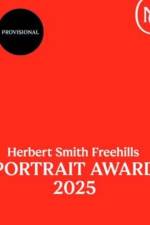
The Herbert Smith Freehills Portrait Award is one of Britain's most prestigious art prizes, and is the leading showcase for artists throughout the world specialising in portraiture. The prestigious competition showcases the very best in contemporary portrait painting and is open to everyone aged eighteen and over. Since its inception over 40 years ago, the competition has attracted over 40,000 entries from more than 100 countries and over 6 million people have seen the exhibition. Alongside stunning artwork reproductions, the catalogue includes extended interviews with all prize-winning artists by journalist Richard McClure, and descriptive captions for all exhibited works, providing fascinating insight into the people and techniques behind the portraits.
This book introduces the applications of Industry 4.0 in machine tools through an overview of the latest available digital technologies. It focuses on digital twinning, communication between industrial controls, motion, and input/output devices, along with sustainability in SMEs.
The libraries of Oxford University are among the finest, but also among the least-known, buildings in the city. Ranging in date from the 13th to the 21st centuries, they incorporate successive changes in internal design and architectural taste. This profusely illustrated book explains these changes though a close study of the library buildings of the University, its departments and its colleges.
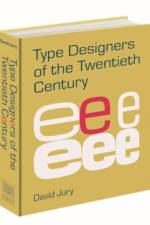
An exploration of a significant art: type designing. The twentieth century saw many developments in printing techniques and how fonts were made. Beginning with cold metal type at the start of the century, the industry moved to hot metal type, phototypesetting, and finally digitization. In each phase, certain type designers excelled in harnessing the latest techniques to create beautiful, innovative, and functional new fonts. Against a background story of the evolution of technology, the role of the designer, the rise of the advertising agency, and the changing function of the printer, this book explores thirty-eight key type designers, how they worked, the fonts they designed, and their lasting influence on typography. Here, you will find Frederic Goudy and Edward Johnston, Stanley Morison and Roger Excoffon, Hermann Zapf and Adrian Frutiger, and renowned contemporary designers Neville Brody and Carol Twombly, plus many more. Taken together, the work and working lives of these extraordinary designers chart the radical changes in typography during the twentieth century.
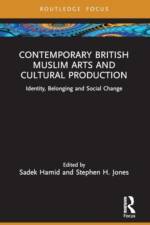
This unique collaboration between scholars, practitioners and Muslim artists profiles emerging forms of contemporary British Muslim art, prompting a debate about its inclusion in UK society. It features analysis of Muslim art as a category, as well as accounts of creatives who are often at the margins of the British arts industry.
This book investigates changing geographies of fast growing Asian metropolitan regions, in particular their peripheral areas. Through examining the intersection of global suburbanisation and Asian urbanism, it depicts a complex (sub)urban world in Asia. The chapters in this book were originally published in Urban Geography.
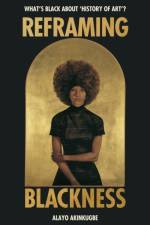
From the African diaspora to Ancient Egypt and Western Civilisation, Blackness has been distinctly missing from discussions of art history.In Reframing Blackness, art historian Alayo Akinkugbe, challenges this void, bringing it into the mainstream and interrogating its consequences on culture, society and education.Alayo covers a wide range of topics, exploring the presentation of Black figures in western Art, Blackness in Museums, contemporary art from Africa and its diaspora and Blackness in the curriculum. This is a book that will unveil a long buried, but integral part, of our collective art history and start a much needed conversation.Accessible and incredibly refreshing, Reframing Blackness tells the history of art as it's never been told before.
Abonner på vårt nyhetsbrev og få rabatter og inspirasjon til din neste leseopplevelse.
Ved å abonnere godtar du vår personvernerklæring.