














Gjør som tusenvis av andre bokelskere
Abonner på vårt nyhetsbrev og få rabatter og inspirasjon til din neste leseopplevelse.
Ved å abonnere godtar du vår personvernerklæring.Du kan når som helst melde deg av våre nyhetsbrev.

This book provides a critical overview of the cultural impact of the Murder, She Wrote TV series and it's paratextual elements including board and video games, podcasts, fan conventions, collectible figures, and ghostwritten novels.
An extraordinary biography of Karl Lagerfeld, based upon a series of rare, powerful, and emotional interviews—the real story, full of inside details, that repeatedly surprises and enlightens.Ottavi enjoyed a rare degree of open and candid access to Lagerfeld in his later years, and this biography offers an unparalleled look into the iconic designer’s complex personality and wide-ranging creativity. Lagerfeld himself wanted this to be a frank, honest, serious account that would be an invaluable resource for fashion lovers and admirers of his incomparable legacy. Unlike other recent books, this intimate portrait deftly reveals his true inner nature in his own words.Based upon interviews with Lagerfeld over the course of two years prior to his death, this biography is further enriched with memories, stories, and anecdotes from close friends and associates including the Princess of Hanover, Bernard and Hélène Arnault, Silvia Fendi, Bruno Pavlovsky, Tom Ford, Alessandro Michele, Valentino, Carine Roitfeld, Naomi Campbell, Claudia Schiffer, Inès de La Fressange, Linda Evangelista, Tadao Ando, Fran Lebowitz, and others.Lagerfeld was many things: inspired creator, witty raconteur, media darling, highly cultured, eccentric in his manners, insatiable at work, ultra-sensitive, and given to maintaining grudges. This narrative includes Lagerfeld’s own especially perceptive insights into his relationship with Jacques de Bascher, his only true love, and how Yves Saint Laurent’s later passion for de Bascher resulted in the infamous break in the longstanding friendship between the two couturiers.
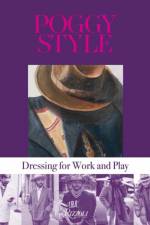
Poggy Style is the modern man’s guide to getting dressed, from Motofumi “Poggy” Kogi—a sought-after fashion tastemaker and street style star known for his refreshing perspective on men’s dressing for today.In Japanese culture, there is the concept of hare (roughly translated as festive or extraordinary occasions) and its antonym is ke (roughly translated as ordinary, or day-to-day). It is often said that living a life of ke alone withers the spirit. Human beings need the occasional moment of hare, and they should dress accordingly.Resolving this tension of dressing for both work and play, and for both formal and informal settings, is what has driven Poggy over two decades of design and curation. By mixing streetwear savvy with what is referred to in Japan as “Traditional” Western fashion, he challenges rigorous definitions of what is done or not done, inventing new ways of dressing up. In his own inimitable way, Poggy shares with readers how fun and appropriate it can be when you break the so-called rules. His sartorial approach is casual, but with a little effort: a hoodie layered under a tweed jacket, a tailored suit styled with sneakers and topped with a wide-brimmed hat, a basketball jersey paired with a cozy vintage coat.In contrast to fashion titles devoted to the collections of one creator, Poggy Style is all about self-expression, and how inexpensive or lovingly worn items can be extremely versatile or can express one’s individuality: a new wabi-sabi sensibility.
"A first-ever publication of Frederick Kiesler's manifesto from 1945, transcribed and annotated, accompanied with original illustrations and introduced with an essay by Spyros Papapetros"--
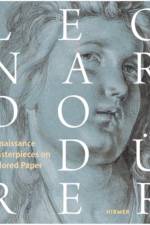
Kaum ein Werk der Kunst hat eine solche Popularität wie Dürers Betende Hände. Kaum zwei Künstler haben die Kunstwelt mit ihren Arbeiten so nachhaltig verändert wie Leonardo und Dürer. Mit atemberaubender Virtuosität erwecken sie Motive zum Leben und schaffen Meisterwerke von unglaublicher Intimität.Mythologie, Religiosität und Geschichte, Alltags- und Reiseszenen – Kernthemen des 15. Jahrhunderts stehen im Zentrum von Leonardos und Dürers Zeichenkunst. Im Zusammenspiel von Hell und Dunkel auf farbigem Papier entfalten die Darstellungen ihren Zauber. Werke beider Meister treffen auf Blätter ihrer Zeitgenossen wie Albrecht Altdorfer oder Hans Baldung Grien. Wie konnte sich diese Kunstform als eigenständig behaupten und was machte sie so beliebt und erfolgreich? Diesen spannenden Fragen geht der opulente Band nach und veranschaulicht die vielseitigen Ausdrucksmöglichkeiten der Technik.Künstler:innen:Albrecht Altdorfer, Hans Baldung Grien, Albrecht Dürer, Leonardo da Vinci, Vittore Carpaccio, Raphael
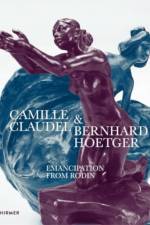
Plastiken zweier beeindruckender Künstler:innen, beide von Rodin inspiriert, treten aus dem Schatten des großen Vorbilds heraus: Camille Claudels (1864-1943) und Bernhard Hoetgers (1874-1949) Werke ebnen der Skulptur den Weg in die Moderne. Künstlerische Freiheiten der Avantgarde etwa des aufblühenden Art Nouveau werden in neuen Formen und Idealen sichtbar.Was vereint die Kunst von Claudel und Hoetger? Nach ihrer gemeinsamen Ausstellung 1905 in der Pariser Galerie Eugène Blot, einer Drehscheibe der künstlerischen Avantgarde, bringt der Band die Kunst der beiden 120 Jahre später wieder zusammen. Der reich illustrierte Ausstellungskatalog präsentiert das Aufeinandertreffen der Bildhauer:innen in der Kunstszene Frankreichs am Beginn der Moderne. Ihr Experimentieren mit neuen Materialien und Techniken ermöglicht das Ausbrechen aus etablierten Mustern des Kunstschaffens.
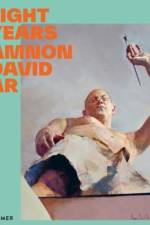
Amnon David Ars Gemälde in leuchtenden, knallig-bunten Farben zeigen Alltagsszenen, Porträts und Stillleben. Sie alle eint, dass sie überraschende Details, Arrangements oder Blickwinkel enthalten, die zum genauen Hinsehen und Nachdenken animieren. Seine Werke lenken unseren Blick auf das Besondere im vorgeblich Unscheinbaren unserer modernen Welt. Die Monografie gibt einen Überblick über sämtliche Schaffensphasen des Künstlers. Der in Berlin arbeitende israelische Künstler (*1973) erzeugt durch ungewöhnliche Zusammenstellungen seiner humorvollen Sujets ein Spannungsfeld zwischen Fantasie und Realität. Starke Farben, das Spiel mit Licht und Schatten und klar umrissene Formen zeigen eine Bandbreite realistischer Malerei, in der Ar das Unperfekte nicht versteckt, sondern mit ihm spielt und es hervorhebt.
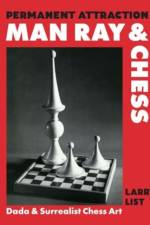
Man Ray war Zeit seines Lebens bessessen vom Schach. Er spielte nicht nur, sondern entwarf auch eigene Sets an Figuren und schuf Kunstwerke, die sich mit dem Spiel, seinen Figuren und der Ästhetik beschäftigen. Die Publikation entführt in einen abgeschlossenen Kosmos innerhalb des beeindruckenden Oeuvres von Man Ray. Man Rays Schachbilder sind so begehrt wie seine innovativen Fotografien. Der Maharadscha von Indore, Igor Strawinsky oder David Bowie sammelten sie. Heute befinden sie sich in den bedeutendsten Kunstsammlungen der Welt - dem Metropolitan Museum of Art, Museum of Modern Art, Centre Georges Pompidou und anderen - und werden auf der ganzen Welt geschätzt. Die reich bebilderte Publikation zeigt wann, wie und warum einer der einflussreichsten Künstler des 20. Jahrhunderts dem königlichen Spiel verfiel und mit seinen Schachfiguren und -designs zeitlose Werke geschaffen hat.
Sechs Jahre Acts of Art, eine Galerie, die 1969 von und für Schwarze Künstler*innen in Greenwich Village gegründet wurde. Die Publikation blickt zurück, skizziert das New York der damaligen Zeit, die lokale Kunstszene und stellt die an die Galerie angegliederten Künstler*innen vor.Die in den 60er und 70er Jahren in Greenwich Village gelegene Acts of Art Kunstgalerie spielte eine essentielle Rolle innerhalb der Gemeinschaften Schwarzer Künstler*innen in New York. Ein eng verbundenes Netzwerk an Künstler*innen rund um den Mitbegründer Nigel Jackson bildeten das Zentrum. Von Benny Andrews, James Denmark, Loïs Mailou Jones bis zu Hale Woodruff - die Publikation stellt sie alle mit exemplarischen Werken vor. Ein vollständige Dokumenation der Ausstellungen und Veranstaltungen sowie Biografien runden die Publikation ab.
Welchen Einfluss hatten und haben Frauen auf die zeitgenössische Kunstwelt? Der Band gibt Antworten und gewährt Einblick in die transformative Kunst von über 250 Künstlerinnen seit Gründung des renommierten Kunstpreises Anonymous Was A Woman im Jahr 1996. Anlässlich des 25. Jahrestages erinnert die umfassende Publikation mit ausgewählten Kunstwerken, biografische Informationen und unbekannten Geschichten an die Preisträgerinnen des Anonymous Was A Woman Preises. Der Publikation enthält Beiträge führender Schriftstellerinnen, Kunstwissenschaftlerinnen und Aktivistinnen sowie ein Gespräch mit der Anonymous Was A Woman Stifterin Susan Unterberg. Der AWAW-Preis zeugt seit seiner Gründung von den Leistungen jener Frauen, die die zeitgenössische Kunst grundlegend verändert haben, was mit dieser Publikation erstmals in Gänze anschaulich wird.
Some of the most striking examples of modernist architecture are churches, yet they have seldom been subject to extended critical analysis. In this book, Matthew Rampley provides just such an analysis, focusing on the Catholic church in interwar Austria, Czechoslovakia, and Hungary. A powerful institution in the Habsburg Empire, the Catholic Church continued to be a central social, political, and cultural agent after 1918, working in alliance with political parties and national governments to promote visions of a new national culture. As a result, church building took on an important ideological and political function. Rampley's study is set against the backdrop of two interrelated issues: the role of architecture in the Catholic Church's response to an increasingly secular modernity, and church architecture as part of the Church's attempts to shape social and political life in the states that emerged after the collapse of Austria-Hungary. Rampley also examines the aesthetic, cultural, and political contexts that informed architectural projects, including the conflict between Catholicism and social democracy, the embrace of fascism, Catholic theories of technology, and discourses of regionalism and ruralism. In bringing to light an untold chapter in the history of modern architecture, this book also engages in methodological reflection on the implications of the study of modern church architecture for the historiography of modernism. This book will appeal to students and scholars of architectural history, religious and political history, and interwar Central European history.
The major monograph Howard Smith celebrates the far-reaching practice of the multifaceted African-American artist, designer, and collector who spent most of his creative life in Finland.Working with paper, pigments, wood, clay, textiles, and metal, Smith had both fine art and commercial practices. While he designed for industry—planning interior designs for corporate offices, public buildings and a ferry—he especially enjoyed recycling items like scrap metal, used cardboard, and castoff clothing, which he transformed into offbeat compositions. Howard Smith’s work displays an exuberance and generosity characteristic of the man. Immediately recognizable for bold gestures in line, plane, and mass, his creations embrace rich colors and contrasts in material and form. He referred to many of these forms as ‘glyphs,’ vibrant figures that often suggest the human form in posture of celebration.Exhibition schedule:Palm Springs Art Museum, Palm Springs, California(opening May 2025)National Nordic Museum, Helsinki, Finland(dates TBD)
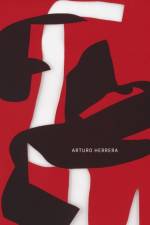
The first monograph on Venezuelan multimedia artist Arturo Herrera in nearly twenty years, this comprehensive book takes a deep look at his diverse body of work.Most known for collage, felt sculpture, and wall painting, Herrera references the complex legacy of abstraction using modernist visual languages. Often employing found material and sourced elements, Herrera’s work incorporates discrete iconography and familiar imagery to provoke a multiplicity of references and readings. As his practice has evolved, the artist has become renowned for his colorful abstract mixed-media pieces that adapt and renew techniques of fragmentation and layering found in his earlier collage-based work.
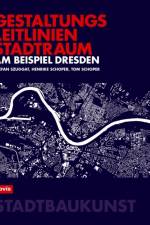
Architecture is an interminable business-current construction projects are planned years in advance; those being envisioned today will achieve realization only years in the future. But without a clear vision that brings us closer to the objective of a truly liveable city, statements of intention will never be translated into reality. The present publication, Gestaltungsleitlinien Stadtraum am Beispiel Dresden (Design Guidelines for Urban Space with Reference to Dresden) is intended primarily as a guidebook, and aims to provide orientation around a shared vision for clients, planners, and architects. "Yes, that's what I'd like, the Baltic in front of me, Friedrichstraße behind me...." This is by no means a question of dreamscapes in the spirit of Kurt Tucholsky. The cities we inhabit have already been built, and they might have gaps and ruptures that are also reflective of social turmoil. How, then, can we deal with existing structures in a way that allow truly liveable cities to emerge in the future-or to be preserved in the present? Striking graphic illustrations visualizing urbanistic, urban planning, and architectural design principles An analysis of Dresden's urban structure and proposals for the further development of the existing architectural inventory Nine theses on the development of building culture in Dresden
Das Buch vermittelt Architekten und Architektinnen das nötige Fachwissen, den Stampflehmbau im eigenen Bau- und Planungsalltag einzusetzen. Es spiegelt die Entwicklung dieser alten neuen Konstruktionsart wider und bietet konkretes Planungsmaterial. Neben der Darstellung zeitgenössischer Stampflehmbauten und ihrer konstruktiven Details im Maßstab 1:20 geht das Buch auch auf die Lebenszyklusanalyse sowie bauphysikalische und Nachhaltigkeitsaspekte des Rohstoffs ein.
Das Buch dokumentiert die spannendsten Projekte von Amsterdams aktueller Architekturszene - wie schwimmende Häuser, Hotels in ehemaligen Brückenwärterhäuschen oder eine Fahrradgarage unter einem Hafenbecken. Die gebauten orzeigeprojekte geben Einblick in Amsterdams urbane Resilienz und innovative Ansätze im Wohnungsbau. Ergänzende Essays und Interviews mit den Protagonisten und Protagonistinnen der Architektur blicken hinter die Kulissen.
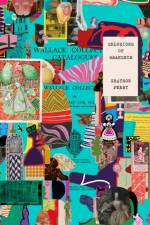
A fully illustrated catalogue of new work and texts by Sir Grayson Perry to accompany a landmark exhibition at the Wallace Collection in celebration of the artist's 65th birthday.
Advancements in Machining Processes Through Hybrid and Sequential Approaches is a multi-contributed book which details the most current research in machining techniques to manufacture complex structures in difficult-to-machine materials.
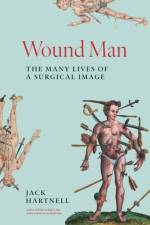
A spectacularly illustrated history of an enigmatic medieval diagramThe Wound Man-a medical diagram depicting a figure fantastically pierced by weapons and ravaged by injuries and diseases-was reproduced widely across the medieval and early modern globe. In this panoramic book, Jack Hartnell charts the emergence and endurance of this striking image used as a visual guide to the treatment of many ailments, taking readers on a remarkable journey from medieval Europe to eighteenth-century Japan and explaining why the Wound Man continues to intrigue us today. Drawing on a wealth of original research, Hartnell traces the many lives of the Wound Man, from its origins in late medieval Bohemia to its vivid reincarnations in hundreds of manuscripts and printed books over more than three hundred years. Transporting readers beyond the specifics of bodily injury, Hartnell demonstrates how the Wound Man's body was at once an encyclopedic repository of surgical knowledge, a fantastic literary and religious muse, a catalyst for shifting media landscapes, and a cross-cultural artistic feat that reached diverse audiences around the world. The Wound Man, we discover, held profound importance for scribes, students, printmakers, poets, nuns, monks, and both healers and patients alike. Marvelously illustrated, Wound Man sheds light on the entwined histories of art and medicine, showing how premodern medical diagrams represent a unique site of contact between sickness and cure, suffering and sanctity, and painting and print.
The Protection of Green Spaces for Climate Change Adaptation identifies how spatial planning and climate change adaptation are linked by examining the protection of green spaces in cities across Europe, Africa, the Middle East, South America and Australia.
Indian thought, based on original texts and commentaries. Occasionally, however, the author has discussed the views of other writers in the assessment of the chronology of facts.Years of dedicated study and painstaking collation of data yielded this phenomenal collection of all the strains of philosophic thought propagated by various schools and philosophers in India down the ages. Originally published in five volumes, the last being posthumous, A History of Indian Philosophy remains a seminal work for scholars and students alike.This edition presents the original work in three volumes for the first time, making it more accessible and easier to handle. Nothing of the original has been abridged or sacrificed to the book.
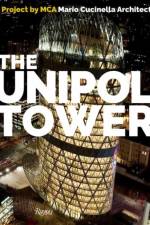
Milan, on the one hand; architecture today, on the other: Unipol Tower is one of the latest projects in the city to feature a “sensory” building.Milan is growing fast and—above all—it is getting higher and higher in terms of architecture and urban development.A new tower stands out against the city skyline: the Unipol Tower designed by Mario Cucinella Architects, an internationally renowned architecture studio based in Milan and Bologna. The Unipol Tower is a 124-meter elliptical tower in the Porta Nuova area, in the heart of the city. Made from glass and steel, it has a glasshouse on the rooftop serving as a cultural venue. Commissioned by Unipol, the leading Italian insurance company, the tower looks beyond the corporate identity and headquarters of Unipol and has been acclaimed as one of the most advanced architecture projects ever created.Manuel Orazi describes the structure in terms of its conception and its inclusion within the urban context, together with the testimony of the structural engineer, Massimo Majowiecki. The creator of the building, architect Mario Cucinella, talks about its genesis. Architecture critic Jay Merrick introduces the book with a foreword.
This book tracks the career of the artist over six decades, revealing his retained interest in lighthearted subjects while casting them in traditional modes of painting.
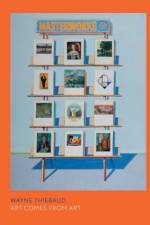
Explores Wayne Thiebaud's career as a self-described "thief" who appropriated and reinterpreted old and new European and American artworks. Although artist Wayne Thiebaud (1920-2021) earned acclaim for his poetic renderings of the prosaic particulars of American life, he openly admitted that "it's hard for me to think of artists who weren't influential on me, because I'm such a blatant thief." Wayne Thiebaud: Art Comes from Art features the artist's virtuosic appropriations and reinterpretations of old and new European and American artworks, spanning from Andrea Mantegna to Édouard Manet, Henri Matisse to Richard Diebenkorn, offering crucial insights into his creative process. Thiebaud's exploration of art, artists, and art history--along with the practices of copying, appropriation, and reinterpretation--allowed him not only to see through the eyes of other artists but also to commune with them through their work, expanding his own vision. This career-long engagement with the concept of appropriation illustrates his perception of art history as an encyclopedic "bureau of standards"--a rich repository and resource that offers working artists community with their predecessors and communion with their artworks. Published in association with the Fine Arts Museums of San Francisco Exhibition dates: Legion of Honor: March 22-August 17, 2025
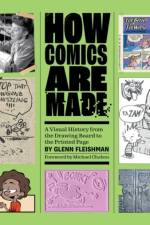
If you love comic strips, you'll love this visual history of comic strips featuring all of the methods, techniques, and wizardry that made the funny pages such an important staple of American life. Featuring interviews with dozens of the centurys most famous cartoonists and a forward by bestselling author Michael Chabon.How Comics Were Made coversthe entire history of newspaper comics from a unique anglehow they were made and printed.This book combines years of research and dozens of interviews with cartoonists, historians, and production people to tell the story of how a comic starts with an artist's hand and makes it way through transformations into print and onto a digital screen.You'll see reproductions of art and artifacts that have never appeared in print anywhere, and some historic comics will appear for the first time ever in any medium in this book.And you'll find out about metal etching, Dragon's Blood (a real thing), flong (also a real thing), and the massively, almost impossibly complicated path that original artwork took to get onto newsprint in the days of metal relief printing. The book is divided by time and transitions, from the start of consistently appearing daily and weekly comics in newspapers: The Early Days:From the Yellow Kid in the 1890s to the 1910s Syndication in Metal:When it became affordable to make hundreds or thousands of copies of daily strips to send around the country (or world), from the 1910s to 1970s Flatland:Newspapers' switch from relief to flat printing and the shift to purely photographic transformations from the 1950s to the 1980s Pixel Perfect:The transition from photographic to digital, from scanning to digital creation, from the 1970s to 2000s and through the present day Webcomics and Beyond:Look, ma, no ink! Digital comics read online and sometimes put on press to make books Each section will feature interviews with artists, reproductions of original cartoon art, printing and coloring artifacts, and the way cartoons appeared in printor on screen.
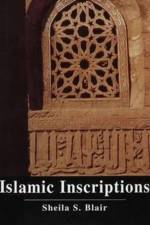
A vital reference for everyone interested in Islamic inscriptions on buildings, objects and works of art.
Abonner på vårt nyhetsbrev og få rabatter og inspirasjon til din neste leseopplevelse.
Ved å abonnere godtar du vår personvernerklæring.