









Gjør som tusenvis av andre bokelskere
Abonner på vårt nyhetsbrev og få rabatter og inspirasjon til din neste leseopplevelse.
Ved å abonnere godtar du vår personvernerklæring.Du kan når som helst melde deg av våre nyhetsbrev.

African Venice is the first guidebook to the extensive historical and contemporary African presence in the city of the lagoons. A set of ten walking tours highlights images of Black people in Venetian art from the Middle Ages to the present, the afterlife of Shakespeare's Othello, the painful local legacies of slavery and Italian colonialism, and the remarkable visibility of African and Afro-descendant artists at the Venice Biennale. These tours are enriched by more than twenty essays, poems, and reflections that celebrate, question, and reimagine Venice's Black past and present. From premodern paintings and sculpture to contemporary artworks, African Venice will show you the city as you have never seen it. The book includes contributions from Giuseppina Bakhita, Marilena Umuhoza Delli, Rita Dove, Emiliano Guaraldo, Eddy L. Harris, Lorenzo Lazzarini, Ibrahima Lö, Vittorio Longhi, Olga Manente, Tony Mochama, Yvonne Adhiambo Owuor, Caryl Phillips, Sandra Stocchetto, Sami Tchak, Ngugi wa Thiong'o, and Alessandra Viola.
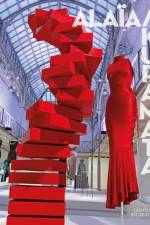
Shiro Kuramata's work is replete with the ancient and fascinating history of Japanese decorative arts and the modern eagerness for Japanese simplicity and structural simplicity that has strongly influenced the dogma of "form follows function". More than the pieces themselves, what's important is their stories, which are connected by the continuous thread of non-materialisation. "My strongest wish is to feel free of all gravity, of all ties," he declared; "I want to float". This approach runs imbues all of his work with a kind of spiritual quest. His attempts to defy gravity find formal expression in transparent materials such as glass, acrylc and metal mesh, as well as in his experiments with the incorporation of light. By using these materials, he explores links between lightness and gravity, matter and non-matter. These relationships shimmer in his designs, producing a calm, contemplative atmosphere redolent with gentle aesthetic humanity and a refined sense of poetry. Azzedine Alaïa was a great admirer of Shiro Kuramata, who died in 1991, and organised an exhibition of his work at the Fondation Alaïa in 2005. Twenty years later, and for the first time ever, the Fondation Azzedine Alaïa has decided to celebrate one of the great designers of his time by associating Kuramata's work with a careful selection of pieces by Alaïa chosen for the materials, forms or approaches they share. The lurex knit of a simple gown responds to the knitted metal mesh of a chair, while the transparent acrylic of a shelf unit echoes the feather-light muslin of an haute couture creation. Some twenty pieces of furniture and exceptional objects designed by Shiro Kuramata (1934-91) are presented in the book. In parallel, almost twenty haute couture creations by Azzedine Alaïa demonstrate his poetry of form, his radical tailoring, his subtle choice of colour and his refined use of transparency. Imbued with a great sense of lightness, the pieces on display reflect an eagerness for abstraction shared by both artists. All the pieces by Shiro Kuramata and Azzedine Alaïa are from the collections of the Fondation Azzedine Alaïa.
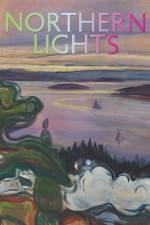
- The forests of the North - Borealis - in art- Unique paintings of the northern hemisphere- Fascinating exhibition on Nordic modernism
¿ Das Louisiana Museum zu Gast in der Schweiz¿ Spitzenwerke des 20. und 21. Jahrhundert¿ Gertschs Schaffen im Kontext von Pop Art und Farbfeldmalerei
¿ Coco Chanel's beginnings in the vibrant 1920s¿ The role of seaside resorts in Chanel's characteristic style¿ Interdisciplinary influences on her work
A stunning presentation of the acclaimed British painter Chris Ofili's newest body of work that continues his exploration of Shakespeare's OthelloRenowned for his rich, multilayered paintings, Ofili here expands his engagement with William Shakespeare's The Tragedy of Othello, the Moor of Venice. The transmuting colors and forms of the watercolors and paintings in this volume reflect the complex interiority of the character Othello-his vulnerabilities and his joyful sorrows. The artist also considers these works, which investigate ideas of authenticity, meaning, and selfhood, to be partly self-portraits. In encountering these repeated representations of Othello, as viewers and readers, we are asked to consider metamorphosis, love, the bearing of outside influences on our inner selves, and the force we exercise on the world. Published on the occasion of a two-site exhibition staged by David Zwirner Paris and Victoria Miro in Venice, the catalogue includes a text from Ofili's studio and a selection of poems by Jason Allen-Paisant from his 2023 collection Self-Portrait as Othello.
The story of the wildest experiments in early photography and the wild people who undertook them.
Dr Martens, the beloved British boot with its unmistakeable AirWair soles, is a symbol of subcultural style throughout the world, from punk to grunge, glam to goth...
A richly illustrated sourcebook of two-dimensional pattern and three dimensional ornamentation, presenting more than 1,000 historic and contemporary examples from around the world. The wealth of surface pattern and three-dimensional ornamentation in the many objects that enrich our lives is testament to the inventiveness of designers and craftspeople around the globe and throughout history. This richly illustrated, easy-to-navigate sourcebook presents more than 1,000 historic and contemporary examples of pattern and ornamentation from around the world, each one succinctly identified and explained. Arranged thematically, it is unique among pattern books, as it includes examples not only of surface pattern but also of three-dimensional ornamentation and embellishment. Two-dimensional pattern is ubiquitous, no matter what the age of an object or where it was created. From Japanese kimono and William Morris fabrics to Chinese porcelain and contemporary furniture, such works reveal humanity's unceasing desire to combine pattern with design. Just as prevalent are examples of three-dimensional embellishments that go far beyond the requirements of their practical use: an acrylic handbag has a carved motif of insects and wildflowers, a cobalt-blue pottery ewer has a dragon's-head spout and an early 19th-century fruit plate is shaped like a seashell. Designers working today are as fascinated and inspired by pattern and ornament as they have always been. This expertly compiled selection will appeal to designers, artists, illustrators and other creatives from all disciplines as well as anyone interested in visual and material culture.
Children's books tell more than just stories. They stimulate the imagination, convey feelings and world views and help children to explore the world. They appeal to children and adults alike through their idiosyncratic narratives, but above all through their diverse and unusual illustrations and individual styles. Their creative appeal lies in the variety of illustrative possibilities, which range from detailed watercolors to linocuts and woodcuts to minimalist drawings, and can also evolve into animations or digital applications.The publication presents works from the end of the 19th century to the present day. On display are international books and illustrations for children that surprise and fascinate with their creative and sophisticated design.Text: Martin Salisbury, Morag Styles.
This latest volume in the MoMA One on One series focuses on Kisho Kurokawa's Nakagin Capsule Tower in Tokyo, completed between 1970-72. One of the most iconic architectural marvels of the postwar period, the Nakagin Capsule Tower in Tokyo was designed by the office of Japanese architect Kisho Kurokawa and completed between 1970-72. The project comprised of two steel and concrete towers outfitted with 140 prefabricated living capsules; each capsule was intended for single occupancy and came outfitted with its own ensuite bathroom, a fold-out desk, a telephone, a reel-to-reel tape player, a Sony colour television, and a "porthole" window overlooking the city. In this volume of the MoMA One on One series, curator Evangelos Kotsioris delves into the groundbreaking design, construction, evolution, and ultimate need for the demolition of this remarkable structure in 2022.
This book helps you make good lighting decisions and will be a very useful hands-on tool for anyone involved with engineering, maintenance, purchasing, specification, retrofits, remodels, and new construction for interior or exterior lighting applications. It gives very practical ways to maintain and update existing lighting systems and how to p
Deadweight is a new body of work by Dominique White, winner of the 9th Max Mara Art Prize for Women, during a six-month residency in Italy. Published to accompany the work's debut at Whitechapel Gallery, this exhibition catalogue includes installation photography, texts by Olamiju Fajemisin and Alexis Pauline Gumbs, an interview between the artist and Bina von Stauffenberg, and poems by June Jordan. An exploration of rebellion and transformation, Deadweight features four large-scale sculptural works that reflect the artist's deep connection with the sea and her enduring fascination with shipwrecks. Combining force and fragility, the sharp, angular structures evoke material forms - anchors, a ship's hull, the carcass of an unknown mammal - which also act as symbols of defiance. The title Deadweight, originally a nautical term for a ship's carrying capacity, is inverted by White to signify disruption instead of stability. It symbolises a breaking point, suggesting that freedom might be achieved through abolition.
Hiroshige was one of Japan's most talented, prolific and popular artists. Famed for his landscapes, he was also a great observer of nature with a visionary approach to colour and brushwork. His legacy continues to influence and inspire artists today. Over a career spanning four decades, the prolific Utagawa Hiroshige (1797-1858) produced thousands of landscape and nature prints, hundreds of paintings commissioned by the samurai elite, as well as many illustrated books. His work appealed to every stratum of society. While some of his landscape prints, such as Evening Snow - Kanbara and Ohashi - Evening Rain, are well-known examples of Japanese art, the full range of his output is less familiar. Hiroshige came from a samurai family, but he crossed social boundaries and devoted himself to depicting popular customs and the world around him. His work is distinguished by an air of gentle grace and decorum, perhaps arising partly from his steady temperament. His calm artistic vision sustained his contemporaries through the uncertainties of daily life and changing times. A great colourist, he stands out for discovering a subtle lyricism in the experience of travel, and a bond between people and the natural world. Featuring highlights from leading private collections of Hiroshige prints, alongside works by Hiroshige and other artists from the British Museum's outstanding collection of Japanese art and from other major collections, this lavishly illustrated new publication celebrates one of the world's most accomplished artists.
Leading architectural theorists exchange ideas with the contemporary philosopher Jacques Rancière in order to debate what architecture's fundamental relationship is with aesthetics.
Abonner på vårt nyhetsbrev og få rabatter og inspirasjon til din neste leseopplevelse.
Ved å abonnere godtar du vår personvernerklæring.