









Gjør som tusenvis av andre bokelskere
Abonner på vårt nyhetsbrev og få rabatter og inspirasjon til din neste leseopplevelse.
Ved å abonnere godtar du vår personvernerklæring.Du kan når som helst melde deg av våre nyhetsbrev.

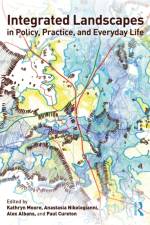
Exploring the ways in which an integrated landscape vision can help deliver regional, national and international agendas, this book investigates how a new idea of landscape can reimagine governance, policy, economics, culture, identity, health, transport and development priorities by connecting with local aspirations and demands.
Exploring the ways in which an integrated landscape vision can help deliver regional, national and international agendas, this book investigates how a new idea of landscape can reimagine governance, policy, economics, culture, identity, health, transport and development priorities by connecting with local aspirations and demands.
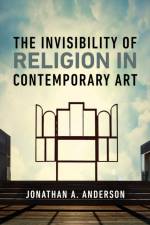
The Invisibility of Religion in Contemporary Art offers a critical guide for rereading and rethinking religion in the histories of modern and contemporary art. Since the turn of the twenty-first century, there has been a marked increase in attention to religion and spirituality in contemporary art among artists and scholars alike, but the resulting scholarship tends to be dispersed, disjointed, and underdeveloped, lacking a sustained discourse that holds up as both scholarship of art and as scholarship of religion. The Invisibility of Religion in Contemporary Art is both a critical study of this situation and an adjustment to it, offering a much-needed field guide to the current discourse of contemporary art and religion. By connecting the work of leading art historians, theologians, philosophers, and sociologists, Jonathan A. Anderson uncovers the gaps and reveals opportunities for scholars to engage more fully with the theological grammars, histories, and concepts at play in modern and contemporary art. By addressing the religious blind spots in existing scholarship, Anderson opens new lines of inquiry and invites deeper dialogue between religious studies, theology, and art history and criticism.
No Prize for Pessimism by Sam Schillace is a thoughtful meditation on the importance of optimism in building and designing tech products - or any product, for that matter. Schillace is Microsoft's Deputy Chief Technology Officer. He is the co-inventor of Google Docs, a product used by more than a billion people around the world. Through a series of insightful letters and reflections, Schillace shares his journey from the early days of personal computing to the forefront of AI innovation. This book delves into the mindset required for disruption and innovation, emphasizing the importance of optimism, experimentation, and a willingness to embrace the messiness of creation.In his debut as an author, Schillace argues that optimism is crucial for innovation, contrasting it with the dangers of a pessimistic mindset which he believes stifles creativity and progress. Leadership, according to Schillace, is rooted in humility and trust. He warns against the "prima donna death spiral" where leaders fail to delegate, leading to team inefficiency. The author discusses the transformative potential of AI, emphasizing the need to integrate AI capabilities with traditional coding practices for effective product development. He explores the balance between speed and maintainability in coding, advocating for a pragmatic approach to software development. Schillace stresses the importance of humility in leadership, encouraging leaders to support their teams and prioritize collective success over personal ego. He identifies several emerging technologies with disruptive potential, including AI, quantum computing, and renewable energy solutions.Throughout, the author encourages readers to adopt a "What if?" mindset, fostering creativity and resilience in the face of challenges. Schillace shares personal anecdotes and lessons learned throughout his career, offering practical advice for aspiring innovators and leaders. No Prize for Pessimism is perfect for entrepreneurs, engineers, and anyone interested in the future of technology.
As a world heritage site and one of the most visited cities in the world, Edinburgh boasts a huge range of building from all periods and in many different styles. In this book, architectural writer Robin Ward introduces 200 of the city's most fascinating places.
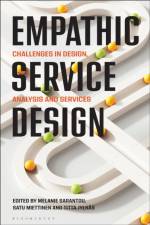
Practice-based case studies from around the world exploring empathy within service design.
gestalt is a poetic enquiry of the Panchayat, a collective of South Asian and Black artists/practitioners involved in communal archiving, artmaking and activism in Britain from 1988-2015.
First published in 1952, John Constable and the Fishers is based on original letters which have never been published in full before.
The author of the magisterial England's Thousand Best Churches turns his eye to England's cathedrals, with fascinating, personal - and often funny - insight into their history and their place in English life.
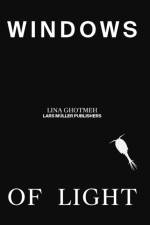
Licht ist ein physikalisches Phänomen und ein soziales Bindeglied, dessen Bedeutung über das Sichtbare hinausgeht. Um diese Bedeutung zu erfassen, versammelt Windows of Light Symbole, Mythen, Innovationen und beschreibt wie Licht unsere biologische, astronomische und architektonische Umwelt grundlegend prägt. Die vielen Darstellungen von Licht werden durch ein fotografisches Narrativ untermauert, das uns daran erinnert, dass der Zugang zu elektrischem Licht in vielen Regionen der Welt nach wie vor ein Privileg und nicht ein Recht ist.
Decision-Making Optimization Models for Business Partnerships extends non-parametric Data Envelopment Analysis (DEA) and parametric econometrics approaches to better understand how economic efficiency and market competitiveness is achieved for different types of partnerships and strategic alliances.
¿ Malerei an der Schnittstelle zu Performance und Intervention¿ Politisch motivierte, humorvolle Eingriffe in den öffentlichen Raum¿ Entdeckenswert und sehr inspirierend!
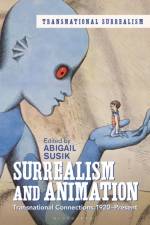
From Betty Boop to Donald Duck, Tex Avery to Walt Disney, collage animation to Japanese anime, and Claymation to 3D animation, Surrealism and Animation is the first book to identify correspondences between the art of animation and the International Surrealist Movement.Sharing a deep commitment to a reanimation of everyday life, surrealist artists and animators sought a marvellous, living form of art. Cartoons and trick films by pioneers such as Georges Méliès were influential for Salvador Dalí and André Breton, among others; many other surrealists and their associates such as Max Ernst, Joseph Cornell, Hans Richter, Len Lye, Roland Topor, Jan Svankmajer, and Lawrence Jordan turned to animated cinema and theories of animacy to express their surrealist visions.Surrealism and Animation is the first book devoted to surrealism's vivid engagement with the history, theory, and medium of animation on a transnational basis. Featuring seventeen essays by leading and emerging scholars, as well as interviews with contemporary artists Penny Slinger and Jacolby Satterwhite, this collection investigates a shimmering range of topics on animated surrealism, including black humour, queer subjectivities, ecofeminism, Black surrealisms, and more.
This book reveals the rich tapestry of sacred art around Mexico and southwest USA (New Spain) from the sixteenth to the nineteenth centuries.
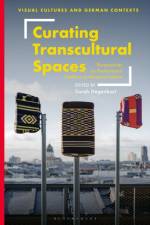
"Curating Transcultural Spaces asks what a museum which enables the presentation of multiple perspectives might look like. Can identity be global and local at the same time? How may one curate dual identity? More broadly, what is the link between the arts and processes of identity construction? This volume, an indispensable source for the process of engaging with colonial history in Germany and beyond, takes its starting point from the 'scandal' of the Humboldt Forum. The transfer of German state collections from the Ethnological Museum and the Museum for Asian Art, located at the margins of Berlin in Dahlem, into the centre of Germany's capital indicates the nation's aspiration of purported multiculturalism and cosmopolitanism; yet the project's resurrection of the site's former Prussian city palace, which was demolished during the GDR, stands in opposition to its very mission, given that the Prussian rulers benefited from colonial exploitation. By examining the contrasting successes of other projects, such as the National Museum of African American History and Culture in Washington DC, Curating Transcultural Spaces compellingly argues for the necessity of taking post-colonial thinking on board in the construction of museum spaces in order to generate genuine exchange between multiple perspectives"--
As the twentieth century began, Indianapolis found itself at the center of a booming commercial and industrial network with new office buildings, department stores, theaters, hotels, factories, places or worship, and the largest electric interurban train network in the nation. The population was growing, as well, with many new residential additions to the city planned, from ornate mansions on the north side of the city to working-class bungalows and apartments.In Architecture in Indianapolis: 1900-1920, preservationist and architectural historian Dr. James A. Glass describes the varied architectural currents that shaped buildings in Indianapolis during the first two decades of the twentieth century, a period when the Commercial Club of Indianapolis called the state capital "the largest inland city." With over 300 photographs and drawings, as well as 31 maps, Glass continues the exploration begun in Volume 1 of the variety of architectural styles that the city's builders drew on, including Italian Renaissance, Gothic, Arts and Crafts, Modern, Tudor palace and Tudor vernacular, Prairie Style, and many more. And, like Volume 1, Volume 2 documents the loss of distinctive architecture that has occurred throughout Indianapolis and explains why certain structures were razed. Both volumes together provide the first history of architecture in the city during its first century and will serve as an indispensable reference for decades to come.Along with its companion 1820-1900, Architecture in Indianapolis: 1900-1920 describes the varied architecture that architects and builders in the city designed and constructed during the first two decades of the twentieth century and profusely illustrates buildings of that period, providing an indispensable reference for decades to come.
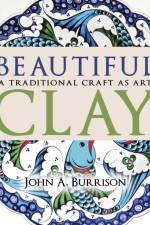
For most of human history, all pottery was what we would now consider traditional folk pottery. Not all artifacts go beyond the basic requirements of utility in pursuit of beauty, but Beautiful Clay considers those that do.In Beautiful Clay, noted scholar of traditional ceramics John A. Burrison writes about how a potter applies aesthetics to utilitarian objects to transform raw clay into something beautiful. Though what is considered beautiful in art changes from culture to culture and person to person, there are universal techniques such as manipulating form, color, texture, and more that tap into clay's potential for beauty. Burrison uses an approach from a perspective of international artistry rather than an approach bound by history or geography. After beginning with more than 40,000 images that the author curated as a study resource, Beautiful Clay narrows it down to around 230 images that capture the artistry within traditional ceramics worldwide.Beautiful Clay examines the aesthetic dimensions of what is essentially a traditional utilitarian craft, the ancient clay-based craft of pottery, from earliest times to the present.
Abonner på vårt nyhetsbrev og få rabatter og inspirasjon til din neste leseopplevelse.
Ved å abonnere godtar du vår personvernerklæring.