







Gjør som tusenvis av andre bokelskere
Abonner på vårt nyhetsbrev og få rabatter og inspirasjon til din neste leseopplevelse.
Ved å abonnere godtar du vår personvernerklæring.Du kan når som helst melde deg av våre nyhetsbrev.

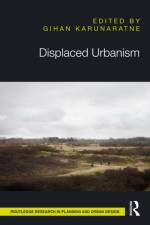
This book critically interrogates dominant narratives surrounding displacement by offering an in-depth examination of how it unfolds across diverse urban and rural settings worldwide.
This book explores aspects and instances of Ottoman public architecture in the Balkans, a region that encompassed diverse populations, climates, and landscapes, all of which contributed to a wide array of architectural variations in both public and private structures.
Volumes have been written on the need for high-quality data to support organizational decision-making. Navigating the Data Minefields: Management's Guide to Better Decision-Making provides executives and SMEs with a 'reasonable' set of (useful) tools they can adapt to their specific organization and operating environment.
The text presents various design and modelling solutions for effective decision-making that are grounded on the basics of data analytics. It also discusses topics such as sustainable design and data-driven design synthesis, product analytics and its role in sustainable development, amongst many others.
First published in 1981, In A Glamourous Fashion is a fascinating look at film fashion portraying the glamour and glitter of Hollywood's heyday.
First Published in 1986 The Architectural History of King's College Chapel provides a complete picture of how and why King's College Chapel came to be built. The book also contains analysis of the remarkable Tudor building accounts and their significance for the study of mediaeval architectural history.
First Published in 1981 The Architectural History of Canterbury Cathedral traces the entire architectural history of the church from Anglo-Saxon times to the present day. Every major epoch of English architecture is represented, from the Norman Conquest to the splendours of the Tudor age.
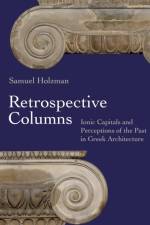
An innovative study of how and why ancient Greek builders sometimes combined older and contemporary carving styles when making capitalsThe Ionic order of ancient Greek architecture gradually evolved over the course of the sixth century BCE. In Retrospective Columns, Samuel Holzman examines an overlooked group of nine Ionic monuments that are varied in design but have capitals that combine the pillowy, convex volutes of sixth-century Ionia on one side and the crisp concave volutes of more contemporary styles on the other. Such mixed-form capitals had a surprising longevity and range, spanning Greece, Italy, and Turkey between 550 and 250 BCE. Why did ancient Greek builders sometimes revert to older carving styles and combine them with newer ones? One old theory is that mixed-form capitals were a labor-saving shortcut-a notion Holzman puts to rest with a marble carving experiment that recreated the volutes of one capital. Rather, he argues that hybrid capitals represented an important parallel to other trends in Greek art, notably "bilingual" Attic vases, which combined older and newer painting techniques for sheer visual delight. By studying the chiaroscuro carving effects and painted polychrome decoration of hybrid capitals, Holzman shows that ancient viewers were primed to look for differences in such details, which the book illustrates with many original drawings and diagrams. Exploring works of Ionic architecture from different periods in Ionia, the Cyclades, Athens, and the Northern Aegean, Retrospective Columns demonstrates that their builders ultimately returned to outmoded elements to establish continuity with the past, reinforcing community identities and architectural tradition.
A fascinating account of the use and meaning of visual and spatial distortions in seventeenth-century art and architectureDuring the Catholic Reformation, patrons, artists, architects, and viewers, especially in Rome, were strongly drawn to visual and spatial distortions or "deformations"-works of art and architecture that were designed to be visually incomprehensible, at least initially. From Borromini's San Carlo alle Quattro Fontane in Rome to the attention-grabbing prospettiva in the city's Palazzo Spada and the anamorphoses that define the corridors and walls of Minim and Jesuit buildings, The Deformation explores what this intriguing phenomenon reveals about contemporary religious belief, optics, and the natural sciences, as well as wider questions about attention and discernment. Failing to conform to an established ideal, deformations required a "reformation" to achieve that ideal. Anamorphic deformations, for example, could only be reformed into clarity when viewed from a particular angle or through a special mirror. Susanna Berger examines how deformations were experienced by beholders, and how they were embraced or opposed by critics. The book shows how deformations and related works-whether altar tabernacles, ephemeral religious architecture, churches, monumental sundials, colonnades with accelerated perspective, illusionistic frescoes, turned ivories, or painted anamorphoses-focused observers' attention on theological mysteries and the social power and sophistication of patrons. The book's rich illustrations include two gatefolds and some anamorphic images that can be seen without distortion by using an included reflective insert as a mirror. Looking at writings as well as visual works in multiple artistic media not typically considered in relation to each other, The Deformation offers a new interpretation of deformation that highlights the delay between perception and discernment. Susanna Berger is associate professor of art history and philosophy at the University of Southern California. She is the author of The Art of Philosophy: Visual Thinking in Europe from the Late Renaissance to the Early Enlightenment (Princeton).
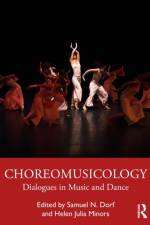
The Routledge Companion to Choreomusicology: Dialogues in Music and Dance is a distinguished collection of essays by leading scholars presenting research that redefines and rethinks the question of what dance and music are, together and apart, and which promotes new ideas and voices in the discipline.
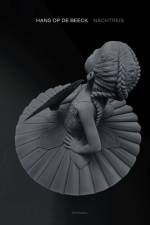
Hans Op de Beeck transforms Antwerp's Royal Museum into a mysterious night park. This book lets readers relive the surreal atmosphere of Night Journey.
From the mid-1740s on, imaginative depictions of mining scenes increasingly adorned vessels from the Meissen Royal Porcelain Manufactory. This publication explores the Middelschulte collection at the Deutsches Bergbau-Museum. Text in German.From the mid-1740s on, imaginative depictions of mining scenes increasingly adorned vessels from the Meissen Royal Porcelain Manufactory. Prior to this, sculptural depictions of mining folk can even be found on Böttger stoneware and Böttger porcelain—with artists George Fritzsche Sr (probably 1697–1756) and Johann Joachim Kaendler (1706–1775) later each dedicating a series to them. The unique combination of mining and porcelain also informed and inspired other manufactories in the German-speaking realm, for example in Berlin, Fürstenberg and Vienna. Achim and Beate Middelschulte have assembled what is probably the world’s most extensive collection of porcelain featuring the subject of mining. A significant selection of this has been transferred to a foundation and incorporated as a permanent loan into the collection at the Deutsches Bergbau-Museum Bochum (German Mining Museum in Bochum). An in-depth presentation of these pieces is now available in this publication. Text in German.
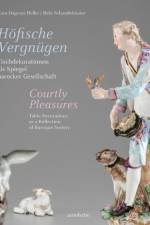
The publication Courtly Pleasures explores how porcelain figurines and miniature landscapes served as table decorations from the Baroque to early 19th century. Text in English and German.Scenes of gardens and of love, idyllic hunting parties, picturesque farms, and lifelike animal figurines in porcelain were popular motifs in table decoration from the Baroque to the beginning of the 19th century. These 'worlds in miniature' were intended to initiate conversation among the table guests - and of course attest to the discerning taste of the hosts. The decorative pieces were, for all intents and purposes, part of the furnishing scheme and finished off the room’s interior as a total work of art down to the last detail. Central to this was the artisanal sophistication and the perfect mastery of the latest techniques, which breathed new life into the miniatures. Following on from Courtly Companions: Pugs and Other Dogs in Porcelain and Faience, now Courtly Pleasures presents the most beautiful table decorations produced by a variety of manufacturers, all from the abundant treasures of a southwest German private collection. Text in English and German.
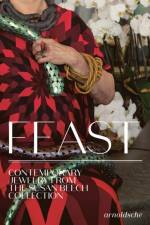
Welcome to a private tour of the home of American collector Susan Beech. Since 1991, Beech has been transforming her house in Tiburon, California, into an extraordinary environment, in which the themes of her extensive jewelry collection interact with craft and fine art, all against a backdrop of Art Deco glamour. Beauty is entwined with darker forces of death and decay, and glimpses of pleasure are complicated by a nod to the surreal and uncanny. The result is a wholly original and fascinating stage for a major collection of contemporary jewelry thoughtfully assembled over four decades.Lavishly illustrated and featuring four essays exploring Beech's activities as a collector and wearer as well as the key themes of her pieces, the publication Feast: Contemporary Jewelry from the Susan Beech Collection marks the donation of the collection to the Renwick Gallery, Smithsonian Museum of American Art, in Washington, DC, and the Museum of Arts and Design in New York City.
Warwick Freeman (geb. 1953) gilt weltweit als einer der einflussreichsten Schmuckkünstler der Gegenwart. In seinen Arbeiten erzählt er von seinem Leben, seiner Kultur, seiner Geschichte wie auch von der Geschichte Aotearoa Neuseelands und den einzigartigen Materialien dieses Landes - dem millimeterdicken Perlmutt der Perlmuschel, der irisierenden Innenhaut der P¿ua, einer Regenbogen-Abalone, oder dem Pounamu, einem Grünstein.Längst ist Freeman - der P¿keh¿, wie die M¿ori Nachfahren mit europäischen Wurzeln nennen - zum Mittler der Kulturen geworden. In den 1980er-Jahren gehörte er zu denjenigen, die die Welt des neuseeländischen Schmucks revolutionierten und zu einer einzigartigen, künstlerischen Sprache führten. Freeman entdeckt Formen, Symbole und Bilder, die die Kulturen der M¿ori, Polynesiens und Europas durch ihre emblematischen Bedeutungen kulturübergreifend verbinden - Hook. Hand. Heart. Star .
Indispensable 5th edition guide to the operation and administration of the JCT Design & Build Contract suite 2024.
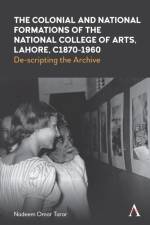
Lahore's Mayo School of Arts, as the National College of Arts (NCA) was called then, was Pakistan's equivalent of London's South Kensington School of Design (presently Royal College of Art, UK). One of the last of the four colonial art schools established in India, the others being in Calcutta, Bombay and Madras, the Mayo School of Arts was founded in 1875 to perpetuate the memory of the Lord Earl of Mayo, the only Indian Viceroy to be murdered while in office. Established by Rudyard Kipling's father Lockwood Kipling, the school had on its staff some of the most renowned names in the Indian art world, such as Ram Singh, Percy Brown, Lionel Heath, S. N. Gupta, B. C. Sanyal and A. R. Chughtai. The Mayo School gave birth to the most celebrated Indian art historical publication in the world, the Journal of Indian Art and Industry. The journal ran 30 illustrated volumes published by London's Imperial Publishers using the most advanced techniques of chromolithography. The pioneers of colonial anthropology in Punjab, the fabled "e;men on the spot,"e; such as Richard Temple, Denzil Ibbetson and Baden Powell, were associated with the establishment and administration of the Mayo School of Arts. They played a foundational role in the ethnographic reconstruction of artisan castes as suitable boys of "e;primitive"e; tribal Punjabi society through administrative reports, exhibition catalogues and gazetteer literature. Constituting the colonial cultural subtext to art education, the colonial discourses provided necessary anthropological foundations for the education of the "e;primitive"e; artisans in the industrial art schools of Punjab. Through its pedagogy, the Mayo School also framed the emergence of the Indo-Saracenic school of architecture and patronized the traditional styles of paintings in Punjab.Despite its strong industrial art agenda, in the early decades of the twentieth century, the Mayo School of Arts was able to give the Indian art world a Punjab School of modern painting. Officially acknowledged in the British Indian Empire Exhibition of 1924, the Punjab School stood apart from the Calcutta School of Indian paintings and comprised largely of drawing masters of the Mayo School. Lionel Heath, a European miniaturist, whose career as the Principal of the Mayo School is overshadowed by his equally illustrious predecessors, was responsible for Mayo School's drift into modern art. Printmaking, graphic design and sculpture made their beginning in the 1930s at the Mayo School under B. C. Sanyal and M. M. Hussain. A. R. Chughtai, one of the most illustrious painters and printmakers of the Punjab School, learnt his skills as a printmaker from the Mayo School. The Mayo School of Art's printing press designed, lithographed and printed hundreds of posters, invitation and greeting cards, calendars, illustrated educational texts, including war publicity posters, by drawing on all the major Western art movements from Arts Nova to Art Deco and Bauhaus.In the founding decades of Pakistan, to mark the cultural transition from a colonized to an independent national identity, the "e;old"e; Mayo School was reorganized and raised as the National College of Arts in 1958. To reflect its role in developing national culture and imparting professional visual art education, the NCA was established on the model of Bauhaus with three main departments in fine art, design and architecture. Some of the most important men in Pakistan's cultural history, such as poet Faiz Ahmed Faiz, painter Shakir Ali, art patron Ghulam Mueenuddin and American sculptor Mark Sponenburgh h,ave been associated with the development of the NCA as the aesthetic center of fine art and design in Pakistan.
Personicx focuses on a collection of A4 collages, prints, and drawings by the artist shown at 1:1 scale-facsimiles which maintain an uneasy tension between reality and the squashed surface of the screen.
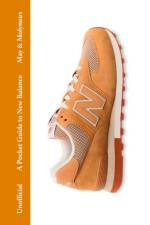
From its origins producing arch supports and orthopaedic products to its irrepressible rise creating specialised athletic footwear, to its omnipresence as a style staple, New Balance and has been defining footwear for well over a century. Featuring all of the brand's most iconic models and the celebrities who have made the signature 'N' synonymous with sport and fashion, this is a must-read for all sneaker heads.
Your abode can be interesting, beautiful, timeless, and best of all, memorable, by centering it around you!
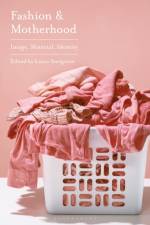
Motherhood, whether achieved through biological or other means, is not a rare experience; dressing oneself, even less so. The two phenomena are intimately linked, as both occur on and to the private body, and are also fully subject to social pressures and the changing tides of public opinion. They also, for anyone who experiences motherhood, define one another and work together to shape an individual's identity and place in their culture. This rich collection explores the essential question of how motherhood and fashion interact, interrogating their relationships to power, misogyny, temporality, longing and embodiment, among other themes. The 13 essays examine representations on film, in popular print and literature; they use images, narrative and material evidence from the past to excavate the historical cleavages in how mothers have been expected to hide, display, share and sacrifice their bodies. An international range of scholars explores the 19th to the 21st centuries, tracing how fashion and motherhood have operated as powerfully interdependent experiences and continue to determine how women are judged and corralled, yet also find meaning, connection and strength.
This book, first published in Finnish in 1985 under the title Aalto, is a critical introduction to Finnish architect Alvar Aalto (1898-1976), written by one of Aalto's Finnish architectural contemporaries, Kirmo Mikkola (1934-1986). The book is divided into six sections dealing with different aspects of Aalto's architecture.
The Routledge Companion to Choreomusicology: Dialogues in Music and Dance is a distinguished collection of essays by leading scholars presenting research that redefines and rethinks the question of what dance and music are, together and apart, and which promotes new ideas and voices in the discipline.
The third edition of this foundational text on housing tenure, housing policy, homelessness, and housing in a global context delves into the complexities of housing and related issues, to provide a deep understanding of housing's relationship to national economic factors and housing policies.
The third edition of this foundational text on housing tenure, housing policy, homelessness, and housing in a global context delves into the complexities of housing and related issues, to provide a deep understanding of housing's relationship to national economic factors and housing policies.
Abonner på vårt nyhetsbrev og få rabatter og inspirasjon til din neste leseopplevelse.
Ved å abonnere godtar du vår personvernerklæring.