














Gjør som tusenvis av andre bokelskere
Abonner på vårt nyhetsbrev og få rabatter og inspirasjon til din neste leseopplevelse.
Ved å abonnere godtar du vår personvernerklæring.Du kan når som helst melde deg av våre nyhetsbrev.

Irony and satire in cinema have fallen out of favor. This study looks at the works of eight auteurs-Luis Buñuel, R.W. Fassbinder, Stanley Kubrick, Robert Altman, Paul Verhoeven, Aki Kaurismäki, Aleksei Balabanov, and David Lynch-whose films, though not always seen as such, are often more ironic than satirical.
Accompanying an exhibition by the same name, this book addresses the life work of Ken Gonzales-Day, a Los Angeles based artist, scholar, teacher, and curator who explores race and place in his photographic and filmic works, drawings, and paintings as well as through his research and putsthe artist's major series of art works in context. 116 illus.
A review of dance education research methodologies with examples and exemplars from the field. The research methodologies include qualitative, quantitative, and mixed methods. Exemplars include investigations from pedagogy, history and cultured, community engagement, social justice and international dance education research.
This collection examines multiple manifestations of Islamic architecture across the Americas, from its northern to southernmost spheres, to expand dialogues surrounding this architectural legacy through a hemispheric consideration of aesthetics, narrative, and patronage. 36 col. 17b& illus.
From underdog to icon, Marshall Rogers helped redefine Batman for generations, inspiring readers and up-and-coming artists alike. Initially savaged by editors at DC Comics, his style was uniquely complex with vast and angular architectural design anchoring his storytelling, and it immediately caught on with fans for his depictions of the Darknight Detective, Hugo Strange, The Joker, Silver St. Cloud, Dr. Strange, Cap'n Quick and a Foozle, and more. And though his output was relatively small in comparison to many of his contemporaries, his impact outlived the artist himself, and inspired a loyal following and affection. Now, Rogers' story is told by friends, collaborators, and family members, delving deep into a complicated and conflicted man and his art, as we feature inker Terry Austin, friend and fellow artist Michael Netzer, Dan Greenfield's extensive interview with writer Steve Englehart (conducted for 13thDimension.com), and others recounting their time and camaraderie with Rogers, alongside an in-depth interview with Marshall himself, and a wealth of art both familiar and rarely seen. Written by Jeff Messer and Dewey Cassell (authors of the Eisner Award-nominated Mike Grell: Life Is Drawing Without An Eraser), this book shines a light on the fan-favorite artist's brightest moments and darkest days. Featuring a new cover collaboration by Marshall Rogers and Terry Austin!
The First Comics Companion is the only book dedicated to the history of Chicago's groundbreaking independent comics publisher, which took on the Big Two by storm between 1983-1991. From a modest promotional comic hawking theater subscriptions, First soon blossomed into an ambitious, aggressive imprint with achievements that included adapting the fabled sci-fi play Warp; reviving beloved '70s Charlton hero E-Man; luring Mike Grell over from Pacific Comics to continue Starslayer and launch Jon Sable, Freelance; and releasing one of the '80s greatest comic book series, American Flagg! by Howard Chaykin. Soon followed Elric, Grimjack, Nexus, Shatter, Dreadstar, Lone Wolf and Cub, super-hero Alter Ego, and a resurrection of Classics Illustrated. Featuring the recollections of founders Mike Gold, Joe Staton, and dozens more, this book continues Richard J. Arndt and Jon B. Cooke's exhaustive "carpet-bombing" approach to documenting comics history in fascinating detail--first, last, and always, THE definitive account! Featuring new Chaykin cover art!
How an enigmatic masterpiece of the French Revolution became a talisman of the revolutionary spirit in our own timeJacques-Louis David’s The Death of Marat depicts the painter’s friend and fellow revolutionary, Jean-Paul Marat, collapsed in his bath after being fatally stabbed by a female assassin who stands just outside the frame. In this fascinating book, Thomas Crow traces the radical legacy of a painting that has been called the Pietà of the French Revolution, showing how David’s masterpiece captures the saga of that violent era in the single figure of Marat, and how it reveals itself anew today.Crow begins by describing how the painting’s enduring power came to the fore during the countercultural tumult of the 1960s, discussing how his vocation as a scholar arose out of his own encounter with the work. He then takes readers back to 1793, telling the story of the painting’s creation through the eyes of David, his subject, and Marat’s charismatic assassin, Charlotte Corday. Charting the history of its impact across more than two centuries, Crow shows how this multilayered portrait surfaced in succeeding waves of political dissent as an enduring talisman of popular insurgency.Beautifully illustrated, Murder in the Rue Marat is an art historian’s disarmingly personal account of a painting whose hidden complexities bear witness to the promise and peril of revolution in Marat’s time and our own.
This collection examines representations of Spanish queer aging through investigations of literary and cinematic representations of this demographic, offering a showcase for research on communities often made invisible due to age and sexual identity in Spanish culture with wider implications for queer aging studies research.
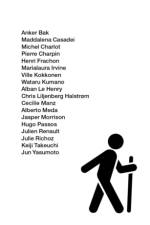
From a practical tool to status symbol, the walking stick is a universal object that has been imbued with symbolism, craftsmanship, and innovation throughout its history. Across different cultures and eras it has taken on different uses and meanings, whether agricultural, religious, ceremonial, orthopaedic or sartorial. Eighteen designers ranging from Jasper Morrison to Julie Richoz were invited to reimagine the walking stick for an exhibition at the Triennale Milano curated by the Milan-based Japanese designer Keiji Takeuchi. This elegant book showcases their designs and demonstrates how a humble object can be a source of pleasure and pride. Presented in a slim vertical format suited to its subject matter, "Walking Sticks" is introduced by Keiji Takeuchi and includes photographs by Miro Zagnoli as well as an essay by the design curator and critic Marco Sammichel, which explores the cultural significance of this understated object.
The Anatomy of the Architectural Book examines approaches to structuring, constructing and designing architectural books and traces how they have changed over time. The discipline has been exposed to debates, just as building construction has been exposed to the charms of book making. Examining the crossovers between book culture and building culture makes the axes visible along which architectural knowledge circulates through books into buildings and back - from the celebration of specific architectural practices to the production of unique books, using pages and print to convey architectural ideas.Dissecting a wealth of books through five conceptual tools - texture, surface, rhythm, structure and scale - André Tavares analyzes the material qualities of books in order to assess their crossovers with architectural knowledge. The detailed history of Sigfried Giedion's Befreites Wohnen and the two incarnations of the Crystal Palace in Hyde Park and Sydenham provide a background that confront us not only with the rise of the industrialized book but also with the configuration of the book as a unique visual device.Richly illustrated with samples from the library of the Canadian Centre for Architecture, the volume discusses a wide range of authors, including Vitruvius, William Morris, Gottfried Semper, El Lissitzky, Le Corbusier, Jacques-Ignace Hittorff, Owen Jones, A. W. N. Pugin, Humphrey Repton, Sebastiano Serlio, Andrea Palladio, John Tallis, Raphael, Viollet-le-Duc, Jean-Rodolphe Perronet, Jean-Nicolas-Louis Durand and Frank Lloyd Wright.
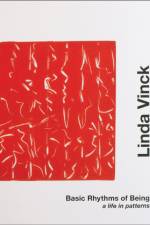
For almost five decades Linda Vinck has been developing a consistent body of work around rhythm and pattern formation. This comprehensive publication contextualises and presents the artist's uvre. Text in English and Dutch.
Lieven Lefere plays with the complex relationship between the photographic image and reality. His oeuvre reconciles reason and subjectivity in an almost entirely reconstructed illusion.
In this artist's book Joëlle Tuerlinckx guides us through the studio's archives, and through the development of a thought process. Text in French. Introduction and colophon translated into English.
Refuge is a photographic safe space, revealing the gaze of Lara Gasparotto within nature, family life, and her travels, creating a timeless photo book; softly and sensitively compiled. Text in French.
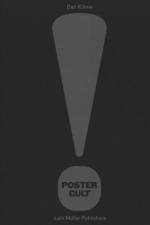
Dafi Kühne is one of Switzerland's foremost poster designers whose diverse, bold work embraces both traditional production tools and modern design processes. Although his posters are printed on presses from the 1960s, they do not look like typical letterpress prints. Instead, they connect with the history of letterpress production while pushing the boundaries of long-established graphic and typographic techniques. Using analog printing presses, computer software applications, laser cutters, and freshly cast hot-metal-type, he creates wildly creative, large-format posters. Working from his vast letterpress studio in the Swiss Alps, Dafi Kühne simultaneously drives poster culture and upholds the cult of the poster.Kühne's first monograph with Lars Müller Publishers, True Print, served as an introduction to Dafi's work from the years 2009 to 2016. "Poster Cult" focuses on the processes, background and context that inform his more recent poster work.
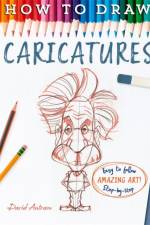
Anyone can create a masterpiece with just a pencil and paper!This easy to follow guide helps aspiring caricature artists learn how to draw a variety of amusing characters in just a few swoops of their pencil. It includes focus on specialist concepts, such as light, tone and composition, and covers all the cartoon basics, including likeness, exaggeration and style. All you need is a pen, pencil and a piece of paper to start bringing your caricatures to life!The How to Draw series takes a highly visual and practical approach to drawing, featuring step-by-step instructions for each art project. From basic shapes to finished art, this book uses two different coloured lines throughout to highlight clearly each process and which steps to follow. The series covers a comprehensive range of core techniques - with sections on materials, composition and perspective.
Anyone can create a masterpiece with just a pencil and paper!This easy to follow guide teaches aspiring artists how to capture the world and people around them in a few simple steps. Taking care to clearly illustrate how to draw various different human poses, forms and anatomical references, Human Figure covers all the basic steps to creating a wonderful human drawing. This inspiring guide is the perfect gift for loved ones who are drawing beginners.The How To Draw series takes a highly visual and practical approach to drawing, featuring step-by-step instructions for each art project. From basic shapes to finished art, this book uses two different coloured lines throughout to highlight clearly each process and which steps to follow. The series covers a comprehensive range of core techniques - with sections on materials, composition and perspective.
Abonner på vårt nyhetsbrev og få rabatter og inspirasjon til din neste leseopplevelse.
Ved å abonnere godtar du vår personvernerklæring.