







Gjør som tusenvis av andre bokelskere
Abonner på vårt nyhetsbrev og få rabatter og inspirasjon til din neste leseopplevelse.
Ved å abonnere godtar du vår personvernerklæring.Du kan når som helst melde deg av våre nyhetsbrev.

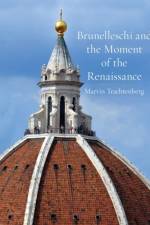
A new view of the brilliant, strikingly original Renaissance architect Filippo Brunelleschi.
Timed in advance of James Gunn's major Superman film (July 2025) comes this officially licensed, one-of-a-kind replica of one of Superman's most innovative gadgets.
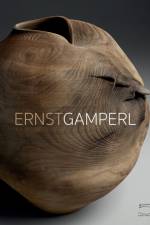
Ernst Gamperl is an internationally acclaimed artist who transforms wood into captivating sculptures. His deep connection with nature and respect for the material drive his innovative work, resulting in elegant and powerful pieces that evoke emotions and challenge perceptions. Text in English, Italian and German.The relationship Ernst Gamperl, an artist of international renown, has developed with wood as a living material and the acknowledgment of inescapable serendipity are a source of creative inspiration as well as the driving forces behind his work – a work revolving around the artist’s deep connection with nature and respect for his raw material. The wood worked by Gamperl sometimes comes from majestic trees tens or even hundreds of years old – grown in nature, it is nature that has often sent these unmistakable creatures crashing down. Trees are an integral part of creation, symbols of life and strength that Gamperl has studied and “perceived” for many years in symbiosis with their essence and nature. His ability to combine an unconventional approach to the material with a revolutionary technique and an original interpretation honed over many years results in works that stand out for their elegance and charisma. Gamperl stretches technique to its limits in creating powerful sculptures that unfailingly stir the viewer, who discovers something never before encountered. Text in English, Italian and German.
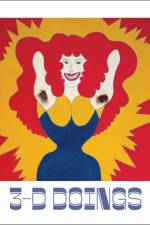
Eccentric and entertaining, the bold and cartoonish three-dimensional objects of the Chicago Imagists receive an enthusiastic survey in this playful volumeContemporaneous with the Pop art movement, Chicago Imagism can be characterized as warm and wacky--a stark contrast to the cooler, more aloof styles in New York and London. The Imagist movement (a term coined by art historian Franz Schulze in 1972) was propelled by a core group of artists--all graduates of the School of the Art Institute of Chicago--that exhibited their work together as The Hairy Who between 1966 and 1968 at the Hyde Park Art Center on Chicago's South Side. Though each artist had their own fiercely unique style, they shared a similar interest in popular culture, comics and material objects. Suellen Rocca and Roger Brown manipulated and augmented mass-produced household items. Art Green and Eleanor Dube painted on shaped canvases. Other artists, such as Karl Wirsum, Christina Ramberg and Philip Hanson, used materials associated with craft.3-D Doings explores the sculptural work and dimensional paintings of the Chicago Imagists. With a replica of Karl Wirsum's Armpits on the cover--fake hair and all--the volume is a zany celebration of Imagist objects and their artists, featuring conversations with Suellen Rocca, Art Green, Gladys Nilsson and Philip Hanson, biographies of each artist and a dedicated ephemera section.Artists include: Don Baum, Roger Brown, Ed Flood, Art Green, Red Grooms, Ted Halkin, Philip Hanson, Gladys Nilsson, Jim Nutt, Christina Ramberg, Suellen Rocca, Barbara Rossi, Evelyn Statsinger, H.C. Westermann, Karl Wirsum, Ray Yoshida. This book was published in conjunction with Tang Museum
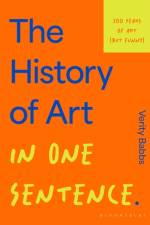
Comedian and art historian Verity Babbs journeys through 50 of the most important art movements throughout history, answering ten questions for each in just one sentence at a time.
Tracing the surge in creativity and transformations in culture and the arts during one of history’s most tumultuous decades Boom: Art and Design in the 1940s looks at the complex shifts in technology and the arts, including music, film, and fashion, that surged in a tumultuous decade. Despite restrictions and hardships, the visual arts flourished, with some artists addressing political concerns in their work and others moving into abstraction. War disrupted the fashion industry in Paris, allowing New York to become a competitive center. Furniture design made creative use of technological advances. The movement of artists during the war years and afterward catalyzed the exchange of ideas and created more diverse artistic communities. Essays by leading figures in their respective fields show how wartime restrictions impacted world economies and the innovative solutions found by creative communities, examine Hollywood of the 1940s and its ability to unite international audiences, explore the ways clothing and textiles were shaped by the rapid changes of the era, and discuss how musicians played a vital role at this moment in history and helped shape the sounds of today. Interviews with contemporary figures, such as jazz artist Christian McBride and filmmaker Ken Burns, reflect on the impact of the 1940s on their respective fields. Including paintings by Lee Krasner, Horace Pippin, and Jackson Pollock, photographs by Margaret Bourke-White and Weegee, furniture by George Nakashima, jewelry by Alexander Calder, poetry by Anna Akhmatova, and apparel by Elsa Schiaparelli, the book covers the transformational responses to a volatile time across the spectrum of artistic practice. Distributed for the Philadelphia Museum of Art Exhibition Schedule: Philadelphia Museum of Art (April 12–September 1, 2025)
Our buildings are making us sick. Our homes, offices, factories, and dormitories are, in some sense, fresh parasites on the sacred Earth, Nahasdzn. In search of a better way, author Jim Kristofic journeys across the Southwest to apprentice with architects and builders who know how to make buildings that will take care of us. This is where he meets the House Gods who are building to the sun so that we can live on Earth. Forever.In House Gods, Kristofic pursues the techniques of sustainable building and the philosophies of its practitioners. What emerges is a strange and haunting quest through adobe mud and mayhem, encounters with shamans and stray dogs, solar panels, tragedy, and true believers. It is a story about doing something meaningful, and about the kinds of things that grow out of deep pain. One of these things is compassion-from which may come solace. We build our buildings, we make our lives-we are the House Gods.
Gibt es eine architektonische und städtebauliche Agenda hinter der Politik extrem rechter Kräfte? Diese Leitfrage durchzieht Right-Wing Spaces (Rechte Räume) dessen Essays zwischen 2015 und 2020 entstanden und viele aktuelle Diskussionen vorwegnahmen. Ergänzt um ein neues, ausführliches Vorwort, das die Entwicklungen im internationalen Raum beleuchtet, wird in den erstmals gesammelt auf Englisch vorliegenden Texten deutlich: Architektur hat sich weltweit zu einem Schlüsselmedium der autoritären Rechten sowohl aus dem völkischen und geschichtsrevisionistischen wie auch dem libertären Spektrum entwickelt. Begleitet wurde diese Entwicklung von einer Niedrigzinspolitik der größten Zentralbanken, die in Folge der Weltfinanzkrise 2008 implementiert wurde und zu einer rapiden Erhöhung der Bauproduktion sowie zu einem Paradigmenwechsel weg von der Architektur als Nutzungs- hin zur Assetform führte. Politisch hochaktuelles internationales Thema Englische Übersetzung der vielbeachteten Texten von Stephan Trüby zur politischen Dimension von Rekonstruktionen Fortsetzung der Diskussion um die Dimensionen des Antisemitismus und Rassismus in Architektur und Architekturausbildung
This collection of ecological evaluations and data on structural physics is a classic in every design library. Planners, architects, and clients will find a wealth of reliable construction details on matters such as passive house standards, building materials, the criteria for verifying ecologically optimized planning, and tendering in the fifth edition of this catalog. New features include information on the circularity of components, and QR codes that enable direct access to the online database Baubook. All assessments are based on international passive house standards. This is a meticulously researched reference work which, thanks to its bilingualism, overcomes language barriers and is therefore an invaluable aid in consultations with international clients. 130 standard cross-sections and connection details Four-color scale drawings Facts and figures on circularity and for ecological planning
Abonner på vårt nyhetsbrev og få rabatter og inspirasjon til din neste leseopplevelse.
Ved å abonnere godtar du vår personvernerklæring.