






Gjør som tusenvis av andre bokelskere
Abonner på vårt nyhetsbrev og få rabatter og inspirasjon til din neste leseopplevelse.
Ved å abonnere godtar du vår personvernerklæring.Du kan når som helst melde deg av våre nyhetsbrev.

Make your words beautiful and unique, with these elegant hand-lettering styles. Professional hand-lettering artist Kate Forrester presents twenty-six of her most popular scripts in easy-to-follow exercises. Ranging from fluid calligraphic styles to antique mosaics, there's an alphabet here for every occasion. Display capitals, in bold colours, also appear, lifting this book far above the competition.
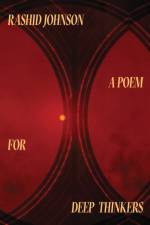
From his early self-portraits to his site-specific installations, this volume underscores Rashid Johnson's fearless engagement with the central themes, questions and aesthetics of the contemporary eraCo-organized by the Solomon R. Guggenheim Museum and the Modern Art Museum of Fort Worth, A Poem for Deep Thinkers is a three-decade survey of Rashid Johnson's artistic career. It situates the artist within three interconnected spheres: as a scholar of art history; as a mediator of Black popular culture and its widespread commodification; and as an artist engaged with the globalization of contemporary art.The exhibition and accompanying catalog features nearly 90 artworks, including early photographs, Cosmic Slops, spray-painted text works, collage paintings, Broken Men mosaics, film projects, and key sculptures and installations that incorporate materials such as shea butter, black soap, plants, ceramic vessels and wax. These explorations demonstrate Johnson's uncommon fluency with multiple materials and forms as well as a nuanced ability to synthesize the condition of the human psyche.This lavish catalog is Bodonia-bound with gold block edges and printed on coated and uncoated papers. Amid more than 200 illustrations, the publication also includes creative meditations on excerpts by literary icons Toni Morrison, Gwendolyn Brooks, Jean Genet, Paul Beatty and Amiri Baraka, interspersed among essays and an interview that illuminate Johnson's work.Born and raised in Chicago, Rashid Johnson (born 1977) received fine arts degrees from Columbia College Chicago and the School of the Art Institute of Chicago. At the age of 24, his work was included in Thelma Golden's 2001 exhibition Freestyle at the Studio Museum in Harlem. Johnson made his directorial debut with his 2019 adaptation of Richard Wright's Native Son.
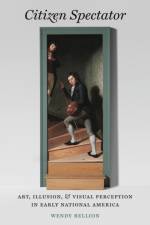
In this richly illustrated study, the first book-length exploration of illusionistic art in the early United States, Wendy Bellion investigates Americans' experiences with material forms of visual deception and argues that encounters with illusory art shaped their understanding of knowledge, representation, and subjectivity between 1790 and 1825. Focusing on the work of the well-known Peale family and their Philadelphia Museum, as well as other Philadelphians, Bellion explores the range of illusions encountered in public spaces, from trompe l'oeil paintings and drawings at art exhibitions to ephemeral displays of phantasmagoria, "Invisible Ladies," and other spectacles of deception. Bellion reconstructs the elite and vernacular sites where such art and objects appeared and argues that early national exhibitions doubled as spaces of citizen formation. Within a post-Revolutionary culture troubled by the social and political consequences of deception, keen perception signified able citizenship. Setting illusions into dialogue with Enlightenment cultures of science, print, politics, and the senses, Citizen Spectator demonstrates that pictorial and optical illusions functioned to cultivate but also to confound discernment. Bellion reveals the equivocal nature of illusion during the early republic, mapping its changing forms and functions, and uncovers surprising links between early American art, culture, and citizenship.
This accessible and engaging book explores the connection between clothes and philosophy - how clothes can pose philosophical problems, and how philosophical ideas influence clothes. It ranges over all aspects of clothes and what they mean to us, helping us to understand an important and underexplored aspect of our lives.
Walcott's lifelong concern with painting and painters deeply inflected his aesthetics and politics. Walcott's interventions on the relationship between Caribbean and colonial history have been thoroughly scrutinised, but, arguably, Walcott was also keen to address and (re)write an art history "of which," paraphrasing a line from Omeros, the Caribbean "too" was/is "capable". Contextualising and putting in conversation Walcott's published and unpublished writings (poems, plays, essays, journalism) and his drawings or paintings (privately owned and publicly disseminated) with specific artists from the Caribbean, Europe, South and North America, Derek Walcott's Painters recalibrates and sharpens our understanding of Walcott's articulation of his own politics and poetics and of the Caribbean's contributions to Atlantic and global culture.
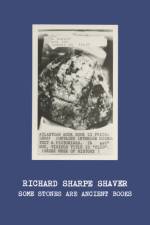
Cult sci-fi author and controversial theorist Richard Sharpe Shaver devoted his life to decoding messages from ancient civilizations left behind in rocksScience fiction writer Richard Sharpe Shaver believed that rocks were books imprinted with valuable information about such mythical ancient races as the Lemurians and Atlanteans. His controversial stories about an advanced prehistoric civilization and a race of evil beings living at the center of the earth appeared in Amazing Stories and other landmark sci-fi publications of the '40s and '50s.A decade later, he was living in relative isolation and devoting himself to rock book research, a course of study that he shared with a devoted group of correspondents. Shaver believed that ancient leaders had left behind images embedded into rocks, which he then tried to interpret. Some Stones Are Ancient Books contains a generous selection of Rokfogos accompanied by hand-typed texts in which Shaver explains--not always patiently--all that can be seen in these stones. Also included are facsimiles of his handmade books and publications, all of which he felt to be of incalculable importance to civilization.Richard Sharpe Shaver (1907-75) was an artist and author whose work frequently appeared in 1940s science fiction magazines such as Amazing Stories. He was the center of the Shaver Mystery, a controversy regarding his alleged discovery of a prehistoric civilization, which sparked mass interest and a devoted following that continues to this day.
A fascinating exploration of Cumbria's historic churches. Will be of interest to all those who live in or are visiting this attractive county in England.
A fascinating exploration of Warwickshire's historic churches. Will be of interest to all those who live in or are visiting this attractive county in England.
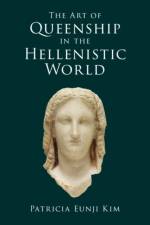
This book explores how ancient queens were important subjects and patrons of dynastic art. It examines an eclectic array of artworks and artifacts from across the Mediterranean and the Middle East. This study invites readers to consider the roles and responsibilities of women in artistic expressions of political power.
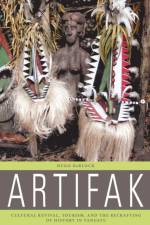
Artifak investigates the meaning and value of (art) objects as commodities in Vanuatu, in differing states of transit and transition: in the local place, on the market, and in the museum. It provides an ethnographic account of commoditization in the context of revitalization of culture and the arts in Vanuatu.
"This book examines necropolitics and performance art, with a particular focus on the black body and the African diaspora. In the book, Myron Beasley situates artists as cultural workers and theorists who illuminate the political linkages between their own and others' specific locales. The focus is an interrogation of the political systems that dictate and determine the value of lives (and decide which lives matter) through a lens of performance and art. Beasley highlights how the performances of rupture, which are of artistic, and historical significance, reveal both strategies of survival and promises of possibility. Artists and curators examined include Jelili Atiku, Giscard Bouchotte, Nona Faustine, Vanessa German, Simone Leigh, Nathalie Anguezomo Mba Bikoro, Ebony Patterson, and Dianne Smith. The volume is an ideal research and reference book for students and scholars of Contemporary Art, African Studies, and Performance Theory"--
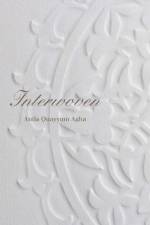
Untangling the conceptual threads that unite a distinguished artist's two- and three-dimensional artworksSpanning two decades of the multifaceted work of Pakistani American visual artist Anila Quayyum Agha (born 1965), Interwoven documents immersive installations, embroidery, drawings, paintings and wall sculptures. Such visual gateways, the "patterns used to break patterns," as the New York Times put it in a recent profile on the artist, poetically convey the contradictions and layered dimensions of the American journey. Whether immersive rooms of light or delicate, intimate drawings, Agha's works prompt feelings of wonder, disarming audiences with their beauty and allowing them to ponder deep questions regarding themes such as the history of women, the role of spirituality and the immigrant experience. The book includes essays that explore Agha's work through the lenses of biography, feminism and art and architectural history. This book was published in conjunction with The Westmoreland Museum of American Art
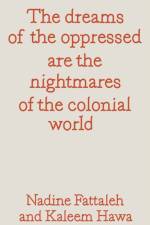
Visualizing the collective imagination of Palestinian and Arab filmmakers across 75 years of exile, dispossession and displacementIn The dreams of the oppressed are the nightmares of the colonial world, Palestinian scholars Nadine Fattaleh and Kaleem Hawa engage in a wide-ranging conversation about Arab history, geography, art and cinema, weaving together theoretical and cultural texts to discuss the afterlives of violence, armed resistance and image-making in the Palestinian struggle. Their exchange centers on the 1987 film The Dream by Syrian filmmaker Mohammad Malas, which chronicles the dreams of Palestinians interviewed in refugee camps in Lebanon. Their discussion expands to consider a constellation of works from the past 60 years by filmmakers including Amiralay, Kassem Hawal, Hani Jawharieh and Jocelyne Saab.Nadine Fattaleh is a Palestinian researcher, writer and translator from Amman.Kaleem Hawa is a Palestinian writer and organizer living in New York City.
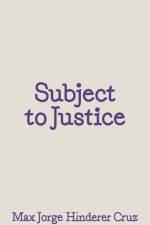
Utilizing case studies from Caribbean and Latin American history, Cruz redefines artistic and cultural practices within the legal labyrinth of restitutionIn discussions over repatriation and restitution of cultural objects, artistic practices often clash with the legal and political frameworks of sovereignty. To untangle these theoretical issues, Max Jorge Hinderer Cruz draws on examples from Latin American and Caribbean history dating back to the 16th century, grounding these reflections in anticolonial struggles and claims for justice. In revisiting such case studies as the so-called Aztec Feather Headdress of Moctezuma and the international dispute over the Spanish galleon San José shipwrecked off the coast of Colombia; or Indigenous political leader and philosopher Ailton Krenak's intervention at the 1987 Brazilian Constitutional Assembly, Cruz confronts not only history's effects on conceptions of art and cultural heritage, but also its juridical and political effects on what he calls cultural sovereignty.Max Jorge Hinderer Cruz is a philosopher based in the Plurinational State of Bolivia.
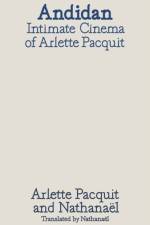
The first English-language introduction to the documentary cinema of Arlette Pacquit, a revered storyteller of Martinican culture and Afro-Caribbean historyThe first publication dedicated to the work of Martinican journalist and filmmaker Arlette Pacquit, Andidan takes the form of a continuous dialogue spanning from 2020 to 2023, between the artist and the poet and translator Nathanaël. Through her documentary-style films, Pacquit has given voice to Martinican history in the wake of French colonialism and to the Afro-Caribbean experience at large. Edited to mimic a film, the book is composed of five recorded interviews (transcribed), two written interviews, several texts by Pacquit and an essay by Nathanaël, amplified by a filmography, film stills and production shots, many previously unseen. Translated into English from French and Kréyol, the book preserves the intimacy of conversation to discuss subjects ranging from Pacquit's films to her engagement with a transnational politics of solidarity, the French colonial imprint on Martinique and Kréyol as a language of the interior.
Abonner på vårt nyhetsbrev og få rabatter og inspirasjon til din neste leseopplevelse.
Ved å abonnere godtar du vår personvernerklæring.